The "Tesla Bike" Search: Why Thousands Look Every Month
Search engines log roughly 2,400 monthly queries for "Tesla bike," and the intent is split: some shoppers expect a Tesla-branded electric bicycle or motorcycle, others confuse the term with Tesla's EV lineup or the Cyberquad ATV. This article resolves that confusion with verified facts, then pivots to what you can actually buy if you want a Tesla electric vehicle — or a legitimate electric two-wheeler from another brand.
Where the "Tesla Bike" Myth Comes From
The rumor has three roots, and understanding them explains why the search volume stays high:
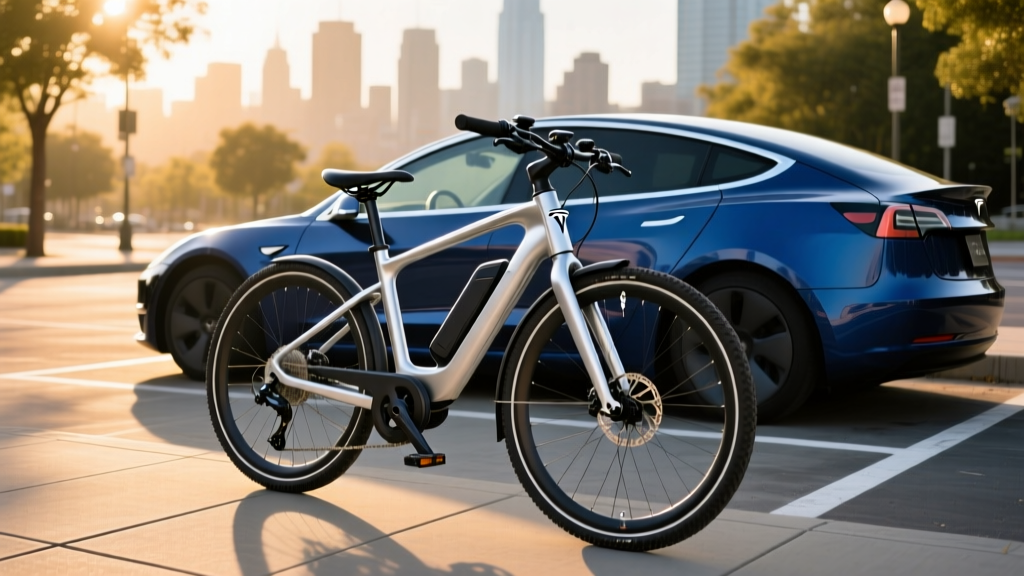
- Concept renders and fan art. Designers on Behance, YouTube, and Instagram periodically publish slick "Tesla Model B" or "Tesla E-Bike" renderings. These are independent projects — not Tesla product leaks.
- Elon Musk's tweets. In 2020, Musk tweeted that Tesla might make a "super cool" electric bike if the company ever had "bandwidth" beyond cars, energy, and robotics. He has not updated that stance, and Tesla's investor presentations through 2025 contain no two-wheeler roadmap.
- The Cyberquad confusion. Tesla did briefly sell the Cyberquad for Kids ($1,900, recalled in 2022 by the CPSC for violating federal ATV safety standards). That was a youth ATV, not a bicycle, and it's no longer available.
None of these amount to a purchasable Tesla bike. If a retailer or listing claims otherwise, verify it against shop.tesla.com before spending money.
What Tesla Actually Sells in 2026: The Real EV Lineup
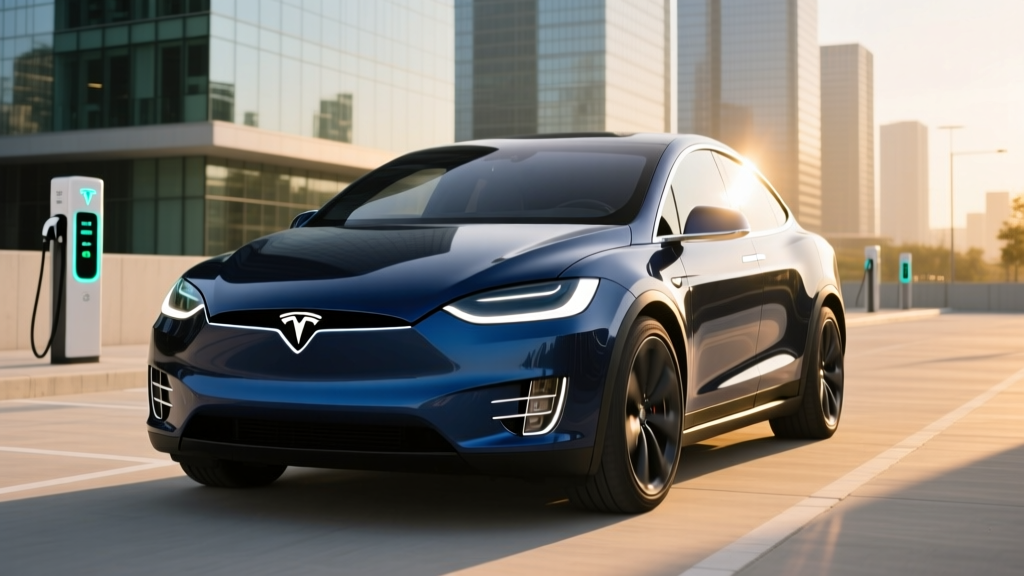
If your "Tesla bike" search was a loose way of exploring Tesla's portfolio, here's the current showroom — with the numbers buyers actually need to decide.
| Model | EPA Range | Battery (kWh usable) | 0-60 mph | Peak DC kW | Base MSRP |
|---|---|---|---|---|---|
| Model 3 RWD | 363 mi | ~60 kWh LFP | 5.8 s | 170 kW | $38,990 |
| Model 3 Long Range AWD | 363 mi | ~75 kWh NMC | 4.2 s | 250 kW | $45,490 |
| Model Y Long Range AWD | 320 mi | ~75 kWh NMC | 4.8 s | 250 kW | $44,990 |
| Model S LR | 402 mi | ~100 kWh NMC | 3.1 s | 250 kW | $79,990 |
| Model X LR | 335 mi | ~100 kWh NMC | 3.8 s | 250 kW | $84,990 |
| Cybertruck AWD | 340 mi | ~123 kWh NMC | 4.1 s | 350 kW (est.) | $79,990 |
Sources: fueleconomy.gov, Tesla.com specifications pages. Ranges are EPA combined; real-world highway and cold-weather figures run 10–25% lower.
Real-World Range, Charging Speed, and What Owners Actually See
Charging speed is where the kW-vs-kWh distinction matters most. A 75 kWh battery (energy capacity) charging at a peak 250 kW (power rate) does not fill in 18 minutes — that peak only holds between roughly 10% and 35% state of charge. Here's what a typical Supercharger session looks like:
| Level | Power | Miles per Hour Added | Typical Use |
|---|---|---|---|
| Level 1 (120V) | ~1.4 kW | 3–5 mi/hr | Overnight trickle |
| Level 2 (240V, 48A Wall Connector) | 11.5 kW | ~44 mi/hr | Home daily charging |
| DC Fast (V3 Supercharger) | Peak 250 kW | ~1,000 mi/hr peak | 10–80% in ~25 min |
| DC Fast (V4 Supercharger) | Peak 350 kW | ~1,200 mi/hr peak | Cybertruck / future models |
Preconditioning — routing the car to a Supercharger via the nav system — warms the battery so it can accept peak kW immediately. Skip this step on a cold morning and your first 10 minutes may average under 80 kW.
Federal Tax Credit Eligibility: The §30D Rules That Actually Apply
This is where many "Tesla bike" searches mask a real question: can I get $7,500 off a Tesla? The answer depends on current-year IRS rules, and as of 2026 the constraints are strict:
- MSRP cap: Sedans (Model 3) must be ≤$55,000; SUVs/trucks (Model Y, Model X, Cybertruck) must be ≤$80,000.
- Buyer income cap: Modified AGI ≤$150,000 single / ≤$300,000 joint.
- Battery sourcing: Critical minerals and battery components must meet phased-in percentages sourced from the U.S. or FTA partners — Tesla's supply chain has adapted, but verify the specific VIN on the IRS qualified-vehicle list.
- Point-of-sale transfer: You can apply the credit at the dealer to reduce the purchase price rather than waiting to claim it on your tax return.
- No e-bikes: §30D applies to four-wheeled highway-capable vehicles only. Electric bicycles are covered under a separate, smaller proposed credit that has not passed as of 2026.
Check the live list at IRS.gov qualified vehicles before committing — eligibility shifts when battery sourcing changes mid-year.
| Model / Trim | Base MSRP | Max §30D Credit | Net If Eligible |
|---|---|---|---|
| Model 3 RWD | $38,990 | $7,500 | $31,490 |
| Model 3 Long Range AWD | $45,490 | $7,500 | $37,990 |
| Model Y Long Range AWD | $44,990 | $7,500 | $37,490 |
| Model S LR | $79,990 | $0 (above MSRP cap) | $79,990 |
| Model X LR | $84,990 | $0 (above MSRP cap) | $84,990 |
| Cybertruck AWD | $79,990 | $7,500 | $72,490 |
If You Actually Want an Electric Two-Wheeler
The "Tesla bike" search often resolves into a real purchase intent: an electric bicycle or motorcycle. Tesla won't serve that need, but these categories will:
Commuter E-Bikes (Class 1 & 2, up to 20 mph assist)
Brands like Rad Power, Trek, Specialized, and Lectric offer 40–60 mile range on 500–700 Wh batteries at $1,500–$3,500. These are the practical replacement for a short car commute and fit in a trunk or on a transit rack.
High-Speed E-Bikes (Class 3, up to 28 mph assist)
Models from Gazelle, Riese & Müller, and Cowboy push 60–90 mile range with 500–750 W motors at $3,000–$7,000. They're legal on roads but not all bike paths — check local rules.
Electric Motorcycles
Zero Motorcycles, LiveWire (Harley's EV spin-off), and Energica sell highway-capable electric motorcycles with 100–180 mile real-world range, 80–120 mph top speeds, and MSRP from $18,000 to $35,000. None currently qualify for §30D, which is four-wheel-specific.
Who Should Buy a Tesla — and Who Should Look Elsewhere
Tesla's real lineup fits specific use cases well, and poorly for others:
- You want access to the Supercharger network (now partially open to other brands, but still most reliable for Tesla owners).
- Over-the-air updates and a minimalist tech-forward cabin are priorities.
- You can install a Level 2 Wall Connector at home — that unlocks the cheapest, most convenient "fueling" in EV ownership.
- You value one-pedal driving and strong regenerative braking for urban commutes.
- You need physical buttons, Apple CarPlay/Android Auto, or a traditional instrument cluster.
- Your driving is mostly sub-50-mile daily commuting on a tight budget — a used Nissan Leaf, Chevy Bolt, or a Class 3 e-bike may cost less overall.
- You want a true electric motorcycle or e-bike — Tesla simply doesn't make one.
- Insurance cost is a dealbreaker: Tesla premiums run 20–40% above segment average in most states.
Autopilot, FSD, and the "Self-Driving" Misconception
FSD (Supervised) costs $8,000 as a one-time purchase or $99/month as of 2026. It handles highway lane changes, city stoplights, and parking maneuvers well in testing, but NHTSA investigations and real-world incidents show it can misread construction zones, emergency vehicles, and unusual lane markings. Treat it as an advanced cruise system, not a chauffeur.
Warranty, Service, and Long-Term Ownership
Tesla's baseline coverage:
- Basic vehicle: 4 years / 50,000 miles
- Battery & drive unit: 8 years / 100,000 miles (Model 3/Y RWD) or 8 years / 120,000 miles (Long Range, Model S/X, Cybertruck), with a minimum 70% capacity retention threshold.
- Service model: Mobile service for many issues; physical service centers in metro areas. Rural owners should plan for tow distances of 100+ miles in some regions.
Battery degradation on Teslas averages roughly 10% over 150,000 miles based on fleet data, though LFP packs in the Model 3 RWD show slower fade when routinely charged to 100% as Tesla recommends.
Frequently Asked Questions
Does Tesla make an electric bicycle or motorcycle in 2026?
No. Tesla does not sell any e-bike, electric bicycle, or electric motorcycle. The "Tesla bike" is a rumor based on concept renders and a years-old Elon Musk tweet. Tesla's product line consists of the Model 3, Model Y, Model S, Model X, Cybertruck, Semi, and energy products.
What is the cheapest Tesla I can buy new?
The 2026 Model 3 RWD at $38,990 MSRP. If you qualify for the full §30D federal credit ($7,500) and apply it at point of sale, the effective price drops to roughly $31,490 before state incentives, destination fees, or taxes.
How fast does a Tesla charge at home?
On a Tesla Wall Connector (240V, 48A), you'll add roughly 44 miles of range per hour — enough to refill most daily driving overnight. A standard 120V outlet adds only 3–5 miles per hour and is impractical as a primary charging method.
Do Teslas qualify for the federal EV tax credit?
Model 3 and Model Y trims under the MSRP cap ($55,000 sedans / $80,000 SUVs) currently qualify, subject to buyer income limits and battery-sourcing rules. Model S, Model X, and most Cybertruck trims exceed the MSRP cap and do not qualify. Always verify on the IRS qualified vehicle list before purchasing.
Is a Tesla cheaper to own than a gas car?
Over five years and 75,000 miles, a Model 3 RWD typically saves $4,000–$7,000 in fuel and maintenance versus a comparable gas sedan, per fueleconomy.gov comparisons. Those savings can be offset by higher insurance premiums and faster depreciation in some model years — run the numbers for your ZIP code and mileage.
If I want an electric two-wheeler, what should I buy?
For commuter e-bikes: Rad Power, Lectric, or Trek. For premium e-bikes: Riese & Müller or Gazelle. For electric motorcycles: Zero Motorcycles, LiveWire, or Energica. None are Tesla products, and none qualify for the §30D vehicle credit.
Authoritative sources referenced: fueleconomy.gov, IRS §30D qualified vehicles, CPSC.gov, and Tesla.com official specifications.