The Underside Story: Why the Bottom of a Tesla Matters More Than You Think
When most shoppers evaluate an electric vehicle, they focus on the touchscreen, the 0-60 time, or the EPA range sticker. But the most expensive, most critical, and most vulnerable component of any Tesla sits just inches above the pavement. Understanding the bottom of a Tesla — the structural battery pack, the armor shielding it, and the engineering trade-offs involved — is essential for anyone considering a Model 3, Model Y, Model S, or Model X in 2026.
This isn't just an anatomy lesson. The undercarriage design directly dictates a Tesla's range, its charging speed, its ride height, its repair costs after road debris strikes, and even its eligibility for the federal tax credit. Let's break down exactly what's under there, what it costs to protect or replace, and what it means for your ownership experience.
What You'll Actually Find on the Bottom of a Tesla
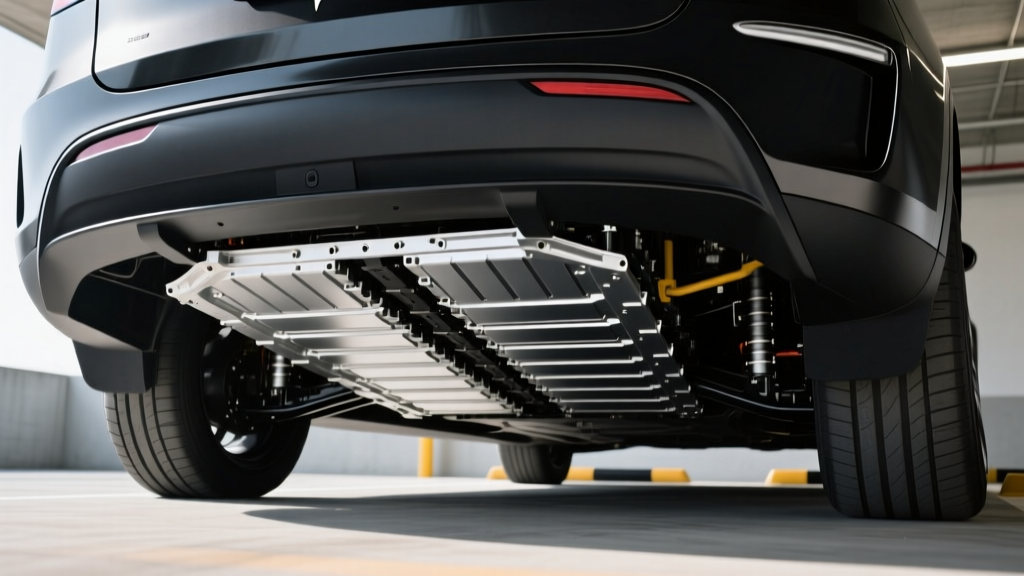
Slide under any current-production Tesla and you'll see a broad, flat, mostly smooth surface. That's the structural battery pack — a skateboard-style platform that serves as both the vehicle's energy storage and a core part of its chassis rigidity. Here's the layer-by-layer breakdown:
- Skid plate / underbody shield: A stamped aluminum or composite panel that protects the battery from road debris, water intrusion, and minor impacts. Tesla has revised this shield multiple times since 2013, adding titanium and additional layers after early Model S undercarriage-strike fires.
- Battery enclosure: A sealed aluminum housing containing the battery modules, cooling channels, and high-voltage busbars. On the Model 3 and Model Y built at Giga Texas, this is a structural pack — the cells themselves are bonded into the chassis, reducing weight and part count but making individual module repair impossible.
- Thermal management plumbing: Glycol coolant lines run through the pack to keep cells in their optimal temperature window (roughly 70–95°F). This is what enables Tesla's strong fast-charging speeds and consistent performance in both hot and cold climates.
- Drive units and half-shafts: Depending on the trim, one or two permanent-magnet synchronous motors (rear and/or front) sit at the axles, connected to the wheels via half-shafts. These are compact and sit above the lowest point of the pack.
- Suspension and subframe: The front and rear subframes bolt to the battery structure. On Model S and Model X, adaptive air suspension can raise the vehicle for clearance; on Model 3 and Model Y, it's a fixed steel spring setup.
2026 Tesla Undercarriage & Key Specs at a Glance
| Spec | Model 3 RWD | Model Y LR AWD | Model S LR | Model X LR |
|---|---|---|---|---|
| Battery Capacity (usable) | ~57.5 kWh (LFP) | ~75 kWh (NMC) | ~95 kWh (NMC) | ~95 kWh (NMC) |
| EPA Range | 272 mi | 320 mi | 402 mi | 348 mi |
| Ground Clearance | 5.5 in | 6.6 in | 5.8 in (adjustable) | 6.8 in (adjustable) |
| Max DC Fast Charge | 170 kW | 250 kW | 250 kW | 250 kW |
| 10–80% DCFC Time | ~25 min | ~27 min | ~30 min | ~32 min |
| Level 2 Home Charge | 11.5 kW (~37 mi/hr) | 11.5 kW (~37 mi/hr) | 11.5 kW (~37 mi/hr) | 11.5 kW (~37 mi/hr) |
| 0–60 mph | 5.8 sec | 4.8 sec | 3.1 sec | 3.8 sec |
| Horsepower | 271 hp | 384 hp | 670 hp | 670 hp |
| Drivetrain | RWD | Dual-Motor AWD | Dual-Motor AWD | Dual-Motor AWD |
| Battery Warranty | 8 yr / 100,000 mi | 8 yr / 120,000 mi | 8 yr / 150,000 mi | 8 yr / 150,000 mi |
Source: fueleconomy.gov and Tesla specifications. Figures reflect 2025–2026 model year data.
Battery Chemistry: LFP vs NMC Under the Floor
Not all Tesla battery packs are created equal, and the chemistry inside the enclosure on the bottom of a Tesla has major ownership implications.
| Factor | LFP (Lithium Iron Phosphate) | NMC (Nickel Manganese Cobalt) |
|---|---|---|
| Used In | Model 3 RWD | Model 3 LR, Model Y LR/Perf, Model S, Model X |
| Energy Density | Lower (heavier pack for same range) | Higher (lighter, more range per kg) |
| Cycle Life | 3,000+ cycles to 80% SoH | 1,500–2,000 cycles to 80% SoH |
| Cold-Weather Range Loss | Greater (~35–40% loss below freezing) | Moderate (~25–30% loss below freezing) |
| Recommended Daily Charge | 100% (Tesla recommends full charge weekly) | 80% daily, 100% for trips only |
| Cobalt Content | None | Contains cobalt (sourcing scrutiny) |
| Estimated Replacement Cost | $10,000–$14,000 | $14,000–$22,000 |
The LFP pack in the Model 3 RWD is a durability champion — it can tolerate daily 100% charging and thousands more cycles before meaningful degradation. The trade-off is lower energy density and worse cold-weather performance. If you live in Minnesota or Maine, the NMC pack in a Long Range or Performance trim will serve you better in January. If you're in Phoenix and commute 30 miles a day, the LFP Model 3 is arguably the smarter long-term play.
Real-World Range vs. the EPA Sticker
EPA Range vs. What You'll Actually Get
Model 3 RWD: EPA 272 mi → Expect ~230–250 mi highway at 75 mph; ~180–200 mi in sub-30°F winter conditions.
Model Y LR AWD: EPA 320 mi → Expect ~270–290 mi highway; ~220–240 mi in deep cold.
Model S LR: EPA 402 mi → Expect ~340–370 mi highway; ~280–310 mi in deep cold.
Model X LR: EPA 348 mi → Expect ~290–320 mi highway; ~240–270 mi in deep cold.
Highway driving at sustained speeds above 70 mph reduces range 10–15% vs. EPA combined. Cold weather compounds this with battery resistance and cabin heating loads. Tesla's heat pump (standard on all current models) mitigates but does not eliminate winter losses.
The structural battery pack sitting at the bottom of a Tesla contributes to the vehicle's low center of gravity and excellent efficiency — but efficiency only goes so far when physics intervenes. At 80 mph on I-70 in February, you're fighting aero drag and thermal losses simultaneously. Plan your road-trip charging stops around 70% of the EPA sticker in winter, and you'll never be stranded.
Ground Clearance, Skid Plates, and Impact Risk
Ground clearance is where undercarriage design meets daily reality. The Model 3 sits at just 5.5 inches — comparable to a sports sedan, not an SUV. The Model Y's 6.6 inches is more crossover-appropriate but still lower than competitors like the Hyundai Ioniq 5 (6.2 in) or Ford Mustang Mach-E (5.9 in). Model S and Model X with air suspension can raise to roughly 6.5–7 inches when needed, which helps on steep driveways or gravel roads.
The impact risk is real. A 2024 IIHS report noted that EV undercarriage damage from road debris, potholes, and speed bumps is a growing insurance claim category. A punctured battery enclosure on a Tesla typically requires a full pack replacement — not a repair. Out-of-warranty pack replacements run $14,000–$22,000 depending on the model and chemistry.
Tesla's multi-layer skid plate (titanium-reinforced on Model S/X since 2014, updated composite on Model 3/Y) handles typical road debris well. But a direct strike from a large rock or a deep pothole at highway speed can defeat it. Some owners in rural areas opt for aftermarket underbody armor from companies like EV Shield or Tesla-specific titanium plates, which run $800–$1,500 installed.
Charging Speed: How the Pack Design Affects Your Stop
The battery pack on the bottom of a Tesla isn't just a fuel tank — its thermal management system directly determines how fast it can accept a charge. Tesla's glycol cooling loops are among the most sophisticated in the industry, which is why Teslas consistently sustain higher charge rates for longer than many competitors.
Charging Speeds Across the Tesla Lineup
| Charge Level | Power / Rate | Model 3 RWD | Model Y LR | Model S/X LR |
|---|---|---|---|---|
| Level 1 (120V outlet) | ~1.4 kW | ~4 mi/hr | ~4 mi/hr | ~4 mi/hr |
| Level 2 (240V home) | 11.5 kW | ~37 mi/hr | ~37 mi/hr | ~37 mi/hr |
| DC Fast (V3 Supercharger) | Up to 250 kW | Peak 170 kW | Peak 250 kW | Peak 250 kW |
| 10–80% DCFC Time | — | ~25 min | ~27 min | ~30–32 min |
| Charge Curve Taper | — | Drops sharply above 60% | Drops above 55% | Drops above 50% |
Critical note on the charge curve: Peak kW is not sustained kW. A Model Y LR may hit 250 kW at 10% SoC, but by 55% it's already tapering to ~100 kW, and above 80% it drops to under 40 kW. This is why Tesla's navigation system routes you to Superchargers and preconditions the battery — arriving with a warm pack maximizes the time spent at peak rate. Without preconditioning (e.g., arriving at a charger without nav routing), expect 10–80% times to stretch 5–10 minutes longer, especially in cold weather.
For home charging, a Tesla Wall Connector on a 60-amp circuit delivers the full 11.5 kW (48 amps continuous). That's roughly 37 miles of range per hour of charging — enough to fully replenish any Tesla overnight. Installation typically costs $800–$2,000 depending on your electrical panel's capacity and the run length from panel to garage. If your home has a 100-amp main panel, you may need a $1,500–$3,000 panel upgrade to support a dedicated 60-amp EV circuit.
Pricing, Tax Credits, and Total Cost
2026 Tesla Pricing & Federal Tax Credit Eligibility
| Model / Trim | Base MSRP | §30D Credit Eligible? | Effective Price (with credit) |
|---|---|---|---|
| Model 3 RWD | $38,990 | Yes — up to $7,500 | ~$31,490* |
| Model 3 Long Range AWD | $45,740 | Yes — up to $7,500 | ~$38,240* |
| Model Y Long Range AWD | $44,990 | Yes — up to $7,500 | ~$37,490* |
| Model Y Performance | $48,990 | Yes — up to $7,500 | ~$41,490* |
| Model S Long Range | $79,990 | No — exceeds $55,000 sedan MSRP cap | $79,990 |
| Model X Long Range | $84,990 | No — exceeds $80,000 SUV MSRP cap | $84,990 |
*Effective price assumes full $7,500 credit. Eligibility requires: buyer AGI ≤ $150K single / $300K joint; vehicle MSRP within caps; battery meets critical-mineral and component sourcing thresholds per IRS §30D rules. Credit can be transferred to the dealer at point of sale as of 2024+. Consult a tax professional for your specific situation. Rules are subject to legislative change.
The Model 3 RWD, at roughly $31,500 after the federal credit, is one of the most affordable new EVs in America — and the cheapest entry point into Tesla's Supercharger network, over-the-air updates, and software ecosystem. The Model Y LR at ~$37,500 is the volume seller for good reason: it balances range, space, and price. The Model S and X, while impressive engineering showcases, are priced out of the federal credit entirely and compete in a luxury segment where rivals like the Lucid Air and BMW iX offer compelling alternatives.
Interior Space, Tech, and Daily Livability
The skateboard architecture — battery flat on the bottom, motors at the axles — gives every Tesla a flat floor and generous interior volume relative to its exterior footprint.
- Model 3: 23 cu ft trunk + 3.1 cu ft frunk. Rear legroom: 35.2 in. Comfortable for two adults in back; tight for three on long trips.
- Model Y: 30.2 cu ft cargo (behind 2nd row) + 4.1 cu ft frunk; 72 cu ft with seats folded. Rear legroom: 41.6 in. Genuine family hauler.
- Model S: 28 cu ft trunk + 3.1 cu ft frunk. Rear legroom: 35.4 in. Premium materials, ventilated seats, 17" center screen, rear passenger screen.
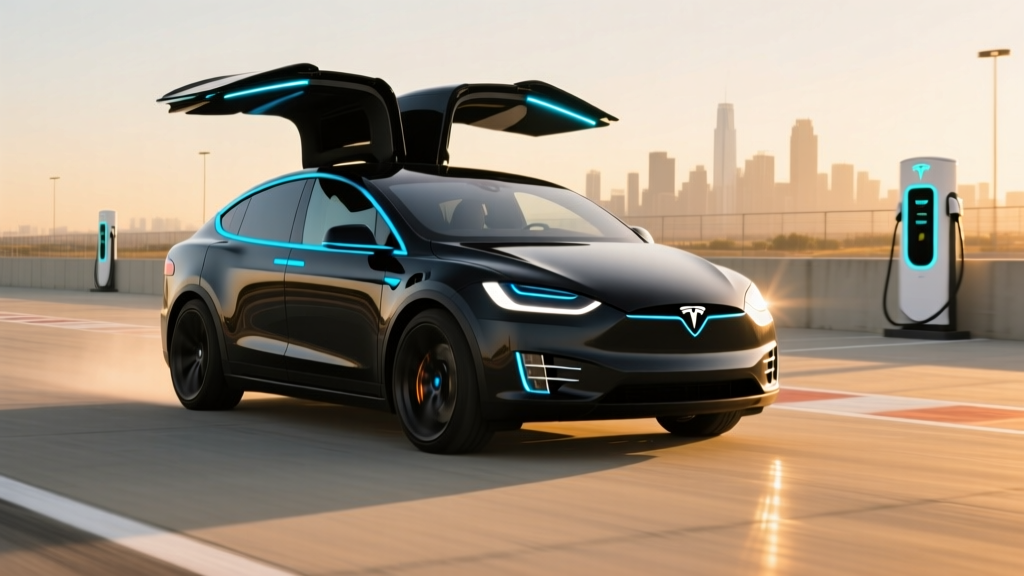
- Model X: Up to 88.1 cu ft with all seats folded (5-seat config). Falcon-wing rear doors ease child-seat loading. Optional 6- or 7-seat layouts.
Tech highlights: All current Teslas run on the same hardware platform (HW4 / AI4) supporting Autopilot (standard) and Full Self-Driving Supervised ($8,000 option or $99/mo subscription). FSD Supervised is an SAE Level 2 system — it does not make the car self-driving. You must keep your eyes on the road and hands available to take over at all times. Tesla's navigation, streaming, gaming, and Sentry Mode are industry-leading in integration, though the lack of Apple CarPlay / Android Auto remains a dealbreaker for some buyers.
Pros
- Class-leading efficiency (Model 3 RWD: 132 MPGe combined / 25 kWh/100mi)
- Supercharger network access — the most reliable DC fast-charging ecosystem in North America
- Over-the-air updates continuously add features and improve performance
- LFP option (Model 3 RWD) offers exceptional cycle life and daily 100% charging
- Strong resale value relative to non-Tesla EVs
- Structural pack reduces weight and lowers center of gravity for sharp handling
Cons
- Low ground clearance (Model 3: 5.5 in) increases undercarriage strike risk
- Battery pack replacement costs $14K–$22K out of warranty — total-loss territory on older vehicles
- No Apple CarPlay or Android Auto
- FSD is expensive and remains Level 2 — not autonomous
- Model S/X priced out of the federal tax credit
- Panel gaps and paint quality still inconsistent on some deliveries
- LFP pack loses more range in freezing weather than NMC
Who Should Buy a Tesla — And Which One?
Decision Framework
Choose the Model 3 RWD if: You commute under 60 miles daily, live in a mild climate, want the lowest purchase price, and plan to keep the car 8+ years (LFP longevity).
Choose the Model Y LR AWD if: You need family cargo space, take road trips, live in a cold-weather state, or want dual-motor traction in snow.
Choose the Model S LR if: You want 400+ miles of range, premium luxury, and don't need the tax credit. You're cross-shopping the Lucid Air Pure and BMW i5.
Choose the Model X if: You need three rows, want falcon-wing doors for tight parking, and budget is flexible.
Look elsewhere if: You need 8+ inches of ground clearance for off-road use, require Apple CarPlay, want a dealer service network in rural areas, or need to tow more than 5,000 lbs.
Frequently Asked Questions
What is the real-world range of a Tesla?
Real-world range depends on speed, temperature, and terrain. A Model Y LR (EPA 320 mi) typically delivers 270–290 mi at highway speeds in moderate weather and 220–240 mi in sub-freezing conditions. City driving with regenerative braking can match or slightly exceed the EPA number. Always plan road-trip charging around 70% of the EPA figure in winter for a safe margin.
How fast does a Tesla charge at home and on the road?
At home on a Level 2 Tesla Wall Connector (11.5 kW), any current Tesla adds roughly 37 miles of range per hour — a full overnight charge from empty. On a V3 Supercharger (250 kW peak), a Model Y LR charges from 10–80% in about 27 minutes, though the charge curve tapers significantly above 55% SoC. The Model 3 RWD peaks lower at ~170 kW due to its LFP chemistry.
How much does a Tesla cost after the federal tax credit?
The Model 3 RWD drops to roughly $31,490 and the Model Y LR to roughly $37,490 after the maximum $7,500 §30D credit, assuming you meet income limits (≤$150K single / $300K joint AGI) and the vehicle's battery meets current critical-mineral sourcing requirements. The credit can be applied at point of sale as a down-payment reduction. Model S and Model X do not qualify due to MSRP caps. Always verify current eligibility on IRS.gov before purchasing.
Is a Tesla worth buying versus competitors in 2026?
For most buyers, yes — particularly the Model Y LR, which remains the best-selling EV in the U.S. for good reason. The Supercharger network, software ecosystem, and efficiency are genuine advantages. However, the Hyundai Ioniq 5 offers faster 800V charging (10–80% in ~18 min), the Ford Mustang Mach-E offers a more traditional interior with CarPlay, and the Chevrolet Equinox EV undercuts on price. Test-drive at least two competitors before committing.
Can the battery on the bottom of a Tesla be repaired if damaged?
In most cases, no. Tesla's structural battery packs (especially the 4680-cell packs in Giga Texas-built Model Y) are bonded units — individual modules cannot be replaced. A punctured or water-damaged pack requires full replacement at $14,000–$22,000 out of warranty. This is why comprehensive insurance with low deductibles is essential for Tesla owners. Within the 8-year battery warranty, Tesla covers defects and degradation below 70% capacity, but not physical damage from road debris.
Does the Tesla battery degrade over time?
Yes, but slowly. Tesla's own fleet data shows median battery degradation of roughly 12% at 150,000 miles for NMC packs. LFP packs in the Model 3 RWD degrade even slower, with many owners reporting less than 5% loss at 60,000 miles. The battery warranty guarantees at least 70% capacity retention for 8 years / 100,000–150,000 miles depending on the model. Avoid frequent DC fast charging above 90% SoC and repeated deep discharges to maximize longevity.