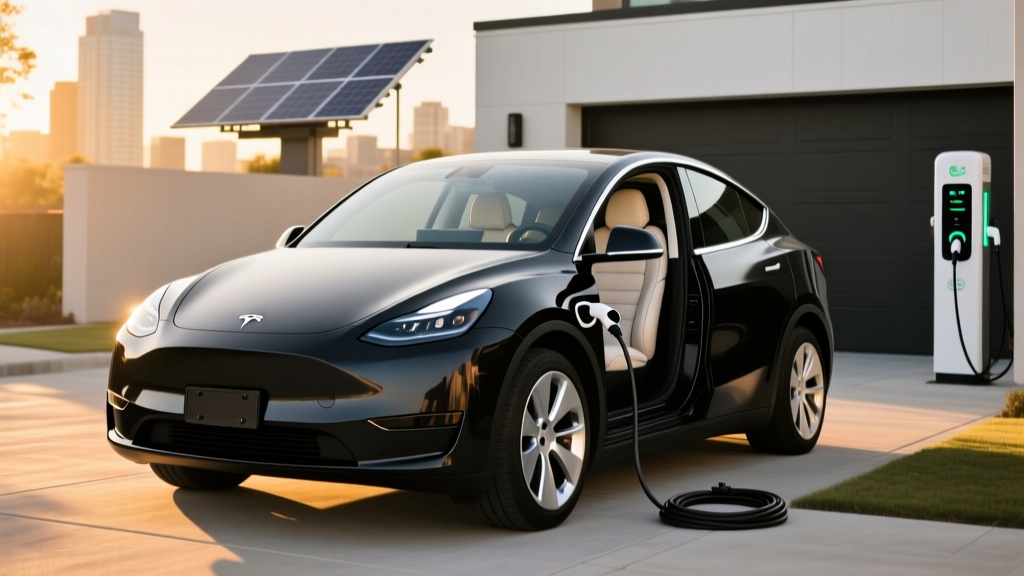
If you've been browsing Tesla forums or social media, you've likely encountered the phrase "Tesla Banish feature" and wondered what it means. The term isn't official Tesla nomenclature — it's a community-coined label for Tesla's increasingly aggressive cabin-overheat protection and automated climate preconditioning routines that effectively "banish" extreme cabin temperatures before you enter the vehicle. In this 2026 Model Y review, we break down exactly what the Banish feature does, how it interacts with the vehicle's thermal management system, and whether the 2026 Model Y Long Range AWD remains the default electric crossover to beat.
What Is the Tesla Banish Feature?
The so-called Tesla Banish feature refers to Tesla's suite of automated thermal-management routines — primarily Cabin Overheat Protection and preconditioning via the Tesla app — that keep the interior at a comfortable temperature even when parked in extreme heat or cold. When enabled, Cabin Overheat Protection activates the air conditioning (or heat pump in cold weather) to prevent the cabin from exceeding a user-set threshold (typically 105°F) for up to 12 hours after parking. The community dubbed this "Banish" because it effectively banishes uncomfortable cabin conditions before the driver returns.
On 2026 Model Y vehicles running software version 2025.44 and later, this system integrates with the heat pump and the octovalve thermal management architecture to draw minimal energy from the high-voltage battery while maintaining cabin comfort. Tesla also added a "Scheduled Departure" mode that layers preconditioning on top of Banish-style protection, warming or cooling both the cabin and the battery pack to optimize efficiency and regenerative braking before your commute.
2026 Tesla Model Y Long Range AWD: Core Specs
Before we get deeper into the Banish feature's real-world behavior, here are the hard numbers for the 2026 Model Y Long Range All-Wheel Drive — the volume-selling trim and the one most buyers cross-shop against the Hyundai Ioniq 5, Ford Mustang Mach-E, and Chevrolet Equinox EV.
| Spec | 2026 Model Y Long Range AWD |
|---|---|
| EPA Range | 320 miles |
| Battery (Usable) | ~75 kWh, NMC (Nickel Manganese Cobalt) |
| Peak DC Fast Charge | 250 kW (V3 Supercharger) |
| 10–80% DC Charge Time | ~25 minutes |
| Level 2 Home Charge Rate | 11.5 kW (~44 mi/hr) |
| 0–60 mph | 4.8 seconds |
| Horsepower | 384 hp (dual-motor AWD) |
| MPGe (Combined) | 117 MPGe (28 kWh/100 mi) |
| Cargo Volume | 30.2 cu ft (rear seats up) / 72.1 cu ft (folded) |
| Rear Legroom | 41.6 inches |
| Base MSRP | $46,630 (before destination) |
| Battery Warranty | 8 years / 120,000 miles (≥70% retention) |
Real-World Range: What the EPA Sticker Doesn't Tell You
Real-World Highway (70 mph, 72°F): ~275–290 miles
Real-World Highway (32°F, cold weather): ~225–250 miles
Real-World City (mixed stop-and-go, 65°F): ~300–315 miles
The 2026 Model Y Long Range AWD carries an EPA-estimated 320 miles of range. In practice, efficiency depends heavily on speed, temperature, and elevation. At sustained 70–75 mph highway speeds in moderate weather, expect roughly 275–290 miles before needing a charge stop. In freezing temperatures, range drops 20–30% due to battery internal resistance and cabin heating demands — even with the heat pump.
This is where the Tesla Banish feature becomes a range consideration. If you leave Cabin Overheat Protection active all day in a Phoenix summer, you'll lose roughly 5–9 miles of range to thermal management. In winter, scheduled preconditioning actually improves effective range by warming the battery before departure, restoring regenerative braking capability and reducing the energy needed for cabin heat during the first 15 minutes of driving.
Charging Speed: Supercharger Network & Home Setup
| Charging Level | Power (kW) | Miles Added per Hour | Notes |
|---|---|---|---|
| Level 1 (120V) | ~1.4 kW | ~3–5 mi/hr | Emergency/trickle only |
| Level 2 (240V, 48A) | 11.5 kW | ~44 mi/hr | Full overnight charge in ~7 hrs |
| DC Fast (V3 Supercharger) | 250 kW peak | ~1,000+ mi/hr (peak) | 10–80% in ~25 min; tapers above 80% |
The Model Y's NACS (North American Charging Standard) connector gives it native access to the Tesla Supercharger network — over 20,000 stalls in North America as of early 2026. At a V3 Supercharger, the Model Y peaks at 250 kW, though sustained charging averages closer to 150–170 kW across the full 10–80% session due to the charge curve taper. Plan on 25 minutes for a 10–80% top-up under ideal conditions; add 5–10 minutes in cold weather unless you've preconditioned the battery via navigation to the charger.
At home, the onboard 11.5 kW charger fills the 75 kWh pack from empty in roughly 7 hours on a 48-amp Level 2 circuit (requires a 60-amp breaker). Most owners charge overnight and wake to a full battery daily.
Pricing, Trims & Federal Tax Credit Eligibility
| Trim | MSRP | After §30D Credit* |
|---|---|---|
| Model Y Long Range AWD | $46,630 | $39,130 |
| Model Y Performance | $51,630 | $44,130 |
*Federal EV tax credit under IRS §30D offers up to $7,500 — but eligibility is not automatic. Key requirements for 2026:
- MSRP Cap: SUVs/crossovers must be under $80,000 (Model Y qualifies easily)
- Buyer Income Cap: Modified AGI ≤ $150,000 (single) / $300,000 (married filing jointly)
- Battery Sourcing: Critical minerals and battery components must meet escalating domestic/free-trade-partner percentages — Tesla's shifting supply chain has maintained eligibility through early 2026, but verify at purchase via the dealer's IRS compliance documentation
- Point-of-Sale Transfer: You can transfer the credit to the dealer at purchase, reducing your out-of-pocket cost immediately rather than waiting for a tax refund
Always confirm current eligibility on fueleconomy.gov before purchasing, as battery-sourcing rules can shift model-year to model-year.
Standout Tech: Autopilot, FSD & the Banish Feature in Context
The 2026 Model Y continues with Tesla's minimalist interior centered on a 15.4-inch touchscreen. Key technology highlights:
- Autopilot (standard): Adaptive cruise + lane centering — SAE Level 2 driver assistance, requiring continuous driver supervision
- Full Self-Driving Supervised ($8,000 option): Enhanced lane changes, traffic-light recognition, and city-street navigation — still SAE Level 2; you must remain alert and ready to take over at all times
- Banish Feature (Cabin Overheat Protection + Scheduled Preconditioning): Automated thermal management as described above; now integrates with Smart Preconditioning to optimize battery temperature for regenerative braking at departure time
- Over-the-Air Updates: Tesla continues to push feature additions, efficiency improvements, and UI refinements without dealer visits
- Sentry Mode: 360° camera-based security monitoring while parked (adds ~1 mile of range consumption per hour of use)
Who Is the 2026 Model Y Best For?
The Model Y Long Range AWD fits a specific buyer profile well:
- Daily commuters (20–80 miles round trip): Home Level 2 charging means you rarely visit a public charger; the Banish feature keeps the cabin ready regardless of outdoor temperature
- Small families: 41.6 inches of rear legroom and 72.1 cu ft of max cargo handle car seats and strollers easily
- Tesla Supercharger loyalists: The NACS connector and Supercharger network remain the most reliable DC fast-charging ecosystem in North America
- Tech-forward buyers: OTA updates, FSD Supervised, and integrated trip planning appeal to those who want a software-defined vehicle
It's less ideal for buyers who prioritize ride comfort over sportiness, want physical buttons for climate controls, or need a third row (the optional third-row seat is best suited for small children only).
Model Y vs. Key Competitors: Quick Comparison
| Metric | 2026 Tesla Model Y LR AWD | 2026 Hyundai Ioniq 5 Limited AWD | 2026 Ford Mustang Mach-E Premium AWD |
|---|---|---|---|
| EPA Range | 320 mi | 290 mi | 290 mi |
| Peak DC Charge | 250 kW | 350 kW | 150 kW |
| 10–80% Time | ~25 min | ~18 min | ~36 min |
| Base MSRP | $46,630 | $52,200 | $48,995 |
| Connector | NACS (native) | NACS (2025+) | NACS (2025+) |
| 0–60 mph | 4.8 sec | 4.5 sec | 5.1 sec |
The Ioniq 5 charges faster at 350 kW-capable stations, but the Model Y's range advantage and Supercharger network access remain compelling for road-trippers. The Mach-E offers a more traditional interior layout but charges considerably slower.
Pros & Cons
- Class-leading 320-mile EPA range
- Supercharger network reliability
- Excellent efficiency (117 MPGe combined)
- Banish feature / thermal management reduces cabin discomfort in extreme climates
- Spacious cargo area (72.1 cu ft)
- OTA updates keep software current
- No physical climate or volume controls — everything via touchscreen
- Firm ride quality on rough pavement
- FSD Supervised costs $8,000 and remains Level 2
- DC charge speed (250 kW peak) trails Ioniq 5 / EV6 at 350 kW stations
- Insurance premiums run 15–25% above segment average
Frequently Asked Questions
What exactly is the Tesla Banish feature?
The "Banish feature" is an informal community term for Tesla's automated Cabin Overheat Protection combined with Scheduled Departure preconditioning. It uses the heat pump and A/C to maintain a set cabin temperature for up to 12 hours after parking, and pre-warms or pre-cools the cabin and battery before a scheduled departure.
Does the Banish feature drain the battery significantly?
In extreme heat (100°F+), expect 1–3 kWh consumption over an 8-hour workday, equating to roughly 3–9 miles of range. In mild weather, the energy draw is negligible. The range cost is small compared to the comfort benefit.
Does the 2026 Model Y qualify for the $7,500 federal tax credit?
It qualifies for up to $7,500 under IRS §30D, provided the buyer meets income caps ($150K single / $300K joint), the vehicle MSRP is under $80,000 (it is), and battery-sourcing requirements are met at time of purchase. Confirm current eligibility at the point of sale — the credit can be transferred to the dealer to reduce your purchase price immediately.
How does the Model Y's real-world range compare to its EPA estimate?
EPA rates it at 320 miles. Expect 275–290 miles at sustained highway speeds in moderate temperatures, and 225–250 miles in freezing cold. City driving with regenerative braking yields results closer to the EPA sticker, around 300–315 miles.
Is the Model Y worth buying over the Ioniq 5 or Mach-E?
Choose the Model Y if range, Supercharger access, and software integration are your top priorities. Choose the Ioniq 5 if DC fast-charge speed matters most (350 kW peak). Choose the Mach-E if you prefer a more conventional interior with physical controls. All three are strong — the decision hinges on which trade-off you accept.
What is the battery warranty on the 2026 Model Y?
Tesla covers the battery and drive unit for 8 years or 120,000 miles, whichever comes first, with a minimum 70% capacity retention guarantee. If degradation exceeds 30% within that period, Tesla will repair or replace the battery to bring it above the 70% threshold.