If you own or are considering a Tesla, you've likely encountered the term Tesla authenticator app — the security layer that protects your Tesla account from unauthorized access and enables seamless phone-key functionality. While Tesla doesn't offer a standalone app by that exact name, the authentication system built into the main Tesla app (combined with third-party authenticator apps used for account security) forms the backbone of how you interact with your vehicle daily. This guide breaks down the authentication ecosystem and pairs it with a comprehensive profile of the 2026 Tesla Model S to help you understand both the software and the machine it controls.
What the Tesla Authenticator App Actually Does
The Tesla authentication system serves two primary functions: account security (multi-factor authentication via time-based one-time passwords, or TOTP) and vehicle access (Phone Key via Bluetooth Low Energy). When you enable MFA on your Tesla account, you can use any standard authenticator app — Google Authenticator, Authy, Microsoft Authenticator, or 1Password — to generate the six-digit codes required at login. This prevents unauthorized users from accessing your account even if they obtain your password.
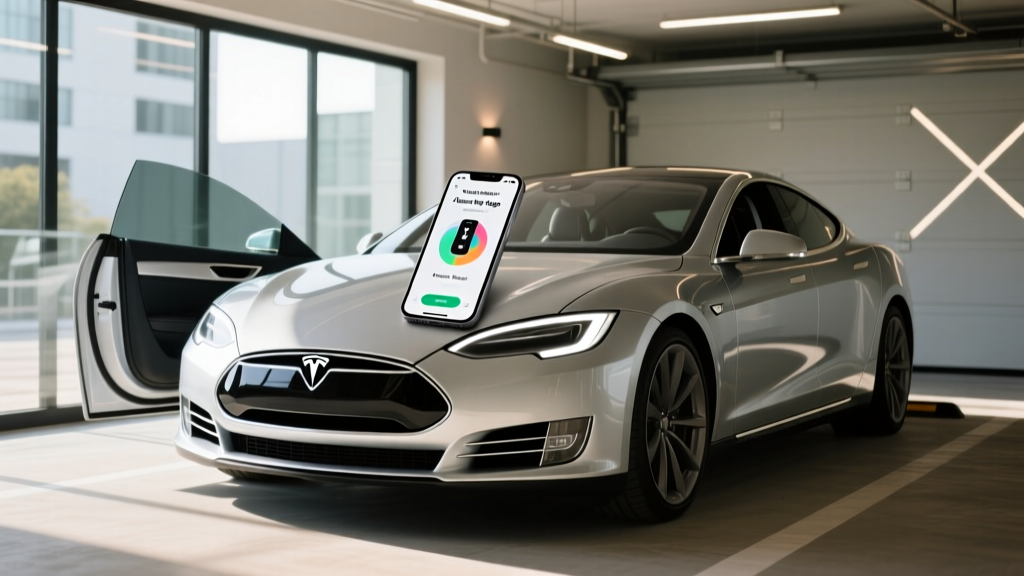
For vehicle access, the Tesla app (version 4.36+ as of early 2026) acts as your phone key. Once paired, your phone communicates with the car via BLE, unlocking doors as you approach and enabling drive mode when you sit inside. No physical key fob required. Tesla requires MFA to be enabled before you can activate Phone Key on new vehicles — a security measure implemented after early reports of relay-attack vulnerabilities.
2026 Tesla Model S: The Flagship Sedan Profiled
The Model S remains Tesla's performance sedan benchmark, now in its 14th year of production but continuously updated. The 2026 model year carries over the refreshed architecture introduced in 2021 (often called the "Palladium" platform internally), with minor software and efficiency tweaks. Here's the complete spec breakdown:
| Specification | Long Range | Plaid |
|---|---|---|
| EPA Range | 402 miles | 396 miles |
| Battery (usable) | ~100 kWh (NMC) | ~100 kWh (NMC) |
| Drivetrain | Dual-Motor AWD | Tri-Motor AWD |
| Horsepower | 670 hp | 1,020 hp |
| 0-60 mph | 3.1 sec | 1.99 sec |
| Max DC Fast Charge | 250 kW | 250 kW |
| 10-80% DC Charge | ~27 min | ~27 min |
| Level 2 (11.5 kW) | ~41 mi/hr | ~41 mi/hr |
| MPGe (combined) | 120 MPGe | 116 MPGe |
| Efficiency | 28 kWh/100mi | 29 kWh/100mi |
| Base MSRP | $74,990 | $89,990 |
Sources: fueleconomy.gov, Tesla Model S Design Studio
Real-World Range: What the EPA Sticker Doesn't Tell You
EPA Estimated: 402 miles
Real-World Highway (70 mph, 72°F): ~340-360 miles
Real-World Cold Weather (32°F, mixed driving): ~280-310 miles
Real-World City/Commuter: ~370-395 miles
The Model S Long Range's 402-mile EPA figure is among the highest of any production EV sold in the US. However, as with all EVs, real-world range depends heavily on speed, temperature, and terrain. The Model S's advantage is its large ~100 kWh NMC (nickel-manganese-cobalt) battery pack, which provides a massive energy buffer. At sustained highway speeds of 70+ mph, aerodynamic drag consumes energy faster than the EPA's mixed-cycle test suggests — expect roughly 340-360 miles on a full charge in moderate temperatures.
Cold weather is the bigger penalty. In sub-freezing conditions, the battery's internal resistance increases and cabin heating draws significant power (the Model S uses a heat pump, which helps, but doesn't eliminate the loss). Plan for 280-310 miles in 20-32°F weather. The heat pump system in the refreshed Model S is notably more efficient than resistive heating, recovering waste heat from the drive units to warm the cabin — a meaningful advantage over older EVs that relied solely on PTC heaters.
For daily commuting under 60 miles round-trip, you'll charge at home every 4-5 days at most. The range anxiety factor for the Model S is essentially zero for typical owners — the concern shifts to road-trip charging logistics, which we address below.
Charging Speed: DC Fast, Level 2, and the Supercharger Advantage
| Level | Power (kW) | Miles Added/Hour | Notes |
|---|---|---|---|
| Level 1 (120V) | ~1.4 kW | ~3-4 mi/hr | Emergency/trickle only |
| Level 2 (240V, 48A) | 11.5 kW | ~41 mi/hr | Home Wall Connector |
| DC Fast (V3 Supercharger) | 250 kW peak | ~200 mi in 15 min | 10-80% in ~27 min |
| DC Fast (V4 Supercharger) | 250 kW (current vehicles) | Same as V3 for Model S | Higher kW for future vehicles |
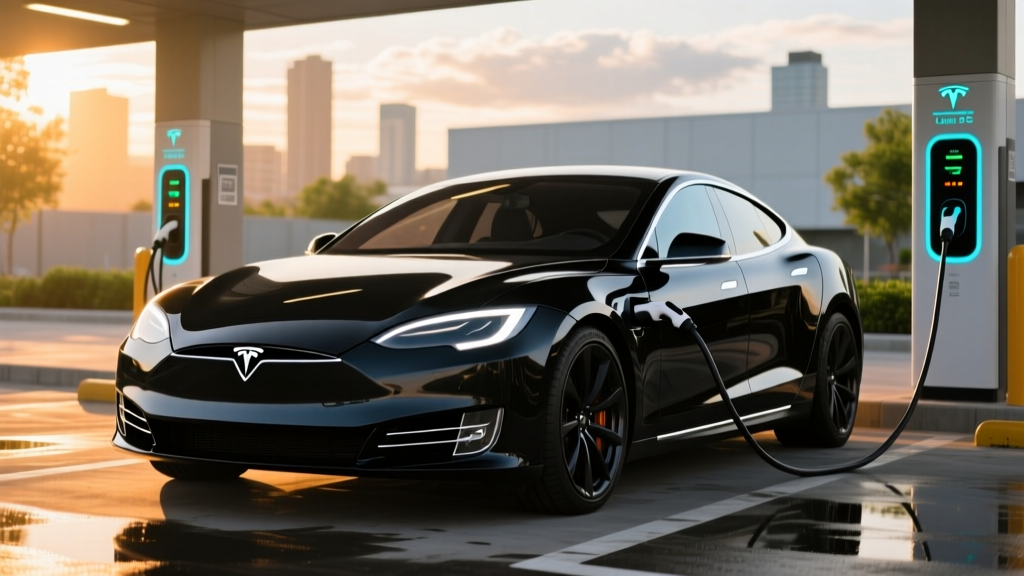
The Model S charges at a peak rate of 250 kW on Tesla's V3 and V4 Superchargers using the NACS (North American Charging Standard) connector — the native Tesla plug now adopted industry-wide. The 10-80% charge takes approximately 27 minutes, which is competitive but not class-leading. The Hyundai Ioniq 5, for example, hits 10-80% in roughly 18 minutes thanks to its 800V architecture, though it has a smaller battery and less total range.
Charging curve reality: The Model S peaks at 250 kW only between approximately 10-30% State of Charge (SoC). Above 50%, the rate tapers to ~150 kW, and above 80%, it drops further to protect battery longevity. This is why Tesla (and all automakers) quote 10-80% times rather than 0-100%. Charging the final 20% can add another 20-25 minutes — plan accordingly on road trips and charge to 80% unless you need the full battery for your next leg.
At home, the Tesla Wall Connector delivers up to 11.5 kW (48 amps on a 60-amp circuit), adding roughly 41 miles of range per hour. A full overnight charge (10 hours) restores approximately 400 miles — essentially a full battery. Installation typically costs $800-$2,000 depending on your electrical panel's capacity and the run length from panel to garage. If your home has a 200-amp panel with available capacity, expect the lower end. A panel upgrade to 200A or 400A can add $2,000-$5,000.
Preconditioning matters: When you navigate to a Supercharger in the Tesla's built-in navigation, the car automatically preconditioning the battery — warming it to the optimal temperature for fast charging. If you arrive at a Supercharger without preconditioning (e.g., using a third-party app or driving to a charger not in the nav system), your initial charge rate may be significantly lower, especially in cold weather. Always use the car's navigation to route to chargers.
Performance, Interior, and Daily Livability
The Model S Long Range hits 0-60 mph in 3.1 seconds with 670 horsepower from its dual-motor all-wheel-drive powertrain. That's supercar territory from a five-passenger sedan. The Plaid model's tri-motor setup (one front, two rear) produces 1,020 hp and a claimed 1.99-second 0-60 — though achieving that figure requires specific conditions: prepped surface, drag mode activated, and battery above 90% SoC. In normal driving, expect roughly 2.3-2.5 seconds, which is still absurdly quick.
Interior space is generous for the segment:
- Front legroom: 42.7 inches
- Rear legroom: 35.4 inches
- Cargo (rear trunk): 26.3 cu ft
- Frunk (front trunk): 5.3 cu ft
- Total cargo: 31.6 cu ft (74.4 cu ft with rear seats folded)
The 17-inch center touchscreen (landscape orientation, 2200x1300 resolution) controls virtually all vehicle functions. The yoke steering wheel is standard on Plaid and optional on Long Range — it provides an unobstructed view of the instrument cluster but is controversial for low-speed maneuvering where hand-over-hand steering is natural. A round steering wheel remains available at no cost.
Driver Assistance: The Model S includes Tesla's Basic Autopilot standard (Traffic-Aware Cruise Control and Autosteer). Full Self-Driving (FSD) Supervised is available as an $8,000 option or $99/month subscription. It is critical to understand that FSD is an SAE Level 2 system — it requires continuous driver supervision and is not autonomous. The driver must keep hands on the wheel (or demonstrate attention via the cabin camera) and remain ready to take over at any moment. Only Level 4 systems like Waymo's driverless service operate without human oversight.
Pricing, Tax Credits, and Total Cost
| Trim | Base MSRP | §30D Credit Eligible? | Est. After Credit |
|---|---|---|---|
| Long Range | $74,990 | No — exceeds $55,000 sedan MSRP cap | $74,990 |
| Plaid | $89,990 | No — exceeds $55,000 sedan MSRP cap | $89,990 |
Important tax credit context: Under IRS §30D rules, the federal EV tax credit is capped at $55,000 MSRP for sedans (the cap is $80,000 for SUVs, trucks, and vans). Because the Model S is classified as a sedan and starts at $74,990, it does not qualify for the $7,500 federal tax credit regardless of your income or the battery's sourcing. This is a significant disadvantage compared to the Tesla Model Y (classified as an SUV, starting under $47,000), which does qualify. Always verify current rules at irs.gov, as vehicle classifications and credit rules can shift.
Additional costs to budget for:
- Destination fee: $1,390
- FSD option: +$8,000 (or $99/mo subscription)
- Paint upgrades: $1,500-$2,500 (white is included)
- Insurance: Expect $2,500-$4,000/year (varies by state, age, driving record — Teslas carry higher premiums due to repair costs)
- Home charger installation: $800-$2,000 (Level 2 Wall Connector)
Warranty and Long-Term Battery Outlook
Tesla covers the Model S with the following warranties:
- Basic Vehicle: 4 years / 50,000 miles
- Battery & Drive Units (Long Range): 8 years / 150,000 miles, whichever comes first, with minimum 70% capacity retention
- Battery & Drive Units (Plaid): 8 years / 150,000 miles, minimum 70% retention
The 150,000-mile battery warranty on the Model S is more generous than the 120,000-mile coverage on the Model 3 and Model Y, reflecting Tesla's positioning of the S as a premium long-distance vehicle. The 70% retention threshold means Tesla will repair or replace the battery if it degrades below 70% of original capacity within the warranty period. Real-world data from Tesla's fleet suggests the NMC packs in the Model S lose approximately 10-12% capacity over the first 150,000 miles, with the steepest degradation occurring in the first 20,000-30,000 miles before leveling off.
Longevity tip: For daily driving, set your charge limit to 80-90% and only charge to 100% when you need the full range for a road trip. NMC chemistry (unlike LFP) benefits from avoiding prolonged storage at 100% SoC. The Tesla app lets you set charge limits remotely — one of many features tied back to the authentication system protecting your account.
Pros and Cons at a Glance
Pros
- Class-leading 402-mile EPA range (Long Range)
- Access to Tesla Supercharger network (17,000+ stalls in North America)
- Tri-motor Plaid offers hypercar acceleration in a sedan
- Over-the-air updates continuously add features
- Heat pump standard — better cold-weather efficiency
- 150,000-mile battery warranty exceeds most competitors
- Strong resale value relative to luxury EV peers
Cons
- Does NOT qualify for $7,500 federal tax credit (sedan MSRP cap)
- 250 kW peak charge rate trails 800V competitors (Ioniq 5, Taycan)
- Yoke steering controversial; round wheel should be standard
- Build quality still inconsistent vs. German luxury rivals
- High insurance premiums ($2,500-$4,000/year)
- Touchscreen-dependent controls (no physical buttons for climate)
- FSD requires subscription or $8K purchase — not included
Who Should Buy the 2026 Model S?
Choose the Model S Long Range if: You want maximum range in a luxury sedan, regularly drive 300+ miles between charges, value Supercharger network access for road trips, and don't need the federal tax credit to justify the purchase.
Choose the Model S Plaid if: You want the fastest production sedan available, track-day capability matters to you, and budget is flexible above $90,000.
Look elsewhere if: You need the $7,500 federal credit to make the math work (consider the Model Y, BMW i5, or Hyundai Ioniq 6), you prefer traditional luxury interior materials (BMW i7, Mercedes EQS), or you need more than 31.6 cu ft of cargo space (consider the Model X or an electric SUV).
Frequently Asked Questions
What is the real-world range of the 2026 Tesla Model S?
The EPA rates the Long Range at 402 miles and the Plaid at 396 miles. In real-world highway driving at 70 mph in moderate temperatures, expect 340-360 miles. In cold weather (below freezing), plan for 280-310 miles. City driving with regenerative braking can approach the EPA figure.
How fast does the Model S charge at home and on the road?
At home on a Level 2 Tesla Wall Connector (11.5 kW / 48A), the Model S gains approximately 41 miles of range per hour, fully charging overnight in about 10 hours. On a V3 or V4 Supercharger, it peaks at 250 kW and charges from 10-80% in roughly 27 minutes. Note that kW (kilowatts) measures charging power/speed, while kWh (kilowatt-hours) measures battery energy capacity — they are not interchangeable.
Does the Model S qualify for the federal EV tax credit?
No. Under current IRS §30D rules, the federal clean vehicle credit has an MSRP cap of $55,000 for sedans. The Model S starts at $74,990, making it ineligible regardless of buyer income or battery sourcing. The Tesla Model Y (classified as an SUV with an $80,000 cap) does qualify. Always check irs.gov for the latest eligibility rules.
How do I set up the Tesla authenticator app for my account?
Go to tesla.com/teslaaccount, navigate to Security → Multi-Factor Authentication, and scan the QR code with any TOTP-compatible authenticator app (Google Authenticator, Authy, 1Password, etc.). This is required before enabling Phone Key. Save your backup recovery codes in a secure location.
Is the Model S worth buying vs. competitors like the BMW i5 or Lucid Air?
The Model S wins on range (402 miles vs. the i5's ~295 miles and the Lucid Air Pure's ~372 miles), Supercharger network access, and proven over-the-air update capability. The BMW i5 offers superior interior materials, a more traditional luxury experience, and physical controls. The Lucid Air offers comparable range and faster charging. If the tax credit matters, none of these sedans qualify — but the Model Y does. Your choice depends on whether you prioritize Tesla's ecosystem and range (Model S), traditional luxury (i5/i7), or efficiency (Lucid Air).
What is the Model S battery warranty?
Tesla covers the Model S battery and drive units for 8 years or 150,000 miles (whichever comes first) with a minimum 70% capacity retention guarantee. If the battery degrades below 70% within that period, Tesla will repair or replace it at no cost.
Can I use a third-party authenticator app with my Tesla account?
Yes. Tesla's MFA system supports any standard TOTP authenticator app — Google Authenticator, Authy, Microsoft Authenticator, 1Password, Bitwarden, and others all work. You are not locked into a Tesla-specific authenticator application.