Why 1 Tesla Road, Austin TX 78725 Matters to EV Owners and Enthusiasts
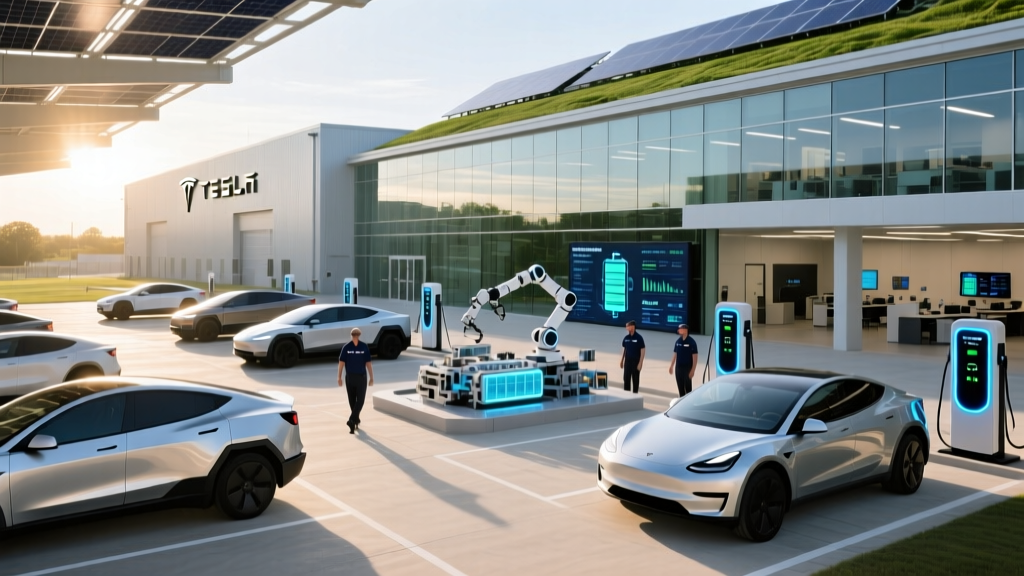
Since Tesla officially relocated its corporate headquarters to 1 Tesla Road, Austin, TX 78725 in late 2021, the sprawling Gigafactory Texas campus has become a pilgrimage site for EV enthusiasts, prospective Tesla buyers, and industry analysts alike. Spanning over 10 million square feet along the Colorado River, this facility is where the Model Y is built for North American buyers and where the Cybertruck entered volume production in 2024.
Whether you're a local Austin resident considering a Tesla purchase, an EV road-tripper planning a detour, or a Tesla shareholder curious about the production hub, this guide covers what you need to know about visiting the area, understanding the vehicles manufactured there, and navigating the local EV charging landscape in 2026.
The Gigafactory Texas Campus: What's Built at 1 Tesla Road
Gigafactory Texas is Tesla's largest manufacturing facility by volume. As of the 2026 model year, the plant produces:
- Model Y (Long Range AWD and Performance variants for North America)
- Cybertruck (AWD, Rear-Wheel Drive, and Cyberbeast trims)
- 4680 battery cells — Tesla's proprietary larger-format cylindrical cells used in select Model Y and Cybertruck builds
The campus also houses Tesla's global engineering teams, including Autopilot/FSD development, vehicle design, and energy products. While the factory floor itself is not open for public tours as of early 2026, Tesla occasionally hosts shareholder events and limited-access preview experiences at the facility.
Owner tip: The Tesla showroom and service center closest to Gigafactory Texas is the Tesla Austin Service Center on Burleson Road, roughly 10 minutes from 1 Tesla Road. That's your best bet for test drives, deliveries, and walk-in questions.
2026 Tesla Lineup: Specs, Range, and Pricing for Models Built in Austin
If you're visiting the Austin area and considering a Tesla purchase, here's a detailed breakdown of the two vehicles currently manufactured at Gigafactory Texas — the Model Y and Cybertruck — with 2026 model-year specifications.
| Specification | Model Y Long Range AWD | Cybertruck AWD |
|---|---|---|
| EPA Range | 320 miles | 340 miles |
| Battery (usable) | ~75 kWh (NMC) | ~123 kWh (NMC/4680 cells) |
| Peak DC Fast Charge | 250 kW | 350 kW (4680 architecture) |
| 10–80% DC Charge Time | ~25 minutes | ~20 minutes |
| Level 2 Home Charging | 11.5 kW (~44 mi/hr) | 11.5 kW (~37 mi/hr) |
| 0–60 mph | 4.8 seconds | 4.1 seconds |
| Horsepower | 384 hp | 600 hp |
| Drivetrain | Dual-Motor AWD | Dual-Motor AWD |
| MPGe (combined) | 117 MPGe | 70 MPGe |
| Efficiency | 28 kWh/100 mi | 48 kWh/100 mi |
| Cargo Volume | 76 cu ft (rear seats folded) | ~67 cu ft (vault bed + frunk) |
| Towing Capacity | 3,500 lbs | 11,000 lbs |
| Base MSRP | $44,990 | $79,990 |
| Battery Warranty | 8 yr / 120,000 mi | 8 yr / 150,000 mi |
Model Y Long Range AWD: EPA-rated at 320 miles. Expect ~270–290 miles on sustained highway driving at 70+ mph. In Austin's extreme summer heat (100°F+), cabin cooling can reduce range by 5–8%. In freezing winter conditions, expect a 15–25% reduction.
Cybertruck AWD: EPA-rated at 340 miles. The truck's angular aerodynamics hit efficiency harder at highway speeds — plan for ~280–300 miles on real interstate runs. Towing near max capacity cuts range roughly in half.
Charging Near 1 Tesla Road: Superchargers, Destination Charging, and Home Setup
Austin's EV charging infrastructure is among the best in Texas, thanks in part to Tesla's local presence. Here's what you'll find near the Gigafactory campus and throughout the Austin metro area.
| Charging Level | Power (kW) | Miles Added Per Hour | Typical Location | Cost |
|---|---|---|---|---|
| Level 1 (120V) | 1.4 kW | ~4–5 mi/hr | Any standard outlet | ~$0.12/kWh (residential) |
| Level 2 (240V) | 11.5 kW | ~37–44 mi/hr | Home Wall Connector, hotels | ~$0.12–0.18/kWh |
| Tesla Supercharger V3 | 250 kW peak | ~1,000+ mi/hr (peak) | Circuit of the Americas, Barton Creek | ~$0.30–0.40/kWh |
| Tesla Supercharger V4 | 350 kW peak | ~1,200+ mi/hr (peak) | Selected Austin-area stations (2025+) | ~$0.32–0.42/kWh |
The nearest high-capacity Supercharger stations to 1 Tesla Road are located at the Circuit of the Americas (roughly 15 minutes south) and several downtown Austin locations. Tesla has also opened its North American Charging Standard (NACS) network to non-Tesla EVs via the Tesla app, meaning the Supercharger ecosystem is now a universal resource.
Home Charging Installation in Austin
If you're a local buyer taking delivery at the Austin service center, budget for a Level 2 home installation. Here's a typical cost breakdown for the Austin metro area:
| Component | Low Estimate | High Estimate |
|---|---|---|
| Tesla Wall Connector (hardware) | $420 | $475 |
| Electrician labor (240V/48A circuit) | $600 | $1,800 |
| Electrical permit (City of Austin) | $75 | $150 |
| Panel upgrade (if needed: 100A → 200A) | $1,500 | $3,500 |
| Total (no panel upgrade) | $1,095 | $2,425 |
| Total (with panel upgrade) | $2,595 | $5,925 |
Always consult a licensed electrician for your final quote. Austin Energy offers a rebate program for EV charger installations — check their site for current availability and amounts, as these change annually.
Federal Tax Credit Eligibility: §30D Rules for 2026 Tesla Purchases
Under the IRS §30D Clean Vehicle Credit, new Tesla buyers may qualify for up to $7,500 — but eligibility depends on several requirements that change year to year. As of the 2026 tax year, here's what you need to know:
- MSRP Cap: Vans, SUVs, and pickups must be under $80,000 MSRP. Sedans and other vehicles must be under $55,000. The Model Y qualifies as an SUV (under $80K cap). The Cybertruck AWD at $79,990 fits just under the pickup cap.
- Buyer Income Cap: Modified Adjusted Gross Income (MAGI) must not exceed $300,000 (joint filers), $225,000 (head of household), or $150,000 (individual).
- Battery Component Sourcing: A percentage of battery components must be manufactured or assembled in North America. Tesla's Austin-built vehicles with 4680 cells generally meet this requirement, but the exact percentage threshold increases annually.
- Critical Minerals: A percentage of critical minerals must be sourced from the U.S. or a free-trade-agreement partner. This threshold also tightens each year.
- Point-of-Sale Transfer: Since 2024, buyers can transfer the credit to the dealer at purchase, reducing the vehicle's price upfront rather than waiting for a tax refund.
| Model / Trim | Base MSRP | Max §30D Credit | Effective Price |
|---|---|---|---|
| Model Y Long Range AWD | $44,990 | $7,500 | ~$37,490 |
| Model Y Performance | $48,990 | $7,500 | ~$41,490 |
| Cybertruck AWD | $79,990 | $7,500 | ~$72,490 |
| Cybertruck Cyberbeast | $99,990 | $0 (over MSRP cap) | $99,990 |
Note: The Cybertruck Cyberbeast exceeds the $80,000 MSRP cap and does not qualify for §30D. Always verify your specific eligibility with a tax professional and the latest fueleconomy.gov listings before purchasing.
Driving and Ownership Experience: Standout Tech and Notable Drawbacks
Standout Tech
- 15.4" Touchscreen (Model Y) / 18.5" Touchscreen (Cybertruck): All vehicle controls, navigation, and entertainment run through a single central display. The interface is responsive, and over-the-air (OTA) updates continuously add features.
- Autopilot (standard) and FSD Supervised (optional): Tesla's Autopilot provides adaptive cruise control and lane-keeping. The optional Full Self-Driving (Supervised) package adds automatic lane changes, traffic light recognition, and city-street navigation. This is SAE Level 2 — the driver must remain fully engaged at all times.
- 4680 Structural Battery Pack: Select Model Y and all Cybertruck builds use Tesla's 4680 cells as a structural component, reducing weight and increasing torsional rigidity.
- Bioweapon Defense Mode: A HEPA filtration system that pressurizes the cabin and filters outside air — genuinely useful during Austin's allergy season and occasional wildfire smoke events.
Both Autopilot and FSD (Supervised) are SAE Level 2 driver-assistance systems. They do not make the vehicle autonomous. You must keep your hands on the wheel (or apply steering torque as prompted), monitor the road, and be prepared to take over instantly. Only Level 4 services like Waymo operate without a human driver in defined geofenced areas.
Notable Drawbacks
- Minimalist interior: No physical buttons, no instrument cluster, no traditional stalks on the refreshed Model Y (turn signals are on the steering wheel). This is polarizing — some owners adapt quickly, others find it frustrating.
- Panel gaps and build variability: While Austin-built vehicles have improved significantly over early Fremont production, minor panel-gap inconsistencies still surface on some deliveries. Inspect your vehicle carefully at delivery.
- Service wait times: Austin's rapid Tesla population growth has occasionally outpaced service center capacity. Mobile service handles many issues, but bodywork or major repairs may involve multi-week waits.
- Cybertruck size: At over 231 inches long and 80 inches wide (excluding mirrors), the Cybertruck is challenging in older Austin parking garages and tight residential streets.
Pros and Cons at a Glance
Pros
- Access to the Supercharger network — the most reliable DC fast-charging ecosystem in the U.S.
- Class-leading efficiency (Model Y at 28 kWh/100 mi)
- Over-the-air updates add real features over time
- Strong resale value relative to most EV competitors
- Locally built in Austin — supports regional economy and reduces shipping-related delivery delays
- Excellent thermal management in extreme Texas heat
Cons
- Stalkless steering wheel on refreshed Model Y requires adaptation
- FSD Supervised is expensive ($8,000 or $99/mo) and still requires full driver attention
- Insurance premiums for Teslas run 15–30% higher than comparable non-Tesla EVs in Texas
- Cybertruck Cyberbeast does not qualify for §30D tax credit
- Limited physical controls can be distracting while driving
- Service center capacity in Austin still catching up to local fleet growth
Who Should Buy a Tesla Built at 1 Tesla Road, Austin?
Choose the Model Y Long Range AWD if:
- You're an Austin commuter driving 30–60 miles daily and want to charge at home 95% of the time
- You need a compact SUV with family-friendly cargo space (76 cu ft with seats folded)
- You want the lowest per-mile energy cost in Tesla's lineup
- You qualify for the full $7,500 §30D credit, bringing the effective price to ~$37,490
Choose the Cybertruck AWD if:
- You need genuine truck capability: 11,000-lb towing, a 6-foot bed vault, and off-road ground clearance
- You want the 4680 battery architecture with faster peak charging (350 kW)
- You're willing to accept the size and efficiency trade-offs of a full-size electric pickup
- You understand that the AWD trim at $79,990 just qualifies for §30D, but higher trims do not
Visiting 1 Tesla Road: Practical Tips for EV Travelers
If you're planning a visit to the Gigafactory Texas area, here are practical logistics:
- Address: 1 Tesla Road, Austin, TX 78725 (near the intersection of FM 969 and the Colorado River, east of downtown Austin)
- Public access: The factory itself is not open for public tours. Exterior viewing of the building is possible from public roads. Tesla occasionally hosts community events — follow Tesla's official channels for announcements.
- Nearest Supercharger: Multiple Supercharger stations are within 15–20 minutes of the campus. Use the Tesla app or PlugShare to check real-time stall availability.
- Test drives: Schedule through the Austin-area Tesla store (Domain NORTHSIDE or South Austin) — not at the factory itself.
- Parking: If driving an EV to the area, public Level 2 chargers are available at several nearby retail centers and the Circuit of the Americas.
Frequently Asked Questions
What is the real-world range of the 2026 Model Y built in Austin?
The EPA rates the Model Y Long Range AWD at 320 miles. In real-world Austin-area driving — a mix of I-35 highway at 70–80 mph and stop-and-go city traffic — most owners report 270–300 miles on a full charge. During July and August, when ambient temperatures regularly exceed 100°F, the heat pump and cabin cooling draw additional energy, reducing range by roughly 5–8%. In rare freezing conditions (Austin averages a handful of sub-32°F mornings per year), expect a 15–25% reduction.
How fast does the Cybertruck charge at Austin Superchargers?
The Cybertruck with 4680 cells can peak at 350 kW on V4 Superchargers, adding up to ~200 miles in about 10 minutes under ideal conditions. The 10–80% charge takes approximately 20 minutes. However, charge speed tapers significantly above 80% SoC — going from 80% to 100% can take an additional 15–20 minutes. Austin currently has several V3 stations (250 kW max) where the Cybertruck will charge at a reduced peak of ~250 kW, making 10–80% closer to 25–28 minutes.
Does the Model Y qualify for the $7,500 federal EV tax credit in 2026?
The Model Y Long Range AWD at $44,990 MSRP qualifies as an SUV under the $80,000 MSRP cap. If your MAGI is within the §30D income limits ($150K individual / $300K joint) and the vehicle's battery sourcing meets the current-year critical mineral and component thresholds, you can claim up to $7,500 — either on your tax return or as a point-of-sale transfer. Check the fueleconomy.gov qualifying vehicle list and consult a tax professional for your specific situation.
Is it worth buying a Tesla vs. competitors like the Hyundai Ioniq 5 or Ford F-150 Lightning?
For the Model Y segment, the Hyundai Ioniq 5 offers comparable range (310+ miles EPA), 800V architecture for ultra-fast charging, and more physical controls — but lacks access to the native Supercharger network (though NACS adapters help). The Model Y wins on efficiency (28 vs. ~32 kWh/100 mi), software maturity, and Supercharger reliability. For the Cybertruck segment, the Ford F-150 Lightning offers a more conventional truck experience with a larger frunk and CCS charging, but trails in range and DC charge speed. Your decision should hinge on whether Supercharger access and Tesla's software ecosystem outweigh the more traditional interfaces competitors offer.
Can I tour the Tesla Gigafactory at 1 Tesla Road?
As of 2026, Tesla does not offer regular public tours of Gigafactory Texas. The facility is an active manufacturing plant with safety and IP restrictions. Tesla has hosted limited events for shareholders and media, and local STEM education groups have occasionally received access. For the general public, the best way to experience Tesla in Austin is through a test drive at a local Tesla store and by visiting the exterior of the campus.