The electric vehicle transition is only as strong as the workforce that builds, services, and maintains it. While most coverage of Tesla focuses on quarterly deliveries or Full Self-Driving updates, a quieter but arguably more consequential initiative is the Tesla Apprenticeship Program — a structured pipeline that turns aspiring mechanics into high-voltage-certified EV technicians. In 2026, with over 30 million EVs on U.S. roads and a documented shortage of qualified service personnel, this program has become a critical piece of the industry's infrastructure.
This article examines the Tesla Apprenticeship Program from an owner's and industry perspective: what apprentices actually learn on vehicles like the refreshed Model Y and Model 3, which specific EV systems they master (including LFP battery packs, NACS charging hardware, and heat-pump thermal management), and why the program matters for anyone who owns or plans to own a Tesla — or any modern EV.
Why the EV Industry Needs Trained Technicians Now
Unlike internal-combustion vehicles, EVs introduce high-voltage systems (typically 400V, with some architectures moving to 800V), lithium-ion battery packs ranging from 50 to 100+ kWh, and power electronics that require specialized safety training. A technician who can swap brake pads on a gas sedan is not automatically qualified to diagnose a contactor fault in a Model Y's structural battery pack.
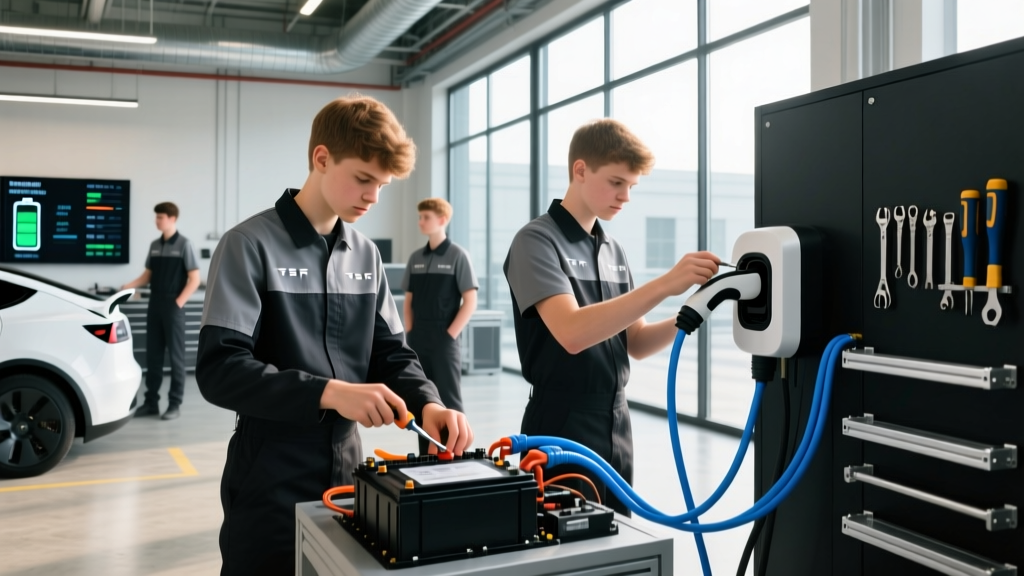
The Bureau of Labor Statistics projects that demand for automotive service technicians will remain strong through 2032, but the subset qualified for high-voltage EV work remains a fraction of the total workforce. Tesla's apprenticeship program directly addresses this gap by combining classroom instruction with hands-on work on actual customer vehicles under certified mentor supervision.
Program Structure: What Tesla Apprentices Actually Learn
The 2026 Tesla Apprenticeship Program runs for approximately 12 to 18 months depending on the track (Service Technician, Manufacturing Technician, or Energy/Product). Apprentices split time between structured coursework and paid, on-the-job training at Tesla Service Centers, Gigafactories, or Energy installation sites.
Core Curriculum Areas
The curriculum is tightly aligned with the actual vehicles in Tesla's fleet. Here is what apprentices must master, mapped to the real specifications they'll encounter:
| System Area | Specific Skills & Knowledge | Vehicle Reference (2026 Model Year) |
|---|---|---|
| High-Voltage Battery | LFP vs. NMC chemistry identification, state-of-health diagnostics, module-level and pack-level service, thermal runaway protocol | Model 3 RWD: 60 kWh LFP; Model Y Long Range: ~75 kWh NMC |
| Charging Systems | NACS connector service, onboard charger diagnostics (11.5 kW AC), DC fast-charge contactor and cooling-loop service | Model Y Long Range: peak 250 kW DC, 10-80% in ~25 min |
| Drive Unit & Powertrain | Permanent-magnet and induction motor service, inverter diagnostics, single-motor RWD and dual-motor AWD configurations | Model 3 Performance: dual-motor AWD, ~510 hp, 0-60 in 2.9 sec |
| Thermal Management | Heat pump (Octovalve) service, battery preconditioning circuit, cabin HVAC diagnostics | All 2026 Model 3/Y variants (heat pump standard) |
| ADAS & Electronics | Autopilot hardware (HW4) calibration, camera and radar alignment, 12V lithium auxiliary battery service | All current-production vehicles (SAE Level 2 driver assist) |
| Safety & PPE | High-voltage lockout/tagout, insulated tool usage, arc-flash awareness, emergency disconnect procedures | All high-voltage platforms |
Notice that the program is not generic "auto repair." Every module ties to the exact battery chemistries, charge rates, and drivetrain configurations that Tesla owners drive daily. An apprentice graduating from this program can, for example, explain to a Model 3 RWD owner why their 60 kWh LFP pack can be safely charged to 100% daily — while advising a Long Range owner with an NMC pack to set their daily limit to 80% for longevity.
Hands-On Training: The Vehicles Apprentices Work On
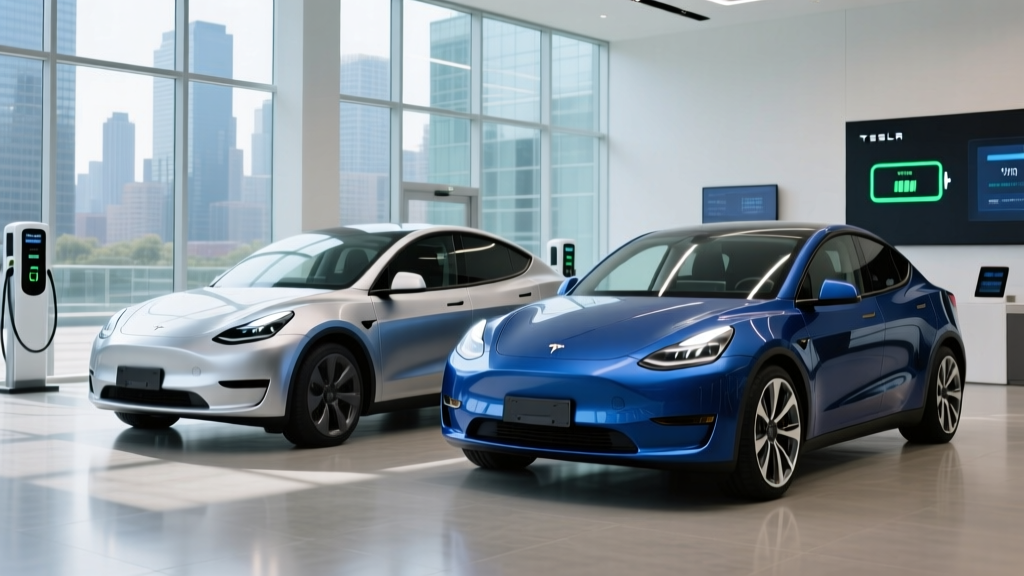
To understand the depth of training, consider the specifications of the two most common vehicles in Tesla's 2026 service queue — the Model 3 and Model Y — which apprentices must learn inside and out:
| Spec | Model 3 RWD | Model 3 Long Range AWD | Model Y Long Range AWD | Model Y Performance |
|---|---|---|---|---|
| EPA Range | 341 mi | 363 mi | 320 mi | 296 mi |
| Battery (usable, est.) | ~60 kWh (LFP) | ~75 kWh (NMC) | ~75 kWh (NMC) | ~75 kWh (NMC) |
| Peak DC Charge Rate | 170 kW | 250 kW | 250 kW | 250 kW |
| 10-80% DC Time | ~30 min | ~25 min | ~25 min | ~25 min |
| Level 2 (Home) Rate | 11.5 kW (~44 mi/hr) | 11.5 kW (~44 mi/hr) | 11.5 kW (~44 mi/hr) | 11.5 kW (~44 mi/hr) |
| 0-60 mph | 5.8 sec | 4.2 sec | 4.8 sec | 3.5 sec |
| Horsepower | ~271 hp | ~384 hp | ~384 hp | ~510 hp |
| Drivetrain | RWD (single motor) | AWD (dual motor) | AWD (dual motor) | AWD (dual motor) |
| Efficiency (MPGe) | 132 MPGe combined | 125 MPGe combined | 117 MPGe combined | 111 MPGe combined |
| Battery Warranty | 8 yr / 100,000 mi | 8 yr / 120,000 mi | 8 yr / 120,000 mi | 8 yr / 120,000 mi |
| Base MSRP (2026) | ~$38,990 | ~$44,990 | ~$47,990 | ~$52,990 |
An apprentice must be able to diagnose why a Model 3 RWD's LFP pack might show a different state-of-charge curve than a Long Range's NMC pack, or why a Model Y Performance's DC fast-charging session tapers above 80% SoC to protect cell longevity. These are not theoretical exercises — they are daily service-bay realities.
Eligibility, Compensation, and Career Outcomes
The Tesla Apprenticeship Program is open to applicants with a high school diploma or equivalent; prior automotive experience is helpful but not required. Tesla prioritizes candidates with demonstrated mechanical aptitude, electrical coursework, or military technical training. The program is a paid position — apprentices earn an hourly wage that increases as they progress through competency milestones.
What Graduates Earn and Where They Work
Upon completion, apprentices typically transition into full-time Tesla Service Technician or Manufacturing Technician roles. As of early 2026, Tesla service technicians in the U.S. earn in the range of $28-$42 per hour depending on location, certification level, and experience, according to aggregated job-posting data. In high-cost metro areas, total compensation (including benefits and stock) can exceed $80,000 annually for senior technicians.
Graduates are also well-positioned for the broader EV service economy. The high-voltage safety certification, battery diagnostics skills, and power-electronics knowledge they acquire are transferable to any manufacturer's EV lineup — from Ford's e-CBD platforms to Hyundai's E-GMP architecture to Rivian's skateboard chassis.
Why Tesla Owners Should Care About This Program
If you own a Tesla or are considering one, the apprenticeship program directly affects your ownership experience in measurable ways:
- Shorter service wait times: Tesla's rapid fleet growth has outpaced service-center capacity in many regions. More graduating apprentices means more certified technicians to handle warranty repairs, battery diagnostics, and recall campaigns.
- Higher first-visit fix rates: Apprentices trained on the exact battery chemistry and charging hardware in your vehicle are less likely to misdiagnose issues — a common complaint in the early days of EV adoption when generalist mechanics attempted high-voltage work.
- Better customer education: A well-trained technician can explain why your LFP Model 3 benefits from periodic 100% calibration charges, or why preconditioning your battery before a DC fast-charge session shaves minutes off your 10-80% time.
- Safety assurance: High-voltage systems are not dangerous when handled correctly, but they are unforgiving of improper procedure. Certified technicians reduce risk for themselves, for you, and for first responders in collision scenarios.
Tesla Apprenticeship vs. Competing EV Training Programs
Tesla is not the only automaker investing in EV workforce development. Here is how the program compares to other pathways:
| Program | Duration | Paid? | Focus | OEM Certification |
|---|---|---|---|---|
| Tesla Apprenticeship | 12-18 months | Yes | Tesla-specific HV systems, service & manufacturing | Tesla-certified |
| Ford EV Technician Training (via dealerships) | 6-12 months | Varies | Ford e-CBD, F-150 Lightning, Mustang Mach-E | Ford-certified |
| GM EV Specialist Program | 6-9 months | Varies | Ultium platform, Silverado EV, Equinox EV | GM-certified |
| Community College EV Certificates (e.g., ASE L3 prep) | 6-12 months | No (financial aid avail.) | Multi-brand HV safety, battery fundamentals | ASE L3 (industry-wide) |
| START Program (Tesla — partner colleges) | ~16 weeks | No (tuition-based) | Tesla pre-employment training at select community colleges | Tesla-recognized |
The Tesla Apprenticeship Program's primary advantage is that it is a paid, immersive program with direct placement into Tesla's service or manufacturing network. The START program (Student Training and Readiness for Tesla) is a complementary feeder — a shorter, tuition-based pre-employment course offered at partner community colleges that can serve as a stepping stone into the full apprenticeship.
How to Apply and What to Expect
Applications for the Tesla Apprenticeship Program are submitted through Tesla's careers portal. The selection process typically includes:
- Online application: Resume, basic eligibility questions, and location preferences.
- Technical assessment: A mechanical and electrical reasoning test evaluating spatial awareness, circuit fundamentals, and tool identification.
- Panel interview: Behavioral and situational questions focused on problem-solving, safety mindset, and teamwork.
- Hands-on evaluation (varies by location): Some sites include a practical component — wiring a simple circuit, identifying components, or performing a basic mechanical task.
Acceptance is competitive. Tesla reports receiving thousands of applications per cycle, with acceptance rates that vary significantly by region and program track. Candidates with prior electrical training, military technical experience, or completion of the START program tend to have stronger applications.
Frequently Asked Questions
Is the Tesla Apprenticeship Program free for participants?
Yes. Unlike tuition-based trade programs, the Tesla Apprenticeship Program is a paid position. Apprentices earn an hourly wage from day one, with pay increases tied to competency milestones. There is no tuition obligation to the apprentice.
Do I need prior automotive experience to apply?
No. A high school diploma or equivalent is the minimum requirement. However, candidates with electrical coursework, military technical training, or hands-on mechanical hobbies tend to perform better in the selection process. Tesla values aptitude and safety awareness over prior EV-specific knowledge.
Will I be certified to work on non-Tesla EVs after graduating?
The program is Tesla-specific, but the underlying skills — high-voltage safety, lithium-ion battery diagnostics, power-electronics troubleshooting, and thermal-management service — are highly transferable. Many graduates pursue an ASE L3 Light Duty Hybrid/Electric Vehicle certification to broaden their credentials across manufacturers.
Where are apprenticeship positions located?
Positions are available at Tesla Service Centers, Gigafactories, and Energy installation sites across the United States. Major hubs include Fremont (CA), Austin (TX), Sparks (NV), and Buffalo (NY), but service-center apprenticeships are distributed nationally based on regional demand.
What is the difference between the Apprenticeship and the START program?
The START program is a shorter (~16 weeks), tuition-based pre-employment course offered at select community colleges in partnership with Tesla. The Apprenticeship Program is longer (12-18 months), paid, and results in direct placement into a full-time Tesla role. START can serve as a pipeline into the apprenticeship but is not a prerequisite.
Does Tesla help with relocation for apprentices?
Relocation assistance varies by position, location, and program cycle. Some openings include relocation stipends; others are listed as local-only. Check the specific job posting on Tesla's careers site for details.
Program Strengths
- Paid from day one — no tuition debt
- Direct placement into Tesla service or manufacturing roles
- Hands-on training on current-production vehicles (Model 3/Y, Cybertruck)
- High-voltage safety certification recognized industry-wide
- Skills transferable to any EV manufacturer's service network
- Structured mentorship with certified senior technicians
Program Limitations
- Competitive acceptance — not all applicants are selected
- Tesla-specific focus; additional ASE L3 certification needed for multi-brand work
- 12-18 month commitment before full technician placement
- Availability varies by region — not all metro areas have open slots
- Physically demanding work; requires comfort with high-voltage environments
- Pay during apprenticeship is below full-technician rate
The Bottom Line for EV Owners and Aspiring Technicians
The Tesla Apprenticeship Program is not a consumer product — you cannot test-drive it or compare it on a spec sheet. But it is one of the most consequential programs shaping the EV ownership experience in 2026 and beyond. Every time a Tesla owner pulls into a service center for a battery health check, a charging-system diagnostic, or an Autopilot camera recalibration, the quality of that visit depends on the training of the technician behind the bay door.
For aspiring EV technicians, the program offers a debt-free pathway into one of the fastest-growing technical careers in the automotive sector. For current and prospective Tesla owners, the program's expansion means shorter wait times, more accurate diagnostics, and a service network that actually understands the 60 kWh LFP pack in your Model 3 RWD — not just the concept of "an electric car."
If you are considering applying, review current openings at tesla.com/careers and consider the START program as a preparatory step. If you are an owner, the existence of this program is one more data point in Tesla's long-term service-infrastructure investment — even if the service experience still has room to grow.