The Tesla App Went Down. Your Car Didn't.
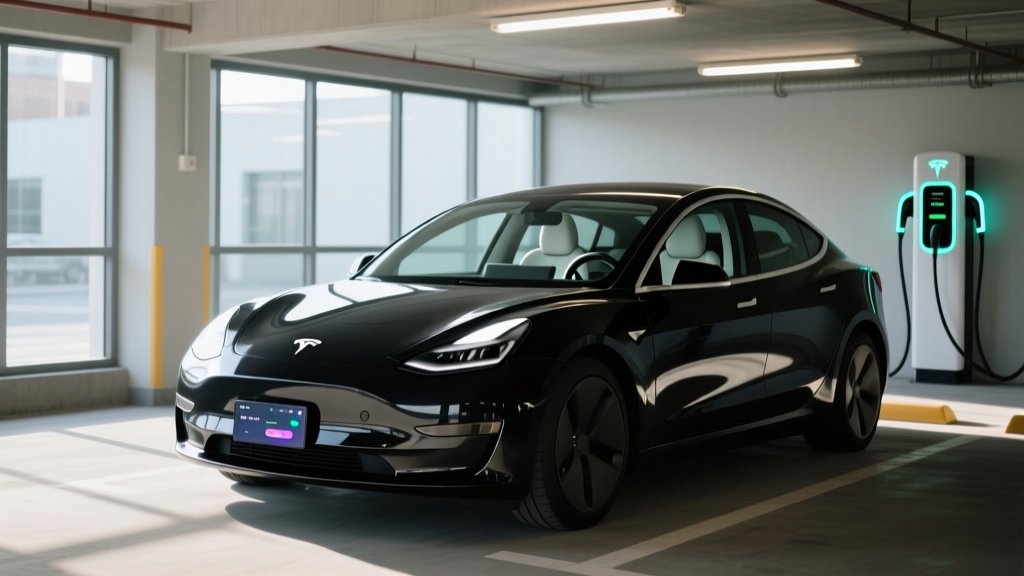
Search volume for "Tesla app down" spikes every few months when Tesla's cloud services experience an outage. Owners suddenly can't remote-start climate control, check charge status, or summon their car in a parking lot. It's a jarring reminder that modern EVs are rolling computers tethered to corporate servers. But here's the practical reality: when the app goes dark, the 2026 Tesla Model 3 still drives, still charges, and still gets you where you need to go. The question is whether you're comfortable with that dependency — and whether the car underneath the software layer justifies the trade-off.
This review examines the 2026 Tesla Model 3 through the lens of real ownership: what happens during server outages, what the hardware delivers independent of connectivity, and whether the numbers — range, charging speed, price, efficiency — still make it a segment leader.
2026 Model 3 Specifications at a Glance
| Attribute | Specification |
|---|---|
| EPA Range | 341 miles |
| Battery Capacity | 79 kWh usable (NMC chemistry) |
| Peak DC Fast Charge | 250 kW |
| 10–80% DC Charge Time | ~27 minutes |
| Level 2 Home Charging | 11.5 kW (~44 mi/hr) |
| 0–60 mph | 4.2 seconds |
| Horsepower | 346 hp (dual motor) |
| Drivetrain | AWD (dual motor) |
| Efficiency | 132 MPGe / 25 kWh/100 mi |
| Cargo Volume | 23 cu ft (rear trunk + frunk) |
| Rear Legroom | 35.3 inches |
| Battery Warranty | 8 years / 120,000 miles |
| Base MSRP | $47,740 (Long Range AWD) |
Real-World Range: Beyond the EPA Sticker
Tesla's efficiency remains a class benchmark. The 25 kWh/100 mi figure means the Model 3 extracts more miles per kilowatt-hour than nearly every competitor in the premium sedan segment. The heat pump, standard since the Highland refresh, reduces winter energy consumption for cabin heating compared to resistive systems in older EVs.
For context, a 300-mile round-trip road trip requires a single DC fast-charge stop in summer conditions. In winter, plan for two stops or a conservative buffer. According to fueleconomy.gov, the Model 3 Long Range AWD achieves 132 MPGe combined — among the highest of any all-wheel-drive EV on the market.
Charging Speed: DC Fast and Home Level 2
| Charging Level | Power | Miles Added per Hour | Notes |
|---|---|---|---|
| Level 1 (120V) | 1.4 kW | ~5 mi/hr | Emergency/trickle only |
| Level 2 (240V, 48A) | 11.5 kW | ~44 mi/hr | Full charge in ~7 hours |
| DC Fast Charge | 250 kW peak | ~1,000 mi/hr at peak | 10–80% in ~27 min |
The Model 3 Long Range peaks at 250 kW on V3 Superchargers and compatible CCS/NACS DC fast chargers. The charge curve is aggressive: you'll sustain above 200 kW from roughly 10% to 35% state of charge, then taper progressively. By 60% SoC, power drops to around 120 kW, and above 80%, it falls below 50 kW to protect the NMC cells. This is why Tesla (and every EV maker) quotes 10–80% times rather than 0–100%.
At home on a Level 2 Wall Connector, the 11.5 kW onboard charger adds about 44 miles of range per hour. A full overnight charge from 20% to 90% takes roughly 5 hours — well within a typical sleep window. The key requirement is a 60-amp dedicated circuit installed by a licensed electrician; expect $500–$1,500 for installation depending on panel proximity and local permitting.
During a Tesla app down event, Supercharger authentication can be affected if the vehicle cannot reach Tesla's servers. However, the car caches recent authentication tokens, and most Supercharger stalls will initiate a session via the vehicle's built-in cellular connection independently of the phone app. Plug-in, and the car handles the handshake directly with the charger in most cases.
Performance and Driving Dynamics
The 2026 Model 3 Long Range AWD delivers 346 horsepower from its dual-motor setup, launching to 60 mph in 4.2 seconds. That's quick enough to merge onto any freeway with authority, though the Performance trim (3.1 seconds, 510 hp) exists for those who want sports-car acceleration. The RWD base model (271 hp, 5.8 seconds) trades speed for a lower price and slightly higher efficiency.
The Highland refresh brought meaningful improvements to ride quality: new frequency-selective dampers, acoustic glass, and revised suspension bushings reduce road noise and harshness compared to pre-2024 models. The steering remains quick and direct, though some drivers note it feels artificially weighted at low speeds. Regenerative braking is strong enough for one-pedal driving in most conditions, though Tesla removed the user-adjustable regen setting — it's now fixed at a firm calibration.
When the Tesla App Goes Down: What You Lose and Keep
Here's a practical breakdown of functionality during a server outage:
- Still works: Driving, navigation (cached maps), Bluetooth phone key (proximity unlock), Supercharger authentication (vehicle-side cellular), media streaming (cached/Bluetooth), all safety systems, regenerative braking, climate control via touchscreen.
- Disabled: Remote climate preconditioning from your phone, remote lock/unlock from outside Bluetooth range, vehicle location tracking, Sentry Mode clip downloads to phone, software update initiation, Summon and Smart Summon (require server handshake), trip planning with live Supercharger availability.
The Bluetooth phone key is the critical backup. As long as your phone has battery, you can unlock and drive the car without any server connection. Keep a physical key card in your wallet as a secondary fallback — it uses NFC and requires zero connectivity.
Tesla's server outages are typically brief (1–4 hours) and infrequent (2–3 times per year based on historical patterns). But if you live in an area with poor cellular coverage, the app experience can feel unreliable even when servers are up, since the car-to-cloud link depends on LTE/5G signal strength.
Pricing, Tax Credits, and Ownership Cost
| Trim | MSRP | Est. Price After §30D Credit |
|---|---|---|
| RWD (Standard Range) | $38,990 | $31,490* |
| Long Range AWD | $47,740 | $40,240* |
| Performance AWD | $54,990 | $47,490* |
*Federal tax credit eligibility under IRS §30D is not guaranteed for every buyer. The 2026 rules require:
- Buyer income caps: Modified AGI below $150,000 (single), $225,000 (head of household), or $300,000 (joint).
- MSRP cap: Sedans must be below $55,000 MSRP (all Model 3 trims qualify).
- Battery sourcing: Critical minerals and battery components must meet phased-in domestic/free-trade sourcing thresholds. Tesla's supply chain has largely adapted, but verify current eligibility on IRS.gov before purchase.
- Point-of-sale transfer: You can apply the credit as an immediate price reduction at delivery rather than waiting for tax filing.
Consult a tax professional for your specific situation. State incentives (California, Colorado, Massachusetts, etc.) may stack on top — check your local energy office for current programs.
Interior, Cargo, and Daily Livability
The Model 3's minimalist interior remains polarizing. Everything routes through the 15.4-inch center touchscreen: climate controls, glovebox release, mirror adjustment, and speedometer. There is no instrument cluster, no head-up display, and no physical buttons beyond steering wheel stalks and a few capacitive touches. For some, it's clean and futuristic; for others, it's a distracting single point of failure.
Cargo space totals 23 cubic feet (19.4 cu ft rear trunk + 3.1 cu ft frunk). That's competitive with compact luxury sedans but less than hatchback rivals like the Hyundai Ioniq 6 or the Model Y's 30 cu ft. Rear legroom at 35.3 inches is adequate for adults under 6 feet but tight for taller passengers on long trips. The panoramic glass roof creates an airy feel but adds solar heat gain in summer — an aftermarket tint or ceramic coating is a common owner upgrade.
Standout tech includes Tesla's Autopilot (SAE Level 2 — hands on wheel, eyes on road required), a 17-speaker audio system, HEPA air filtration, and over-the-air software updates that periodically add features. Full Self-Driving (Supervised) remains a $8,000 option or $99/month subscription, but it is not autonomous driving — it requires constant driver supervision and is classified as Level 2.
Warranty and Long-Term Battery Outlook
Tesla covers the Model 3's battery and drive unit for 8 years or 120,000 miles (Long Range/Performance) with a minimum 70% capacity retention threshold. The basic vehicle warranty is 4 years / 50,000 miles. These terms are standard for the segment — Hyundai offers 10 years / 100,000 miles on the battery, which is more generous.
NMC battery degradation data from Tesla's fleet suggests approximately 10–12% capacity loss over the first 100,000 miles, with the curve flattening significantly afterward. Many high-mileage Model 3 owners report 85–90% state of health at 150,000 miles. To maximize longevity, Tesla recommends daily charging to 80% for NMC batteries and reserving 100% charges for road trips.
Pros, Cons, and the Competition
- Class-leading efficiency (25 kWh/100 mi)
- Supercharger network access (17,000+ stalls in North America)
- Strong over-the-air update cadence
- Quick DC charging (250 kW peak, 27 min 10–80%)
- Bluetooth key works without server connection
- Low total cost of ownership vs. gas sedans
- App/server dependency for remote features
- No physical buttons — all controls via touchscreen
- Rear seat legroom tight for tall adults
- FSD subscription cost ($99/mo) for Level 2 assist
- Firm regenerative braking with no user adjustment
- Insurance premiums 15–30% above segment average
Key competitors include the Hyundai Ioniq 6 (361-mile range, $42,000, CCS/NACS adapter required for Tesla Superchargers), BMW i4 eDrive40 (307-mile range, $52,000, more traditional interior), and the Polestar 2 (276-mile range, $49,000, Google Automotive OS). The Model 3 wins on efficiency and charging infrastructure; the Ioniq 6 wins on range per dollar; the BMW i4 wins on interior quality and physical controls.
Who Should Buy the 2026 Tesla Model 3?
The Model 3 is best suited for: tech-comfortable commuters who can charge at home, solo drivers or couples without frequent rear-seat passengers, road-trippers who value Supercharger network density, and buyers who prioritize efficiency and software over traditional luxury materials.
Look elsewhere if: you need maximum rear-seat space (consider Model Y or Ioniq 5), you want physical buttons and a traditional instrument cluster (BMW i4), you're uncomfortable with cloud dependency for vehicle features, or you regularly tow (Model 3 is not rated for towing).
Frequently Asked Questions
What should I do when the Tesla app is down?
Use the Bluetooth phone key to unlock and drive. The car's built-in cellular handles Supercharger authentication independently. Keep a key card as backup. Remote features (preconditioning, location tracking, Summon) will be unavailable until servers recover.
Does the 2026 Model 3 qualify for the $7,500 federal tax credit?
It can, but eligibility depends on your income (AGI caps apply), the vehicle's MSRP (all trims qualify under the $55,000 sedan cap), and battery sourcing compliance. Verify current rules on IRS.gov and consult a tax professional.
How long does a full home charge take?
On a Level 2 Wall Connector at 11.5 kW, a full charge from 10% to 90% takes approximately 5.5 hours. Most owners charge overnight and wake to a full battery every morning.
Is the Model 3's battery LFP or NMC?
The 2026 Long Range AWD uses NMC (nickel manganese cobalt) chemistry for higher energy density. The RWD Standard Range variant uses LFP (lithium iron phosphate), which tolerates daily 100% charging but offers lower range and cold-weather performance.
Can I use non-Tesla chargers?
Yes. The 2026 Model 3 uses the NACS connector natively. For CCS chargers, a NACS-to-CCS adapter (available from Tesla or third parties) enables access to Electrify America, EVgo, and other networks. Supercharger access remains the primary advantage.