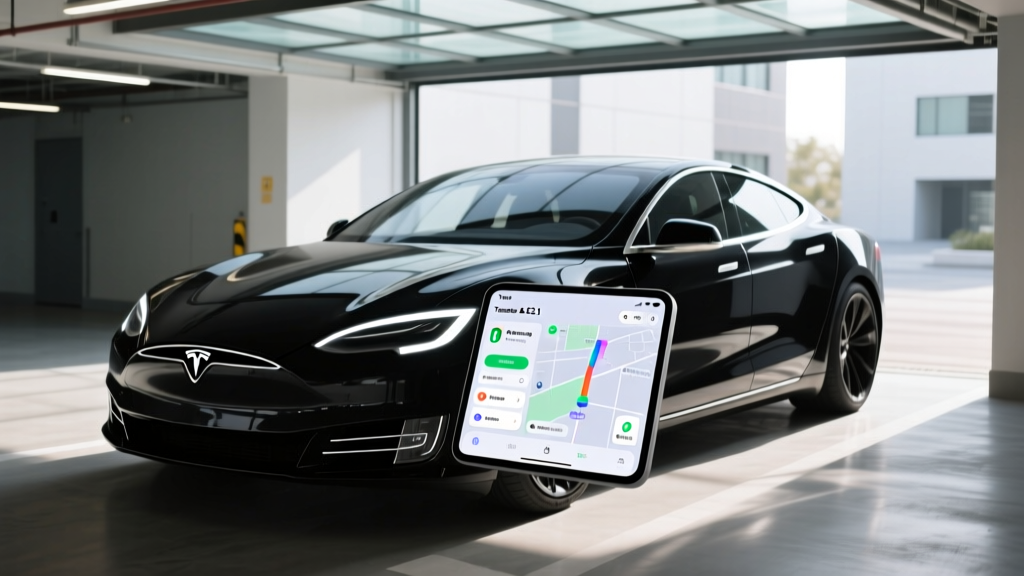
Understanding Tesla App Version 4.52.1 and Its Impact on Ownership
The Tesla mobile app serves as the primary interface between owners and their vehicles, and version 4.52.1 brings incremental but meaningful refinements to how you interact with your EV. While Tesla doesn't publish detailed changelogs for every minor update, this version continues the platform's evolution toward more granular vehicle control, improved charging session management, and faster remote command execution.
For Tesla owners, the app isn't just a convenience—it's essential for preconditioning your battery before DC fast charging, scheduling charging during off-peak electricity rates, monitoring battery state of health over time, and managing software updates that can unlock new features or adjust vehicle behavior. Version 4.52.1 builds on the foundation established in earlier 2025-2026 releases, focusing on reliability and responsiveness rather than headline-grabbing additions.
Core Tesla App 4.52.1 Features for Vehicle Management
Enhanced Climate and Preconditioning Controls
The app's climate control interface now provides more precise temperature scheduling and battery preconditioning options. When you navigate to a Supercharger in your vehicle's navigation system, the app reflects the preconditioning status in real-time, showing battery temperature trends and estimated charge readiness. This matters because cold batteries charge significantly slower—a battery at 50°F might accept only 40-60 kW initially, while a preconditioned battery at optimal temperature can hit peak charge rates immediately.
Charging Session Analytics and History
Version 4.52.1 expands the charging history dashboard with more granular session data. You can now view energy added (in kWh), session duration, peak and average charge rates (in kW), and cost per session if you've linked a payment method for home charging tracking. The app distinguishes between Level 1 (120V), Level 2 (240V), and DC fast charging sessions, helping owners understand their charging patterns and electricity costs over time.
Software Update Management
Tesla's over-the-air updates can add features, adjust regenerative braking behavior, improve range estimates, or modify Autopilot functionality. The app now provides clearer status indicators during download and installation phases, estimated completion times, and the ability to schedule updates for specific windows. If an update requires the vehicle to remain stationary for 30-90 minutes, you can delay it until overnight or a convenient time.
Real-World Range and Efficiency: What the App Helps You Monitor
The Tesla app displays your vehicle's current estimated range based on recent driving efficiency, but this differs from EPA ratings. For example, a 2026 Model 3 Long Range AWD carries an EPA rating of 358 miles, but real-world highway driving at 70-75 mph typically yields 280-310 miles. Cold weather (below 40°F) can reduce range by 20-30% due to battery resistance and cabin heating demands. The app's energy graph helps you track actual consumption in Wh/mile and identify efficiency trends.
The app's energy tracking shows consumption in watt-hours per mile (Wh/mi), which directly correlates to your electricity costs. A Model 3 averaging 250 Wh/mi driven 1,000 miles monthly would consume 250 kWh—costing roughly $30-50 depending on local electricity rates ($0.12-0.20/kWh). This compares favorably to a 30 MPG gas vehicle requiring 33 gallons at $3.50/gallon ($116 monthly).
| Specification | Value |
|---|---|
| EPA Range | 358 miles |
| Battery Capacity | 79 kWh (usable), NMC chemistry |
| Efficiency | 132 MPGe combined (25 kWh/100mi) |
| 0-60 mph | 4.2 seconds |
| Horsepower | 346 hp (dual motor AWD) |
| Max DC Fast Charge | 250 kW peak |
| 10-80% DC Charge Time | ~18 minutes (with preconditioning) |
| Level 2 Home Charging | 11.5 kW (44 miles/hour) |
| Cargo Volume | 23 cu ft (rear trunk) + 3 cu ft (frunk) |
| Base MSRP | $47,740 |
| Battery Warranty | 8 years / 120,000 miles (70% capacity retention) |
Charging Speed and Infrastructure: App-Managed Optimization
The Tesla app's navigation to Superchargers automatically triggers battery preconditioning, warming the battery to optimal temperature for maximum charge acceptance. Without preconditioning, you might arrive at a 250 kW Supercharger and see only 60-90 kW initially, adding 10-15 minutes to your session.
| Charging Type | Power (kW) | Miles Added Per Hour | Typical Use Case |
|---|---|---|---|
| Level 1 (120V household outlet) | 1.4 kW | 3-5 miles/hour | Emergency/overnight trickle |
| Level 2 (240V home charger) | 7.7-11.5 kW | 30-44 miles/hour | Daily home charging |
| DC Fast (Tesla Supercharger V3) | Up to 250 kW | ~1,000 miles/hour peak | Road trips, quick top-ups |
| DC Fast (CCS adapter at third-party) | Up to 150-250 kW | Varies by station | Non-Tesla network access |
The charge curve matters: a Model 3 Long Range might sustain 250 kW from 10-30% state of charge, then taper to 150 kW by 50%, 90 kW by 70%, and 40 kW above 85%. This is why the 10-80% time (~18 minutes) is the standard metric—charging above 80% becomes progressively slower and is typically unnecessary for road trips.
Federal Tax Credit Eligibility and Pricing
The 2026 Model 3 Long Range AWD at $47,740 MSRP falls under the IRS §30D federal tax credit MSRP cap of $55,000 for sedans. However, eligibility depends on multiple factors:
- Buyer Income Caps: Modified adjusted gross income (MAGI) must not exceed $150,000 (single filers), $225,000 (head of household), or $300,000 (joint filers)
- Battery Sourcing Requirements: A percentage of critical minerals must be sourced from the U.S. or free-trade agreement countries, and battery components must be manufactured in North America—these percentages increase annually through 2026
- Point-of-Sale Transfer: As of 2024, you can transfer the credit to the dealer at purchase, reducing your upfront cost rather than waiting for a tax refund
Check the official IRS clean vehicle credits page for current-year sourcing requirements, as battery component rules have tightened significantly. The Model 3 built at Tesla's Fremont factory with varying battery supply chains may or may not qualify for the full $7,500 credit depending on the specific build month and battery pack source.
| Scenario | MSRP | Federal Credit | Effective Price |
|---|---|---|---|
| Full $7,500 credit eligibility | $47,740 | -$7,500 | $40,240 |
| Partial $3,750 credit (sourcing rules) | $47,740 | -$3,750 | $43,990 |
| No credit (income/sourcing ineligibility) | $47,740 | $0 | $47,740 |
Competitor Comparison: Is the Model 3 Still the Benchmark?
The Model 3 faces competition from vehicles like the Hyundai Ioniq 6 (EPA 361 miles, $42,000), Chevrolet Equinox EV (EPA 319 miles, $33,000), and BMW i4 (EPA 307 miles, $52,200). The Tesla's advantages remain its Supercharger network access, software integration, and over-the-air update capability. However, competitors offer more traditional interior layouts, physical buttons, and in some cases faster peak charging speeds (the Ioniq 6 can hit 233 kW with an 800V architecture).
The app experience is where Tesla maintains differentiation. Third-party apps for other EV brands often lag in responsiveness, lack granular charging controls, or require separate accounts for different charging networks. Tesla's vertical integration means the app, vehicle, and Supercharger network operate as a unified system—though this ecosystem lock-in is both a strength and a limitation.
Pros, Cons, and Target Buyer Profile
Pros
- Industry-leading Supercharger network with 50,000+ global stalls and high reliability
- Comprehensive app control with real-time vehicle status and remote commands
- Over-the-air updates that can add features and improve performance post-purchase
- Strong efficiency (25 kWh/100mi) translates to lower electricity costs
- Excellent acceleration and handling for the price point
- Minimalist interior with 15.4-inch touchscreen and premium audio
Cons
- No physical buttons or gauges—everything routes through the touchscreen
- Panel fit and paint quality inconsistencies reported by owners
- Autopilot/FSD remains SAE Level 2 (requires active driver supervision)
- Higher insurance premiums compared to non-Tesla competitors
- Touchscreen-only climate and mirror adjustments can distract while driving
- Limited service center capacity in some regions leads to long wait times
Who Should Buy the Model 3 Long Range?
Ideal for: Tech-savvy commuters who value app integration, road-trippers who want reliable fast-charging infrastructure, and buyers who prioritize efficiency and performance. The 358-mile EPA range and 18-minute fast-charge capability make it viable for 400-mile trips with a single 15-20 minute stop.
Consider alternatives if: You prefer traditional vehicle controls, need maximum rear-seat space (the Model 3 is tighter than a Model Y or Ioniq 5), want the absolute lowest purchase price (Equinox EV starts $14,000 lower), or live in an area with limited Tesla service infrastructure.
Frequently Asked Questions
Does Tesla app 4.52.1 add new Autopilot or FSD features?
Minor app updates typically don't change Autopilot or Full Self-Driving (Supervised) functionality—those changes come via vehicle software updates (like 2025.44.x). The app update focuses on interface improvements, bug fixes, and remote command reliability. FSD remains an SAE Level 2 system requiring constant driver attention and is not autonomous driving.
Can I use the Tesla app to monitor battery health over time?
The app displays current estimated range and recent efficiency, but Tesla doesn't provide a direct state-of-health percentage like some competitors. You can infer degradation by comparing your current full-charge range to the original EPA rating—if your Model 3 Long Range originally showed 358 miles at 100% and now shows 330 miles, that's roughly 8% degradation. The battery warranty covers replacement if capacity drops below 70% within 8 years or 120,000 miles.
How does preconditioning work, and why does it matter for charging speed?
When you navigate to a Supercharger, the vehicle's thermal management system warms the battery to approximately 95-105°F, the optimal temperature for fast charging. Without preconditioning, a cold battery (below 60°F) might accept only 40-60 kW initially, adding 10-15 minutes to your session. The app shows preconditioning status and estimated battery temperature when en route to a charger.
What's the real cost to charge a Model 3 at home versus Superchargers?
Home charging at $0.15/kWh costs roughly $12 to add 300 miles (79 kWh battery). Supercharger pricing varies by location and time but averages $0.28-0.40/kWh, making that same 300 miles cost $22-32. Most owners charge at home 80-90% of the time, using Superchargers primarily for road trips. The app tracks charging costs if you enable the feature.
Is the Model 3 Long Range worth buying over the base RWD model?
The Long Range AWD ($47,740) offers 358 miles EPA range versus 272 miles for the base RWD ($38,990), plus dual-motor all-wheel drive and 4.2-second 0-60 times versus 5.8 seconds. The $8,750 premium buys 86 additional miles, better traction in snow/rain, and significantly quicker acceleration. For most buyers covering 15,000+ miles annually or taking regular road trips, the Long Range justifies the cost.
For official EPA range and efficiency data, consult fueleconomy.gov. Current federal tax credit rules and eligibility requirements are published at irs.gov. Tesla's official specifications and pricing can be verified at tesla.com/model3.