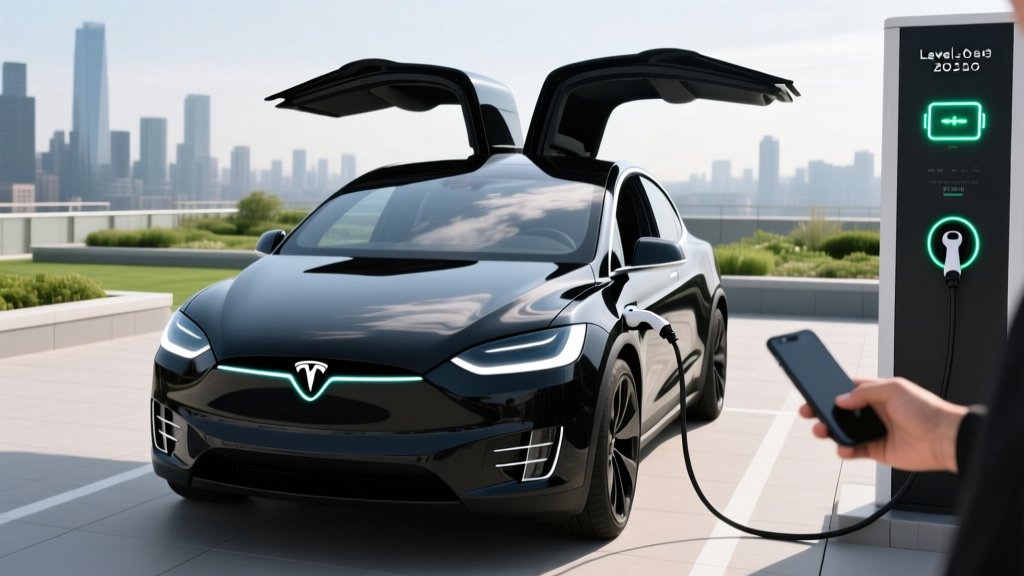
When shoppers search for a Tesla anti theft device, they're often surprised to learn that Tesla vehicles don't rely on traditional aftermarket alarms or steering wheel locks. Instead, Tesla builds its security ecosystem directly into the car's software and hardware architecture. From Sentry Mode's 360-degree camera surveillance to GPS tracking and PIN to Drive, Tesla's anti-theft approach is fundamentally different from legacy automakers—and it's one reason these EVs consistently rank among the most recovered stolen vehicles.
But how effective are these systems really, and what do you need to know about Tesla's security features in the context of the 2026 Model Y lineup? This review covers Tesla's built-in anti-theft technology stack alongside a complete profile of the current Model Y—the best-selling EV in America—so you can evaluate both security and daily-drivability in one place.
Tesla's Anti-Theft Technology Stack Explained
Tesla's approach to vehicle security operates on multiple layers, most of which require no additional hardware purchase. Here's what's built into every current Tesla:
Sentry Mode
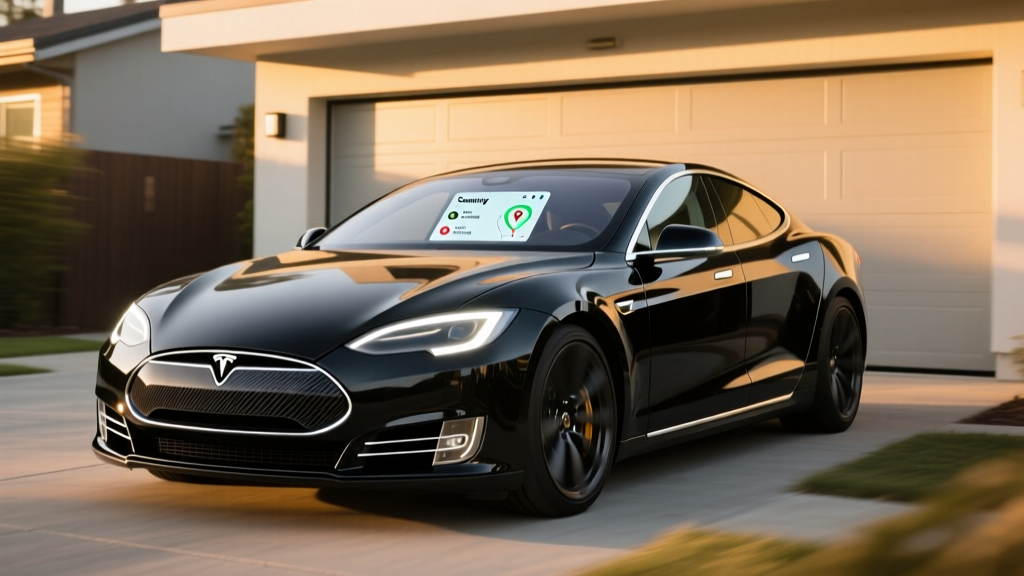
Sentry Mode is Tesla's flagship anti-theft feature. When the vehicle is parked and locked, the external cameras remain active and monitor the surroundings. If a threat is detected—someone leaning on the car, attempting a break-in, or causing damage—the system escalates through three states: Standby (minor motion detected), Alert (recording triggered, screen displays warning), and Alarm (full alarm activation, owner notification via app, video clips saved to USB drive). Sentry Mode consumes roughly 1 mile of range per hour of use, so Tesla allows you to set location-based exclusions (e.g., disable at home).
GPS Tracking and App Integration
Every Tesla continuously reports its location to Tesla's servers when connected. Through the Tesla app, owners can track their vehicle's real-time position, which has proven critical for law enforcement recovery. According to NHTSA data and various police department reports, Tesla vehicles have one of the highest recovery rates among stolen cars—often within hours—because the GPS tracking cannot be easily disabled without cutting the 12V auxiliary battery, which itself triggers an alert.
PIN to Drive
This feature requires the driver to enter a 4-digit PIN on the touchscreen before the vehicle can be driven, even with the key fob or phone key present. It's one of the most effective deterrents against relay attacks and key cloning, which are common methods used to steal modern keyless vehicles.
Walk-Away Auto Lock and Phone Key
Tesla's phone key uses Bluetooth Low Energy to detect when the owner walks away, automatically locking all doors, closing windows, and arming Sentry Mode. The encrypted BLE protocol makes traditional relay attacks far more difficult than with conventional RFID key fobs.
2026 Tesla Model Y: Range, Battery, and Efficiency
The 2026 Tesla Model Y (refreshed "Juniper" generation) continues to dominate the compact electric SUV segment. Here's what the powertrain looks like across trims:
| Spec | Long Range RWD | Long Range AWD | Performance |
|---|---|---|---|
| EPA Range | 320 mi | 300 mi | 277 mi |
| Battery (usable) | ~75 kWh (NMC) | ~75 kWh (NMC) | ~75 kWh (NMC) |
| Efficiency | 122 MPGe / 27 kWh/100mi | 117 MPGe / 29 kWh/100mi | 111 MPGe / 30 kWh/100mi |
| 0–60 mph | 5.8 sec | 4.8 sec | 3.5 sec |
| Horsepower | ~346 hp | ~384 hp | ~456 hp |
| Drivetrain | RWD (single motor) | AWD (dual motor) | AWD (dual motor) |
Charging Speed: DC Fast Charge and Home Level 2
Charging speed is where the Juniper Model Y made meaningful gains over the previous generation. The 2026 Model Y supports up to 250 kW peak DC fast charging on V3/V4 Superchargers and compatible CCS/NACS stations.
| Charging Level | Power | Speed (mi/hr added) | Notes |
|---|---|---|---|
| Level 1 (120V) | ~1.4 kW | 3–5 mi/hr | Emergency/trickle only |
| Level 2 (240V, 48A) | 11.5 kW | ~44 mi/hr | Home Wall Connector; full charge ~7 hrs |
| DC Fast (Supercharger V3) | 250 kW peak | ~162 mi in 15 min | 10–80% in ~22 min; tapers above 80% |
Charge curve reality: The 250 kW peak only sustains between roughly 10–30% State of Charge. From 30–60%, expect ~150–180 kW; from 60–80%, it drops to ~80–100 kW. This is why Tesla quotes 10–80% times rather than 0–100%—charging above 80% slows dramatically to protect battery longevity. For road trips, plan stops around the 10–80% window for maximum time efficiency.
The 2026 Model Y ships with the NACS (North American Charging Standard) connector natively. This gives you direct access to Tesla's Supercharger network—over 25,000 stalls in North America—without an adapter. For non-Tesla DC fast chargers using CCS, a NACS-to-CCS adapter is available but rarely needed given Supercharger coverage.
Interior, Cargo, and Practicality
The Juniper refresh brought meaningful interior improvements to the Model Y, addressing long-standing complaints about cabin noise and ride quality:
- Cargo volume: 30.2 cu ft behind rear seats; 72.1 cu ft with rear seats folded (per fueleconomy.gov)
- Front trunk (frunk): 4.1 cu ft—enough for a charging cable bag and small groceries
- Rear legroom: 41.6 inches (noticeably improved over pre-2025 models)
- Seating: 5-passenger standard; ventilated front seats now standard on Long Range and above
- Acoustic glass: Laminated glass on all windows (previously front-only) reduces highway noise by ~4 dB
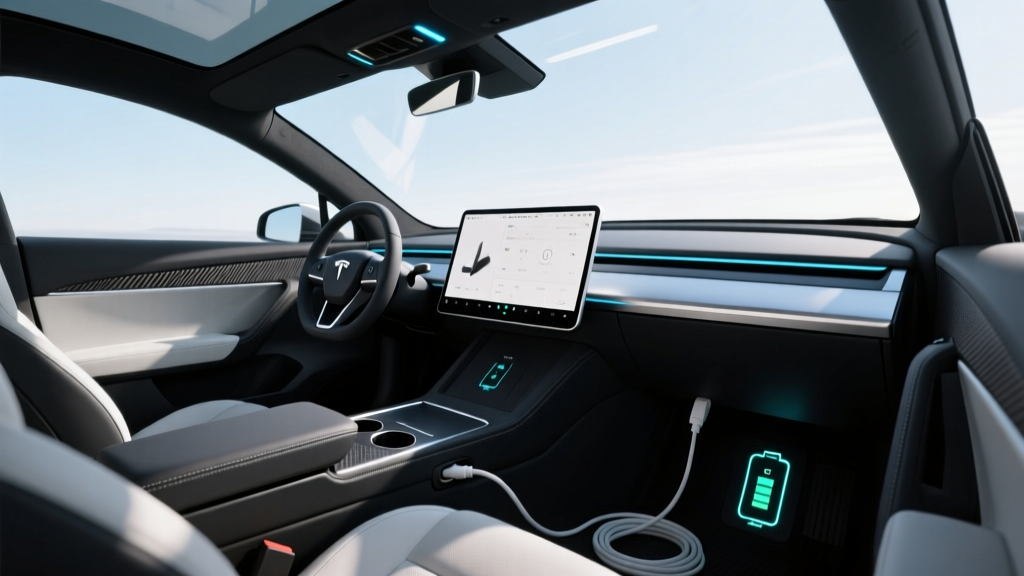
- Ambient lighting: Full-width light bar across the dashboard, customizable color
The 15.4-inch center touchscreen remains the primary interface for virtually all vehicle controls. There is no instrument cluster—speed and navigation appear on the upper-left corner of the main display. A rear 8-inch screen for second-row passengers controls climate, media, and entertainment.
Pricing, Trims, and Federal Tax Credit Eligibility
| Trim | Base MSRP | Est. After §30D Credit | Eligible? |
|---|---|---|---|
| Long Range RWD | $46,630 | ~$39,130 | ✅ Yes (under $80K cap) |
| Long Range AWD | $49,630 | ~$42,130 | ✅ Yes (under $80K cap) |
| Performance | $53,630 | ~$46,130 | ✅ Yes (under $80K cap) |
Federal tax credit details (IRS §30D): All 2026 Model Y trims fall under the $80,000 MSRP cap for SUVs. However, the full $7,500 credit depends on several factors that change periodically:
- Buyer income caps: Modified AGI must not exceed $150,000 (single), $225,000 (head of household), or $300,000 (joint filers)
- Battery sourcing: A percentage of critical minerals and battery components must be sourced from the U.S. or free-trade-agreement countries—Tesla's supply chain has generally met these thresholds, but verify current-year compliance on IRS.gov
- Point-of-sale transfer: You can elect to transfer the credit to the dealer at purchase, reducing your out-of-pocket cost immediately rather than waiting for tax filing
- One credit per VIN, one per taxpayer per year: You cannot claim the credit on more than one vehicle per tax year
Note: Tax credit rules are subject to legislative changes. Always confirm current eligibility with a tax professional or the IRS before purchasing.
Driver Assistance: Autopilot and FSD (Supervised)
Every 2026 Model Y includes Basic Autopilot as standard: adaptive cruise control and lane-keeping assist on highways. Enhanced Autopilot ($6,000 upgrade) adds auto lane change, Navigate on Autopilot, and Smart Summon. Full Self-Driving (Supervised) ($8,000 or $99/month) adds traffic light/stop sign recognition and city street autosteer.
From a security perspective, Tesla's driver-assistance cameras double as the Sentry Mode surveillance system—meaning the same hardware that enables Autopilot also protects your parked vehicle. This integration is unique to Tesla and adds value beyond the driving experience.
Warranty and Long-Term Ownership
Tesla's warranty structure for the 2026 Model Y:
- Basic vehicle: 4 years / 50,000 miles
- Battery & drive unit: 8 years / 120,000 miles (Long Range); retains minimum 70% capacity over the warranty period
- NMC battery longevity: The Model Y uses NMC (nickel manganese cobalt) chemistry, which offers higher energy density than LFP but is more sensitive to sustained 100% charging. Tesla recommends daily charging to 80–90% for NMC packs, reserving 100% for road trips.
For buyers prioritizing battery longevity over maximum range, the Model Y does not currently offer an LFP battery option in the U.S. market (unlike the Model 3 RWD). If you plan to keep the vehicle 10+ years, the 8-year warranty provides a floor, but real-world NMC degradation data from Tesla owners suggests ~10–12% capacity loss at 150,000 miles with proper charging habits.
Pros, Cons, and Who Should Buy
✅ Pros
- Best-in-class anti-theft ecosystem (Sentry Mode + GPS + PIN to Drive)
- Supercharger network access (25,000+ stalls, highest reliability)
- 250 kW DC fast charging; 10–80% in ~22 minutes
- Class-leading efficiency (122 MPGe Long Range RWD)
- Over-the-air updates continuously add features
- Strong resale value relative to other EVs
❌ Cons
- No LFP battery option (NMC requires careful charge management)
- Sentry Mode drains ~1 mile of range per hour parked
- Minimalist interior polarizes; no physical buttons or instrument cluster
- Insurance premiums run 15–30% higher than comparable ICE SUVs
- FSD (Supervised) costs $8K and remains Level 2
- Service center wait times can be long in some metro areas
Who the 2026 Model Y Suits Best
Choose the Model Y if: You want the most integrated anti-theft system in any EV, rely on road-trip charging infrastructure, and value efficiency and cargo space in a compact SUV footprint. Ideal for suburban commuters with home charging and families needing 5-seat practicality.
Look elsewhere if: You want LFP battery longevity (consider Model 3 RWD or a competitor), prefer physical controls (Hyundai Ioniq 5, VW ID.4), or need 3-row seating (Kia EV9).
Frequently Asked Questions
What is the real-world range of the 2026 Tesla Model Y?
The EPA rates the Long Range RWD at 320 miles, but real-world highway driving at 70+ mph yields approximately 260–285 miles. In cold weather (below freezing), expect 200–230 miles of usable range before needing to charge. The AWD and Performance trims deliver proportionally less due to higher energy consumption.
How fast does the Model Y charge at home and on the road?
At home on a Level 2 Tesla Wall Connector (240V, 48A), the Model Y charges at 11.5 kW, adding roughly 44 miles of range per hour—a full charge takes about 7 hours. On a V3 Supercharger, it peaks at 250 kW, achieving a 10–80% charge in approximately 22 minutes. Charging slows significantly above 80% to protect battery health.
Does the 2026 Model Y qualify for the federal EV tax credit?
Yes—all Model Y trims are under the $80,000 SUV MSRP cap. However, eligibility for the full $7,500 credit depends on your income (single filers under $150K MAGI, joint filers under $300K), and the vehicle's battery must meet current-year critical mineral and component sourcing requirements. Verify on IRS.gov before purchasing, as rules can shift.
Is the Tesla Model Y worth buying vs. competitors like the Ioniq 5 or Equinox EV?
The Model Y wins on charging network access, anti-theft technology, and efficiency. The Hyundai Ioniq 5 offers faster 800V charging architecture (~18 min 10–80%), a more conventional interior, and an LFP battery option. The Chevrolet Equinox EV undercuts on price but charges slower. If anti-theft features and Supercharger reliability are top priorities, the Model Y remains the segment benchmark.
Can I add an aftermarket anti-theft device to my Tesla?
Tesla does not officially support aftermarket alarms or immobilizers, and installing one could interfere with the vehicle's electrical systems and void warranty coverage. Tesla's built-in Sentry Mode, GPS tracking, and PIN to Drive provide robust security. For additional visible deterrence, some owners use a steering wheel lock in high-risk parking situations, but this is generally unnecessary given the car's integrated systems.
Does Sentry Mode significantly impact battery life?
Sentry Mode consumes approximately 1 mile of range per hour of operation—roughly 24 miles over a full day. Over a year of daily use, the energy cost is modest, but it can be noticeable if you park for extended periods without charging. Tesla allows you to exclude specific locations (home, work) from Sentry Mode activation to manage this drain.