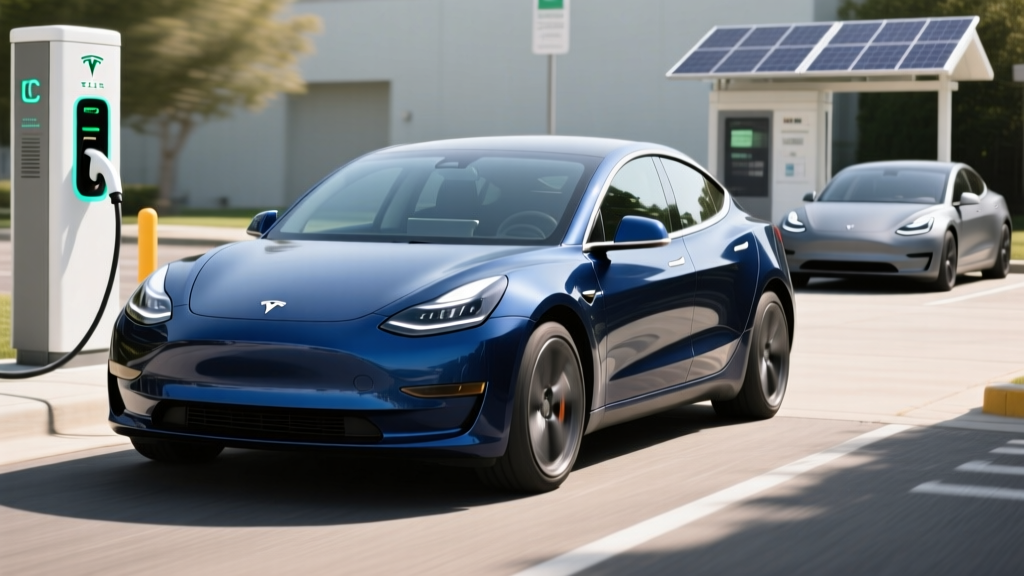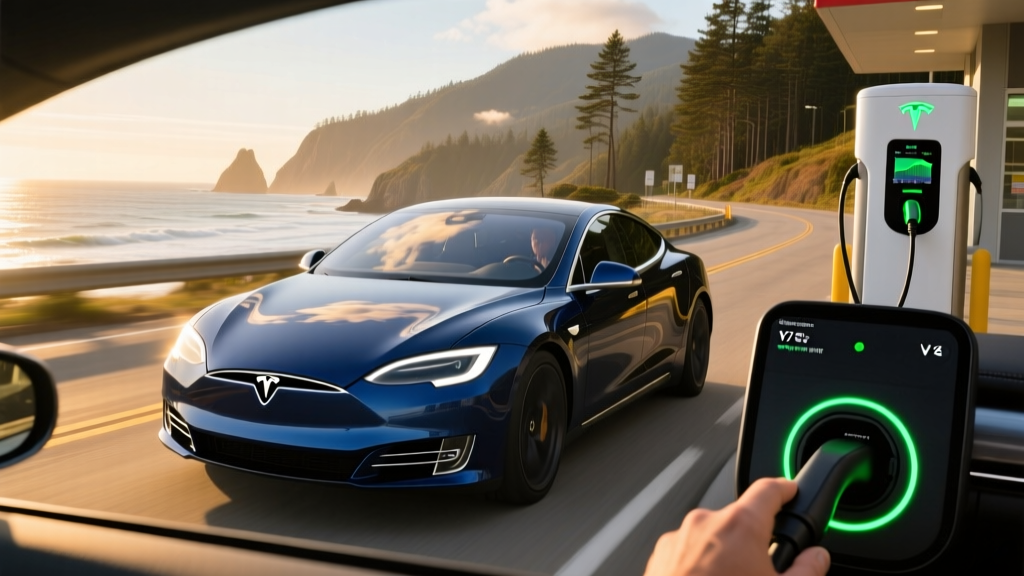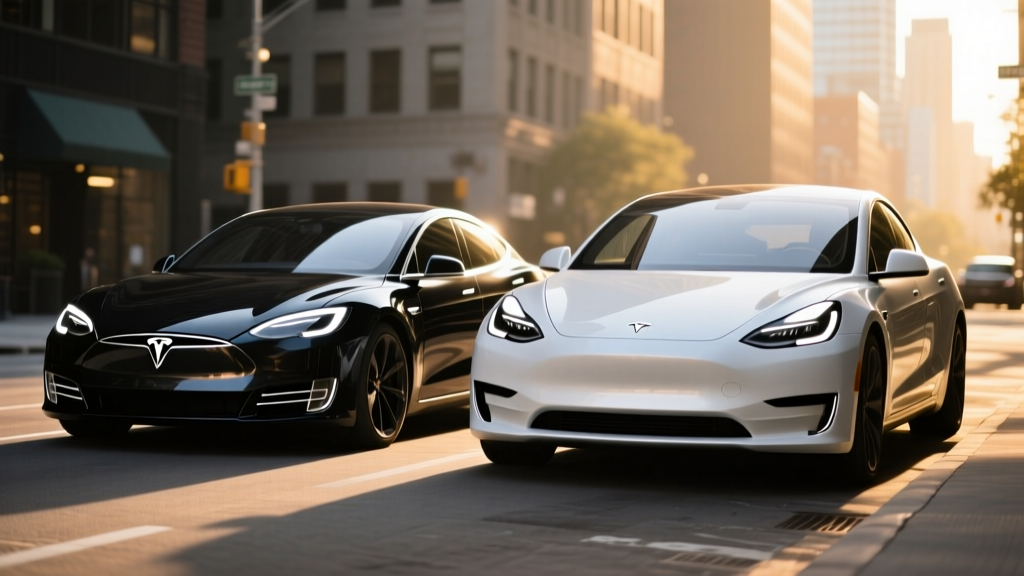
Tesla remains the most recognized name in electric vehicles, but for shoppers researching a purchase, the question "how many cars does Tesla sell a year?" is about more than corporate bragging rights. Sales volume signals manufacturing maturity, Supercharger network growth, parts availability, and long-term viability — all factors that affect your ownership experience. Below, we break down Tesla's latest annual delivery numbers, then profile the full 2026 lineup with the exact range, charging, pricing, and tax-credit data buyers need.
Tesla's Annual Sales: 2024–2025 Delivery Numbers
Tesla reported 1.79 million global vehicle deliveries in 2024, a slight decline from 2023's 1.81 million, as increased competition from BYD and legacy automakers pressured pricing and demand in key markets. Through the first three quarters of 2025, Tesla has delivered approximately 1.33 million vehicles, putting the company on pace for roughly 1.75–1.85 million deliveries for full-year 2025, depending on Q4 demand and the launch cadence of the refreshed Model Y ("Juniper").
| Year | Total Deliveries | YoY Change | Best-Selling Model |
|---|---|---|---|
| 2022 | 1,313,851 | +40% | Model Y |
| 2023 | 1,808,581 | +38% | Model Y |
| 2024 | 1,789,226 | -1.1% | Model Y |
| 2025 (est.) | ~1,750,000–1,850,000 | ~-2% to +3% | Model Y (Juniper) |
For U.S. buyers, what matters most is that Tesla's North American Supercharger network now exceeds 7,000 stalls across 800+ stations (as of late 2025), and parts/service infrastructure scales with sales volume. The Model Y alone accounts for roughly 55–60% of all Tesla deliveries globally — making it the most consequential EV to evaluate if you're shopping the brand.
2026 Tesla Lineup: Range, Battery, and Charging Specs
Whether Tesla sells 1.5 million or 2 million cars next year, the decision to buy one comes down to specs. Here's the current 2026 lineup at a glance, with EPA-verified figures from fueleconomy.gov and Tesla's official spec sheets.
| Spec | Model 3 LR AWD | Model Y LR AWD | Model S LR | Model X LR | Cybertruck AWD |
|---|---|---|---|---|---|
| EPA Range | 363 mi | 320 mi | 402 mi | 335 mi | 340 mi |
| Battery (usable kWh) | ~75 kWh (NMC) | ~75 kWh (NMC) | ~95 kWh (NMC) | ~95 kWh (NMC) | ~123 kWh (NMC, 4680 cells) |
| Peak DC Charge Rate | 250 kW | 250 kW | 250 kW | 250 kW | 250 kW (400V-limited) |
| 10–80% DCFC Time | ~27 min | ~27 min | ~32 min | ~32 min | ~35 min |
| Level 2 (11.5 kW) Rate | ~37 mi/hr | ~37 mi/hr | ~41 mi/hr | ~41 mi/hr | ~37 mi/hr |
| 0–60 mph | 4.2 sec | 4.8 sec | 3.1 sec | 3.8 sec | 3.9 sec |
| Horsepower | 346 hp | 384 hp | 670 hp | 670 hp | 600 hp |
| Drivetrain | Dual-Motor AWD | Dual-Motor AWD | Dual-Motor AWD | Dual-Motor AWD | Tri-Motor AWD (Beast) / Dual (AWD) |
| Efficiency (MPGe) | 132 MPGe | 120 MPGe | 124 MPGe | 110 MPGe | 77 MPGe |
| Cargo Volume (rear seats up) | 23 cu ft | 30 cu ft (+ 4 cu ft frunk) | 28 cu ft | 88 cu ft (folded) | 67 cu ft (vault + bed) |
EPA estimates assume a mix of city and highway driving at moderate temperatures. On the highway at 75 mph, expect 10–15% range reduction across all Tesla models (e.g., a Model Y LR rated at 320 mi EPA will deliver roughly 270–290 mi in real-world highway use). In freezing temperatures (below 30°F), range loss can reach 20–30% due to cabin heating and battery resistance, even with Tesla's heat pump standard on all 2026 models. Plan road trips using 250–260 mi as a practical highway ceiling for the Model Y in summer, and ~220 mi in winter.
Charging Deep Dive: Supercharger Network vs. Home Level 2
Tesla's biggest ownership advantage remains the Supercharger network. But charging speed varies dramatically between DC fast charging on the road and Level 2 charging at home. Understanding the difference between kW (power, or how fast energy flows) and kWh (energy, or battery capacity) is critical.
| Charging Level | Power (kW) | Miles Added per Hour | Typical Use Case | Cost Estimate |
|---|---|---|---|---|
| Level 1 (120V outlet) | ~1.4 kW | ~3–5 mi/hr | Overnight trickle / emergency | $0.10–0.15/kWh (residential) |
| Level 2 (240V, 48A) | 11.5 kW | ~37–44 mi/hr | Home daily charging | $0.10–0.18/kWh (residential) |
| DC Fast (V3 Supercharger) | Up to 250 kW | ~1,000+ mi/hr (peak) | Road trips | $0.25–0.35/kWh (varies by region) |
| DC Fast (V4 Supercharger) | Up to 350 kW* | Future: faster 10–80% | Newer stations, limited rollout | $0.28–0.40/kWh |
*V4 Supercharger cabinets support up to 350 kW, but current Tesla vehicles are limited to 250 kW peak acceptance at 400V architecture. Future 800V Tesla platforms may unlock higher rates.
Charging curve reality: Tesla vehicles peak at 250 kW only between roughly 10–25% State of Charge (SoC). Above 50%, the rate tapers significantly — expect ~100 kW at 60% and ~50 kW above 80%. This is why 10–80% charge times (~27 minutes for Model 3/Y) are the meaningful metric, not peak kW alone. For daily driving, Tesla recommends charging to 80% (or 100% for LFP-equipped RWD trims, which Tesla now identifies in-app).
2026 Pricing and Federal Tax Credit Eligibility
Tesla has aggressively repriced its lineup since 2023. Here's where 2026 models stand, alongside IRS §30D federal tax credit eligibility.
| Model / Trim | Base MSRP | As-Tested (typical config) | §30D Credit Eligible? | Effective Price (after credit) |
|---|---|---|---|---|
| Model 3 RWD | $38,990 | $39,990 | Yes — $7,500 (if sourcing reqs met) | ~$31,490–$32,490 |
| Model 3 LR AWD | $45,990 | $47,490 | Yes — $7,500 (if sourcing reqs met) | ~$38,490–$39,990 |
| Model Y LR AWD | $44,990 | $47,490 | Yes — $7,500 (if sourcing reqs met) | ~$37,490–$39,990 |
| Model S LR | $79,990 | $84,990 | No — exceeds $55,000 sedan MSRP cap | $79,990 |
| Model X LR | $79,990 | $86,990 | Yes — under $80,000 SUV cap (if sourcing reqs met) | ~$72,490–$79,490 |
| Cybertruck AWD | $79,990 | $84,990 | Yes — under $80,000 truck cap (if sourcing reqs met) | ~$72,490–$79,990 |
- MSRP Cap: Sedans ≤ $55,000; SUVs/trucks/vans ≤ $80,000
- Buyer Income Cap: AGI ≤ $150,000 (single), $225,000 (head of household), $300,000 (joint)
- Battery Sourcing: Critical minerals and battery components must meet escalating domestic/FATB-content thresholds (80%+ critical minerals from U.S./FTA partners for 2026; components cannot be from a "foreign entity of concern")
- Point-of-Sale Transfer: You can apply the credit as a down-payment reduction at purchase — no need to wait for tax filing
- Verification: Always check the latest VIN eligibility on fueleconomy.gov before purchasing, as sourcing compliance can change mid-year
Driver Assistance: Autopilot, FSD (Supervised), and SAE Levels
Every 2026 Tesla ships with Basic Autopilot (lane-keeping, traffic-aware cruise control). The optional Full Self-Driving (Supervised) package adds automatic lane changes, traffic-light/stop-sign recognition, and city-street navigation — currently priced at $8,000 one-time or $99/month.
Both Autopilot and FSD (Supervised) are classified as SAE Level 2 driver-assistance systems. The driver must remain attentive, keep hands available, and be prepared to take over instantly. These are not self-driving systems. Only Level 4 services like Waymo (operating in Phoenix, San Francisco, and Los Angeles) offer true driverless capability in geofenced areas. Tesla's naming — "Full Self-Driving" — is marketing terminology, not a technical classification.
Warranty, Ownership Costs, and Who Should Buy
Tesla's warranty structure is straightforward but slightly below some competitors in battery coverage duration:
- Basic Vehicle Limited Warranty: 4 years / 50,000 miles
- Battery & Drive Unit Warranty: 8 years / 100,000 miles (Model 3/Y RWD); 8 years / 120,000 miles (Model 3/Y LR, Model S/X)
- Battery Retention Threshold: Tesla warrants a minimum of 70% capacity retention during the warranty period
Who each Tesla model suits best:
- Model 3 RWD / LR: Daily commuters, apartment-dwellers with workplace charging, and budget-conscious EV-first buyers. Best efficiency in the lineup at 132 MPGe.
- Model Y LR AWD: Families needing crossover cargo space (30 cu ft + frunk), road-trippers relying on the Supercharger network, and buyers wanting the most practical all-rounder.
- Model S LR: Performance sedan buyers who want 402 mi of range and 670 hp without stepping to a luxury-badge competitor. No tax credit due to MSRP cap.
- Model X LR: Families needing three rows (6/7-seat config), falcon-wing rear doors for tight parking, and 335 mi of range in a large SUV.
- Cybertruck: Truck buyers wanting EV torque (600 hp Beast), 11,000-lb towing capacity, and a stainless-steel exoskeleton. Polarizing styling limits resale predictability.
- Best-in-class DC charging network (Superchargers)
- Class-leading efficiency and range-per-kWh
- OTA software updates add features post-purchase
- Point-of-sale tax credit reduces upfront cost
- Strong performance across all trims
- 250 kW peak charge rate trails Hyundai/Kia 800V platforms (~350 kW)
- Build-quality variability reported across Fremont/Austin plants
- FSD (Supervised) is Level 2 — not autonomous despite the name
- No Apple CarPlay / Android Auto integration
- Service center wait times in high-population areas
Frequently Asked Questions
How many cars does Tesla sell a year globally?
Tesla delivered approximately 1.79 million vehicles in 2024 and is projected to deliver between 1.75–1.85 million in 2025. The Model Y accounts for over half of all sales. For context, Toyota sells roughly 10 million vehicles annually, but Tesla remains the largest pure-EV automaker by volume worldwide.
What is the real-world range of the most popular Tesla, the Model Y?
The 2026 Model Y LR AWD carries an EPA rating of 320 miles. In real-world highway driving at 75 mph, expect 270–290 miles. In sub-freezing winter conditions, plan for 220–240 miles. Preconditioning the battery (automatic when navigating to a Supercharger) mitigates cold-weather charging slowdowns.
How fast does a Tesla charge at home vs. on the road?
At home on a 240V / 48A Level 2 charger (11.5 kW), Teslas add roughly 37–44 miles of range per hour — a full overnight session (8 hours) restores ~300 miles. On a V3 Supercharger (250 kW DC), the 10–80% charge takes approximately 27 minutes for Model 3/Y. The charging curve tapers significantly above 50% SoC, which is why peak kW alone is misleading.
Does the Tesla Model Y qualify for the $7,500 federal tax credit in 2026?
Yes — the Model Y LR AWD (MSRP $44,990) falls under the $80,000 SUV cap. However, eligibility depends on the buyer's AGI (≤ $300,000 joint), battery critical-mineral sourcing compliance, and absence of FEOC-sourced components. Always verify the specific VIN on fueleconomy.gov before purchase. The credit can be transferred at point of sale as a price reduction.
Is a Tesla worth buying versus competitors like the Hyundai Ioniq 5 or Ford Mustang Mach-E?
Tesla wins on Supercharger network access, efficiency (MPGe), and software integration. Competitors like the Hyundai Ioniq 5 (with 800V architecture enabling ~350 kW DC charging on compatible stalls) charge faster at non-Tesla DCFC stations. The Mach-E offers a more traditional interior with physical controls and Apple CarPlay. If you road-trip frequently, Tesla's network remains the strongest advantage. If you prioritize fastest possible DC charging or want CarPlay, look at Hyundai/Kia or Ford.
What battery chemistry does Tesla use?
Tesla uses NMC (nickel manganese cobalt) in Long Range and Performance trims for higher energy density, and LFP (lithium iron phosphate) in RWD/base trims. LFP batteries are heavier and less energy-dense but offer longer cycle life, lower degradation, no cobalt, and can be charged to 100% daily without accelerated wear. Tesla's in-app battery identification shows which chemistry your vehicle has.
Sources: U.S. EPA / fueleconomy.gov, IRS §30D Clean Vehicle Credits, Tesla Investor Relations quarterly delivery reports.