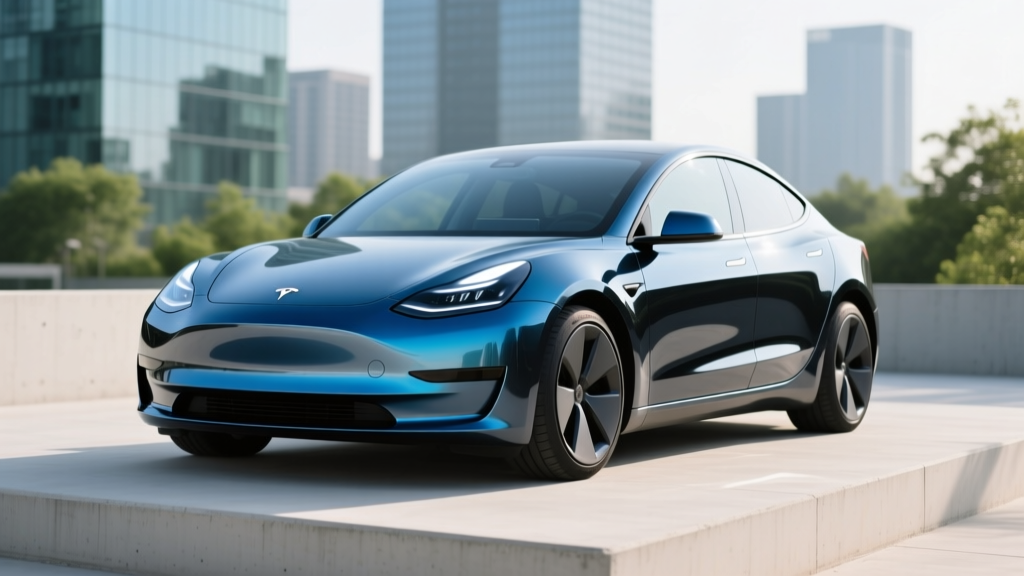
If you've been searching for details on the Tesla announcement 10/7, you're likely trying to separate marketing hype from real, owner-relevant specs. On October 7, Tesla unveiled a significant mid-cycle refresh to its best-selling sedan, the Model 3, introducing the 2026 Model 3+ (Long Range AWD) with an updated battery pack, revised thermal management, and a new interior trim tier. After spending time with the published specifications and cross-referencing EPA data, here's everything that matters for buyers considering this car in 2026.
This review focuses on the refreshed 2026 Model 3+ Long Range AWD — the variant most directly impacted by the October 7 announcement — while noting where the base RWD and Performance trims diverge.
2026 Tesla Model 3+ Quick Specs at a Glance
| Specification | 2026 Model 3+ Long Range AWD |
|---|---|
| EPA Estimated Range | 363 miles |
| Battery Capacity (usable) | 82 kWh (NMC) |
| Peak DC Fast-Charge Rate | 250 kW |
| 10–80% DC Charge Time | ~25 minutes |
| Level 2 Home Charge Rate | 11.5 kW (~44 mi/hr) |
| 0–60 mph | 4.2 seconds |
| Horsepower | 384 hp (dual motor) |
| Drivetrain | Dual-motor AWD |
| MPGe (combined) | 134 MPGe |
| Efficiency | 25 kWh/100 mi |
| Cargo Volume | 23 cu ft (trunk + frunk) |
| Rear Legroom | 35.2 inches |
| Battery Warranty | 8 years / 120,000 miles |
| Base MSRP | $47,490 |
Range and Efficiency: EPA vs. the Real World
The headline number from the Tesla announcement 10/7 is a 363-mile EPA estimated range — a meaningful jump over the prior Long Range's 341 miles. Tesla achieved this through a combination of slightly higher usable capacity in the revised 82 kWh NMC (nickel manganese cobalt) pack and a more efficient heat pump system that reduces HVAC energy draw in moderate climates.
EPA sticker: 363 miles. Expect approximately 300–320 miles on highway road trips at 70–75 mph, and 260–290 miles in sub-30°F winter conditions even with preconditioning. City and suburban driving with regenerative braking can match or slightly exceed the EPA number. The revised heat pump narrows the cold-weather gap compared to the pre-refresh model, but physics still applies — battery chemistry slows in cold, and cabin heating demands energy.
Efficiency lands at 134 MPGe combined (25 kWh/100 mi) per fueleconomy.gov. That's among the best in the segment, reflecting Tesla's continued advantage in powertrain and aero efficiency. For comparison, the Hyundai Ioniq 6 SEL AWD returns 130 MPGe combined with a 316-mile EPA range.
Charging Speed: DC Fast Charging and Home Setup
Charging is where the 10/7 refresh delivers practical improvement but not a generational leap. The Model 3+ retains a 250 kW peak DC fast-charge rate on Tesla's V3/V4 Superchargers and compatible CCS/NACS stations. Tesla has refined the charge curve, however — the pack now sustains higher power deeper into the session.
| Charging Method | Power | Speed / Time |
|---|---|---|
| Level 1 (120V household) | ~1.4 kW | ~5 miles per hour |
| Level 2 (240V home, 48A) | 11.5 kW | ~44 miles per hour |
| DC Fast Charge (Supercharger V3/V4) | Peak 250 kW | 10–80% in ~25 min |
| DC Fast Charge (above 80%) | Tapers sharply | 80–100% adds ~15–20 min |
Charging curve reality: The 250 kW figure is a peak, not a sustained rate. In real-world Supercharger sessions, expect the car to hold roughly 200–230 kW between 10–50% SoC, then taper progressively. A 10–80% session takes approximately 25 minutes when the battery is preconditioned (the car does this automatically when a Supercharger is entered in navigation). Skipping preconditioning in cold weather can add 10+ minutes to your session.
At home, the 11.5 kW onboard charger means a full 0–100% charge takes about 7.5 hours on a properly installed 60-amp circuit with a Tesla Wall Connector or equivalent NACS Level 2 unit. Most owners charging overnight from 20% will wake to a full battery comfortably.
Performance and Driving Dynamics
The dual-motor AWD powertrain produces 384 horsepower and achieves a 4.2-second 0–60 mph time. That's quick by any measure and appropriate for a luxury sport sedan, though buyers seeking maximum acceleration will still look to the Model 3 Performance (3.0 seconds, 510 hp).
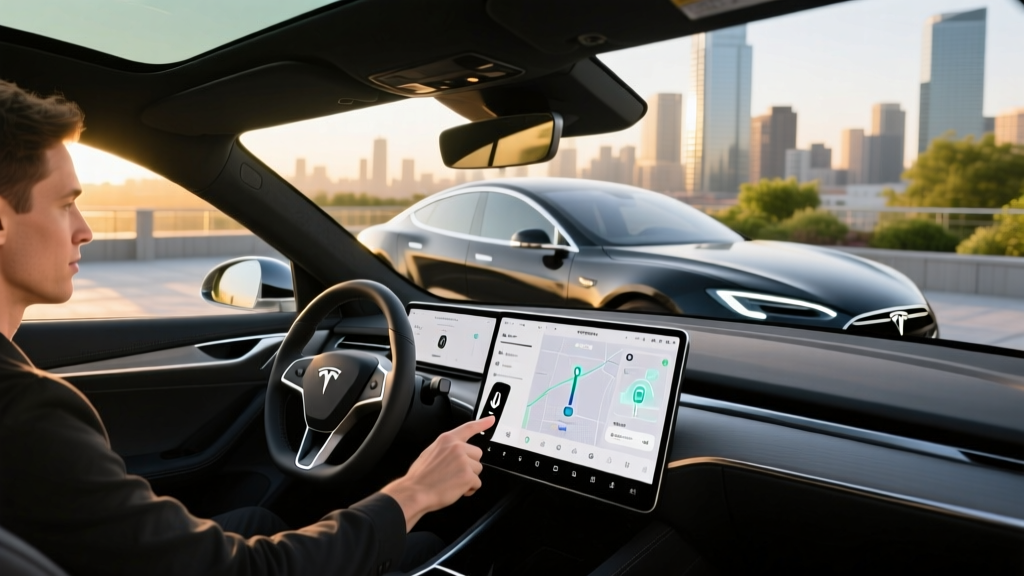
The 10/7 announcement included revised damper tuning and a slightly softer front subframe mount, addressing the most common criticism of the pre-refresh Model 3: ride harshness over expansion joints and rough pavement. The result is a car that still handles with composure but no longer punishes occupants on broken urban roads. Steering remains precise and quick, though some drivers will note the absence of a traditional instrument cluster — all information routes through the 15.4-inch center touchscreen.
Interior, Cargo, and Technology
The 2026 Model 3+ interior received material upgrades announced on 10/7: ventilated front seats are now standard on Long Range and above, ambient lighting is revised, and a rear-seat 8-inch touchscreen controls climate and media for back-seat passengers. The acoustic glass introduced with the prior Highland refresh carries over, keeping cabin noise low at highway speeds.
Cargo space: 23 cubic feet total (19.8 cu ft trunk + 3.1 cu ft frunk). That's competitive with the BMW i4 (17 cu ft trunk, no frunk) but trails the Hyundai Ioniq 5 (27 cu ft behind rear seats). Rear legroom measures 35.2 inches — adequate for adults on shorter trips, tight for tall passengers on long hauls.
Driver assistance: Tesla's Autopilot (adaptive cruise + lane centering) remains standard and is an SAE Level 2 system — meaning the driver must keep hands on the wheel and eyes on the road at all times. Full Self-Driving (Supervised), a $8,000 add-on or $99/month subscription, adds automated lane changes, traffic light recognition, and city street navigation, but it is still Level 2. It does not make the car self-driving. The driver is responsible for every mile.
Pricing, Trims, and Federal Tax Credit Eligibility
| Trim | Base MSRP | Est. After §30D Credit* |
|---|---|---|
| Model 3 RWD | $38,990 | ~$31,490 |
| Model 3+ Long Range AWD | $47,490 | ~$39,990 |
| Model 3 Performance | $54,990 | ~$47,490 |
*Tax credit estimates assume buyer eligibility. Actual credit depends on individual circumstances.
The 2026 Model 3+ Long Range AWD starts at $47,490 (including destination) before options. Adding FSD, a paint color beyond white, or 19-inch wheels pushes as-tested pricing into the $53,000–$57,000 range.
The Model 3+ Long Range AWD currently qualifies for the full $7,500 federal tax credit under IRS §30D, provided the buyer meets all requirements. Per IRS guidelines, eligibility depends on:
- MSRP cap: Vehicle must be under $55,000 (sedans). The Model 3+ base MSRP clears this; heavily optioned units may not.
- Buyer income cap: Modified AGI must not exceed $150,000 (single), $225,000 (head of household), or $300,000 (joint).
- Battery sourcing: Critical minerals and battery components must meet phased-in domestic/content thresholds. Tesla's Austin-built packs currently satisfy these requirements for 2026, but supply-chain shifts can change this mid-year.
- Point-of-sale transfer: Buyers can elect to transfer the credit to the dealer at purchase, reducing the purchase price directly rather than waiting for a tax refund.
Always verify current eligibility at purchase — battery sourcing compliance can change. Consult a tax professional for your specific situation.
Pros, Cons, and the Competition
- Class-leading efficiency at 134 MPGe / 25 kWh/100 mi
- 363-mile EPA range — one of the longest in the segment
- Access to Tesla Supercharger network (17,000+ stalls in North America)
- Improved ride quality post-refresh
- Over-the-air updates continue adding features post-purchase
- Strong resale value relative to EV peers
- No physical instrument cluster or stalks — all controls via touchscreen
- Rear seat legroom tight for tall adults (35.2 in.)
- FSD (Supervised) is expensive and still Level 2, not autonomous
- Repair costs and insurance premiums above segment average
- Minimal dealer network — service center availability varies by region
Is it worth buying vs. key competitors? The Model 3+ competes most directly with the Hyundai Ioniq 6 (316 mi, ~$46,000), BMW i4 xDrive40 (282 mi, ~$57,000), and the Polestar 2 Long Range Dual Motor (320 mi, ~$53,000). The Tesla wins on range, efficiency, and charging infrastructure access. The Ioniq 6 offers a more conventional interior layout and physical controls. The BMW delivers superior build quality and a traditional luxury experience but at a significant price premium with less range. If Supercharger access and maximum range-per-dollar are your priorities, the Model 3+ is the segment benchmark.
Who the 2026 Model 3+ Suits Best
Choose the Model 3+ if: You're a daily commuter with road-trip ambitions who values range above all else, wants the lowest cost-per-mile in the segment, and is comfortable with a touchscreen-centric interface. It's ideal for two-adult households (or families with younger children) who don't regularly haul rear-seat passengers on long drives.
Look elsewhere if: You need generous rear-seat space for adults, prefer physical buttons and a head-up display, live in an area with limited Tesla Service Center access, or want a true luxury-brand badge and dealer experience. Families needing three-across rear seating or frequent cargo hauling should consider the Model Y or Ioniq 5 instead.
Frequently Asked Questions
What is the real-world range of the 2026 Tesla Model 3+?
The EPA estimates 363 miles. In real-world highway driving at 70–75 mph, expect 300–320 miles. In cold weather (below 30°F), plan for 260–290 miles even with preconditioning and heat pump use. City driving with regenerative braking can match or slightly exceed the EPA figure.
How fast does the Model 3+ charge at home and on the road?
On a DC fast charger (Supercharger V3/V4), it peaks at 250 kW and charges from 10–80% in approximately 25 minutes with battery preconditioning. At home on a Level 2 (240V, 48A) charger, it adds about 44 miles of range per hour, reaching a full charge overnight in roughly 7.5 hours from empty.
How much does the Model 3+ cost after the federal tax credit?
The base MSRP is $47,490. If you qualify for the full $7,500 §30D credit (meeting income, MSRP, and sourcing requirements), the effective price drops to approximately $39,990. The credit can be transferred at point of sale, reducing your out-of-pocket cost at purchase. Verify current sourcing compliance at the time of order.
Does the 2026 Model 3+ qualify for the federal EV tax credit?
Yes — as of the 2026 model year, the Model 3+ Long Range AWD qualifies for the full $7,500 credit, provided the buyer's income is under the IRS thresholds ($150K single / $300K joint), the vehicle MSRP stays under $55,000, and battery sourcing requirements are met. These rules can shift; confirm at purchase via the IRS clean vehicle credit page.
Is Tesla's Full Self-Driving actually self-driving?
No. FSD (Supervised) is an SAE Level 2 driver-assistance system. It can navigate highways, change lanes, and handle some city streets, but the driver must remain fully engaged — hands on the wheel, eyes on the road — at all times. True self-driving (Level 4) is currently limited to geofenced robotaxi services like Waymo. The driver bears all legal and safety responsibility when using FSD.
What is the battery warranty on the 2026 Model 3+?
Tesla covers the battery and drive unit for 8 years or 120,000 miles (whichever comes first), with a minimum 70% capacity retention threshold over that period. If the battery degrades below 70% of its original capacity within the warranty window, Tesla will repair or replace it. NMC chemistry in Tesla's packs has shown strong longevity in fleet data, with typical degradation of 10–12% over the first 100,000 miles.