Quick Verdict: Ground vs Sky Electrification
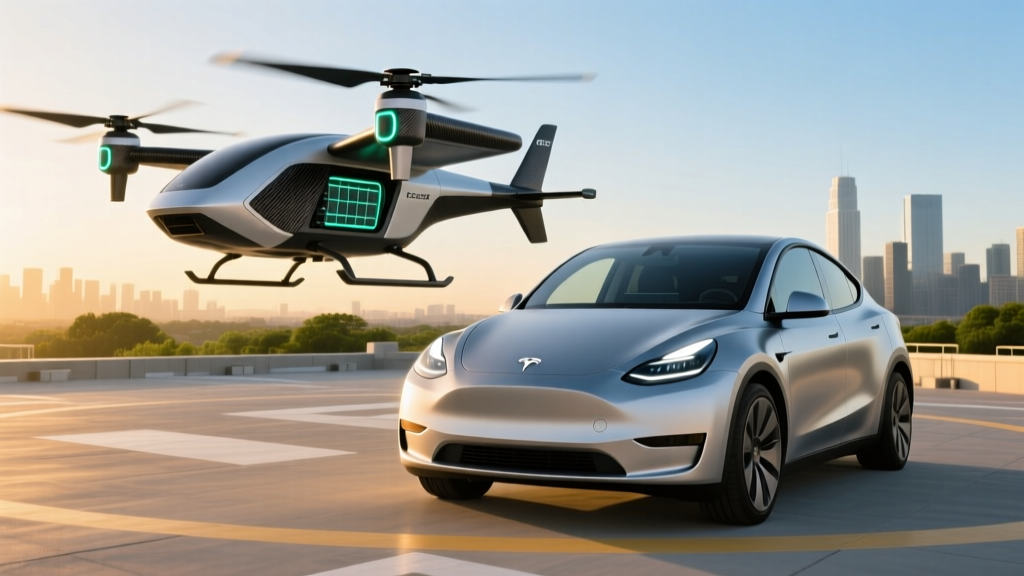
Tesla and Archer Aviation represent two divergent paths of lithium-ion electrification in 2026. Tesla's Model Y remains the best-selling EV in the U.S., with a mature Supercharger network, proven NMC and LFP battery packs, and a starting price near $44,990. Archer Aviation's Midnight eVTOL (electric vertical takeoff and landing aircraft) targets urban air mobility — a 100-mile range, 150 mph cruise speed, and a battery architecture borrowing heavily from automotive EV supply chains. This profile compares their core electrification technology, ownership realities, and what each platform means for buyers and investors in 2026.
| Attribute | Tesla Model Y LR AWD (2026) | Archer Midnight (Announced) |
|---|---|---|
| Vehicle Type | 5-passenger crossover SUV | 4-passenger eVTOL aircraft |
| EPA / Estimated Range | 320 mi (EPA) | ~100 mi (mission profile) |
| Battery Capacity | ~75 kWh usable (NMC) | ~70 kWh (estimated, NMC-based) |
| Peak DC Fast Charge | 250 kW (V3 Supercharger) | Ground charge; specs TBD |
| 10–80% Charge Time | ~27 min | ~30 min (target) |
| 0–60 mph / Top Speed | 4.8 sec / 135 mph | N/A / ~150 mph cruise |
| Power Output | 384 hp (dual motor AWD) | ~1,000+ hp (12 rotors, preliminary) |
| Base Price | $44,990 MSRP | Not consumer-priced (air-taxi service) |
| Federal §30D Tax Credit | Up to $7,500 (eligibility varies) | Not eligible (not a road vehicle) |
| Availability | On sale now | FAA certification pending; commercial service expected 2026–2027 |
Range & Efficiency: Highway Miles vs Mission Profiles
EPA-rated at 320 miles. Expect approximately 270–290 miles in mixed highway driving at 70–75 mph, and as low as 220–240 miles in sustained sub-freezing temperatures. Regenerative braking in city traffic can push real-world efficiency slightly above the EPA estimate, but highway speed and cold weather are the primary range reducers for any BEV.
The Tesla Model Y Long Range AWD carries a 75 kWh usable battery pack using nickel-manganese-cobalt (NMC) chemistry, delivering an EPA-estimated 320 miles and a combined efficiency rating of approximately 122 MPGe (about 28 kWh per 100 miles). The RWD Standard Range variant uses an LFP (lithium iron phosphate) pack — heavier and slightly less energy-dense, but more tolerant of daily 100% charging and offering a longer cycle life.
Archer's Midnight aircraft targets a 100-mile mission profile — enough for a Newark-to-Manhattan or LAX-to-downtown-LA hop with reserves. This isn't EPA-rated because eVTOLs fall under FAA certification, not fueleconomy.gov testing. Archer's battery pack is estimated at roughly 70 kWh, also NMC-based, sourced from automotive-tier suppliers. The key difference: an eVTOL expends significant energy during vertical lift (hover phase), meaning its effective "MPGe equivalent" is far lower than a ground vehicle's. Cruise efficiency at altitude is better, but the vertical takeoff and landing phases are energy-intensive.
Charging Architecture: Supercharger Network vs Vertiport Ground Power
| Level | Tesla Model Y | Archer Midnight (Preliminary) |
|---|---|---|
| Level 1 (120V / 12A) | ~1.4 kW — 3–4 mi/hr | Not applicable |
| Level 2 (240V / 48A) | 11.5 kW — ~37 mi/hr | Not applicable |
| DC Fast Charge | 250 kW peak (V3 Supercharger); ~27 min 10–80% | Ground-based rapid charge; ~30 min turnaround (target) |
| Connector | NACS (native Tesla) | Proprietary ground-power connector |
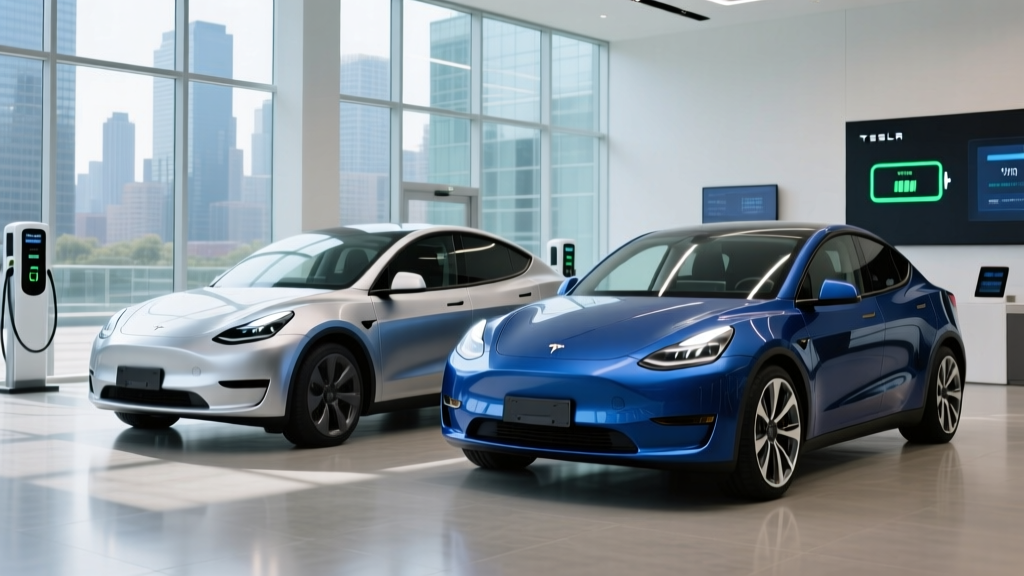
Tesla's charging advantage in 2026 is structural: over 18,000 Supercharger stalls in North America, all using the NACS connector that has now been adopted by Ford, GM, Rivian, Hyundai, and most major automakers. The Model Y peaks at 250 kW on a V3 Supercharger, but sustained charging tapers significantly above 60% State of Charge (SoC). A typical 10–80% session takes about 27 minutes, with the final 20% adding another 15–20 minutes due to the charge curve taper — a reality every EV owner should understand before planning road trips.
Archer's Midnight will charge on the ground at vertiports between flights. The company targets a ~30-minute turnaround using high-power ground charging infrastructure. Unlike consumer EVs, Archer's aircraft won't use public charging networks — each vertiport will have dedicated ground-power equipment. This means charging reliability is controlled, not dependent on third-party networks, but it also means there's no consumer "plug in anywhere" flexibility.
Performance: Dual-Motor Torque vs 12-Rotor Lift
The Model Y Long Range AWD delivers 384 horsepower through dual permanent-magnet synchronous motors, hitting 0–60 mph in 4.8 seconds. The Performance trim drops that to 3.5 seconds with 510 hp. Both use Tesla's torque-vectoring AWD system, and the instant torque delivery characteristic of electric drivetrains makes the Model Y feel quicker than its numbers suggest in daily driving.
Archer's Midnight uses a 12-rotor tilt-wing design with distributed electric propulsion. Total system output is estimated above 1,000 hp to enable vertical lift of a ~6,500 lb aircraft. Cruise speed targets 150 mph at altitude, and the aircraft is designed for short-hop missions under 100 miles. Performance here is measured in climb rate and hover stability rather than 0–60 times — a fundamentally different engineering challenge than ground-based EV acceleration.
Pricing, Tax Credits & Ownership Economics
| Trim | MSRP | §30D Credit (Max) | Effective Price |
|---|---|---|---|
| Long Range RWD | $44,990 | Up to $7,500 | From ~$37,490* |
| Long Range AWD | $47,990 | Up to $7,500 | From ~$40,490* |
| Performance AWD | $52,490 | Up to $7,500 | From ~$44,990* |
*Effective price assumes full §30D eligibility. Actual credit depends on buyer income, battery sourcing, and MSRP caps. See IRS §30D rules.
The Tesla Model Y qualifies as an SUV under IRS §30D guidelines, meaning it is subject to the $80,000 MSRP cap for SUVs (easily met). Buyer income caps apply: $300,000 for joint filers, $225,000 for heads of household, $150,000 for single filers (modified adjusted gross income). The credit also depends on battery-component and critical-mineral sourcing requirements that have tightened through 2026 — not every Model Y configuration may qualify for the full $7,500. The point-of-sale transfer option allows buyers to apply the credit as a down-payment reduction at the dealer, rather than waiting for a tax refund.
Archer's Midnight is not a consumer vehicle and does not qualify for the §30D federal EV tax credit. The aircraft will be operated by air-taxi services (Archer has partnerships with United Airlines), and pricing will be per-seat per-flight — comparable to premium rideshare or helicopter services, estimated at $50–$150 per seat for typical 20–50 mile routes once commercial service scales.
Interior, Cargo & Technology
The Model Y offers 76.2 cubic feet of cargo space with the rear seats folded (30.2 cu ft behind the second row), 40.5 inches of rear legroom, and a 4.1 cu ft front trunk (frunk). The 15.4-inch center touchscreen runs Tesla's proprietary infotainment with native navigation, streaming, and over-the-air updates. Autopilot (SAE Level 2 driver assistance) is standard; Full Self-Driving (Supervised) is a $8,000 add-on that adds automated lane changes, traffic-light recognition, and city-street navigation — but requires continuous driver supervision and is not autonomous driving.
Archer's Midnight cabin seats four passengers plus a pilot (during initial commercial operations under FAA Part 135). Interior space is comparable to a light helicopter — roughly 55–60 cu ft total cabin volume, with airline-style seating and large windows for the urban air-mobility experience. The cockpit features fly-by-wire flight controls and a simplified pilot interface designed to reduce training time compared to traditional helicopters. Passenger tech will include app-based booking, in-flight displays, and climate control.
Warranty, Battery Longevity & Safety
Tesla covers the Model Y battery and drive unit for 8 years or 120,000 miles (whichever comes first), with a guarantee that the battery will retain at least 70% of its original capacity during that period. Real-world degradation data from Tesla's fleet suggests NMC packs lose approximately 10–12% capacity over the first 100,000 miles, with the curve flattening significantly afterward. The vehicle limited warranty is 4 years / 50,000 miles.
Archer's battery packs will be subject to FAA-mandated inspection and replacement cycles far more stringent than automotive standards. Aviation battery packs typically undergo replacement on shorter intervals (estimated every 1,000–3,000 flight hours or 4–6 years) due to the safety-critical nature of flight. Archer has stated its batteries are designed for rapid swap-and-charge workflows at vertiports to minimize aircraft downtime.
Safety ratings diverge completely: the Model Y earns a 5-star overall rating from NHTSA and Top Safety Pick+ from IIHS. Archer's Midnight must achieve FAA Type Certification — a multi-year process involving thousands of test hours, failure-mode analysis, and redundant-system validation — before carrying paying passengers.
Who Each Platform Suits Best
- 320 mi EPA range; mature Supercharger network
- Up to $7,500 §30D tax credit (point-of-sale)
- 76.2 cu ft cargo, family-friendly crossover
- OTA updates, strong resale value
- 250 kW DC fast charging, NACS connector
- FSD (Supervised) is Level 2, not autonomous
- Panel upgrade may be needed for home L2 install
- Cold-weather range loss of 20–30%
- Insurance premiums above segment average
- Ride quality firm on rough pavement
Buy the Tesla Model Y if: You need a daily-driver family EV with proven range, access to the best public charging network, and eligibility for federal tax credits. It's the default choice for commuters, road-trippers, and families transitioning from gas vehicles.
Watch Archer Aviation if: You're an investor, urban planner, or future air-taxi rider interested in the electrification of short-hop aviation. Midnight won't replace your car — it aims to replace your helicopter ride or your hour-long highway commute with a 10-minute flight.
Frequently Asked Questions
What is the real-world range of the Tesla Model Y?
The EPA rates the 2026 Model Y Long Range AWD at 320 miles. In real-world highway driving at 70–75 mph, expect 270–290 miles. In cold weather (below 32°F), range can drop to 220–240 miles due to battery resistance and cabin heating demands.
How fast does the Tesla Model Y charge?
On a V3 Supercharger (250 kW peak), the Model Y charges from 10–80% in approximately 27 minutes. At home on a Level 2 (240V/48A) Wall Connector, it adds about 37 miles per hour, fully recharging overnight in roughly 8 hours.
Does the Tesla Model Y qualify for the federal EV tax credit?
Yes, subject to IRS §30D rules. The Model Y is classified as an SUV ($80,000 MSRP cap), and buyer income must be under $300K joint / $150K single. Battery-component and critical-mineral sourcing requirements apply and change annually — verify current eligibility at irs.gov.
Can consumers buy an Archer Midnight eVTOL?
No. Archer's Midnight is designed for commercial air-taxi service, not individual ownership. United Airlines and other partners plan to operate the aircraft on per-seat routes once FAA certification is complete, expected in the 2026–2027 timeframe.
Is Tesla involved in eVTOL or flying car development?
No. As of 2026, Tesla has no announced eVTOL or aviation program. Tesla's electrification efforts remain focused on ground vehicles (cars, trucks, buses via Semi), energy storage (Powerwall, Megapack), and robotics (Optimus). Archer Aviation is an independent company, though it sources battery cells from the same automotive-grade supply chains Tesla uses.
Is the Tesla Model Y worth buying vs competitors in 2026?
The Model Y remains the segment benchmark for charging infrastructure access and software integration. The Hyundai Ioniq 5 offers comparable range (305 mi) with 800V charging (10–80% in ~18 min). The Ford Mustang Mach-E provides similar space and a more traditional driving feel. Choose the Model Y if Supercharger access and Tesla's software ecosystem matter most; cross-shop the Ioniq 5 and Mach-E for charging speed and interior refinement.