Why Tesla Owners Are Turning to Car Camping
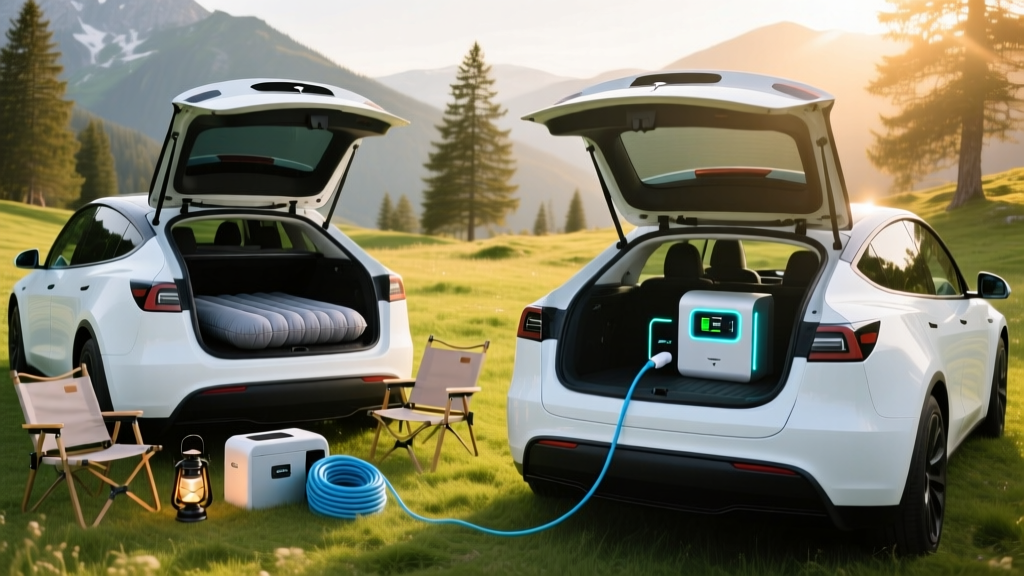
Tesla's flat-folding rear seats and efficient thermal management have turned the Model Y and Model 3 into some of the most popular platforms for car camping. Unlike gas vehicles, a Tesla can run climate control all night without idling emissions or carbon-monoxide risk, making a Tesla air mattress setup one of the most practical ways to sleep off-grid. But not every mattress fits every Tesla, and not every Tesla has the cargo volume to make camping comfortable. This guide breaks down which Tesla models work best for car camping, the exact mattress dimensions you need, how much range Camp Mode actually consumes overnight, and which air mattress brands deliver the best fit for 2026 model-year vehicles.
Which Tesla Model Is Best for Sleeping?
The answer depends on your cargo length, roof height, and whether you prioritize range or interior space. Here is how the current lineup stacks up for car camping:
| Model | Max Cargo Length (seats down) | Cargo Volume (seats down) | EPA Range | Best For |
|---|---|---|---|---|
| Model Y (Long Range AWD) | ~74 inches | 72.1 cu ft | 320 mi | Couples & small families |
| Model 3 (Long Range AWD) | ~68 inches | 23.1 cu ft (trunk+frunk) | 341 mi | Solo campers, minimal gear |
| Model X (Long Range) | ~78 inches | 88.1 cu ft | 329 mi | Families, tall sleepers |
| Cybertruck (AWD) | ~72 inches (bed+tonneau) | 67.0 cu ft (bed) | 340 mi | Rugged overlanding |
The Model Y remains the sweet spot for most campers. Its crossover roofline provides roughly 39 inches of vertical interior height at the cargo area, enough to sit up partially when on a mattress. The Model 3's sedan trunk opening limits mattress width to about 40 inches and requires threading the mattress through a narrower pass-through. The Model X offers the most space but commands a significantly higher MSRP, and the Cybertruck's stainless-steel bed is better suited to a truck-bed tent or rooftop setup than an interior mattress.
Choosing the Right Tesla Air Mattress: Fit & Dimensions
A standard full-size air mattress measures roughly 54 x 75 inches. That fits the Model Y's cargo floor with seats folded, but leaves minimal side clearance. A twin XL (39 x 80 inches) fits the Model 3 trunk pass-through more easily but sacrifices width. Here is what to look for:
Model Y Mattress Requirements
- Max width: ~48 inches between wheel wells
- Max length: ~74 inches (leave 2-3 inches for bedding tuck)
- Recommended type: SUV-specific air mattress with wheel-well cutouts or a custom-fit foam pad
- Inflation clearance: At least 6 inches of mattress height still allows sitting up under the cargo-area ceiling
Model 3 Mattress Requirements
- Trunk pass-through width: ~40 inches at the narrowest point
- Max length with front seats forward: ~68 inches to cargo barrier
- Recommended type: Twin-size or custom-cut foam pad; full-size air mattresses generally do not fit without modification
Top Air Mattress Categories for Teslas
| Type | Pros | Cons | Best Tesla Fit |
|---|---|---|---|
| SUV-shaped inflatable (e.g., FBSPORT, WEY&FLY) | Wheel-well cutouts, built-in headboard extension, quick inflation via 12V pump | Durability concerns, 1-2 season lifespan typical | Model Y, Model X |
| Self-inflating foam pad (e.g., Therm-a-Rest, Exped) | Superior insulation (R-value 5+), durable, compact packing | Heavier, more expensive ($100-$250) | All models |
| Custom-fit memory foam (e.g., Tesmat, Expander) | Exact Tesla cargo dimensions, best comfort, no inflation needed | Bulky to store, $200-$400 | Model Y, Model 3 |
| Standard full/twin inflatable (Intex, Coleman) | Affordable ($25-$60), widely available | No wheel-well accommodation, slides around, poor insulation | Model Y (tight fit) |
For the best balance of comfort and practicality, a custom-fit foam mattress like the Tesmat or a high-R-value self-inflating pad delivers better insulation against the Tesla's metal floor pan than a thin air mattress. The metal floor conducts cold rapidly, so R-value matters as much as cushion thickness.
Camp Mode: Battery Drain, Climate Control & Overnight Range
Tesla's Camp Mode maintains cabin temperature, airflow, and USB power while the vehicle is parked. It disables the automatic walk-away lock and keeps the touchscreen active. But how much range does it actually cost you overnight?
- Mild weather (60-75°F): ~1-2% battery per hour, or roughly 10-15% over an 8-hour night
- Cold weather (20-35°F): ~2-4% per hour, consuming 20-30% overnight as the heat pump works harder
- Hot weather (90°F+, AC running): ~1.5-3% per hour
On a Model Y Long Range with a 320-mile EPA range and ~75 kWh usable battery, a mild-weather night costs roughly 25-35 miles of range. In sub-freezing conditions, expect to lose 60-90 miles of range by morning.
Tesla's heat pump (standard on all current models) is significantly more efficient than the resistive heaters used in older EVs, but cold weather still doubles or triples overnight consumption. If you are camping in winter, precondition the cabin while still plugged in before departing, and consider a rated sleeping bag to reduce the thermostat setting to 55-60°F rather than 70°F.
Powering Accessories: 12V Outlets, USB & V2L Options
Camp Mode keeps USB ports and the 12V accessory outlet live. Here is what you can practically run overnight from your Tesla's battery:
- USB-C ports (up to 65W on 2024+ models): Charge laptops, phones, camera batteries, portable power stations
- 12V outlet (12-15A, ~150-180W max): Small air mattress pumps, LED light strips, 12V fans
- No native AC outlet: Unlike the Ford F-150 Lightning or Hyundai Ioniq 5, Tesla does not offer built-in V2L (vehicle-to-load) AC outlets as of 2026. You need a separate inverter connected to the 12V system for AC devices, limited to ~150W continuous
For inflating an air mattress, a compact 12V pump draws roughly 60-100W and fills a full-size mattress in 3-5 minutes. Keep the pump in your camping kit — Tesla's onboard compressor is for tire repair only and is not designed for mattress inflation.
Specs That Matter for the Camping-Capable Tesla Model Y
Since the Model Y Long Range AWD is the most popular Tesla for air mattress camping, here is the full spec profile for the 2026 model year:
| Specification | Value |
|---|---|
| EPA Range | 320 miles |
| Real-World Highway (70 mph) | ~270-290 miles |
| Real-World Cold Weather (30°F) | ~230-260 miles |
| Battery Capacity (usable) | ~75 kWh, NMC chemistry |
| MPGe (combined) | 111 MPGe |
| Efficiency | 28 kWh/100 mi |
| Max DC Fast Charge | 250 kW (Supercharger V3/V4) |
| 10-80% DC Charge Time | ~27 minutes |
| Level 2 Home Charge (48A/11.5 kW) | ~44 miles per hour |
| 0-60 mph | 4.8 seconds |
| Horsepower | 384 hp (dual motor) |
| Drivetrain | AWD (dual motor) |
| Cargo Volume (rear seats up) | 26.6 cu ft |
| Cargo Volume (rear seats down) | 72.1 cu ft |
| Max Cargo Length (seats folded) | ~74 inches |
| Towing Capacity | 3,500 lbs |
| Ground Clearance | 6.6 inches |
| Battery/Drive Unit Warranty | 8 years / 120,000 miles |
| Base MSRP | $48,990 (before destination) |
Source: EPA Fuel Economy — Tesla Model Y
Pricing, Tax Credits & Total Camping Setup Cost
Here is what a Tesla Model Y camping setup actually costs when you factor in the vehicle, federal tax credit, and camping accessories:
| Item | Cost Range |
|---|---|
| Model Y Long Range AWD (base MSRP) | $48,990 |
| Destination & order fee | ~$1,390 |
| Federal §30D tax credit (if eligible) | -$7,500 (point-of-sale) |
| Custom-fit foam mattress (Tesmat or similar) | $200-$350 |
| Window covers / privacy shades | $50-$120 |
| 12V air pump + LED camping lights | $30-$60 |
| Portable power station (EcoFlow/Jackery for AC devices) | $200-$500 |
| Estimated net vehicle cost after credit | ~$42,880 |
| Total camping setup (vehicle + gear) | ~$43,400-$44,300 |
Federal Tax Credit Eligibility (§30D) — Key Rules
As of 2026, the Tesla Model Y Long Range assembled at Giga Texas may qualify for the full $7,500 federal tax credit under IRS §30D, but eligibility depends on several conditions:
- MSRP cap: SUVs/crossovers must be under $80,000 — the Model Y qualifies
- Buyer income cap: AGI must not exceed $150,000 (single), $225,000 (head of household), or $300,000 (joint)
- Battery sourcing: Critical minerals and battery components must meet phased percentage thresholds from US or FTA-partner countries — verify current-year compliance on the IRS eligible vehicle list before purchasing
- Point-of-sale transfer: You can transfer the credit to the dealer at purchase, reducing your out-of-pocket cost immediately rather than waiting for tax filing
Always confirm eligibility on fueleconomy.gov and consult a tax professional before relying on the credit.
Camp Mode Setup: Step-by-Step
Getting your Tesla ready for a night on an air mattress takes about 10 minutes:
- Fold rear seats flat — pull the seat-release levers in the cargo area or use the touchscreen
- Slide the mattress in — for inflatable types, partially inflate outside, then slide in and fully inflate using a 12V pump
- Install window covers — reflective covers on all windows prevent condensation and add privacy
- Enable Camp Mode — Controls → Safety → Camp Mode (or use the Tesla app)
- Set climate to 62-66°F — lower temperatures reduce battery drain significantly; supplement with a sleeping bag rated to 30°F or lower
- Crack one window 0.5 inch — reduces interior condensation buildup, which is significant with two people breathing overnight in a sealed cabin
- Set charge limit to 90% — NMC batteries benefit from not sitting at 100% for extended periods, and 90% provides ample overnight buffer
Pros & Cons of Tesla Car Camping
Pros
- Zero-emission overnight climate control — no idling, no CO risk
- Heat pump efficiency keeps overnight drain to 10-15% in mild weather
- Model Y's 72+ cu ft cargo volume fits a full-size mattress
- Supercharger network enables camping trips with easy charging stops
- Camp Mode maintains USB power for devices all night
- Flat-folding seats create a genuinely level sleeping surface
- Sentry Mode provides campsite security while you sleep
Cons
- No native V2L AC outlet — need external inverter for AC appliances
- Cold-weather camping doubles battery consumption (20-30% overnight)
- Model 3 sedan trunk opening limits mattress size significantly
- No roof rails on Model Y (removed in refresh) — limits rooftop tent options
- Low ground clearance (6.6 in) restricts off-road campsite access
- Metal floor pan conducts cold — requires insulated mattress or pad
- Touchscreen glare can be disruptive without proper dimming/settings
Is a Tesla Worth Buying for Car Camping vs. Competitors?
If car camping is a primary use case, the Model Y competes against several alternatives:
| Vehicle | Cargo Volume (seats down) | EPA Range | V2L | Starting MSRP |
|---|---|---|---|---|
| Tesla Model Y LR AWD | 72.1 cu ft | 320 mi | No | $48,990 |
| Hyundai Ioniq 5 (Long Range AWD) | 59.3 cu ft | 290 mi | Yes (V2L adapter) | $49,500 |
| Kia EV6 (Long Range AWD) | 50.1 cu ft | 282 mi | Yes (V2L adapter) | $48,700 |
| Ford F-150 Lightning (XLT) | Bed: 52.8 cu ft | 240 mi | Yes (Pro Power Onboard) | $54,995 |
| Rivian R1S (Dual-Motor) | 104.7 cu ft | 352 mi | Yes | $75,900 |
The Model Y offers the best cargo-to-price ratio for interior sleeping among crossovers. The Ioniq 5 and EV6 offer V2L but sacrifice 10-20 cubic feet of cargo space. The F-150 Lightning excels at truck-bed camping with Pro Power Onboard but has lower range and a higher price. The Rivian R1S is the ultimate camping SUV but costs $25,000+ more.
Frequently Asked Questions
What size air mattress fits a Tesla Model Y?
A full-size air mattress (54 x 75 inches) fits the Model Y cargo area with seats folded, though width between the wheel wells is approximately 48 inches. An SUV-specific mattress with wheel-well cutouts or a custom-fit foam pad sized to Tesla's cargo dimensions provides a better fit without dead space.
How much battery does Tesla Camp Mode use overnight?
In mild weather (60-75°F), Camp Mode consumes roughly 1-2% battery per hour, totaling 10-15% over an 8-hour night. In cold weather below freezing, consumption increases to 2-4% per hour, or 20-30% overnight. On a Model Y with 320 miles of range, that translates to roughly 30-90 miles of range used depending on temperature.
Does the Tesla Model 3 work for car camping?
The Model 3 works for solo campers using a twin-size mattress, but the sedan's trunk pass-through limits width to roughly 40 inches and length to about 68 inches. It is best suited for a thin foam pad rather than a thick inflatable mattress. Couples will find the Model Y significantly more practical.
Can I power an air pump from my Tesla?
Yes. The 12V accessory outlet in the cargo area can power a compact 12V air pump (typically 60-100W draw) to inflate a mattress in 3-5 minutes. The USB-C ports cannot power an air pump. Tesla's onboard tire inflator kit is not designed for mattress use.
Does the Tesla Model Y qualify for the $7,500 federal tax credit?
The Model Y assembled at Giga Texas may qualify for the full $7,500 §30D credit in 2026, subject to buyer income limits ($150K single / $300K joint), the $80,000 SUV MSRP cap, and battery-sourcing requirements. The credit can be transferred at point of sale. Always verify current eligibility on IRS.gov before purchasing.
What is the best Tesla for camping with a family?
The Model X offers the most interior space (88.1 cu ft with seats folded, ~78-inch cargo length) and accommodates a queen-size mattress. However, its $80,000+ starting price and lower efficiency make the Model Y the more practical choice for most families, especially with children who require less sleeping length.
Do I need a special mattress or will any air mattress work?
Any standard full-size inflatable mattress physically fits a Model Y, but SUV-specific mattresses with contoured edges and integrated headboard extensions provide better coverage and comfort. For cold-weather camping, a self-inflating foam pad with an R-value of 5 or higher insulates far better than an air mattress against the Tesla's conductive metal floor.