The AI5 Chip: Why a Silicon Milestone Matters to EV Buyers
When Elon Musk confirmed that Tesla taped out the design for its next-generation AI5 chip, it wasn't just a semiconductor story — it was a signal about the trajectory of Tesla's vehicles, driver-assistance systems, and eventual robotaxi ambitions. For current and prospective Tesla buyers, the AI5 chip raises a practical question: Should I wait for hardware 5.0 vehicles, or buy now?
This article breaks down what the AI5 tape-out means for Tesla's lineup, then grounds the discussion in hard specs for the vehicles you can actually buy today — including the refreshed 2026 Model Y and Model 3 — so you can make an informed decision without speculation-driven paralysis.
What 'Taped Out' Actually Means
In semiconductor design, a "tape-out" is the final step before a chip design is sent to a fabrication facility (foundry) for manufacturing. It means Tesla has completed the logical and physical design of the AI5 and locked it for production. This is a significant engineering milestone, but it does not mean the chip is in cars today.
Typical timelines from tape-out to volume production in vehicles span 12–24 months, accounting for:
- Fab manufacturing and yield ramp (4–6 months)
- Automotive qualification testing (AEC-Q100 standards, 3–6 months)
- Integration into Tesla's HW5.0 computer and vehicle validation (6–12 months)
Realistically, vehicles with the AI5 chip could begin reaching customers in late 2027 or 2028 — not immediately.
Current Tesla Lineup: What You Can Buy in 2026
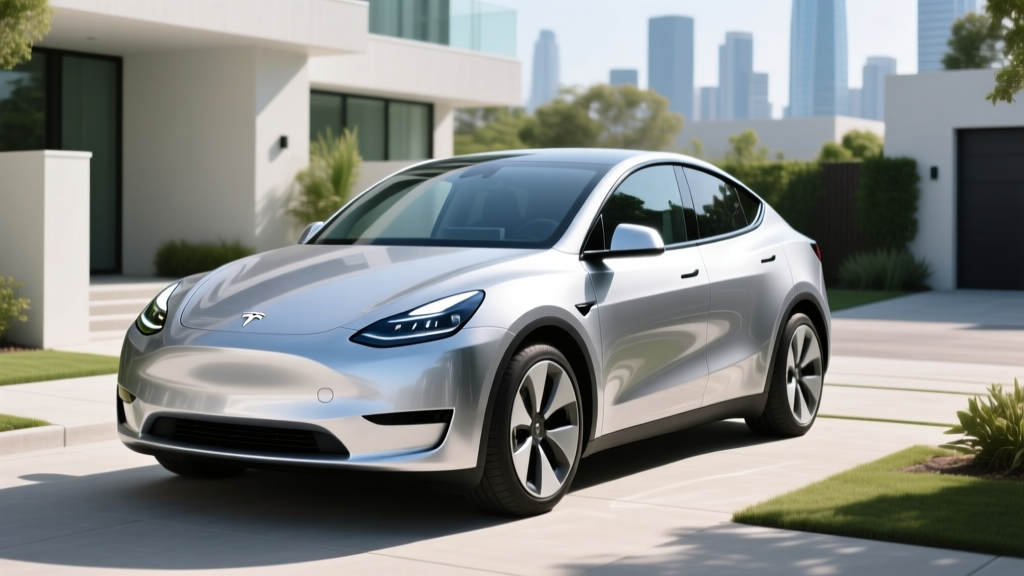
While the AI5 chip is future hardware, Tesla's current lineup runs on Hardware 4.0 (HW4.0), which powers FSD (Supervised) across all new vehicles. Here are the specs that matter for today's buyers, focused on the highest-volume models.
| Spec | Value |
|---|---|
| EPA Range | 320 miles |
| Battery Capacity | ~79 kWh usable (NMC chemistry) |
| Efficiency | 28 kWh/100 mi (120 MPGe combined) |
| Max DC Fast Charge | 250 kW peak |
| 10–80% DC Charge Time | ~25 minutes |
| Level 2 Home Charge Rate | 11.5 kW (~44 mi/hr) |
| 0–60 mph | 4.8 seconds |
| Horsepower | 384 hp (dual motor AWD) |
| Cargo Volume | 34.3 cu ft (rear seats up) / 76.2 cu ft (folded) |
| Base MSRP | $48,990 (before incentives) |
| Battery Warranty | 8 years / 120,000 miles (min 70% retention) |
| Spec | Value |
|---|---|
| EPA Range | 346 miles |
| Battery Capacity | ~79 kWh usable (NMC chemistry) |
| Efficiency | 26 kWh/100 mi (130 MPGe combined) |
| Max DC Fast Charge | 250 kW peak |
| 10–80% DC Charge Time | ~25 minutes |
| Level 2 Home Charge Rate | 11.5 kW (~48 mi/hr) |
| 0–60 mph | 4.2 seconds |
| Horsepower | 384 hp (dual motor AWD) |
| Cargo Volume | 23 cu ft trunk + frunk |
| Base MSRP | $47,740 (before incentives) |
| Battery Warranty | 8 years / 120,000 miles (min 70% retention) |
Source: EPA Fuel Economy, Tesla Model Y specs.
Real-World Range: Beyond the EPA Sticker
EPA Estimated: 320 miles
Real-World Highway (75 mph, mild weather): ~270–290 miles
Real-World Cold Weather (below 32°F, highway): ~230–260 miles
City/Stop-and-Go (regen-heavy): ~300–320 miles
Tesla's EPA range figures are among the more realistic in the industry, but physics still applies. At sustained highway speeds above 70 mph, aerodynamic drag increases consumption significantly. In cold weather, battery chemistry (NMC in the Long Range trims) becomes less efficient, and cabin heating draws from the pack — even with Tesla's standard heat pump, expect a 15–25% range reduction in sub-freezing conditions.
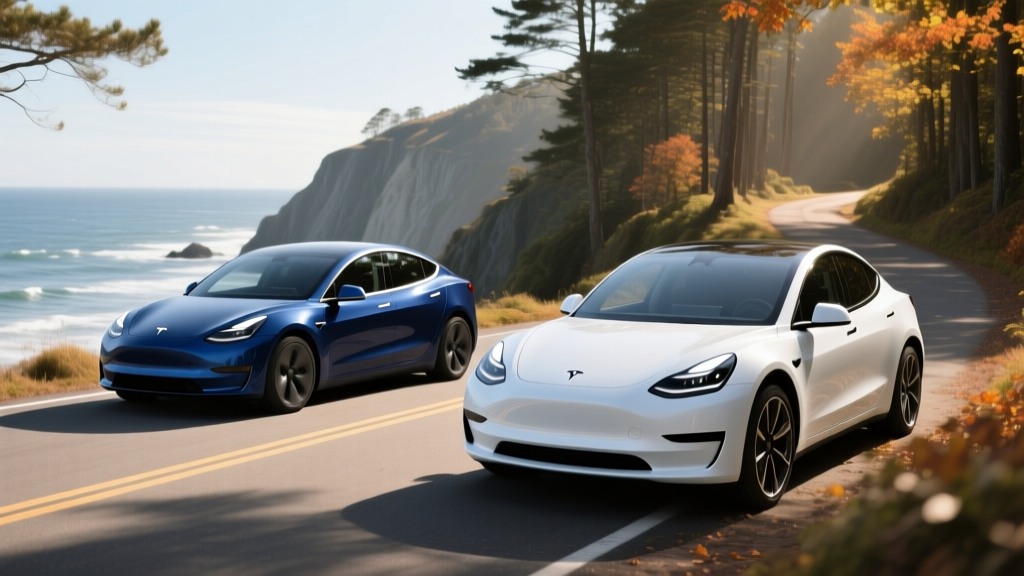
The Model 3 sedan, with its lower drag coefficient, typically outperforms the Model Y by 10–15 miles in real-world highway driving despite sharing the same battery pack.
Charging Speed: DC Fast and Home Level 2
| Charging Level | Power / Rate | Miles Added | Notes |
|---|---|---|---|
| Level 1 (120V outlet) | ~1.4 kW | ~3–5 mi/hr | Emergency/trickle only |
| Level 2 (240V, 48A) | 11.5 kW | ~44–48 mi/hr | Full charge overnight (~7–8 hrs) |
| DC Fast (Tesla Supercharger V3) | 250 kW peak | ~200 mi in 15 min | Peak rate at low SoC; tapers above 60% |
| DC Fast (CCS adapter + third-party) | Up to 250 kW | Varies by station | Requires Tesla CCS adapter (included with new vehicles) |
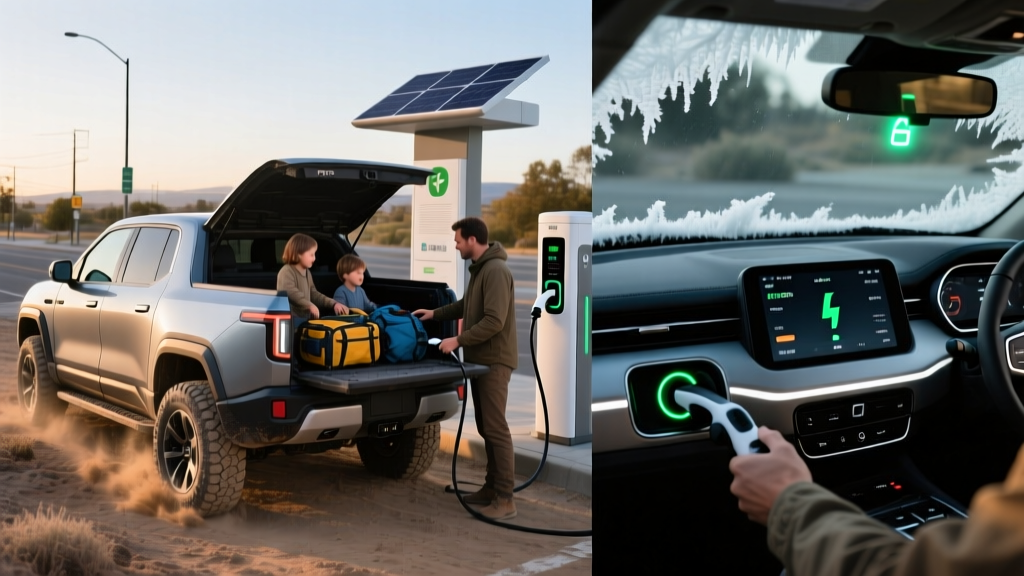
Charge curve reality: Tesla's 250 kW peak rate is achieved between roughly 10–30% State of Charge (SoC). Above 60%, the charge rate drops significantly — often below 100 kW by 75% SoC. This is normal lithium-ion behavior to protect battery health. A 10–80% session takes approximately 25 minutes at a V3 Supercharger, but plan for ~35 minutes if starting from a very low SoC on a cold battery without preconditioning.
Preconditioning matters: Always navigate to a Supercharger using the Tesla app or in-car navigation before arriving. This warms the battery to optimal charging temperature and can shave 5–10 minutes off your session, especially in cold weather.
Pricing, Trims, and Federal Tax Credit Eligibility
| Model / Trim | MSRP | §30D Credit (Est.) | Effective Price |
|---|---|---|---|
| Model 3 RWD | $38,990 | Up to $7,500 | ~$31,490 |
| Model 3 Long Range AWD | $47,740 | Up to $7,500 | ~$40,240 |
| Model Y Long Range AWD | $48,990 | Up to $7,500 | ~$41,490 |
| Model Y Performance | $52,490 | Up to $7,500 | ~$44,990 |
- MSRP Cap: SUVs/vans/pickups ≤ $80,000; sedans ≤ $55,000 (Model 3 qualifies; all current Model Y trims qualify as SUV-class)
- Buyer Income Cap: AGI ≤ $150K (single), $225K (head of household), $300K (joint)
- Battery Sourcing: Critical minerals and battery components must meet escalating domestic/free-trade sourcing thresholds — Tesla has worked to qualify, but eligibility can shift by model year and build date
- Point-of-Sale Transfer: Eligible buyers can apply the credit as a purchase-price reduction at the dealer/direct sale, rather than waiting for a tax refund
- Verification: Always confirm current eligibility on IRS.gov and the DOE's fueleconomy.gov tax credit page before purchasing
Important caveat: Tax credit eligibility for specific Tesla models has shifted multiple times due to battery component and critical mineral sourcing rules. The Model 3 RWD (which has used LFP batteries from CATL in some production runs) has seen its credit eligibility change — always verify the exact build you're ordering.
Standout Tech and Notable Drawbacks
- Supercharger network — still the most reliable DC fast-charging ecosystem in North America, with 25,000+ stalls
- FSD (Supervised) continuous improvement via over-the-air updates on HW4.0
- Class-leading efficiency (kWh/100mi) in both Model 3 and Model Y segments
- Minimalist interior with 15.4" center display, excellent app integration, and Sentry Mode
- Strong resale value relative to most EV competitors
- Heat pump standard — better cold-weather range retention than resistive heating
- No Apple CarPlay or Android Auto — Tesla's infotainment is proprietary
- Rear-seat comfort and visibility in Model Y improved with Juniper refresh but still trails Hyundai Ioniq 5 and Kia EV6
- FSD (Supervised) requires constant driver attention — it is not autonomous despite the name
- Panel gap quality and interior material choices remain a common complaint vs. luxury competitors
- Turn signal stalks removed on refreshed models — steering-wheel-mounted buttons require relearning
- Insurance costs 15–30% higher than comparable gas vehicles in most states
What the AI5 Chip Changes — and What It Doesn't
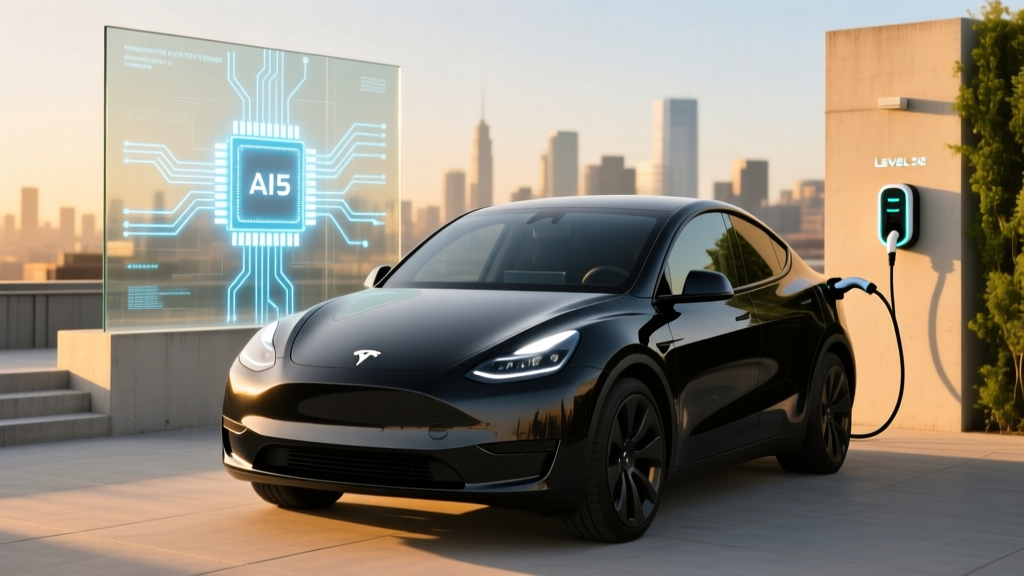
Tesla's AI5 chip is designed to dramatically increase onboard inference performance for neural network processing. Musk has stated it will deliver roughly 5x the compute performance of HW4.0 while consuming less power per inference. Here's what that means practically:
- FSD capability: More compute enables larger, more complex neural networks running in real time — potentially improving object detection, path planning, and edge-case handling. But software quality, training data, and validation remain equally important.
- Power efficiency: A more efficient chip means less energy diverted from the battery for compute, marginally improving range (likely single-digit miles).
- Robotaxi ambitions: The AI5 is a prerequisite for Tesla's planned unsupervised FSD and robotaxi service, but regulatory approval (Level 4 certification) is a separate, significant hurdle with no guaranteed timeline.
- Current vehicles: HW4.0 vehicles will not be retrofitted with AI5. Tesla has historically not offered hardware upgrades for existing vehicles.
Should You Wait for AI5 or Buy Now?
- Buy now if: You need a vehicle in 2026, you can charge at home, and the current Model Y or Model 3 meets your range and space needs. HW4.0 FSD (Supervised) is functional for highway and city driving with active supervision, and Tesla's Supercharger network provides reliable road-trip charging today.
- Wait for AI5/HW5.0 if: You're primarily interested in Tesla's long-term autonomy vision, you don't need a vehicle urgently, or you plan to use FSD extensively and want the best possible hardware foundation. Expect HW5.0 vehicles no earlier than late 2027.
- Consider competitors now if: You want Apple CarPlay, more rear-seat comfort, or faster DC charging (Hyundai Ioniq 5 peaks at 350 kW on 800V architecture; Tesla remains at 400V/250 kW).
How Current Teslas Compare to Key Competitors
| Spec | Tesla Model Y LR AWD | Hyundai Ioniq 5 Limited AWD | Kia EV6 GT-Line AWD | Ford Mustang Mach-E Premium AWD |
|---|---|---|---|---|
| EPA Range | 320 mi | 290 mi | 282 mi | 290 mi |
| Battery | ~79 kWh NMC | 84 kWh NMC | 77.4 kWh NMC | 91 kWh NMC (extended) |
| Max DC Charge | 250 kW | 350 kW (800V) | 350 kW (800V) | 150 kW |
| 10–80% Time | ~25 min | ~18 min | ~18 min | ~38 min |
| 0–60 mph | 4.8 sec | 5.1 sec | 5.1 sec | 5.1 sec |
| Base MSRP (comparable trim) | $48,990 | $52,600 | $51,900 | $48,995 |
| Charging Network | Supercharger native | NACS adapter for SC access | NACS adapter for SC access | NACS adapter for SC access |
The Hyundai/Kia 800V architecture delivers meaningfully faster DC charging — an 18-minute 10–80% session vs. Tesla's 25 minutes. On a road trip with multiple fast-charge stops, this adds up. However, Tesla's Supercharger network still leads in reliability and stall availability. Hyundai, Kia, and Ford now have NACS adapters enabling Supercharger access, narrowing this gap.
Frequently Asked Questions
What is the real-world range of the 2026 Tesla Model Y?
The EPA rates the Model Y Long Range AWD at 320 miles. In real-world highway driving at 75 mph in mild weather, expect 270–290 miles. In cold weather (below 32°F), plan for 230–260 miles due to battery chemistry limitations and cabin heating demands.
How fast does a Tesla charge at home and on the road?
On a Level 2 home charger (240V, 48A), the Model Y adds approximately 44 miles of range per hour, fully charging overnight in 7–8 hours. At a Tesla V3 Supercharger, it peaks at 250 kW and charges from 10–80% in about 25 minutes — though the rate tapers significantly above 60% SoC.
How much does a Tesla cost after the federal tax credit?
If you qualify for the full $7,500 §30D credit (meeting income, MSRP, and battery-sourcing requirements), the Model 3 RWD drops to approximately $31,490 and the Model Y Long Range AWD to about $41,490. The credit can now be applied at point of sale as a purchase-price reduction. Always verify current eligibility at IRS.gov.
Is Tesla still worth buying vs. Hyundai, Kia, and Ford?
Tesla leads in efficiency, Supercharger network access, and software integration. Hyundai/Kia lead in DC charging speed (800V architecture, 350 kW peak) and rear-seat comfort. Ford competes on price. If Supercharger reliability and efficiency are your top priorities, Tesla remains strong. If fastest possible road-trip charging matters more, the Ioniq 5 or EV6 are compelling alternatives.
Does the AI5 chip affect current Tesla vehicles?
No. The AI5 chip is for future Hardware 5.0 vehicles, expected no earlier than late 2027. Current Tesla vehicles use HW4.0, which will continue to receive FSD (Supervised) software updates. Tesla has not historically offered retroactive hardware upgrades to existing vehicles.
Does the Tesla Model Y qualify for the $7,500 federal EV tax credit?
Eligibility depends on your income (AGI ≤ $300K joint), the vehicle's MSRP (≤ $80K for SUVs — all Model Y trims qualify), and battery component/critical mineral sourcing requirements that change by build date. Tesla's credit eligibility has shifted multiple times — confirm your specific order's eligibility on the IRS clean vehicle credit page before finalizing your purchase.
Sources: fueleconomy.gov, Tesla.com, IRS.gov §30D Clean Vehicle Credits, NHTSA.gov.