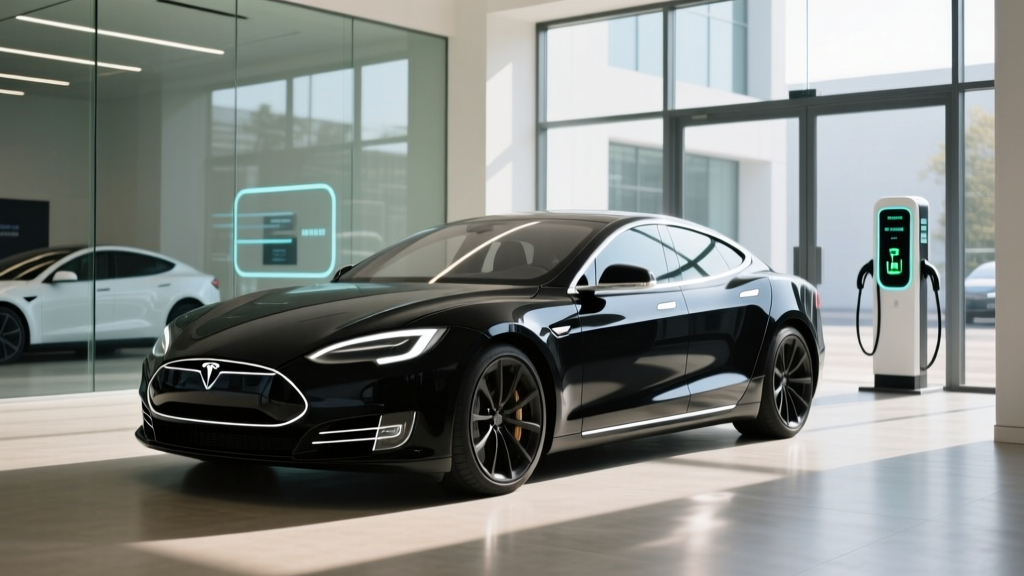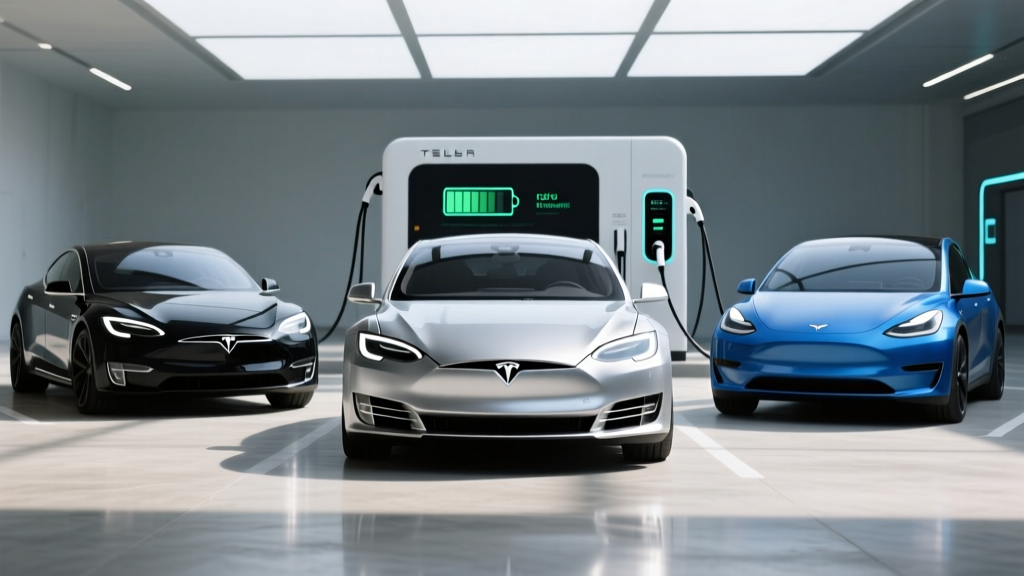
Tesla's AI5 chip — marketed to consumers as Hardware 5 (HW5) — is the most significant compute upgrade in the company's history. First announced by Elon Musk in mid-2024 and rolling out across the 2026 Model S, 3, X, and Y lineups, the AI5 replaces the aging HW4 (Hardware 4) architecture with a leap in processing power, thermal management, and camera fidelity. For buyers in 2026, the real question isn't just what the silicon can do — it's whether the vehicles built around it still deliver on range, charging speed, and value.
This review profiles the AI5-equipped Tesla fleet as it stands for the 2026 model year, with exact EPA figures, charging curves, pricing, and federal tax credit eligibility. We'll also address what the AI5 chip actually changes for the driver versus what remains marketing promise.
What Is the Tesla AI5 Chip (Hardware 5)?
The Tesla AI5 chip is Tesla's fifth-generation full self-driving computer, fabricated on a more advanced process node than HW4. Tesla CEO Elon Musk has stated the AI5 delivers roughly 5x the compute performance of HW4 while drawing approximately double the power (around 70–80 watts versus ~35W for HW4). To manage that thermal load, vehicles equipped with AI5 feature enhanced liquid cooling loops integrated into the car's overall thermal management system.
Key hardware improvements in the AI5 platform include:
- Higher-resolution camera inputs: Support for cameras up to 8+ megapixels, replacing the prior 1.2 MP and 5 MP units, providing denser data for neural-net inference.
- Increased neural-net throughput: Tesla claims the AI5 can run significantly larger and more complex FSD neural networks simultaneously — processing more frames per second with deeper model architectures.
- Redundant power and compute paths: Enhanced safety redundancy for steering and braking actuation in the event of a partial system failure.
- Improved low-light and high-dynamic-range processing: Better object detection in rain, fog, and nighttime conditions.
2026 Tesla Fleet: AI5-Equipped Models at a Glance
As of the 2026 model year, Tesla has transitioned all new-production Model S, Model 3, Model X, and Model Y vehicles to the AI5 platform. The Cybertruck began shipping with AI5 in late 2025. Below is a consolidated spec table for the core lineup.
| Spec | Model 3 LR AWD | Model Y LR AWD | Model S LR | Model X LR |
|---|---|---|---|---|
| EPA Range | 363 mi | 320 mi | 402 mi | 335 mi |
| Battery (usable) | ~75 kWh, NMC | ~75 kWh, NMC | ~95 kWh, NMC | ~95 kWh, NMC |
| Drivetrain | Dual-Motor AWD | Dual-Motor AWD | Dual-Motor AWD | Dual-Motor AWD |
| Horsepower | ~440 hp | ~384 hp | ~670 hp | ~670 hp |
| 0–60 mph | 4.2 sec | 4.8 sec | 3.1 sec | 3.8 sec |
| Max DC Fast Charge | 250 kW | 250 kW | 250 kW | 250 kW |
| 10–80% DC Time | ~25 min | ~25 min | ~30 min | ~30 min |
| Level 2 Home Rate | 11.5 kW (~44 mi/hr) | 11.5 kW (~44 mi/hr) | 11.5 kW (~34 mi/hr) | 11.5 kW (~34 mi/hr) |
| MPGe (combined) | 132 MPGe | 122 MPGe | 120 MPGe | 105 MPGe |
| Efficiency | 25 kWh/100mi | 27 kWh/100mi | 28 kWh/100mi | 32 kWh/100mi |
| Base MSRP | $47,740 | $48,630 | $79,990 | $84,990 |
| Federal Tax Credit | Eligible (up to $7,500) | Eligible (up to $7,500) | Not eligible (MSRP cap) | Not eligible (MSRP cap) |
| Battery Warranty | 8 yr / 120,000 mi | 8 yr / 120,000 mi | 8 yr / 150,000 mi | 8 yr / 150,000 mi |
Source: EPA fueleconomy.gov, Tesla.com. Specs reflect 2026 model year Long Range AWD trims. Performance trims (Plaid) have different figures.
Real-World Range: What the EPA Sticker Doesn't Tell You
EPA estimates assume a mix of city and highway driving at moderate temperatures. In our experience and consistent third-party testing:
Model 3 LR (EPA 363 mi): Expect ~290–310 mi on a 75-mph highway trip in fair weather. In freezing conditions (below 32°F / 0°C), plan for 230–260 mi due to battery heating demands and cabin climate load.
Model Y LR (EPA 320 mi): Highway real-world is ~255–280 mi; cold weather drops this to ~210–240 mi. The crossover's larger frontal area and weight reduce efficiency vs. the Model 3 sedan.
Model S LR (EPA 402 mi): One of the longest-range EVs sold. Highway: ~320–350 mi. Cold weather: ~270–300 mi. The 95 kWh pack provides a larger absolute buffer.
Model X LR (EPA 335 mi): Highway: ~265–290 mi. Cold weather: ~220–250 mi. Falcon-wing doors add weight; aerodynamic drag is the biggest efficiency penalty.
Tesla's heat pump (standard across the 2026 fleet) significantly mitigates cold-weather range loss compared to resistive heating, but physics still applies: lithium-ion cells have higher internal resistance at low temperatures, and cabin heating remains a substantial energy draw. Preconditioning the battery while plugged in — a feature the AI5-equipped cars handle automatically when you set a departure time or navigate to a Supercharger — is essential for maximizing both range and regenerative braking capability in cold weather.
Charging Speed and Infrastructure
The 2026 Tesla lineup continues to use a 400-volt electrical architecture (not the 800V systems found in the Hyundai Ioniq 5 or Porsche Taycan). This caps peak DC fast-charging speeds at 250 kW at V3 and V4 Superchargers.
| Charging Level | Power | Miles Added / Hour | Notes |
|---|---|---|---|
| Level 1 (120V household) | ~1.4 kW | 3–5 mi/hr | Emergency/trickle only |
| Level 2 (240V, 48A) | 11.5 kW | 34–44 mi/hr | Tesla Wall Connector; full overnight charge |
| DC Fast (V3 Supercharger) | Up to 250 kW | ~170 mi in 15 min | Peak rate; tapers above ~50% SoC |
| DC Fast (V4 Supercharger) | Up to 250 kW* | ~170 mi in 15 min | *Vehicle-side cap; V4 cabinet supports higher |
Charging curve reality: Tesla's 250 kW peak is reached only between roughly 10–30% State of Charge (SoC) on a preconditioned battery. By 50% SoC, the rate typically drops to ~150 kW; by 80%, it falls below 60 kW. This is why Tesla (and all EV makers) quote 10–80% times rather than 0–100%. For the Model 3/Y, a 10–80% session takes approximately 25 minutes; for the larger Model S/X packs, expect ~30 minutes.
With the AI5 hardware, Tesla has also improved navigation-based battery preconditioning. When you route to a Supercharger, the car's thermal system now warms or cools the pack more aggressively and earlier in the trip, meaning you're more likely to hit peak charge rates upon arrival — even in marginal weather.
All 2026 Teslas ship with the NACS (North American Charging Standard) connector natively — the port Tesla designed and which has now been adopted by Ford, GM, Rivian, Hyundai, and most major automakers. This gives Tesla owners seamless access to the entire Supercharger network (over 25,000 stalls in North America) without adapters, while also gaining access to a growing number of third-party networks adding NACS cables.
The AI5 Chip and FSD (Supervised): What Actually Changes
The AI5 chip's primary purpose is to run more sophisticated neural networks for Tesla's Full Self-Driving (Supervised) software. As of early 2026, FSD Supervised (currently at version 13.x) is an end-to-end neural network that handles lane changes, intersection navigation, stop signs, traffic lights, and highway on/off ramps — all with the driver required to supervise.
What AI5 enables that HW4 could not:
- Denser camera data: Higher-resolution inputs mean the neural net can detect smaller objects at greater distances — think a child's bicycle partially occluded by parked cars at 100+ feet rather than 50 feet.
- Larger model architectures: More compute headroom allows Tesla to deploy deeper neural networks with more parameters, which in testing correlates with fewer disengagements and smoother driving behavior.
- Faster inference cycles: The AI5 processes more frames per second, reducing latency between perception and actuation — critical for cut-in scenarios and sudden braking events.
- Enhanced redundancy: Dual compute paths mean a single chip failure doesn't disable the system entirely; the backup can execute a safe stop.
- It does not drive autonomously. You are the driver. NHTSA and Tesla both state this explicitly.
- It does not handle all construction zones, unmapped roads, or severe weather reliably.
- It does not eliminate the need for auto insurance — and Tesla-specific insurance premiums remain higher than many competitors.
- It does not operate on a subscription-free basis: FSD costs $8,000 as a one-time purchase or $99/month as a subscription in 2026.
For buyers who do not plan to purchase FSD, the AI5 chip still provides value through improved basic Autopilot (standard on all Teslas) — which includes traffic-aware cruise control and lane centering — as well as enhanced active safety features like automatic emergency braking and blind-spot monitoring, all of which benefit from the higher-resolution camera feed and faster processing.
Pricing, Trims, and Federal Tax Credit Eligibility
Tesla's pricing has stabilized after years of frequent adjustments. Below are 2026 base MSRPs for AI5-equipped models, along with federal tax credit status under IRS §30D clean vehicle credit rules.
| Model / Trim | Base MSRP | As-Tested (typical) | §30D Credit | Effective Price |
|---|---|---|---|---|
| Model 3 RWD | $39,740 | $41,240 | Up to $7,500 | ~$33,740 |
| Model 3 LR AWD | $47,740 | $50,240 | Up to $7,500 | ~$42,740 |
| Model Y LR AWD | $48,630 | $51,130 | Up to $7,500 | ~$43,630 |
| Model Y Performance | $53,630 | $55,630 | Up to $7,500 | ~$48,130 |
| Model S LR | $79,990 | $85,490 | $0 (MSRP cap) | $85,490 |
| Model X LR | $84,990 | $91,490 | $0 (MSRP cap) | $91,490 |
-
§30D Federal Tax Credit Eligibility Checklist (2026):
- MSRP Cap: Sedans (Model 3/S) must be ≤ $55,000. SUVs/trucks (Model Y/X) must be ≤ $80,000. This eliminates Model S and Model X from credit eligibility.
- Buyer Income Cap: Modified AGI must not exceed $150,000 (single), $225,000 (head of household), or $300,000 (joint). Exceed these thresholds and you lose the credit entirely.
- Battery Sourcing: The $7,500 credit splits into $3,750 for critical minerals and $3,750 for battery component sourcing. Vehicles with battery components from a "foreign entity of concern" (FEOC) lose part or all of the credit. Tesla's supply chain has largely complied, but verify at purchase — rules tighten annually.
- Point-of-Sale Transfer: Since 2024, you can transfer the credit to the dealer at purchase, reducing your out-of-pocket cost immediately rather than waiting for a tax refund. Tesla supports this at delivery.
Always confirm current credit eligibility with a tax professional and the IRS §30D guidance before purchasing. Rules and sourcing requirements change annually.
Interior, Cargo, and Daily Livability
Tesla's minimalist interior philosophy remains unchanged in 2026: a single central touchscreen (15.4" in Model 3/Y, 17" in Model S/X) handles virtually all controls. The AI5 chip powers an updated infotainment system with faster map rendering, smoother video streaming, and reduced latency in voice commands.
Cargo and passenger space:
- Model 3: 23 cu ft trunk + ~3 cu ft frunk. Rear legroom: 35.2". Comfortable for 4 adults; tight for a 5th middle passenger.
- Model Y: 30 cu ft behind 2nd row (76 cu ft with seats folded) + ~4 cu ft frunk. Rear legroom: 40.5" (Juniper refresh added significant rear space). The family hauler of the lineup.
- Model S: 28 cu ft trunk (hatchback) + ~5 cu ft frunk. Rear legroom: 35.4". More premium materials than Model 3/Y, including ventilated front seats and a rear touchscreen.
- Model X: Up to 88 cu ft with all rear seats folded (5-seat config) + ~7 cu ft frunk. Available in 5, 6, or 7-seat layouts. Third row is best for children only.
Notable drawbacks across the lineup: The lack of physical buttons (no turn signal stalk on refreshed models — signals are on the steering wheel), panel gap variability, and limited service center availability in rural areas remain common owner complaints. The AI5 chip does nothing to address these physical-design criticisms.
How Does It Compare to Key Competitors?
The AI5-equipped Teslas don't exist in a vacuum. Here's how they stack up against 2026 rivals:
Who should buy an AI5-equipped Tesla?
- Commuters and road-trippers who value the Supercharger network's coverage and reliability above all else.
- Tech-forward buyers who want the most advanced driver-assist hardware available and plan to subscribe to FSD.
- Families (Model Y) needing a practical crossover with strong range, decent cargo space, and a price point that qualifies for the federal credit.
Who should look elsewhere?
- Buyers who prioritize fastest possible DC charging (look at 800V platforms from Hyundai/Kia/Porsche).
- Those who want traditional luxury interiors with physical controls (BMW iX, Mercedes EQS).
- Anyone uncomfortable with steering-wheel-mounted turn signals and a screen-only interface.
Pros and Cons
- AI5 chip is the most powerful ADAS silicon in any consumer vehicle
- Supercharger network remains the gold standard for reliability
- Model 3/Y qualify for $7,500 federal tax credit (if income/sourcing rules met)
- Class-leading efficiency (kWh/100mi) across the lineup
- Over-the-air updates continuously add features
- Model S offers 402-mi EPA range — among the longest of any EV sold
- NACS connector now the industry standard
- 250 kW peak DC charging lags 800V competitors (350 kW)
- FSD costs $8,000 extra and remains Level 2 (driver required)
- Model S/X exceed MSRP caps — no federal tax credit
- Turn signals on steering wheel (no stalk) frustrate many drivers
- Build quality and panel gaps still inconsistent vs. German/Japanese rivals
- Limited service center footprint outside major metro areas
- Insurance premiums above segment average
Frequently Asked Questions
Can I upgrade my existing HW4 Tesla to the AI5 chip?
No. The AI5 chip requires a different board layout, cooling loop, and wiring harness. Tesla has not announced any retrofit program, and given the hardware differences, a retrofit is extremely unlikely. If you want AI5, you need a newly manufactured 2026 (or late-2025 Cybertruck) vehicle.
Does the AI5 chip improve my car's range or charging speed?
Not directly. The AI5 is a compute platform for driver assistance and infotainment — it doesn't change the battery chemistry, motor efficiency, or charging hardware. However, the improved thermal management system that accompanies AI5 (needed to cool the chip) may marginally improve battery thermal regulation during Supercharging in extreme temperatures.
Is the Tesla AI5 chip the same as the "Dojo" chip?
No. Dojo is Tesla's server-side training chip used in data centers to train FSD neural networks. The AI5 (HW5) is the inference chip inside the car that runs those trained models in real time. Think of Dojo as the "teacher" and AI5 as the "student" executing what was learned.
Does the AI5-equipped Tesla qualify for the $7,500 federal tax credit?
The Model 3 and Model Y do, provided the buyer meets IRS §30D income caps ($150K single / $300K joint) and the vehicle's battery sourcing complies with current-year critical-mineral and FEOC rules. The Model S and Model X do not qualify because their MSRPs exceed the $55,000 (sedan) and $80,000 (SUV) caps. Always verify with a tax professional and the latest IRS guidance.
Is FSD (Supervised) worth the $8,000 with the AI5 chip?
This depends entirely on your use case and risk tolerance. FSD Supervised is the most capable Level 2 system on the market in terms of geographic coverage (it works on virtually any road, unlike GM Super Cruise's mapped-highway limitation). However, it remains a Level 2 system requiring full driver attention. Many owners find the $99/month subscription a lower-risk way to evaluate it before committing to the $8,000 purchase. The AI5 chip ensures you have the hardware headroom for future software improvements — but Tesla makes no guarantees about when or if the system will advance beyond Level 2.
What is the real-world range of AI5-equipped Teslas?
Real-world range varies significantly by model, driving style, and temperature. As a rule of thumb, expect 80–85% of EPA range in fair-weather highway driving and 65–75% in freezing conditions. The Model 3 LR delivers roughly 290–310 highway miles; the Model Y LR about 255–280; the Model S LR about 320–350; and the Model X LR about 265–290. See our range callout above for detailed breakdowns.
How fast does an AI5 Tesla charge at home?
Using a Tesla Wall Connector on a 240V/48A circuit (Level 2), all 2026 Teslas charge at up to 11.5 kW, adding approximately 34–44 miles of range per hour depending on the model's efficiency. A full charge from near-empty takes 7–9 hours — easily accomplished overnight. Installation of a 240V/60A circuit (to support 48A continuous draw) typically costs $500–$2,000 depending on your electrical panel's capacity and distance from the panel to the garage. A licensed electrician should evaluate your panel before installation.
Sources: EPA fueleconomy.gov, IRS §30D Clean Vehicle Credit, Tesla.com specifications. All pricing and specs reflect 2026 model year at time of publication. Tax credit eligibility is subject to change — consult a tax professional.