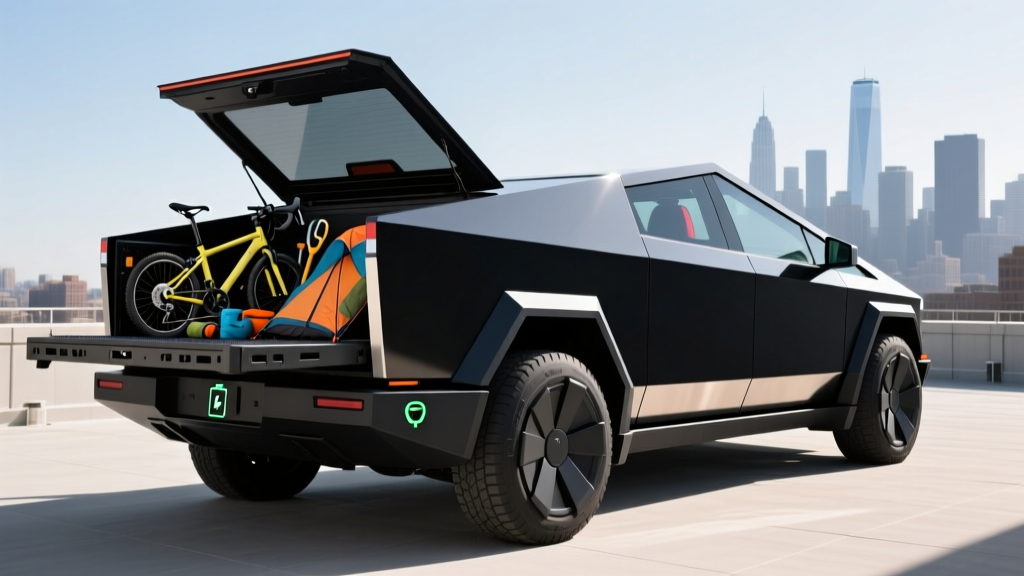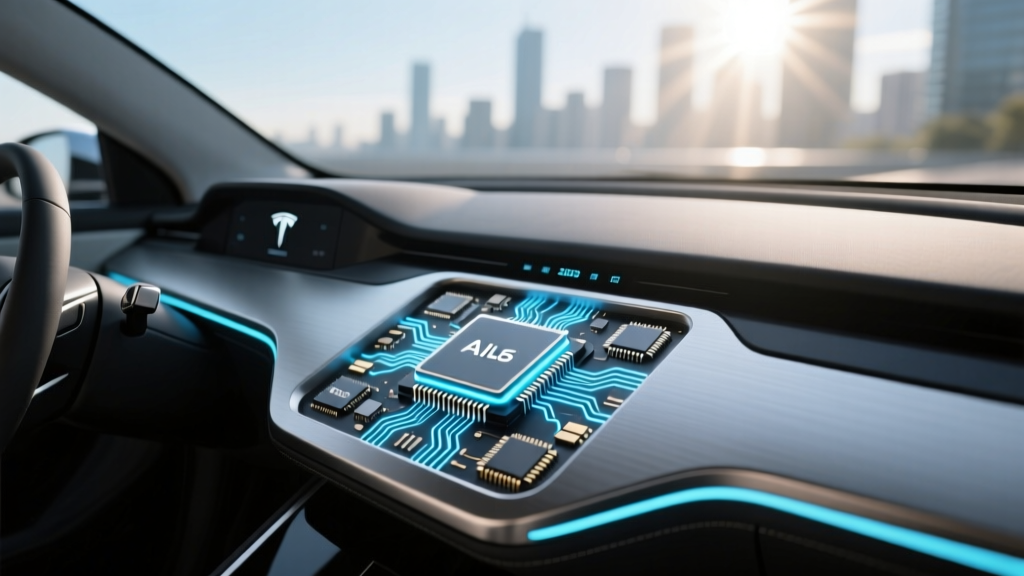
If you have been following Tesla's silicon roadmap, you have likely seen the headlines about the next-generation inference chips destined for its vehicles and robots. The Tesla AI5 and AI6 production timeline has become one of the most searched topics among prospective Tesla buyers in 2026 — and for good reason. These custom-designed processors are not just incremental upgrades; they represent a fundamental shift in how Tesla's vehicles perceive the world, manage energy, and execute driver-assist functions.
But here is the question that actually matters at the dealership: What does a new chip mean for the car you drive home today? This profile examines the current Tesla lineup — Model 3, Model Y, Cybertruck, and the refreshed Model S/X — through the lens of the AI5/AI6 hardware transition, pairing hard specs with real-world ownership data so you can decide whether to buy now or wait for the next silicon generation.
What Are Tesla's AI5 and AI6 Chips, and Why Do They Matter?
Tesla's in-house AI5 chip (sometimes referred to as Hardware 5 or HW5) is the successor to the Hardware 4 (HW4) computer that has powered Tesla vehicles since early 2023. AI5 is designed primarily for the Optimus humanoid robot and next-generation vehicle platforms, offering roughly 2.5 to 3 times the compute throughput of HW4 while drawing comparable power. AI6 is the planned follow-on generation, expected to debut in Tesla's purpose-built robotaxi platform and potentially next-generation consumer vehicles beyond 2027.
For current Tesla buyers, the practical implications break down into three areas:
- Full Self-Driving (Supervised) capability: More compute means denser neural networks, faster inference, and potentially smoother, safer Level 2 driver-assist behavior. Note: FSD Supervised remains an SAE Level 2 system requiring full driver engagement.
- Energy management: Next-gen silicon can optimize thermal management, battery preconditioning, and regenerative braking algorithms in real time — potentially squeezing additional range from the same battery pack.
- Longevity and resale: Vehicles equipped with the latest hardware tend to receive more advanced software features over time, which can influence resale value and over-the-air update trajectories.
Current Tesla Lineup: Range, Battery, and Efficiency Specs
Before we get into the hardware-transition question, here is exactly what you can buy right now. All figures below reflect 2026 model-year specifications as published by Tesla and the EPA.
| Spec | Model 3 Long Range AWD | Model Y Long Range AWD | Cybertruck AWD | Model S Long Range |
|---|---|---|---|---|
| EPA Range | 363 mi | 330 mi | 340 mi | 402 mi |
| Battery (usable) | ~79 kWh, NMC | ~79 kWh, NMC | ~123 kWh, NMC | ~100 kWh, NMC |
| Efficiency (MPGe) | 131 MPGe combined | 117 MPGe combined | ~100 MPGe combined | 120 MPGe combined |
| 0–60 mph | 4.2 sec | 4.8 sec | 3.9 sec | 3.1 sec |
| Horsepower | ~346 hp | ~384 hp | ~600 hp | ~670 hp |
| Drivetrain | Dual-motor AWD | Dual-motor AWD | Tri-motor AWD | Dual-motor AWD |
| Cargo Volume | 23 cu ft (trunk+frunk) | 76 cu ft (max, seats folded) | ~68 cu ft (vault+frunk) | 28 cu ft (trunk+frunk) |
| Current Hardware | HW4 | HW4 | HW4 | HW4 |
Sources: fueleconomy.gov, Tesla official specifications. Battery usable capacity figures are industry estimates based on teardown data; Tesla does not publish official kWh numbers.
Real-World Range: What the EPA Sticker Doesn't Tell You
The EPA range figure is a laboratory-derived combined cycle estimate. In real-world driving, expect the following adjustments:
- Highway driving (75+ mph): Subtract 10–15% from EPA. A Model 3 LR rated at 363 mi typically delivers 290–320 mi at sustained highway speeds.
- Cold weather (below 32°F / 0°C): Subtract 20–30%. The same Model 3 may deliver 250–280 mi in freezing conditions due to battery resistance and cabin heating demands.
- City/regenerative driving: You may match or slightly exceed EPA numbers in stop-and-go traffic where regen recaptures energy.
Tesla's thermal management system — which includes a heat pump across the current lineup — helps mitigate cold-weather losses compared to older EVs without heat pumps. However, physics is physics: NMC chemistry loses efficiency at low temperatures, and cabin heating is a significant energy draw. Preconditioning your battery while plugged in (using grid power rather than battery energy) is the single most effective habit for preserving winter range.
Charging Speed: DC Fast Charge and Home Level 2
Charging speed is often the deciding factor for road-trip-capable EVs. Tesla's Supercharger network remains the most reliable DC fast-charging ecosystem in North America, with V4 cabinets now delivering up to 350 kW to capable vehicles.
| Charging Metric | Model 3 LR | Model Y LR | Cybertruck | Model S LR |
|---|---|---|---|---|
| Max DC Fast Charge | 250 kW peak | 250 kW peak | 350 kW peak | 250 kW peak |
| 10–80% DCFC Time | ~25 min | ~27 min | ~20 min | ~30 min |
| Level 2 Home (11.5 kW) | ~44 mi/hr | ~40 mi/hr | ~37 mi/hr | ~34 mi/hr |
| Connector | NACS (native) | NACS (native) | NACS (native) | NACS (native) |
Understanding the charge curve: Peak kW is not sustained kW. A Model 3 hitting 250 kW at 10% State of Charge (SoC) will taper to roughly 150 kW by 50% SoC and drop below 100 kW past 70%. This is why manufacturers quote 10–80% times rather than 0–100%. Charging past 80% slows dramatically to protect the battery — plan your road-trip stops around the 10–80% window for optimal throughput.
For home charging, Tesla's Wall Connector delivers up to 11.5 kW (48 amps) on a 60-amp circuit. A full overnight charge adds 200+ miles for any model in the lineup — more than enough for daily driving. Installation costs typically range from $800 to $2,500 depending on your electrical panel capacity and run distance; consult a licensed electrician for a site-specific quote.
Pricing, Trims, and Federal Tax Credit Eligibility
| Model / Trim | Base MSRP | MSRP Cap (§30D) | Est. Credit | Effective Price |
|---|---|---|---|---|
| Model 3 RWD | ~$38,990 | Under $55K ✓ | Up to $7,500* | ~$31,490 |
| Model 3 Long Range AWD | ~$45,490 | Under $55K ✓ | Up to $7,500* | ~$37,990 |
| Model Y Long Range AWD | ~$46,630 | Under $80K ✓ | Up to $7,500* | ~$39,130 |
| Cybertruck AWD | ~$79,990 | Under $80K ✓ (barely) | Up to $7,500* | ~$72,490 |
| Model S Long Range | ~$79,990 | Under $55K ✗ (sedan cap) | $0 | $79,990 |
*Federal tax credit eligibility under IRS §30D depends on multiple factors:
- MSRP caps: Sedans must be under $55,000; SUVs, trucks, and vans under $80,000.
- Buyer income limits: AGI must not exceed $300,000 (joint), $225,000 (head of household), or $150,000 (single).
- Battery sourcing requirements: Critical minerals and battery component sourcing thresholds phase up annually. As of 2026, 80% of critical minerals and 100% of battery components must meet North American or FTA-partner sourcing requirements for the full $7,500. Partial credits of $3,750 apply if only one requirement is met.
- Point-of-sale transfer: Eligible buyers can transfer the credit to the dealer at purchase, reducing the upfront price rather than waiting for a tax refund.
The Model S, as a sedan priced above $55,000, does not qualify for the federal credit. The Model 3, Model Y, and base Cybertruck configurations currently qualify, though battery-sourcing rules are subject to change. Always verify current eligibility on the fueleconomy.gov tax credit page before purchasing.
Warranty Coverage and Battery Longevity
Tesla's warranty structure is straightforward and competitive within the EV segment:
- Basic Vehicle Limited Warranty: 4 years / 50,000 miles, whichever comes first.
- Battery and Drive Unit Warranty: 8 years / 120,000 miles for Model 3 and Model Y Long Range; 8 years / 150,000 miles for Model S and Cybertruck. Tesla guarantees the battery will retain at least 70% of its original capacity during the warranty period.
Real-world degradation data from fleet analyses shows Tesla's NMC batteries typically lose 5–8% capacity over the first 100,000 miles, with the curve flattening significantly thereafter. Many high-mileage Tesla vehicles report 85–90% State of Health (SoH) at 150,000 miles. The 70% retention threshold in the warranty is conservative relative to observed degradation patterns.
For buyers concerned about battery replacement costs outside warranty: a Model 3/Y battery pack replacement currently runs $12,000–$16,000 at Tesla service centers, while Model S packs can exceed $20,000. These costs have been trending downward as Tesla's remanufacturing capabilities improve.
Should You Buy Now or Wait for AI5/AI6 Hardware?
This is the core question driving searches around Tesla AI5 and AI6 production. Here is the honest assessment based on what we know in 2026:
- You need a vehicle within the next 3–6 months and the current Model 3/Y meets your range and cargo requirements.
- You want to lock in current federal tax credit eligibility before sourcing rules tighten further.
- You are satisfied with HW4's FSD (Supervised) performance — which is already a capable Level 2 system for highway and city driving with supervision.
- You prioritize proven reliability data over speculative future hardware.
- Your purchase timeline extends 12–18+ months and you want the latest compute platform for long-term OTA update support.
- You are considering Tesla's next-generation vehicle platform (the more affordable compact model expected to debut with AI5).
- You plan to keep the vehicle 8+ years and want maximum future-proofing for increasingly complex neural-network-based driver-assist features.
- You are evaluating Tesla specifically for autonomous capability and want the hardware most likely to support future Level 3+ features (if and when regulated).
The historical pattern with Tesla hardware transitions is that existing vehicles do not receive retrofits. When HW4 replaced HW3, owners of HW3 vehicles were not offered upgrades. If AI5-equipped vehicles begin shipping in your target model, there will be a period of mixed inventory where some new cars carry HW4 and others carry AI5 — similar to the HW3-to-HW4 transition in 2023. Checking the vehicle's build sheet or asking the delivery specialist directly is the only way to confirm which hardware your specific car contains.
Pros and Cons: Tesla Lineup in 2026
✓ Pros
- Best-in-class Supercharger network with 250–350 kW speeds and exceptional uptime
- Class-leading efficiency (MPGe) across Model 3 and Model Y
- Native NACS connector — no adapter needed at Tesla Superchargers or growing third-party NACS stations
- Continuous OTA updates add features years after purchase
- Strong resale value relative to non-Tesla EVs
- Heat pump standard on all models reduces cold-weather range loss
✗ Cons
- Model S exceeds the $55K sedan MSRP cap — no federal tax credit
- Minimalist interior lacks physical controls; all climate/mirror/vent adjustments go through the touchscreen
- Panel gaps and paint quality remain inconsistent compared to legacy luxury automakers
- No Apple CarPlay or Android Auto — Tesla's proprietary infotainment only
- Insurance premiums run 15–30% higher than comparable ICE vehicles in most states
- FSD (Supervised) requires a $8,000 one-time purchase or $99/month subscription on top of vehicle price
Who Should Buy a Tesla in 2026?
The daily commuter: Model 3 RWD or Long Range is the efficiency king of the lineup at 131 MPGe combined. If your commute is under 60 miles round-trip and you can charge at home, the Model 3 delivers the lowest cost-per-mile in the Tesla portfolio. Home charging at $0.13/kWh works out to roughly $0.035/mile — a fraction of gasoline costs.
The family hauling cargo: Model Y Long Range AWD offers 76 cu ft of cargo space with seats folded, making it competitive with midsize SUVs. The frunk adds additional storage, and the 330-mi EPA range covers most family road trips with a single 25-minute Supercharger stop.
The truck buyer: Cybertruck's 340-mi range and available 11,000-lb towing capacity make it viable for light-duty truck work, though efficiency drops significantly when towing (expect 50–60% range reduction at max tow). The 48-volt electrical architecture and steer-by-wire system are genuinely novel, but service-center familiarity with these systems is still maturing.
The luxury sedan buyer: Model S Long Range delivers 402 mi of EPA range and a 3.1-second 0–60 time, but the $79,990 price tag with no federal credit makes it a harder value proposition against competitors like the Lucid Air, which offers comparable range at a similar price point, or the BMW i5, which undercuts on price while offering a more traditional luxury interior.
Frequently Asked Questions
What is the real-world range of current Tesla models?
Expect 10–15% below EPA at sustained highway speeds and 20–30% below EPA in freezing weather. A Model 3 Long Range rated at 363 mi EPA typically delivers 290–320 mi on the highway in mild weather and 250–280 mi in sub-freezing conditions. City driving with regenerative braking can match or slightly exceed EPA estimates.
How fast do Teslas charge on DC fast chargers and at home?
On Tesla Superchargers, Model 3 and Model Y peak at 250 kW with a 10–80% time of approximately 25–27 minutes. Cybertruck can peak at 350 kW on V4 Superchargers, achieving 10–80% in roughly 20 minutes. At home on a Level 2 Wall Connector (11.5 kW), expect 34–44 miles of range added per hour of charging — a full overnight session adds 200+ miles.
How much does a Tesla cost after federal tax credits?
The Model 3 RWD starts around $38,990 and can drop to approximately $31,490 with the full $7,500 federal credit, assuming you meet all income, MSRP, and battery-sourcing requirements. The Model Y Long Range effectively costs around $39,130 with the credit. The Model S does not qualify due to the $55,000 sedan MSRP cap. Always verify eligibility on fueleconomy.gov and consult a tax professional.
Is Tesla worth buying vs. competitors like Hyundai, Ford, or BMW?
Tesla's advantages are the Supercharger network, efficiency, and OTA update cadence. Competitors like the Hyundai Ioniq 6 (360+ mi range), Ford Mustang Mach-E, and BMW i4 offer comparable or better interior quality, physical controls, and Apple CarPlay. If charging infrastructure access is your top priority, Tesla still leads. If interior refinement and dealer service networks matter more, cross-shop aggressively.
Does the Tesla Model Y qualify for the $7,500 federal EV tax credit?
Yes, the Model Y qualifies as an SUV under the §30D MSRP cap of $80,000, and its base pricing falls well under that threshold. However, you must also meet the buyer income limits ($300K joint / $150K single AGI) and the vehicle must satisfy battery critical-mineral and component sourcing requirements for the full $7,500. Partial credits of $3,750 may apply if only one sourcing requirement is met. The credit can be transferred at point of sale to reduce your purchase price directly.
Will AI5 or AI6 hardware make current HW4 Teslas obsolete?
Not obsolete, but potentially less capable over time. Tesla has historically continued supporting older hardware with software updates, but the most advanced neural-network features eventually require more compute than older chips can provide. HW4 remains a capable platform for current FSD (Supervised) functionality. AI5 will likely unlock denser models and new features that HW4 cannot run, but this is a gradual process measured in years, not months.