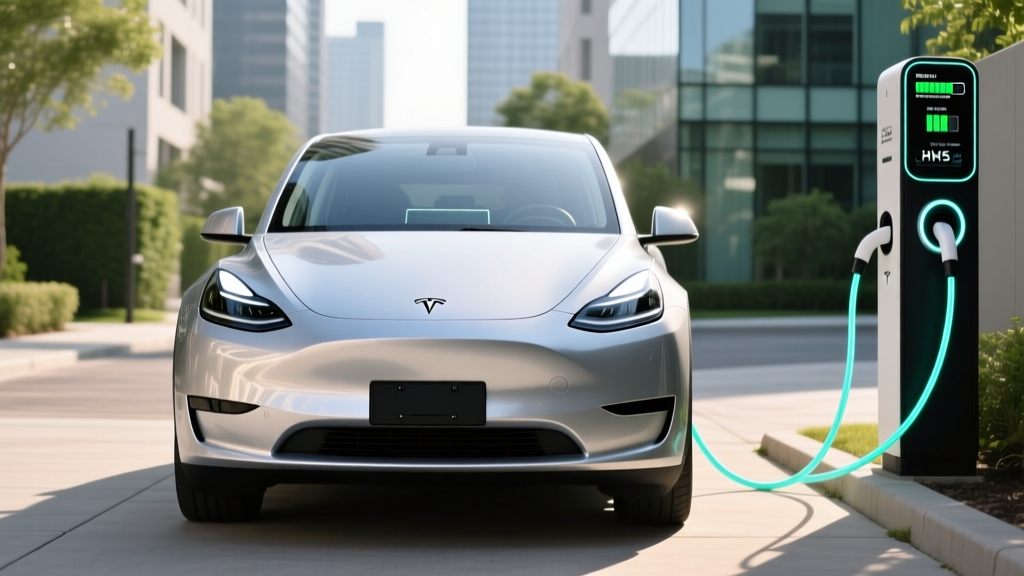
If you've been tracking Tesla's sensor suite evolution, the phrase Tesla AI hardware acquisition likely refers to the rollout of Hardware 5 (HW5), the latest iteration of Tesla's custom silicon and sensor package designed to power Full Self-Driving (Supervised). For 2026, the refreshed Model Y (codenamed "Juniper") ships standard with HW5 across all trims, bringing higher-resolution cameras, a more powerful neural-network processor, and improved radar integration. But beyond the silicon, how does the 2026 Model Y perform as a daily-driver EV? We break down the real-world range, charging curve, ownership economics, and whether the AI hardware upgrade justifies the price.
2026 Tesla Model Y: Core Specifications at a Glance
| Spec | Long Range RWD | Long Range AWD | Performance AWD |
|---|---|---|---|
| EPA Range | 320 mi | 305 mi | 285 mi |
| Battery (usable) | ~75 kWh (NMC) | ~75 kWh (NMC) | ~75 kWh (NMC) |
| Drivetrain | Rear-Wheel Drive | Dual-Motor AWD | Dual-Motor AWD |
| Horsepower | 346 hp | 384 hp | 456 hp |
| 0–60 mph | 5.8 sec | 4.8 sec | 3.5 sec |
| MPGe (combined) | 120 MPGe | 114 MPGe | 108 MPGe |
| Efficiency | 28 kWh/100 mi | 29 kWh/100 mi | 31 kWh/100 mi |
| Base MSRP | $46,630 | $49,630 | $54,630 |
| AI Hardware | HW5 (standard) | HW5 (standard) | HW5 (standard) |
Sources: EPA / fueleconomy.gov, Tesla.com specs. Prices reflect 2026 model year before destination fees.
Range, Battery Chemistry, and Real-World Expectations
The 2026 Model Y Long Range RWD carries an EPA-estimated 320 miles of range from a ~75 kWh usable NMC (nickel-manganese-cobalt) battery pack. The AWD Long Range drops to 305 miles, while the Performance trim sits at 285 miles due to stickier tires, more aggressive tuning, and heavier power draw.
EPA Sticker: 320 mi (Long Range RWD)
Highway (70–75 mph, moderate temps): ~265–285 mi
Cold Weather (below 32°F, highway): ~220–245 mi
City / Stop-and-Go with Regen: ~300–320 mi
The Model Y's heat pump helps mitigate cold-weather cabin energy draw, but battery chemistry itself loses efficiency in freezing temps. Expect 20–30% range reduction on sub-freezing road trips. Preconditioning the battery while plugged in is essential for preserving range and enabling peak DC charge rates in cold weather.
Tesla continues to use NMC chemistry in the Long Range and Performance trims for its higher energy density. The base Standard Range RWD model (not reviewed here) uses LFP (lithium iron phosphate), which sacrifices some energy density but offers longer cycle life and can be charged to 100% daily without degradation concerns.
Charging Speed: DC Fast, Level 2, and the Charge Curve
The 2026 Model Y supports NACS natively (Tesla's proprietary connector, now the North American Charging Standard adopted industry-wide). Here's what charging looks like across levels:
| Charging Level | Power / Rate | Time / Delivery |
|---|---|---|
| Level 1 (120V household) | ~1.4 kW | ~3–4 miles per hour |
| Level 2 (240V, 48A home) | 11.5 kW | ~35–40 miles per hour; full charge ~8 hr |
| DC Fast Charge (V4 Supercharger) | Peak 250 kW | 10–80% in ~22 minutes |
| DC Sustained (above 60% SoC) | ~80–120 kW taper | 80–100% adds ~15 more minutes |
The peak 250 kW rate is achievable at V3 and V4 Supercharger stalls when the battery is preconditioned and State of Charge (SoC) is below 50%. As with all lithium-ion packs, the charge curve tapers significantly above 80% to protect cell longevity. On a road trip, plan your stops around 10–80% windows — pushing to 100% at a DC stall wastes time and money.
At home, a Wall Connector on a 60A circuit (48A continuous) delivers 11.5 kW, enough to replenish a full day's driving overnight. Installation typically runs $500–$1,500 if your electrical panel has capacity; a 200A panel upgrade can add $1,500–$3,000.
Tesla AI Hardware 5: What's New and What It Means for FSD
The 2026 Model Y ships with Hardware 5 (HW5), Tesla's latest AI compute and sensor platform. Key upgrades over HW4 include:
- Higher-resolution cameras: 5MP sensors (up from 1.2MP on HW3) with improved low-light performance and wider dynamic range.
- Next-gen neural-network processor: Tesla claims roughly 2× the TOPS (trillions of operations per second) over HW4, enabling more complex real-time inference for FSD (Supervised).
- 4D radar integration: Higher-fidelity radar provides redundancy in heavy rain, fog, and direct sun glare — conditions where camera-only systems struggle.
- Improved cabin camera: Higher-resolution driver-monitoring camera for more reliable attention tracking.
Despite the "Full Self-Driving" branding, Tesla's FSD (Supervised) remains an SAE Level 2 driver-assistance system. The driver must remain fully engaged — eyes on the road, hands available to take over — at all times. This is not autonomous driving. Only Level 4 services like Waymo operate without a human driver in geofenced areas. Tesla's AI hardware investment is aimed at eventually reaching higher automation levels, but as of 2026, regulatory approval for anything beyond Level 2 has not been granted for consumer Tesla vehicles.
FSD (Supervised) costs $8,000 as a one-time purchase or $99/month in 2026. It adds automated lane changes, city-street navigation, traffic-light recognition, and parking maneuvers on top of the standard Autopilot (which includes adaptive cruise and lane-keeping). Whether HW5 meaningfully improves FSD's real-world behavior over HW4 is still being evaluated by the owner community — early reports suggest smoother interventions in complex urban intersections, but the system still requires active supervision.
Interior, Cargo, and Daily Livability
The Juniper refresh brought meaningful interior improvements to the Model Y:
- Front headroom: 40.8 in | Rear headroom: 39.4 in
- Front legroom: 41.8 in | Rear legroom: 38.2 in
- Cargo (rear seats up): 30.2 cu ft
- Cargo (rear seats folded): 72.1 cu ft
- Front trunk (frunk): 4.1 cu ft
The refreshed cabin adds ventilated front seats, ambient lighting, a rear-seat touchscreen for climate and media control, and improved sound insulation. The 15.4-inch center display runs Tesla's latest infotainment build with native streaming apps, navigation with real-time Supercharger routing, and a phone-as-key system that works reliably via Bluetooth.
Notable drawbacks remain: the Model Y still lacks Apple CarPlay and Android Auto (Tesla's closed ecosystem), the panoramic glass roof can create significant cabin heat in summer sun despite the tint, and the rear touchscreen is small and awkwardly positioned for adult passengers.
Pricing, Tax Credit Eligibility, and Ownership Cost
| Trim | Base MSRP | Est. §30D Credit | Effective Price |
|---|---|---|---|
| Long Range RWD | $46,630 | Up to $7,500* | ~$39,130* |
| Long Range AWD | $49,630 | Up to $7,500* | ~$42,130* |
| Performance AWD | $54,630 | Up to $7,500* | ~$47,130* |
*Federal EV tax credit eligibility under IRS §30D depends on multiple factors that change periodically. The $7,500 credit requires the buyer to meet income caps ($150K single / $300K joint MAGI), the vehicle MSRP must not exceed $80,000 (SUVs), and battery components and critical minerals must meet US-sourcing thresholds that tighten annually. The credit can now be transferred to the dealer at point of sale, effectively reducing the purchase price upfront. Always verify current-year eligibility with a tax professional and the IRS before purchasing.
Beyond the purchase price, Tesla's warranty covers the battery and drive unit for 8 years / 120,000 miles (Long Range and Performance) with a minimum 70% capacity retention threshold. The basic vehicle warranty is 4 years / 50,000 miles. Insurance premiums for the Model Y tend to run 15–25% above comparable non-Tesla SUVs due to repair cost patterns — get a quote before committing.
How the 2026 Model Y Stacks Up Against Competitors
The Model Y's closest rivals in the electric compact-SUV segment include the Hyundai Ioniq 5, Ford Mustang Mach-E, and Chevrolet Equinox EV. Here's a quick decision framework:
- Supercharger network access is a priority for road trips (though competitors now have NACS access to Superchargers too)
- You want the most advanced driver-assist hardware available (HW5)
- Over-the-air updates and a vertically integrated software ecosystem matter to you
- You value best-in-class efficiency (28 kWh/100 mi on Long Range RWD)
- You need Apple CarPlay / Android Auto (Ioniq 5, Mach-E)
- You want a lower entry price (Equinox EV starts ~$33,000)
- You prefer a more traditional dealership service experience
- 800V ultra-fast charging matters (Ioniq 5 peaks at 350 kW on compatible chargers)
Pros and Cons
Pros
- Class-leading efficiency at 28 kWh/100 mi (Long Range RWD)
- HW5 AI hardware is the most advanced sensor suite Tesla has shipped
- Supercharger network remains the most reliable DC charging ecosystem
- Spacious cargo area (72.1 cu ft max) and practical frunk
- Strong OTA update cadence keeps the vehicle improving post-purchase
- Point-of-sale tax credit transfer simplifies the purchase
Cons
- No Apple CarPlay or Android Auto support
- FSD (Supervised) is expensive ($8K) and still requires full driver attention
- Glass roof causes cabin heat buildup in summer
- Insurance costs above segment average
- DC fast-charge peak of 250 kW trails 800V competitors at 350 kW chargers
- Minimal physical controls — everything runs through the touchscreen
Who Should Buy the 2026 Tesla Model Y?
The 2026 Model Y is best suited for tech-forward commuters and small families who prioritize software integration, charging-network reliability, and efficiency above all else. If your daily drive is under 60 miles round-trip with home charging, the Long Range RWD at ~$39,130 after the tax credit is one of the most cost-efficient electric SUVs on the market. Road-trippers will appreciate the Supercharger network, though competitors now have NACS access to those same stalls.
If you're specifically interested in Tesla's AI hardware trajectory — buying into the HW5 platform as a bet on future autonomous capability — understand that this remains speculative. FSD (Supervised) is a Level 2 system today, and there is no guaranteed timeline for regulatory approval of higher automation levels. Buy the car for what it does now, not for what Tesla promises it might do later.
Frequently Asked Questions
What is the real-world range of the 2026 Tesla Model Y?
The EPA rates the Long Range RWD at 320 miles, but expect 265–285 miles on highway road trips at 70–75 mph in moderate temperatures. In freezing conditions, plan for 220–245 miles. City driving with regenerative braking can get you close to the EPA figure.
How fast does the Model Y charge at home and on the road?
At home on a 240V / 48A Level 2 Wall Connector, the Model Y charges at 11.5 kW, adding roughly 35–40 miles per hour (a full charge takes about 8 hours). On a V3 or V4 Supercharger, it peaks at 250 kW and charges from 10–80% in approximately 22 minutes, with significant tapering above 80%.
Does the 2026 Model Y qualify for the federal EV tax credit?
It can qualify for up to $7,500 under IRS §30D, but eligibility depends on your income (MAGI caps: $150K single / $300K joint), the vehicle MSRP (must be under $80,000 for SUVs — all Model Y trims qualify), and battery-sourcing requirements that tighten each year. The credit can be transferred at point of sale. Verify current rules at IRS.gov and consult a tax professional.
Is the Tesla AI Hardware 5 upgrade worth it?
HW5 comes standard on all 2026 Model Y trims — there's no extra cost or option. It provides the best sensor and compute platform Tesla has offered, which improves FSD (Supervised) performance. However, FSD remains a Level 2 system requiring full driver engagement. The hardware is future-proof, but the software capabilities it unlocks are not yet autonomous.
Is the 2026 Model Y worth buying vs. the Hyundai Ioniq 5 or Ford Mach-E?
If Supercharger access, efficiency, and Tesla's software ecosystem are your priorities, the Model Y remains the benchmark. If you want faster 800V DC charging (Ioniq 5 at 350 kW), Apple CarPlay, or a lower starting price (Mach-E, Equinox EV), competitors make a strong case. Test-drive both before deciding.
What is the battery warranty on the 2026 Model Y?
Tesla covers the battery and drive unit for 8 years or 120,000 miles (whichever comes first) on Long Range and Performance trims, guaranteeing a minimum of 70% capacity retention over that period. The basic vehicle limited warranty is 4 years / 50,000 miles.