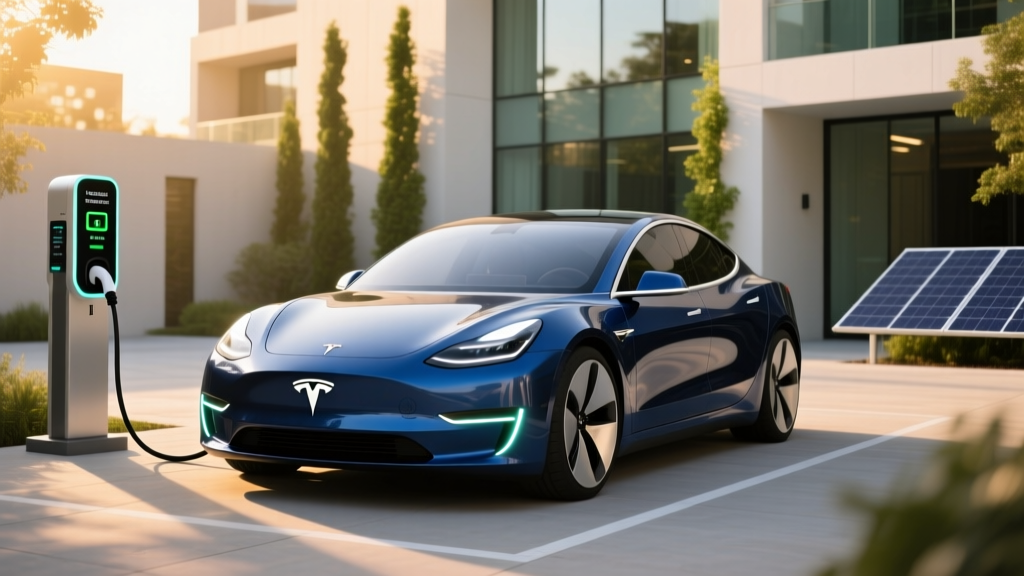
The rumors have circulated for years, but the timeline is finally crystallizing: Tesla is preparing to launch an affordable, entry-level electric vehicle aimed squarely at the mass market. Multiple supply-chain reports and analyst briefings in early 2026 point to a production start and initial customer deliveries beginning in June. If the projected pricing holds, this could be the first Tesla to undercut the $30,000 threshold before incentives — a move that would reshape the compact EV segment overnight.
But speculation is not a spec sheet. As EV analysts who have tracked every Tesla platform evolution from the original Roadster through the refreshed Model Y, we're separating confirmed data from industry estimates. Below is everything we know — and what we don't — about Tesla's most anticipated launch since the Model 3.
Platform, Positioning, and the "Next-Gen" Architecture
Tesla's entry-level EV is widely expected to ride on a new, smaller platform that the company has referenced in earnings calls as its "next-generation" architecture. The goal: cut production costs roughly in half compared to the Model 3/Y platform through a combination of smaller physical footprint, increased use of gigacastings (unboxed manufacturing process), and a simplified interior bill of materials.
Industry consensus places this vehicle in the compact hatchback or subcompact crossover segment — smaller than the Model 3 sedan and Model Y crossover, but larger than a Smart EQ or Mini Cooper SE. Think of it as competing with the Chevrolet Equinox EV, Volvo EX30, and potentially the base Hyundai Kona Electric on size and price.
At AutoEdgeView, we will update this profile with confirmed EPA figures the moment Tesla publishes them. Until then, the numbers below represent our best synthesis of supply-chain leaks, patent filings, and analyst estimates — clearly labeled where preliminary.
Estimated Specs: Range, Battery, and Powertrain
| Attribute | Estimated Figure | Confidence Level |
|---|---|---|
| EPA Range | ~250 miles (target) | Moderate — based on battery size estimates |
| Battery Capacity | ~50–55 kWh usable | Moderate — supply-chain reports |
| Battery Chemistry | LFP (Lithium Iron Phosphate) | High — Tesla already uses LFP in base Model 3 |
| Drivetrain | Rear-Wheel Drive (RWD), single motor | High — cost-reduction priority |
| Horsepower | ~200–250 hp (estimated) | Low — no official figure |
| 0–60 mph | ~6.0–7.0 seconds (estimated) | Low — no official figure |
| Efficiency Target | ~120–130 MPGe / 26–28 kWh/100mi | Moderate — based on Tesla's efficiency leadership |
Tesla's decision to adopt LFP chemistry in the base Model 3 RWD proved that iron-phosphate cells can deliver strong cycle life and lower cost, even if energy density trails NMC. A smaller ~50–55 kWh LFP pack would align with a ~250-mile EPA target, assuming Tesla's industry-leading efficiency of roughly 4 miles per kWh.
Charging Speed: DC Fast Charging and Home Level 2
Charging speed is often the deciding factor for EV buyers who road-trip, and this is where the smaller battery becomes a double-edged sword. A 50–55 kWh pack charges to 80% faster in absolute time than a 75 kWh pack, but peak kW rates may be capped to protect cell longevity.
| Charging Level | Estimated Rate | Practical Outcome |
|---|---|---|
| DC Fast Charge (Peak) | ~170–200 kW (estimated) | 10–80% in roughly 22–28 minutes |
| DC Fast Charge (Sustained Avg) | ~100–130 kW (charge-curve taper above 60%) | Real-world stops average slower than peak |
| Level 2 Home (240V, 48A) | ~11.5 kW / ~44 miles per hour | Full charge in ~5 hours from empty |
| Level 2 Home (240V, 32A) | ~7.7 kW / ~30 miles per hour | Full charge in ~7 hours from empty |
| Level 1 (120V, 12A) | ~1.4 kW / ~5 miles per hour | Emergency/trickle only — not practical for daily use |
A critical nuance many buyers miss: peak kW is not sustained kW. The charge curve tapers significantly above 60–70% State of Charge (SoC) to protect battery health. A 200 kW peak might average 120 kW over a 10–80% session. Tesla's thermal management and preconditioning (warming the battery en route to a Supercharger) remain best-in-class, which should help sustain higher averages than competitors.
The vehicle is expected to ship with a native NACS (North American Charging Standard) port, granting seamless access to Tesla's Supercharger network — now the largest and most reliable DC fast-charging infrastructure in North America. This is a significant ownership advantage over CCS-equipped rivals still navigating adapter requirements.
Pricing, Trims, and Federal Tax Credit Eligibility
This is where the entry-level Tesla could disrupt the market. Multiple analyst reports and supply-chain indicators point to a base MSRP near $25,000–$28,000, with a potential higher-trim variant around $32,000–$35,000 offering extended range or premium features.
| Trim (Estimated) | Base MSRP | Max §30D Credit | Effective Price (if eligible) |
|---|---|---|---|
| Base RWD | ~$25,000–$28,000 | Up to $7,500 | ~$17,500–$20,500 |
| Long Range / Premium | ~$32,000–$35,000 | Up to $7,500 | ~$24,500–$27,500 |
Critical tax-credit caveats: Under current IRS §30D rules, the full $7,500 credit requires meeting both critical-mineral and battery-component sourcing thresholds, which tighten annually. The buyer must also fall under modified adjusted gross income caps ($150,000 single / $300,000 joint). The vehicle MSRP must not exceed $55,000 for sedans/hatchbacks — a cap the entry-level Tesla will clear easily. As of 2026, the credit can be transferred at the point of sale, effectively reducing the purchase price at the dealer rather than waiting for a tax refund. Always verify current-year eligibility with a tax professional before purchasing.
Tesla's use of LFP chemistry — often sourced from CATL in China — has been a flashpoint for battery-component rules. Whether the entry-level model qualifies for the full $7,500, a partial $3,750, or zero credit will depend on Tesla's supply-chain localization at launch. We will update this section as sourcing details are confirmed.
Interior, Cargo, and Technology
Tesla's design language has trended toward extreme minimalism — the refreshed Model 3 "Highland" removed turn-signal stalks and shifted nearly all controls to the central touchscreen. Expect the entry-level model to follow this philosophy even more aggressively to hit cost targets.
Estimated dimensions and space:
- Seating: 5 passengers (likely tighter rear legroom than Model 3's 35.3 inches)
- Cargo (rear seats up): ~18–22 cu ft (estimated, hatchback-style)
- Cargo (rear seats folded): ~45–50 cu ft (estimated)
- Frunk (front trunk): Likely small or eliminated to reduce cost and complexity
Expected technology features:
- Central touchscreen: ~15-inch landscape display (Tesla's standard)
- Infotainment: Tesla OS with streaming, gaming, and over-the-air updates
- Driver assistance: Basic Autopilot standard; FSD (Supervised) available as a paid add-on or subscription
- Connectivity: Built-in LTE, Wi-Fi, Bluetooth, USB-C
- Heat pump: Expected standard (critical for cold-weather efficiency and range preservation)
Warranty and Long-Term Ownership
Tesla's current warranty structure provides a strong baseline:
- Basic Vehicle: 4 years / 50,000 miles
- Battery & Drive Unit: 8 years / 100,000 miles (minimum 70% capacity retention)
LFP batteries historically show excellent long-term degradation characteristics — often retaining 90%+ capacity after 100,000 miles in fleet data. This is a meaningful ownership advantage over NMC in a cost-sensitive vehicle where buyers plan to keep the car for years. Tesla also recommends charging LFP packs to 100% regularly (unlike NMC, where 80% daily is preferred), which simplifies ownership for less technical buyers.
For a detailed breakdown of LFP vs. NMC trade-offs — including energy density, cycle life, cold performance, and cost — see our battery chemistry comparison guide.
Who Should Buy This EV — and Who Should Wait?
Choose the Tesla Entry-Level EV if:
- You want the lowest-cost entry into the Tesla Supercharger ecosystem
- Your daily commute is under 80 miles round-trip (well within the ~250-mile buffer)
- You prioritize software, OTA updates, and minimalist tech over luxury materials
- You qualify for the full §30D credit, bringing the effective price under $20,000
- You want an LFP battery optimized for long cycle life and 100% daily charging
Look elsewhere if:
- You need 300+ miles of EPA range for frequent long road trips (consider Model 3 Long Range or Hyundai Ioniq 6)
- You need AWD for snow-belt winters (this will likely be RWD-only at launch)
- You want physical buttons, a traditional instrument cluster, or premium interior materials
- You need to tow (this vehicle is unlikely to have a meaningful tow rating)
- You want third-row seating or substantial cargo volume (look at Model Y or Kia EV9)
Competitive Landscape: How It Stacks Up
At a projected $25,000–$28,000 base price, the Tesla entry-level EV lands in an increasingly crowded segment. Key competitors include:
- Chevrolet Equinox EV (~$33,000 base, ~315-mile EPA range) — more range, higher price
- Hyundai Kona Electric (~$33,000 base, ~261-mile EPA range) — proven platform, CCS charging
- Volvo EX30 (~$35,000 base, ~265-mile EPA range) — premium branding, smaller cargo
- Nissan Leaf (discontinued after 2025, used market only) — CHAdeMO, limited DC speed
Tesla's advantages: Supercharger network access, software ecosystem, LFP battery longevity, and likely the lowest price in the segment. Its disadvantages: smaller battery means less range buffer, minimalist interior won't suit everyone, and initial production ramp may mean long wait times — a pattern we've seen with every Tesla launch since Model 3.
Projected Pros
- Potentially the most affordable new Tesla ever sold
- Native NACS + Supercharger access — no adapter needed
- LFP battery for long cycle life and 100% daily charging
- Tesla's industry-leading software and OTA update pipeline
- Strong §30D credit eligibility potential (MSRP well under cap)
- Heat pump standard for cold-weather efficiency
Projected Cons
- ~250-mile range is adequate, not exceptional — less than some rivals
- RWD only at launch — no AWD option for snow/winter traction
- Minimalist interior: no stalks, no physical buttons, all touchscreen
- Initial production constraints likely — long delivery waits expected
- FSD (Supervised) adds significant cost and remains Level 2 only
- LFP credit eligibility uncertain due to battery-sourcing rules
Frequently Asked Questions
What is the real-world range of the Tesla entry-level EV?
Based on an estimated ~250-mile EPA target, expect approximately 210–230 miles in warm-weather highway driving and 170–190 miles in freezing conditions. City driving with regenerative braking will yield results closer to or slightly above the EPA figure. LFP chemistry handles cold somewhat better than NMC, but all EVs lose range in winter.
How fast does it charge at home and on the road?
Estimated DC fast-charging peaks at 170–200 kW, delivering a 10–80% charge in roughly 22–28 minutes on a V3 or V4 Supercharger. At home on a 48-amp Level 2 charger (240V), expect about 44 miles of range added per hour, or a full charge in approximately 5 hours.
How much does it cost after the federal EV tax credit?
If the base MSRP lands near $25,000–$28,000 and you qualify for the full $7,500 §30D credit (meeting income, sourcing, and MSRP requirements), the effective price could be as low as $17,500–$20,500. Point-of-sale transfer is available in 2026, meaning the credit reduces your purchase price at delivery. Always confirm eligibility with a tax professional.
Does it qualify for the full $7,500 federal EV tax credit?
It depends on battery sourcing. The MSRP cap ($55,000 for cars) is easily met. The buyer income cap ($150K single / $300K joint) applies. The wildcard is battery-component and critical-mineral sourcing — Tesla's LFP supply chain has historically involved Chinese-sourced materials, which may reduce or eliminate the credit under 2026 tightening rules. We will update when Tesla confirms sourcing.
Is it worth buying vs. the Chevrolet Equinox EV or Hyundai Kona Electric?
If price is the top priority and you value Supercharger access, the Tesla is likely the stronger buy at a lower base MSRP. If you need 300+ miles of range or prefer AWD availability, the Equinox EV or a refreshed Kona Electric may suit you better. Wait for our full comparison review once the Tesla's final specs are published.
Will it have a frunk (front trunk)?
Unconfirmed. Tesla may eliminate the frunk on the entry-level model to reduce manufacturing complexity and cost. The Model 3 offers 3.1 cu ft of frunk space; expect less or none here.
When can I actually order and receive one?
Tesla is expected to open reservations around the June 2026 launch event, with initial deliveries following shortly after for reservation holders. Based on Tesla's historical production ramps (Model 3, Cybertruck), widespread availability with short wait times is unlikely before late 2026 or early 2027.
This article is based on preliminary information, supply-chain reports, and analyst estimates available as of early 2026. AutoEdgeView will publish a full, data-verified review with confirmed EPA, charging, and pricing figures once Tesla releases official specifications. For the latest EV news and reviews, see our complete EV review archive.