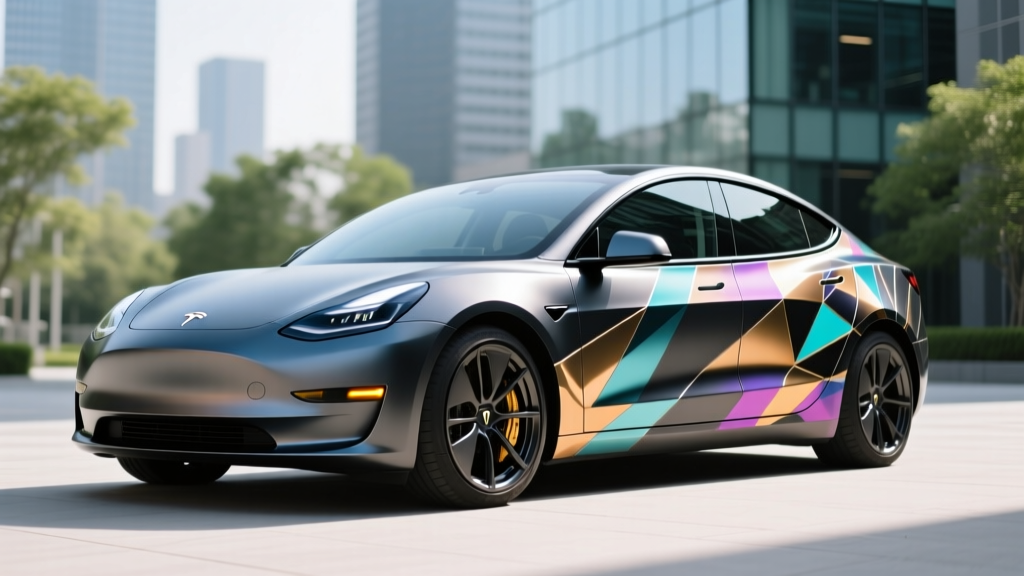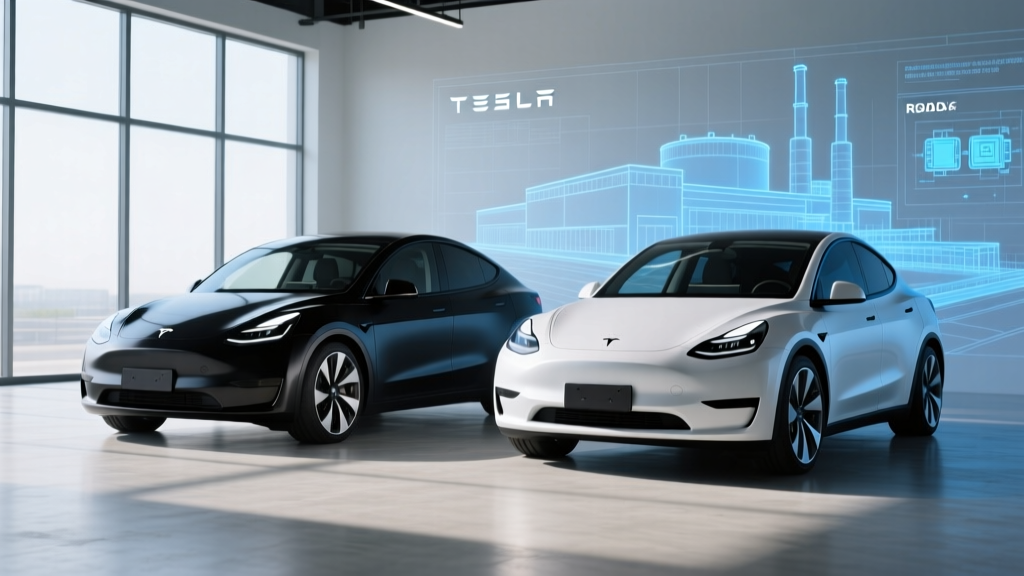
When EV shoppers search for "Tesla acquisitions," they're usually looking for Wall Street analysis. But if you're researching a Tesla purchase, the company's acquisition and vertical-integration strategy directly impacts the car in your driveway: battery chemistry, charging speed, software capability, and whether it qualifies for the federal tax credit. Tesla's approach to owning its supply chain — from raw-material sourcing through in-house seat and chip manufacturing — is the reason the 2026 Model Y Long Range and Model 3 Long Range AWD remain the benchmark compact and midsize electric SUVs/sedans. This review profiles both vehicles through that lens, with the exact numbers buyers need.
Why Tesla's Acquisition Strategy Matters to Buyers
Tesla doesn't build cars the way legacy automakers do. Rather than outsourcing major subsystems, Tesla has acquired or built in-house capabilities across battery cell production (via partnerships with CATL and Panasonic, plus its own 4680 lines in Texas), power-electronics design, silicon (HW4/AI5 compute), seat and interior manufacturing, and its Supercharger network. Recent acquisitions and investments in lithium refining (Corpus Christi, TX) and cathode production aim to secure critical-mineral supply chains — the exact factor that determines IRS §30D tax-credit eligibility under the battery-sourcing rules.
The practical result: Tesla controls more variables affecting your real-world range, charging access, and post-credit price than any other OEM. That vertical integration also explains why Tesla can adjust pricing weekly and push over-the-air updates that materially change vehicle behavior months after delivery.
2026 Tesla Model 3 Long Range AWD: Spec Profile
| Spec | 2026 Model 3 Long Range AWD |
|---|---|
| EPA Range | 341 miles |
| Battery (usable) | ~79 kWh, NMC (2170 cells) |
| Drivetrain | Dual-motor AWD |
| Horsepower | ~440 hp combined |
| 0–60 mph | 4.2 seconds |
| Peak DC Fast Charge | 250 kW (Supercharger V3/V4) |
| 10–80% DC Time | ~27 minutes |
| Level 2 Home Rate | 11.5 kW (~44 mi/hr) |
| Efficiency | 131 MPGe / 25 kWh/100mi |
| Cargo (rear + frunk) | 23 cu ft trunk + 3.1 cu ft frunk |
| Rear Legroom | 35.2 in |
| Battery Warranty | 8 yr / 120,000 mi (70% retention) |
| Base MSRP | $47,740 (before destination) |
2026 Tesla Model Y Long Range: Spec Profile
| Spec | 2026 Model Y Long Range AWD |
|---|---|
| EPA Range | 320 miles (Juniper refresh) |
| Battery (usable) | ~78 kWh, NMC (2170/4680 mix by plant) |
| Drivetrain | Dual-motor AWD |
| Horsepower | ~384 hp combined |
| 0–60 mph | 4.8 seconds |
| Peak DC Fast Charge | 250 kW |
| 10–80% DC Time | ~28 minutes |
| Level 2 Home Rate | 11.5 kW (~42 mi/hr) |
| Efficiency | 122 MPGe / 28 kWh/100mi |
| Cargo (rear seats up) | 30.2 cu ft (+ 4.1 cu ft frunk) |
| Cargo (rear seats folded) | 72.1 cu ft |
| Rear Legroom | 39.4 in |
| Battery Warranty | 8 yr / 120,000 mi (70% retention) |
| Base MSRP | $48,380 (before destination) |
Per fueleconomy.gov, the Model Y Long Range remains one of the most efficient AWD electric SUVs on the market, trailing only the Hyundai Ioniq 5 and Kia EV6 in the segment on MPGe while offering superior Supercharger-network access.
Charging Reality: DC Curve and Home Setup
Tesla's 250-kW peak on V3/V4 Superchargers is well-established, but peak isn't sustained. The charge curve holds above 200 kW roughly from 10% to 35% State of Charge, then tapers through the 150-kW range into the 50–70% window, and drops below 100 kW past 80%. This is why Tesla quotes 10–80% times rather than 0–100%: charging past 80% adds 20+ minutes for the final 20% of capacity. Always precondition via the car's navigation-routed Supercharger prep — skipping preconditioning on a cold battery can add 5–10 minutes to a fast-charge session.
| Charging Level | Power | Added Range per Hour | Use Case |
|---|---|---|---|
| Level 1 (120V) | ~1.4 kW | ~5 mi/hr | Emergency / trickle |
| Level 2 (240V / 48A Wall Connector) | 11.5 kW | ~42–44 mi/hr | Daily home charging |
| DC Fast (V3 Supercharger) | Up to 250 kW | ~200 mi in 15 min (peak) | Road trips |
| DC Fast (V4 Supercharger) | Up to 250 kW (future 350 kW capable) | Similar to V3 today | Newer corridor stations |
For home charging, a Tesla Wall Connector on a 60A circuit (48A continuous) delivers the full 11.5 kW. Most buyers spend $800–$1,500 on installation assuming a 200A panel with capacity; homes needing a panel upgrade to 200A should budget $2,500–$4,500 additional. A licensed electrician should verify panel headroom before purchase.
Pricing, Trims, and Federal Tax-Credit Eligibility
Tesla's pricing shifts frequently — sometimes weekly — based on demand and supply-chain inputs. As of early 2026, the core lineup for these two models:
| Trim | Base MSRP | Est. After §30D Credit |
|---|---|---|
| Model 3 Long Range AWD | $47,740 | ~$40,240 (if eligible) |
| Model 3 Performance | $54,990 | ~$47,490 (if eligible) |
| Model Y Long Range AWD | $48,380 | ~$40,880 (if eligible) |
| Model Y Performance | $53,880 | ~$46,380 (if eligible) |
The IRS §30D credit is up to $7,500, split between critical-minerals ($3,750) and battery-components ($3,750) prongs. Eligibility requires:
- Buyer AGI under $150k single / $300k joint filers
- Vehicle MSRP under $55,000 for sedans (Model 3) or $80,000 for SUVs (Model Y)
- Battery sourcing meeting escalating critical-mineral and component thresholds — Tesla's acquisitions in lithium refining and North American cathode production are specifically aimed at keeping both prongs satisfied
- Point-of-sale transfer available at delivery, reducing the purchase price directly
Critical caveat: sourcing rules tighten annually. Always verify current eligibility on the IRS clean-vehicle list the week you take delivery, not when you order. A tax professional should confirm your AGI eligibility.
Driver-Assist Tech: Autopilot and FSD (Supervised)
Tesla's vision-only FSD (Supervised) stack runs on the in-house HW4 computer — itself a product of Tesla's silicon acquisition strategy. On highway routes, FSD handles lane changes, on/off-ramps, and speed adjustments competently. In complex urban environments, behavior remains inconsistent: phantom braking, cautious unprotected left turns, and occasional routing errors still require active supervision. The $8,000 FSD purchase (or $99/month subscription) is a personal tolerance call, not a safety necessity — standard Autopilot (included) covers lane-keeping and adaptive cruise adequately for most commuters.
The Juniper-refreshed Model Y and Highland-refreshed Model 3 both feature a ventilated-seat option, ambient lighting, rear touchscreen for passengers (Model Y), and a quieter cabin via acoustic glass — all manufactured or sourced through Tesla's vertically integrated supplier base.
Who Should Buy, and How They Compare
Choose the Model 3 Long Range if: you prioritize driving dynamics, want the lowest cost-per-mile in the segment, commute solo or with one passenger, and value 341 miles of EPA range for occasional 300-mile road trips with one short charge stop.
Choose the Model Y Long Range if: you need cargo capacity (30+ cu ft, expandable to 72 cu ft), family rear-seat room (39.4 in legroom), optional third-row seating for small children, and SUV ride height. You trade ~21 miles of range versus the Model 3 for the utility.
Consider competitors if: you want 800V architecture and faster peak charging (Hyundai Ioniq 5 at 350 kW), a more traditional interior layout (Ford Mustang Mach-E, BMW iX), or a lower starting price before credits (Chevrolet Equinox EV, though with less range).
- Supercharger network remains the most reliable DC network in the U.S.
- Class-leading efficiency (kWh/100mi) translates to lower charging cost
- Over-the-air updates meaningfully improve the car post-purchase
- Strong resale value versus EV segment average
- Tight vertical integration preserves §30D credit eligibility as rules tighten
- Minimalist interior isn't for everyone — no physical stalks on refreshed models
- FSD (Supervised) remains Level 2 despite the name; $8,000 is steep for supervised assist
- Service-center capacity in some regions lags sales volume
- Panel-gap and trim consistency still varies unit to unit
- No Apple CarPlay / Android Auto — Tesla's native stack only
Frequently Asked Questions
What is the real-world range of the 2026 Model 3 and Model Y Long Range?
Expect 290–310 miles highway in mild weather for the Model 3 (EPA 341) and 270–290 for the Model Y (EPA 320). Sub-30°F winter driving drops both by roughly 15–25% unless you precondition while plugged in.
How fast does a Tesla charge at home and on the road?
At home on a 48A Wall Connector, roughly 42–44 miles of range per hour — enough to fully replenish overnight. On a V3 Supercharger, 10–80% in about 27–28 minutes, with the curve tapering sharply past 80%.
Do the 2026 Model 3 and Model Y qualify for the $7,500 federal EV tax credit?
Both models currently qualify for the full $7,500 when battery-sourcing thresholds are met — Tesla's in-house refining and North American cell production are specifically designed to maintain eligibility. Buyer income caps ($150k single / $300k joint) and MSRP caps ($55k sedan / $80k SUV) still apply. Verify the week of delivery on irs.gov.
Is the Model Y worth buying versus the Hyundai Ioniq 5 or Ford Mach-E?
The Model Y wins on Supercharger access, efficiency, and software integration. The Ioniq 5 wins on peak DC charge speed (350 kW on 800V) and interior design. The Mach-E offers a more traditional crossover feel. For road-trip-heavy buyers, Tesla's network remains the tiebreaker.
How long will the Tesla battery last?
Tesla warranties the Long Range NMC pack for 8 years / 120,000 miles with a 70% capacity-retention floor. Real-world fleet data from sources like IIHS and owner surveys show most packs retaining 88–92% at 100,000 miles with normal charging habits (avoiding sustained 100% SoC storage). Full replacement, if ever needed, runs $12,000–$18,000 out of warranty.
Does FSD make the Tesla self-driving?
No. FSD (Supervised) is an SAE Level 2 system requiring continuous driver engagement. It's a capable highway assist and improving urban assist, but you are the driver at all times. Treat marketing language skeptically — the "Supervised" label is legally meaningful.