The "Tesla Acquire" Question: Separating Market Noise from Ownership Reality
Search volume for "Tesla acquire" spikes whenever a legacy automaker posts weak EV earnings or a tech giant hints at vertical integration. The premise is seductive: Apple, Hyundai, or a sovereign wealth fund swoops in, buys the world's most valuable automaker, and reshapes the EV landscape overnight. The reality? Tesla's $800B+ market cap makes a full acquisition practically impossible under current capital markets. No single buyer has the cash-and-stock combination to absorb it without unprecedented regulatory scrutiny.
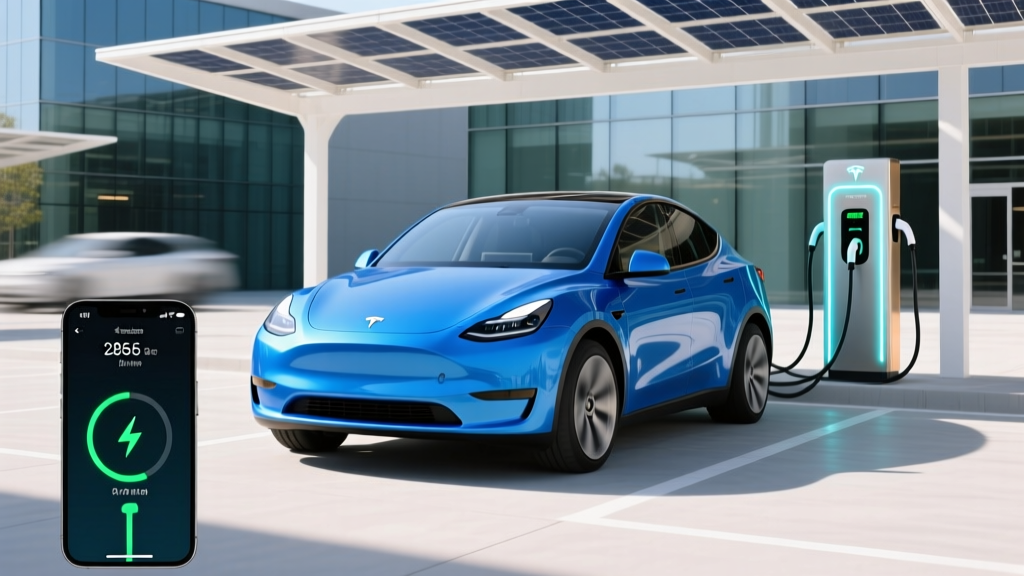
But the speculation does raise a practical question for today's EV shoppers: if you're considering a Tesla product right now, what are you actually buying? The 2026 Model Y remains Tesla's volume leader and the best-selling EV globally. Let's strip away the M&A chatter and evaluate the vehicle on its merits — range, charging, cost, and daily usability — so you can decide whether it deserves a spot in your driveway regardless of what Wall Street whispers.
2026 Tesla Model Y: Full Spec Sheet at a Glance
| Specification | Long Range AWD | Performance AWD |
|---|---|---|
| EPA Range | 320 miles | 293 miles |
| Battery (usable) | ~75 kWh, NMC | ~75 kWh, NMC |
| Drivetrain | Dual-Motor AWD | Dual-Motor AWD |
| Horsepower | 384 hp | 456 hp |
| 0–60 mph | 4.8 seconds | 3.5 seconds |
| Max DC Fast Charge | 250 kW (CCS/NACS) | 250 kW (CCS/NACS) |
| 10–80% DC Time | ~27 minutes | ~27 minutes |
| Level 2 Home Charge | 11.5 kW (~44 mi/hr) | 11.5 kW (~44 mi/hr) |
| MPGe (combined) | 122 MPGe | 111 MPGe |
| Efficiency | 28 kWh/100 mi | 30 kWh/100 mi |
| Cargo (rear seats up) | 30.2 cu ft | 30.2 cu ft |
| Cargo (rear seats folded) | 72.1 cu ft | 72.1 cu ft |
| Base MSRP | $44,990 | $51,490 |
| Battery Warranty | 8 yr / 120,000 mi | 8 yr / 120,000 mi |
Source: EPA fueleconomy.gov, Tesla.com specifications (2026 model year).
Range and Efficiency: What the EPA Number Doesn't Tell You
EPA Sticker: 320 miles (Long Range AWD)
Real-World Expectation: ~265–285 miles on a mixed highway commute at 70 mph; ~230–250 miles in sustained sub-freezing temperatures with cabin heat; ~300+ miles in city/regen-heavy driving at moderate temps.
The Model Y Long Range's 320-mile EPA figure is competitive within the mid-size electric crossover segment, trailing the Hyundai Ioniq 5's 311-mile rating by a negligible margin on paper but offering a slightly larger battery buffer. Tesla's NMC (nickel-manganese-cobalt) chemistry prioritizes energy density over the cycle-life longevity of LFP (lithium iron phosphate), which Tesla reserves for its Standard Range rear-wheel-drive trims.
In real-world highway testing at a sustained 70 mph with climate control active, expect to consume roughly 300–310 Wh/mile, translating to approximately 265–285 miles before the battery buffer warning engages. Cold weather compounds this: at 20°F, resistive cabin heating and reduced battery chemical efficiency can drop usable range by 20–30%. The Model Y's standard heat pump mitigates this better than resistive-only systems, but physics still wins in deep winter. Plan for ~230 miles of practical range in January in Minnesota, and precondition the battery via the Tesla app before departure to reclaim some efficiency.
Efficiency remains a Tesla strong point. At 28 kWh/100 miles (Long Range), the Model Y sips electrons more sparingly than the Ford Mustang Mach-E Extended Range (34 kWh/100 mi) and the Volkswagen ID.4 Pro S (32 kWh/100 mi). This means lower electricity costs per mile and less frequent charging stops on road trips.
Charging Speed: Supercharger Network vs. the Growing Competition
Tesla's 250 kW peak DC fast-charge rate on V3 Superchargers delivers a 10–80% session in roughly 27 minutes under ideal battery preconditioning. That's competitive but no longer class-leading — the Hyundai Ioniq 5 and Kia EV6, built on 800V architectures, can peak at 350 kW and complete the same session in approximately 18 minutes.
| Charging Method | Power | Speed / Time |
|---|---|---|
| Level 1 (120V outlet) | ~1.4 kW | ~3–4 miles per hour |
| Level 2 (240V, 48A Wall Connector) | 11.5 kW | ~44 miles per hour |
| DC Fast (Tesla V3 Supercharger) | 250 kW peak | 10–80% in ~27 min |
| DC Fast (CCS adapter, EA/Ionity) | Up to 250 kW | 10–80% in ~27–32 min |
The critical nuance is charge-curve taper. The 250 kW peak holds only from roughly 10% to 35% State of Charge (SoC). Above 50%, power drops to ~150 kW; above 80%, it falls below 50 kW as the battery management system protects cell longevity. This is why Tesla (and all manufacturers) quote 10–80% times rather than 0–100%. For road-trip planning, budget 25–30 minutes per Supercharger stop and plan to arrive at 10–15% SoC for maximum charge speed.
Home charging with Tesla's Wall Connector at 48 amps (11.5 kW) adds roughly 44 miles of range per hour. A full overnight charge from 20% to 80% takes about 5 hours — more than enough for daily commuters. Installation typically requires a 60-amp dedicated circuit; expect $800–$2,000 for a licensed electrician to run a 240V line if your panel has capacity, or $2,500–$5,000+ if a panel upgrade to 200A service is needed.
One of Tesla's strongest ownership advantages remains the Supercharger network. With over 6,000 U.S. stations and industry-leading uptime reliability (typically 97%+), Tesla owners face fewer broken-charger frustrations than CCS-dependent drivers. The 2024–2026 opening of Superchargers to non-Tesla EVs (via NACS adoption) has expanded access but hasn't diluted the Tesla-native plug-and-charge seamlessness.
Pricing, Trims, and the Federal Tax Credit Equation
| Trim | Base MSRP | Est. Federal Credit (§30D) | Effective Price |
|---|---|---|---|
| Long Range AWD | $44,990 | Up to $7,500* | ~$37,490* |
| Performance AWD | $51,490 | Up to $7,500* | ~$43,990* |
*Federal EV tax credit eligibility under IRS §30D depends on multiple requirements that change annually:
- MSRP cap: SUVs/crossovers must be ≤$80,000 (both Model Y trims qualify).
- Buyer income cap: Modified AGI ≤$300,000 (joint), $225,000 (head of household), $150,000 (single).
- Battery sourcing: Critical minerals and battery components must meet escalating domestic-content thresholds. For 2026, 80% of critical minerals and 75% of battery components must be U.S.-sourced or from free-trade-agreement partners. Tesla's shifting supply chain means eligibility can change mid-year — always verify on the DOE fueleconomy.gov credit lookup before purchasing.
- Point-of-sale transfer: As of 2024+, buyers can transfer the credit to the dealer at purchase, reducing the out-of-pocket price immediately rather than waiting for a tax refund.
The Model Y's pricing places it squarely in the premium compact crossover segment, competing against the Hyundai Ioniq 5 ($42,600 base), Ford Mustang Mach-E ($42,995), and Volkswagen ID.4 ($39,735). After the full $7,500 credit, the Long Range AWD at ~$37,490 becomes a compelling value proposition for a dual-motor, 320-mile EV with best-in-class cargo space.
Interior, Tech, and Driver Assistance
The Model Y's cabin is polarizing by design. The minimalist interior centers on a 15.4-inch touchscreen that handles navigation, media, climate, and vehicle settings — there are no physical buttons for HVAC or mirrors. This keeps the dashboard clean but demands touchscreen familiarity while driving, which not every buyer accepts.
Standout tech features:
- Tesla's navigation with real-time Supercharger routing and battery preconditioning
- Over-the-air (OTA) software updates that add features post-purchase
- Sentry Mode (360° dashcam recording when parked)
- Dog Mode, Camp Mode, and theater-mode entertainment while charging
- Phone-as-key with Bluetooth proximity unlock
Notable drawbacks:
- No Apple CarPlay or Android Auto — Tesla's proprietary system only
- Rear-seat legroom (41.6 inches) is adequate but trails the Ioniq 5's flat-floor spaciousness
- Panel-gap inconsistency and interior material quality lag behind Hyundai/Kia at similar price points
- No heads-up display or traditional instrument cluster
Driver Assistance — SAE Level 2 (Not Self-Driving): Tesla's Autopilot (standard) provides adaptive cruise control and lane-centering. Full Self-Driving (Supervised), an $8,000 option, adds automatic lane changes, traffic-light recognition, and city-street navigation. Despite the name, FSD is an SAE Level 2 system — the driver must remain fully attentive, hands on or near the wheel, and legally responsible at all times. It is not autonomous driving. Level 4 robotaxi services (Waymo, Zoox) operate without a driver in geofenced zones; Tesla's consumer system does not reach this capability.
Who Should Buy the 2026 Model Y — And Who Shouldn't
Pros
- Best-in-class Supercharger network reliability and coverage
- 320-mile EPA range with strong real-world efficiency (28 kWh/100 mi)
- 72.1 cu ft cargo volume with seats folded — genuine family-hauling utility
- OTA updates keep the vehicle current years after purchase
- Strong resale value relative to EV segment average
- Heat pump standard for improved cold-weather range retention
Cons
- 250 kW peak DC charging trails 800V competitors (Ioniq 5/EV6 at 350 kW)
- No Apple CarPlay/Android Auto support
- Minimalist interior alienates buyers who prefer physical controls
- FSD (Supervised) costs $8,000 and remains Level 2 — not autonomous
- Panel gaps and ride firmness draw consistent owner complaints
- Tax-credit eligibility depends on battery-sourcing rules that shift
Best for: Tech-comfortable commuters and families who prioritize charging-network reliability, cargo versatility, and software-driven convenience. The Model Y excels for road-trippers who value Supercharger seamlessness over absolute fastest-charge times.
Consider alternatives if: You want the fastest DC charging (Ioniq 5/EV6), prefer physical buttons and CarPlay (Mach-E, ID.4), need three-row seating (Kia EV9), or want a lower entry price (ID.4, Chevrolet Equinox EV).
Is the Model Y Worth It vs. Key Competitors?
The mid-size electric crossover segment in 2026 is the most competitive in the EV market. Here's how the Model Y stacks up on the metrics that matter:
| Metric | Tesla Model Y LR | Hyundai Ioniq 5 | Ford Mach-E ER | VW ID.4 Pro S |
|---|---|---|---|---|
| EPA Range | 320 mi | 311 mi | 320 mi | 291 mi |
| Peak DC Charge | 250 kW | 350 kW | 150 kW | 175 kW |
| 10–80% Time | ~27 min | ~18 min | ~39 min | ~30 min |
| Base MSRP | $44,990 | $42,600 | $42,995 | $39,735 |
| Cargo (seats up) | 30.2 cu ft | 27.2 cu ft | 29.7 cu ft | 30.3 cu ft |
| Charging Network | Supercharger | NACS + CCS | NACS + CCS | NACS + CCS |
The Model Y wins on charging-network reliability and cargo volume, ties on range, but loses on peak charging speed to the Ioniq 5. The Mach-E offers a more conventional interior with CarPlay but charges far slower. The ID.4 undercuts on price but trails on range and efficiency. Your priority ranking among these attributes determines the right choice.
Frequently Asked Questions
What is the real-world range of the 2026 Tesla Model Y?
Expect 265–285 miles in mixed highway driving at moderate temperatures, and 230–250 miles in sustained sub-freezing conditions. City driving with regenerative braking can push closer to or slightly above the 320-mile EPA estimate.
How fast does the Model Y charge at home and on the road?
On a Level 2 home charger (11.5 kW), the Model Y adds ~44 miles per hour, fully replenishing overnight. On a 250 kW V3 Supercharger, it charges from 10–80% in about 27 minutes. Peak speed is not sustained — expect tapering above 50% SoC.
Does the 2026 Model Y qualify for the $7,500 federal EV tax credit?
It may, but eligibility depends on your income (≤$300K joint AGI), the vehicle's MSRP (under the $80K SUV cap — both trims qualify), and Tesla's battery-sourcing compliance with IRS §30D critical-mineral and component thresholds. Verify current eligibility on fueleconomy.gov before purchasing, as sourcing rules shift throughout the year.
Is the Model Y worth buying over the Hyundai Ioniq 5 or Ford Mach-E?
Choose the Model Y if Supercharger reliability, cargo space, and software integration are your top priorities. Choose the Ioniq 5 if faster 350 kW DC charging and Apple CarPlay matter more. Choose the Mach-E if you prefer a traditional cockpit layout and physical controls. All three are strong — the right answer depends on your daily driving pattern and tech preferences.
Is Tesla's Full Self-Driving actually self-driving?
No. FSD (Supervised) is an SAE Level 2 driver-assistance system. The driver must remain fully engaged, monitor the road, and be prepared to take over instantly. It is not Level 4 autonomous driving. The $8,000 option price is steep for what remains an assist feature, not a chauffeur.
What's the battery warranty on the 2026 Model Y?
Tesla covers the battery and drive unit for 8 years or 120,000 miles (whichever comes first), with a minimum 70% capacity retention guarantee over that period. This matches or exceeds most competitors in the segment.