Quick Verdict: Which Tesla Delivers the Best Acceleration for the Money?
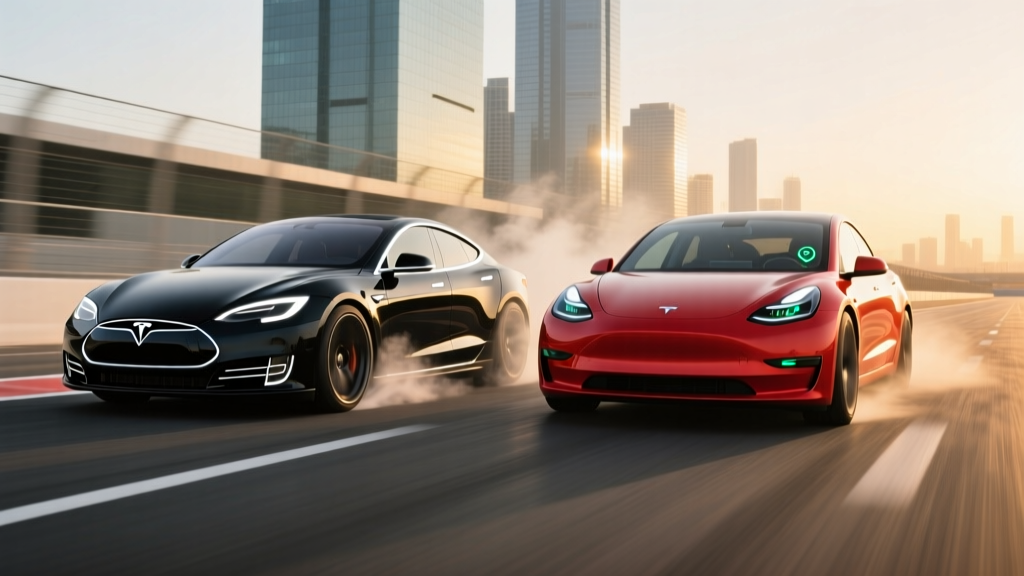
When enthusiasts search for Tesla acceleration, two models dominate the conversation: the flagship 2026 Tesla Model S Plaid and the more accessible 2026 Tesla Model 3 Performance. Both are absurdly quick by any automotive standard, but they serve fundamentally different buyers. The Model S Plaid remains one of the fastest production cars ever built at 1.99 seconds to 60 mph, while the Model 3 Performance offers 90% of the thrill for roughly half the price. Below, we break down every spec that matters — range, charging, real-world performance, tax-credit eligibility, and total ownership cost — so you can decide which Tesla's acceleration actually fits your life and budget.
Choose the Model S Plaid if: You need four-door supercar performance, want 396 miles of EPA range, regularly road-trip and value maximum Supercharger speed, and your budget clears $90,000.
Choose the Model 3 Performance if: You want sub-3-second 0-60 times in a daily-driver package, prioritize lower insurance and running costs, and want to stay under the $55,000 federal tax credit MSRP cap.
Spec Table: 2026 Model S Plaid vs. Model 3 Performance
| Spec | 2026 Model S Plaid | 2026 Model 3 Performance |
|---|---|---|
| 0-60 mph | 1.99 sec | 2.9 sec |
| Horsepower | 1,020 hp (tri-motor AWD) | 510 hp (dual-motor AWD) |
| Top Speed | 200 mph (w/ track package) | 163 mph |
| EPA Range | 396 mi (19" wheels) | 315 mi |
| Battery (usable) | ~95 kWh (NMC) | ~75 kWh (NMC) |
| Max DC Fast Charge | 250 kW (V3 Supercharger) | 250 kW (V3 Supercharger) |
| 10-80% DCFC Time | ~27 min | ~25 min |
| Level 2 Home Charge | 11.5 kW (~41 mi/hr) | 11.5 kW (~44 mi/hr) |
| MPGe (combined) | 116 MPGe | 121 MPGe |
| kWh/100 mi | 29 kWh | 28 kWh |
| Cargo Volume | 28 cu ft (rear) + frunk | 23 cu ft (rear) + 3.1 cu ft frunk |
| Rear Legroom | 35.4 in | 33.9 in |
| Base MSRP | $89,990 | $52,990 |
| Federal Tax Credit | Not eligible (over MSRP cap) | Potentially $7,500 (see rules) |
| Battery Warranty | 8 yr / 150,000 mi | 8 yr / 120,000 mi |
Tesla Acceleration in the Real World: Beyond the 0-60 Number
Tesla's published 0-60 mph times use a 1-foot rollout deduction (common in drag racing), which shaves roughly 0.2-0.3 seconds off the clock. Without rollout, the Model S Plaid runs closer to 2.2-2.3 seconds and the Model 3 Performance around 3.1-3.2 seconds — still astonishingly quick. On public roads, what you feel is the instant torque delivery: zero lag, zero gear shifts, maximum thrust from 0 rpm.
The tri-motor Plaid setup (one front, two rear) provides torque vectoring that pulls the car through corners with unsettling grip. The Model 3 Performance's dual-motor layout is lighter (~4,034 lbs vs ~4,766 lbs for the Plaid), making it feel more nimble on canyon roads despite having half the horsepower. For daily driving, the Model 3 Performance's acceleration is more than sufficient to merge, overtake, and embarrass sports cars at stoplights — the Plaid's extra 500 hp is a bragging-right luxury you'll rarely deploy legally.
Range & Efficiency: Real-World Expectations
Model S Plaid — EPA: 396 mi (19" wheels) / 359 mi (21" Arachnid wheels)
Real-world highway (70-75 mph, mild weather): ~310-330 mi. Cold weather (below 32°F): expect 25-35% reduction, dropping effective range to ~220-260 mi.
Model 3 Performance — EPA: 315 mi
Real-world highway (70-75 mph, mild weather): ~255-275 mi. Cold weather: ~190-230 mi.
Both models use NMC (nickel manganese cobalt) battery chemistry, which offers higher energy density than LFP but requires more careful state-of-charge management for longevity. Tesla recommends daily charging to 80-90% and only charging to 100% before long trips. The Model S Plaid's larger ~95 kWh pack gives it a meaningful road-trip advantage — fewer stops, less time at chargers.
Efficiency favors the lighter Model 3 Performance: at 28 kWh/100 mi, it sips less energy per mile than the Plaid's 29 kWh/100 mi, despite similar aerodynamics. According to fueleconomy.gov, the Model 3 Performance achieves 121 MPGe combined vs. the Plaid's 116 MPGe — a small but measurable gap that compounds over thousands of miles.
Charging Speed: DC Fast Charge and Home Level 2
| Charging Level | Model S Plaid | Model 3 Performance |
|---|---|---|
| Level 1 (120V / 12A) | ~3 mi/hr | ~3 mi/hr |
| Level 2 (240V / 48A) | 11.5 kW (~41 mi/hr) | 11.5 kW (~44 mi/hr) |
| DC Fast (V3 Supercharger, 250 kW peak) | 250 kW, 10-80% ~27 min | 250 kW, 10-80% ~25 min |
| DC Fast (V4 Supercharger, 350 kW capable) | Limited to ~250 kW by vehicle | Limited to ~250 kW by vehicle |
Neither current Tesla sedan supports the full 350 kW that newer V4 Supercharger stalls can deliver — both are capped at 250 kW by their vehicle-side charge architecture. The charge curve is the critical detail: both models hit peak kW only between roughly 10-30% state of charge, then taper progressively. By 60%, you're seeing ~150 kW; by 80%, it drops below 80 kW. This is why Tesla quotes 10-80% times rather than 0-100% — charging above 80% is painfully slow and rarely worth the wait on road trips.
For home charging, a 48-amp Level 2 wall connector on a 60-amp circuit adds roughly 41-44 miles of range per hour. A full overnight charge (8-10 hours) easily replenishes either car from near-empty. Installation typically costs $800-$2,000 depending on panel capacity and conduit run — a licensed electrician should verify your home's 200-amp service can support the circuit.
Pricing, Trims, and Federal Tax Credit Eligibility
| Model / Trim | Base MSRP | As-Tested (typical config) | §30D Tax Credit | Effective Price |
|---|---|---|---|---|
| Model S Plaid | $89,990 | $93,000-$97,000 | $0 (exceeds $55K sedan MSRP cap) | $89,990+ |
| Model 3 Performance | $52,990 | $54,000-$58,000 | Up to $7,500* | ~$45,490+ |
*Federal EV tax credit eligibility under IRS §30D requires:
- MSRP cap: Sedans must be under $55,000 — the Model 3 Performance at $52,990 qualifies; the Model S Plaid at $89,990 does not.
- Buyer income cap: AGI ≤ $150,000 (single), $225,000 (head of household), $300,000 (joint).
- Battery sourcing: Critical minerals and battery components must meet escalating domestic/free-trade sourcing thresholds. Verify current-year compliance on the IRS clean vehicle credit page before purchase.
- Point-of-sale transfer: As of 2024+, you can transfer the credit to the dealer for an immediate price reduction rather than claiming it on your tax return.
The Model S Plaid's exclusion from the credit stings, but buyers in this price bracket rarely cite it as a dealbreaker. The Model 3 Performance, however, becomes a compelling sub-$46,000 performance car when the full $7,500 credit applies — rivalling the Porsche Cayman and BMW M2 on price-to-thrill ratio while offering four doors and near-zero running costs.
Interior, Tech, and Driver Assistance
Both cars share Tesla's minimalist interior philosophy: a single 17-inch (Model S) or 15.4-inch (Model 3) touchscreen controls virtually every function. The Model S Plaid adds a rear-seat 8-inch screen, a 22-speaker audio system, and ventilated front seats as standard. The Model 3 Performance's refreshed "Highland" interior (introduced for 2024 and carried into 2026) features improved materials, ambient lighting, ventilated seats, and a significantly quieter cabin than pre-refresh models.
Tesla Autopilot comes standard on both; Full Self-Driving (Supervised) is a $8,000 add-on or $99/month subscription. Crucially, FSD is an SAE Level 2 driver-assistance system — you must remain attentive, hands on or near the wheel, and ready to intervene at all times. It is not autonomous driving. Tesla's NHTSA safety data filings and the company's own quarterly safety reports show Autopilot-engaged miles have fewer reported crashes per million miles than the US average, but selection bias and reporting methodology make direct comparisons unreliable. Treat it as an advanced cruise-and-lane-keep system, not a chauffeur.
Autopilot / FSD (Supervised) Limitations: These are SAE Level 2 systems. They do NOT handle construction zones reliably, may not detect stationary emergency vehicles, struggle in heavy rain/snow, and require continuous driver supervision. You are legally responsible for the vehicle at all times.
Pros, Cons, and Who Should Buy
Model S Plaid — Pros
- 1.99-sec 0-60: hypercar acceleration, four doors
- 396-mi EPA range: best in Tesla's sedan lineup
- Supercharger network: 250 kW DC fast charging
- Spacious rear seat and 28 cu ft cargo area
- Over-the-air updates continuously add features
Model S Plaid — Cons
- $89,990+ base: no federal tax credit eligibility
- Insurance premiums: among the highest for any sedan
- Yoke steering (standard): polarizing, takes adaptation
- 250 kW charge cap: doesn't leverage V4 350 kW stalls
- Depreciation: luxury EVs lose value faster than mainstream
Model 3 Performance — Pros
- 2.9-sec 0-60: sports-car quick at half the price
- Tax credit eligible: potentially $45,490 effective price
- Lighter, nimbler: more engaging on back roads
- Lower insurance and maintenance costs vs Plaid
- Highland interior: dramatically improved refinement
Model 3 Performance — Cons
- 315-mi EPA range: tighter for long road trips
- Rear seat: 33.9" legroom is snug for tall adults
- No instrument cluster: all info on center screen
- FSD subscription: adds $99/mo if you want it
- Minimalist controls: turn signals on steering wheel buttons
Best use cases: The Model S Plaid suits high-income enthusiasts who road-trip frequently, need rear-seat space for family, and want the ultimate acceleration statement. The Model 3 Performance fits driving enthusiasts who commute daily, want supercar-rivalling acceleration on a sports-sedan budget, and value federal tax credit savings.
Warranty and Long-Term Ownership
Tesla's battery and drive unit warranty covers 8 years / 150,000 miles on the Model S Plaid and 8 years / 120,000 miles on the Model 3 Performance, with a minimum 70% capacity retention threshold. NMC batteries in both models typically degrade 8-12% over the first 100,000 miles based on fleet data from sources like Recurrent Auto. To maximize longevity, avoid habitual 100% charges and frequent DC fast charging; Tesla's battery management system includes a buffer that protects against the worst degradation patterns.
Out-of-warranty battery replacement remains expensive: roughly $15,000-$22,000 for the Model S pack and $12,000-$16,000 for the Model 3, according to Tesla service estimates. However, the vast majority of Tesla batteries outlast the warranty period with capacity to spare.
Frequently Asked Questions
What is the real-world range of the Model S Plaid and Model 3 Performance?
The Model S Plaid delivers roughly 310-330 highway miles in mild weather (EPA: 396 mi), while the Model 3 Performance manages about 255-275 highway miles (EPA: 315 mi). Cold weather (below freezing) reduces both by 25-35%. Highway driving at 75+ mph is the biggest range killer; city driving with regenerative braking is where Teslas shine.
How fast do these Teslas charge at home and on the road?
On a V3 Supercharger (250 kW DC), both hit 10-80% in roughly 25-27 minutes, though the charge curve tapers significantly above 60%. At home on a 48-amp Level 2 charger, expect ~41-44 miles of range per hour — a full overnight charge covers any daily driving need.
Does the Model 3 Performance qualify for the $7,500 federal EV tax credit?
It can, provided you meet IRS §30D requirements: buyer AGI under $150K/$225K/$300K (by filing status), and the vehicle's battery sourcing meets current-year critical mineral and component thresholds. The Model 3 Performance's $52,990 MSRP clears the $55,000 sedan cap. The Model S Plaid at $89,990 does not qualify. Always verify current eligibility on irs.gov before purchasing.
Is Tesla acceleration really that different from other fast EVs?
Yes, in the Plaid's case. The 1.99-second 0-60 time is achievable on a prepped surface with launch control engaged; few production cars of any price match it. The Model 3 Performance's 2.9 seconds is competitive with the Porsche Taycan 4S and BMW i4 M50, but Tesla's software-integrated launch control and instant torque delivery make the seat-of-the-pants experience feel even quicker than the numbers suggest.
Is the Model 3 Performance worth it over the Model S Plaid?
For most buyers, yes. At nearly $37,000 less (before tax credits), the Model 3 Performance delivers 90% of the real-world thrill with better daily-driver practicality, lower insurance, and federal credit eligibility. The Plaid justifies its premium only if you need maximum range, more rear-seat space, and the bragging rights of sub-2-second acceleration.
What are the biggest ownership costs beyond the purchase price?
Insurance is the standout: Model S Plaid premiums average $3,500-$5,000/year; Model 3 Performance averages $2,200-$3,200/year depending on age, location, and driving record. Electricity costs roughly $0.04-$0.06 per mile at home (varies by utility rate) vs. $0.12-$0.18/mile on public DC fast chargers. Tire wear is accelerated on both models due to instant torque — budget $1,200-$2,000 for a set of performance tires every 25,000-35,000 miles.