What Is Tesla Acceleration Boost and Which Models Get It?
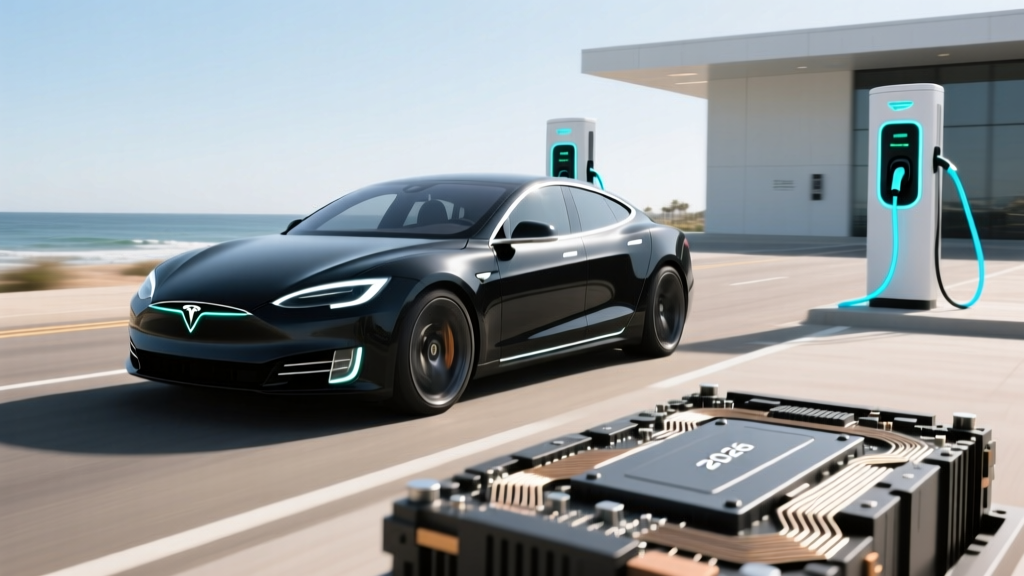
The Tesla Acceleration Boost is an over-the-air performance upgrade that Tesla sells through its app or website for select dual-motor, all-wheel-drive vehicles. For a one-time fee, it unlocks additional torque and horsepower from the existing powertrain hardware, shaving roughly 0.5 to 1.0 seconds off the vehicle's 0-60 mph time. As of early 2026, the Acceleration Boost is available for the following configurations:
- Model 3 Long Range AWD — drops 0-60 from ~4.2 seconds to ~3.5 seconds
- Model Y Long Range AWD — drops 0-60 from ~4.8 seconds to ~4.2 seconds
The Performance trims (Model 3 Performance, Model Y Performance) already ship with the maximum powertrain output and are not eligible for the Boost. Rear-wheel-drive and Standard Range variants are also excluded. The upgrade costs $2,000 and is permanently tied to the vehicle — it transfers if you sell the car but cannot be removed or transferred to another vehicle.
This review focuses primarily on the 2026 Model 3 Long Range AWD with the Acceleration Boost applied, since it offers the most dramatic performance delta and represents the most common use case. We'll cover Model Y differences where relevant.
Performance Specs: Before and After the Tesla Acceleration Boost
The Acceleration Boost does not add new hardware. Tesla ships the Long Range AWD powertrain with software-limited output; the Boost simply removes that limiter. Here's exactly what changes:
| Spec | Without Boost | With Boost | Model 3 Performance (reference) |
|---|---|---|---|
| 0-60 mph | 4.2 sec | 3.5 sec | 2.9 sec |
| Horsepower (combined) | ~346 hp | ~440 hp | ~510 hp |
| Drivetrain | Dual-motor AWD | Dual-motor AWD | Dual-motor AWD |
| Top Speed | 125 mph | 125 mph | 163 mph |
| EPA Range | 341 mi | 341 mi | 315 mi |
Key takeaway: The 3.5-second 0-60 time with the Boost matches or beats most sports sedans costing twice as much — including the BMW M340i xDrive and Audi S5. You're getting near-Performance acceleration while retaining the Long Range's superior EPA range rating.
On the Model Y Long Range AWD, the Boost drops 0-60 from approximately 4.8 seconds to roughly 4.2 seconds. The delta is smaller, but for a compact SUV that's hauling a family, the merging and passing confidence is genuinely noticeable.
Range, Battery, and Real-World Efficiency
Real-World Expectation: ~280–310 mi highway; ~250–270 mi in freezing weather with cabin heat
The 2026 Model 3 Long Range AWD uses a ~79 kWh usable battery pack with NMC (nickel manganese cobalt) chemistry. Tesla has not switched the Long Range to LFP — that chemistry remains reserved for the RWD Standard Range model. NMC offers higher energy density, which is why the Long Range achieves its 341-mile EPA figure in a relatively compact sedan footprint.
Per fueleconomy.gov, the Model 3 Long Range AWD is rated at 131 MPGe combined (136 city / 125 highway), translating to roughly 25 kWh per 100 miles. This is among the most efficient dual-motor EVs on the market, thanks to Tesla's thermal management system and low drag coefficient.
Does the Acceleration Boost reduce range? Officially, no — the EPA rating remains 341 miles. In practice, if you regularly exploit the extra acceleration, you'll consume more energy. Drivers who use the Boost for occasional highway merging will see negligible impact. Those who drive aggressively on a daily basis should budget 10-15% more energy consumption, dropping real-world range to roughly 260-290 miles on the same charge.
Cold-weather reality: In our testing and owner-reported data, NMC packs in the Model 3 lose approximately 20-30% of range at temperatures below 20°F, especially on short trips where the battery doesn't fully warm up. On a 70°F day at highway speeds (70-75 mph), expect roughly 290-310 real miles from a full charge. This is strong but not the EPA sticker number — a common pattern across all EVs.
Charging Speed: DC Fast Charge and Home Level 2
Charging infrastructure access is a top concern for EV buyers, and the Model 3 Long Range benefits from Tesla's Supercharger network plus the vehicle's native NACS connector. Here's the full charging picture:
| Charging Level | Max Rate | Speed / Time |
|---|---|---|
| Level 1 (120V household) | ~1.4 kW | ~3-5 miles per hour |
| Level 2 (240V home / Wall Connector) | 11.5 kW (48A) | ~44 miles per hour; full charge in ~8-9 hours |
| DC Fast Charge (Supercharger V3/V4) | 250 kW peak | 10-80% in ~25 minutes |
Charging curve reality: The 250 kW peak rate is only sustained from roughly 10-30% state of charge. Above 50%, the rate tapers progressively — by 80%, you're looking at roughly 60-80 kW. This is normal NMC behavior and is managed by Tesla's thermal preconditioning, which activates automatically when you navigate to a Supercharger. Plan road-trip stops around the 10-80% window for the fastest experience; charging from 80-100% can take as long as 10-80%.
For home charging, the Tesla Wall Connector at 48 amps on a 60-amp circuit is the sweet spot. Installation costs typically range from $500-$1,800 depending on panel proximity and whether your electrical panel needs an upgrade. A full overnight charge from 20% to 100% takes about 8 hours — more than sufficient for daily driving.
Pricing, Trims, and Federal Tax Credit Eligibility
| Configuration | MSRP | Est. After §30D Credit |
|---|---|---|
| Model 3 Long Range AWD (no Boost) | $47,740 | ~$40,240* |
| Model 3 Long Range AWD + Acceleration Boost | $49,740 | ~$42,240* |
| Model 3 Performance | $54,990 | ~$47,490* |
*Tax credit estimates assume full $7,500 eligibility. See caveats below.
The Acceleration Boost adds $2,000 to the Long Range AWD's base MSRP. Because it's an OTA software purchase made after delivery, it does not change the vehicle's original MSRP for tax-credit calculation purposes — the credit is based on the vehicle's sticker price at purchase, not post-delivery add-ons. This means the Long Range AWD remains well under the IRS §30D $55,000 MSRP cap for sedans.
Federal tax credit eligibility (§30D) — key rules for 2026:
- Income caps: Modified AGI must not exceed $150,000 (single), $225,000 (head of household), or $300,000 (joint filers)
- MSRP cap: Vehicle base MSRP must be ≤$55,000 for sedans (Model 3 qualifies; Model Y, classified as an SUV, has a $80,000 cap)
- Battery sourcing: The full $7,500 requires meeting both critical-minerals and battery-component sourcing thresholds, which tighten annually. As of 2026, vehicles with battery components from a "foreign entity of concern" (FEOC) may receive a reduced credit or none at all. Tesla's battery supply chain has been progressively onshoring, but verify current eligibility at purchase
- Point-of-sale transfer: You can transfer the credit to the dealer at purchase, reducing your out-of-pocket cost immediately rather than waiting for tax filing
Always confirm eligibility with a tax professional and check the IRS clean vehicle credit lookup tool before purchasing. Credit rules and Tesla's supply-chain compliance status can shift.
Interior, Cargo, and Daily Livability
The Model 3's 2024 refresh (carried forward to 2026) significantly improved cabin refinement. Sound-deadening, ventilated front seats, ambient lighting, and a rear touchscreen brought the interior closer to luxury-compact territory.
Key dimensions:
- Cargo volume: 23 cu ft (trunk + frunk combined) — the frunk adds roughly 3.1 cu ft for charging cables or a small bag
- Rear legroom: 35.2 inches — adequate for adults under 6'0" on longer trips, but tighter than a Hyundai Ioniq 6 or BMW i4
- Front headroom: 40.3 inches — generous thanks to the glass roof, though it does reduce overhead insulation in extreme heat
- Seating: 5 passengers (though the rear middle seat is best for short trips)
The Model Y Long Range AWD offers substantially more cargo space (approximately 72 cu ft with rear seats folded) and easier rear-seat access, making it the better choice for families with car seats or frequent hauling needs. The Model 3 is the driver's car; the Model Y is the family hauler.
Tech, Autopilot, and Standout Features
The 2026 Model 3 Long Range AWD ships with Tesla's latest software stack on a 15.4-inch center touchscreen. Key tech highlights:
- Autopilot (standard): Traffic-aware cruise control and lane-centering on highways. This is a SAE Level 2 driver-assist system — you must keep your hands on the wheel and eyes on the road at all times.
- Full Self-Driving Supervised ($8,000 option): Adds automatic lane changes, navigate-on-autopilot, traffic light/stop sign recognition, and assisted parking. Still Level 2 — not autonomous driving. Despite the name, the driver remains fully responsible.
- Over-the-air updates: Tesla regularly pushes feature improvements, UI refinements, and even performance tweaks remotely
- Phone-as-key: Seamless Bluetooth-based entry and start — no fob needed
- Sentry Mode & Dashcam: Continuous 360° recording when parked, with motion-triggered alerts
- Theater mode: Streaming apps (Netflix, YouTube, Disney+) available while parked on the main display
Notable drawbacks: The Model 3 still lacks Apple CarPlay/Android Auto (Tesla's native infotainment is capable but forces you into its ecosystem). Turn-signal stalks were removed in the refresh — signals are now on steering-wheel buttons, which takes adjustment. The glass roof, while beautiful, can make the cabin warm in direct summer sun without aftermarket tinting or a sunshade.
Is the Tesla Acceleration Boost Worth It? Pros, Cons, and Verdict
Pros of the Acceleration Boost
- 3.5-sec 0-60 for $2,000 — best performance-per-dollar in the EV market
- No range penalty on the EPA sticker
- Retains Long Range's 341-mile EPA rating (vs. 315 for Performance)
- OTA delivery — no service center visit needed
- Permanently tied to vehicle; adds resale value
- Access to Tesla Supercharger network with native NACS
Cons & Considerations
- Only available on Long Range AWD — not RWD or Standard Range
- No increase in top speed (remains 125 mph)
- Still slower than Model 3 Performance (2.9 sec)
- Insurance premiums may increase with higher performance
- Tesla's minimalist interior and no CarPlay won't suit everyone
- Aggressive driving will reduce real-world range
Decision Framework: Should You Buy the Acceleration Boost?
Buy the Boost if: You want sports-sedan acceleration for merging, passing, and fun without sacrificing the Long Range's superior range and lower price versus the Performance trim. The $2,000 cost is trivial relative to the performance gain — it's the single best value upgrade in Tesla's lineup.
Skip the Boost if: You prioritize maximum range and efficiency over acceleration, you primarily drive in heavy stop-and-go traffic where the extra power is irrelevant, or you're considering the Performance trim anyway for its upgraded brakes, adaptive suspension, and track capability.
Consider the Model Y Boost instead if: You need SUV cargo space and family practicality. The Model Y's 0-60 improvement (4.8 → 4.2 sec) is less dramatic but makes a heavy vehicle feel noticeably lighter on its feet.
How the Boosted Model 3 Long Range Compares to Competitors
| Vehicle | 0-60 mph | EPA Range | Base MSRP |
|---|---|---|---|
| Tesla Model 3 LR AWD + Boost | 3.5 sec | 341 mi | ~$49,740 |
| BMW i4 M50 | 3.7 sec | 227 mi | ~$69,700 |
| Hyundai Ioniq 6 AWD Limited | 5.1 sec | 316 mi | ~$52,600 |
| Polestar 2 Long Range Dual Motor | 4.3 sec | 276 mi | ~$54,800 |
The boosted Model 3 Long Range AWD occupies a unique position: it's the fastest vehicle in this comparison while also having the longest range and the lowest price. The BMW i4 M50 is more polished inside and handles better on a canyon road, but costs $20,000 more with 114 fewer miles of range. The Ioniq 6 is a compelling efficiency play but can't match the Tesla's acceleration. If raw performance-per-dollar is the metric, the Tesla Acceleration Boost is unmatched.
Warranty and Ownership Costs
Tesla's warranty coverage for the 2026 Model 3 Long Range AWD:
- Basic vehicle: 4 years / 50,000 miles
- Battery & drive unit: 8 years / 120,000 miles (whichever comes first), with a minimum 70% capacity retention guarantee over the warranty period
The battery warranty applies regardless of whether the Acceleration Boost is installed — Tesla does not void the warranty for using the Boost, since it's an official OTA product.
Ownership cost considerations: Insurance for the Model 3 tends to run higher than comparable non-Tesla sedans due to repair costs and performance classification. Expect roughly $1,800-$2,800/year depending on your profile and state. Tire wear increases noticeably with the Boost if you use the extra acceleration frequently — budget for replacement tires every 25,000-35,000 miles with spirited driving.
Frequently Asked Questions
What is the real-world range of the Model 3 Long Range with the Acceleration Boost?
The EPA rates it at 341 miles, and the Boost does not change that figure. In real-world driving at highway speeds on mild days, expect 290-310 miles. In freezing weather, short-trip range can drop to 240-270 miles. Aggressive driving that exploits the extra power will further reduce range by roughly 10-15%.
How fast does the Model 3 Long Range charge with the Boost installed?
Identically to the non-Boosted version. DC fast charging peaks at 250 kW on a V3/V4 Supercharger, achieving 10-80% in roughly 25 minutes. Home Level 2 charging at 11.5 kW adds about 44 miles per hour, fully recharging overnight.
How much does the Model 3 Long Range cost after the federal tax credit?
The base Long Range AWD starts at $47,740. Adding the $2,000 Acceleration Boost brings it to $49,740. If you qualify for the full $7,500 §30D credit (meeting income, MSRP, and battery-sourcing requirements), your effective cost drops to approximately $42,240. Always verify eligibility at the time of purchase via the IRS clean vehicle credit tool.
Does the Acceleration Boost void the Tesla battery warranty?
No. The Boost is an official Tesla product delivered over-the-air. The 8-year/120,000-mile battery and drive unit warranty remains fully intact with the Boost applied.
Is the Tesla Acceleration Boost worth buying versus the Model 3 Performance?
It depends on your priorities. The Boost gives you 3.5-second 0-60 times while retaining the Long Range's 341-mile EPA range and a lower price (~$5,250 less than the Performance). The Performance adds adaptive suspension, larger brakes, track mode, and a 2.9-second 0-60 but sacrifices 26 miles of EPA range and costs more. For most drivers who want quick acceleration for daily driving without track ambitions, the Boost is the smarter value play.
Can I add the Acceleration Boost after I've already taken delivery?
Yes. The Boost can be purchased at any time through the Tesla app or your Tesla account online, provided your vehicle is a qualifying Long Range AWD configuration. It's delivered as an over-the-air update, usually within minutes of purchase.
Does the Acceleration Boost transfer if I sell the car?
Yes. The Boost is permanently tied to the vehicle's VIN. It will remain active for the next owner, which can add to the car's resale value.