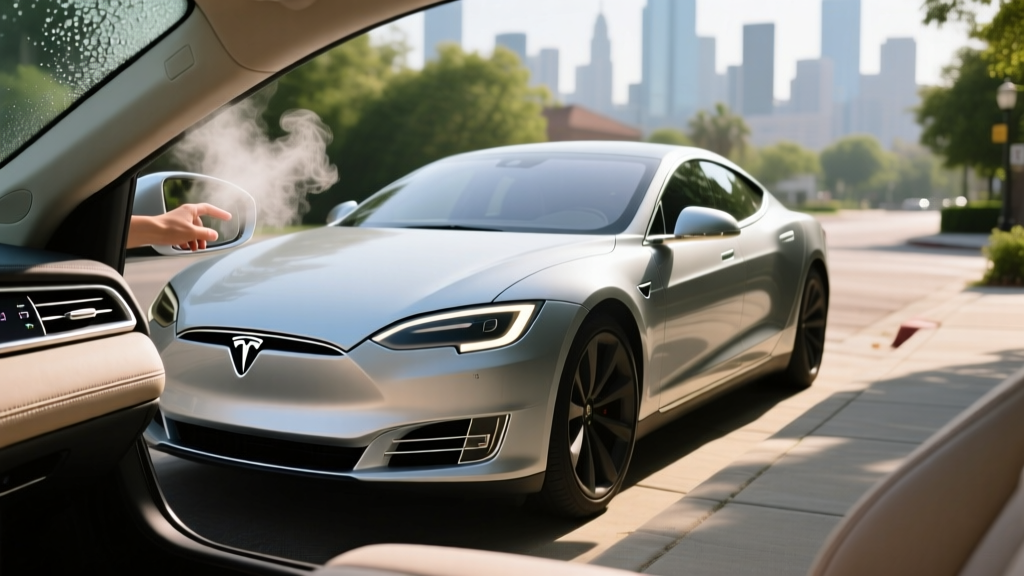
If you've ever turned on your Tesla's climate control and been hit with a sour, vinegar-like, or musty odor, you're not imagining it — and you're not alone. The query "why does my Tesla AC smell" is one of the most common ownership questions in Tesla forums, and the answer almost always traces back to one component: the cabin air filter and the HVAC evaporator coil. But understanding whether the smell is a minor maintenance issue or a sign of something deeper requires knowing your Tesla's HVAC architecture inside and out.
This guide tackles the AC smell problem head-on, then expands into a full 2026 Tesla Model Y ownership profile — the vehicle most affected by this complaint — covering real-world range, charging speeds, pricing, tax credit eligibility, and whether it still holds up against a rapidly closing competitive field.
Why Your Tesla's AC Smells: The Root Cause
The most common Tesla AC odor — a sharp, vinegar-like or damp-towel smell — is caused by microbial growth (mold, mildew, and bacteria) on the evaporator coil inside the HVAC unit. Here's why Teslas are particularly prone to it:
- Condensation trapping: When the AC runs, the evaporator coil gets cold and pulls moisture from the air. In humid climates, that moisture lingers on the coil after you turn the car off, creating a breeding ground for microbes.
- Cabin filter saturation: Tesla's OEM cabin air filters (standard particulate, not HEPA, on most trims) trap organic material — pollen, dust, skin cells — that microbes feed on.
- No post-cooldown dry cycle (older firmware): Earlier Tesla software didn't always run the fan after AC shutoff to dry the evaporator. Firmware updates from 2024 onward added a "Cabin Overheat Protection" and post-drive fan run that helps, but doesn't eliminate the issue.
- Replace both cabin air filters (Tesla recommends every 2 years; many owners do it annually in humid climates). Part cost: ~$25–$40 for aftermarket, ~$55 OEM.
- Run an evaporator coil cleaner — a foaming HVAC treatment sprayed into the intake (located at the base of the windshield) with the fan on recirculate. Products like Kool-It or Nu-Calgon are commonly used.
- Enable Cabin Overheat Protection and ensure your firmware is current — newer versions run the blower post-shutdown to dry the coil.
- If the smell persists, the HEPA filter (if equipped on your trim) may also need replacement — it's a separate, larger filter that costs ~$70–$100.
If you've done all of the above and still detect a chemical or burning smell (not vinegar/musty), that points to a different issue — potentially a failing blower motor resistor, a refrigerant leak, or off-gassing from interior adhesives in hot climates. Those warrant a service center visit.
2026 Tesla Model Y: Core Specifications at a Glance
The AC smell issue affects Model 3 and Model Y owners most frequently due to shared HVAC architecture, but the Model Y remains Tesla's volume seller and the vehicle most buyers are cross-shopping. Here are the 2026 numbers:
| Spec | Value |
|---|---|
| EPA Range | 320 miles |
| Usable Battery Capacity | ~75 kWh (NMC chemistry) |
| Drivetrain | Dual-Motor AWD |
| Horsepower | 384 hp (combined) |
| 0–60 mph | 4.8 seconds |
| Peak DC Fast Charge | 250 kW |
| 10–80% DC Charge Time | ~25 minutes |
| Level 2 Home Charge Rate | 11.5 kW (~44 mi/hr) |
| EPA Efficiency | 122 MPGe combined / 28 kWh/100 mi |
| Cargo Volume | 30.2 cu ft (rear seats up) / 76.2 cu ft (folded) |
| Rear Legroom | 41.6 inches |
| Battery Warranty | 8 years / 120,000 miles |
| Base MSRP | $44,990 (Long Range AWD) |
The base Rear-Wheel-Drive Model Y starts at $39,990 with an EPA range of 302 miles and a 0–60 time of 5.8 seconds. The Performance trim tops out at $52,490 with 277 miles of range and a 3.5-second 0–60.
Real-World Range: What to Actually Expect
EPA Sticker: 320 miles
Real-World Highway (75 mph, moderate climate): ~265–285 miles
Real-World City/Suburban (mixed regen): ~295–310 miles
Cold Weather (below 32°F, highway): ~215–245 miles (30–35% loss due to battery resistance and cabin heating load)
The Model Y's EPA-estimated 320 miles assumes a mix of city and highway driving at moderate temperatures. In practice, sustained highway speeds above 70 mph reduce efficiency significantly — aerodynamic drag scales with the square of velocity, and the Model Y's 0.23 Cd, while excellent, can't overcome physics at 80 mph.
Cold weather compounds the loss. Tesla's heat pump (standard since the 2021 refresh) is more efficient than resistive heating, but battery chemistry still suffers in freezing temperatures. Expect to precondition the battery via the Tesla app before departing in winter — this warms the pack and recovers 5–10% of range that would otherwise be lost to internal resistance.
Charging Speed: Home and DC Fast Charging
Charging is where the Model Y's ownership experience diverges sharply from competitors, largely because of Tesla's Supercharger network advantage.
| Level | Power | Speed | Typical Use |
|---|---|---|---|
| Level 1 (120V) | ~1.4 kW | ~5 mi/hr | Emergency / trickle |
| Level 2 (240V, 48A) | 11.5 kW | ~44 mi/hr | Home overnight |
| DC Fast (Supercharger V3) | 250 kW peak | ~175 mi in 15 min | Road trips |
| DC Fast (above 80% SoC) | Tapers to ~40 kW | Slow | Avoid on road trips |
The critical detail most spec sheets omit: peak 250 kW is only sustained between roughly 10–35% State of Charge. Beyond that, the charge curve tapers progressively — by 60% you're typically at ~120 kW, and above 80% the car deliberately slows to protect battery longevity. Plan road-trip stops around 10–80% increments (~25 minutes at a V3 Supercharger) rather than trying to fill to 100%.
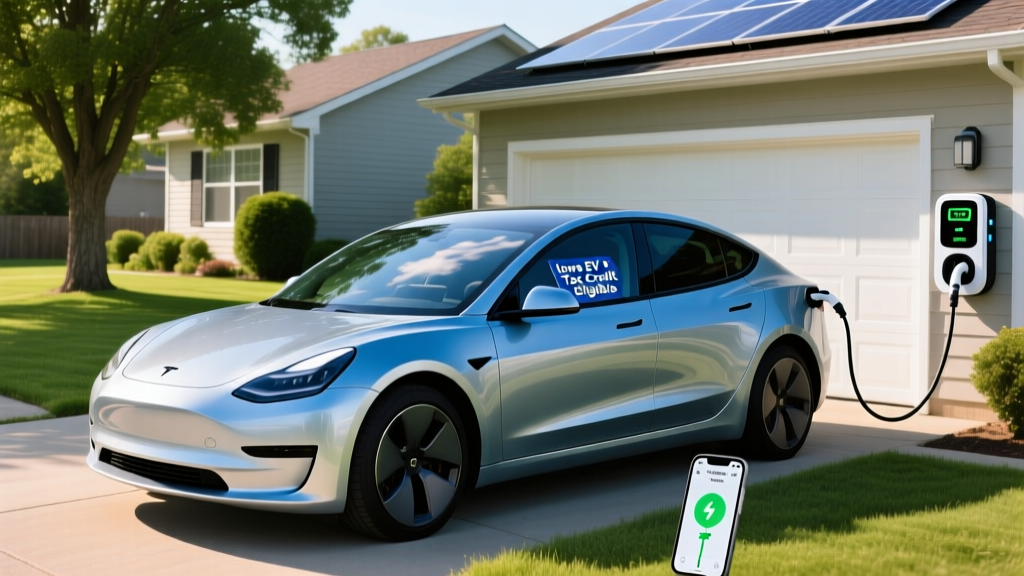
At home, a Wall Connector on a 60A circuit delivers the full 11.5 kW (48A continuous), adding about 44 miles of range per hour — enough to fully replenish overnight. Installation typically costs $800–$2,000 depending on panel proximity and local permitting. If your electrical panel is maxed at 100A, a panel upgrade to 200A can add $1,500–$3,000.
Pricing, Trims, and Federal Tax Credit Eligibility
| Trim | MSRP | §30D Credit | Effective Price |
|---|---|---|---|
| Rear-Wheel Drive | $39,990 | $7,500 (if eligible) | ~$32,490 |
| Long Range AWD | $44,990 | $7,500 (if eligible) | ~$37,490 |
| Performance | $52,490 | $7,500 (if eligible) | ~$44,990 |
The federal §30D clean vehicle credit offers up to $7,500 — but eligibility is conditional and subject to change. As of the 2026 tax year, key requirements include:
- MSRP cap: SUVs (including Model Y) must be priced at or below $80,000. All Model Y trims qualify.
- Buyer income cap: Modified AGI must not exceed $150,000 (single), $225,000 (head of household), or $300,000 (joint).
- Battery sourcing: A percentage of critical minerals and battery components must be sourced from the US or FTA partners. Tesla's shift to LFP batteries from CATL for some RWD trims has complicated eligibility — verify your specific VIN's battery origin on the Tesla order page before purchase.
- Point-of-sale transfer: You can now transfer the credit to the dealer at purchase, reducing your out-of-pocket cost immediately rather than waiting to claim it on your tax return.
Pros and Cons: Honest Ownership Assessment
- Supercharger network remains the most reliable DC fast-charging infrastructure in the US
- Class-leading efficiency (28 kWh/100 mi) reduces per-mile electricity cost
- Over-the-air updates continuously add features (recent: improved battery preconditioning, adaptive wipers)
- Strong resale value relative to non-Tesla EVs
- Spacious cargo area with flat load floor and front trunk (frunk)
- Cabin AC odor issue is widespread and requires proactive filter maintenance
- No physical stalks (turn signals on steering wheel buttons — polarizing)
- Ride quality is firm; road noise is noticeable above 65 mph on coarse pavement
- Rear visibility is limited; relies heavily on backup camera
- Service center wait times can stretch weeks in high-volume metro areas
Tech, Driver Assistance, and Interior
The 2026 Model Y continues with Tesla's minimalist interior: a single 15.4-inch touchscreen handles all controls, navigation, and entertainment. The "Juniper" refresh introduced in 2025 added ambient lighting, ventilated front seats, a rear-seat touchscreen, and improved sound insulation — addressing the most common complaints from the prior generation.
On the driver-assistance front, it's critical to understand what you're getting:
Tesla's Autopilot (standard) and Full Self-Driving Supervised ($8,000 option or $99/month) are SAE Level 2 systems. This means the car can handle steering, acceleration, and braking under certain conditions, but you must remain fully engaged and supervise at all times. It is not self-driving. The "Supervised" label Tesla added in 2024 reflects NHTSA guidance — the driver is legally and practically responsible. Only Level 4 systems (Waymo, Zoox in geofenced areas) operate without human oversight.
Competitors like GM's Super Cruise and Ford's BlueCruise offer comparable Level 2 capability with more robust driver-monitoring (eye-tracking cameras). Tesla's vision-only approach (no LiDAR or radar on current models) occasionally struggles in heavy rain, construction zones, and faded lane markings.
Is the 2026 Model Y Worth It vs. the Competition?
The Model Y's competitive position in 2026 is stronger in some ways and weaker in others:
- vs. Hyundai Ioniq 5: The Ioniq 5 charges faster (350 kW peak on 800V architecture, 10–80% in ~18 min) and has a more conventional interior with physical buttons. But its charging network (Electrify America) has lower uptime than Superchargers. Range is comparable (305 mi Long Range AWD).
- vs. Ford Mustang Mach-E: The Mach-E Extended Range offers 312 miles EPA and a more engaging driving feel, but its DC charging tops out at 150 kW — significantly slower on road trips.
- vs. Kia EV6: Shares the Ioniq 5's 800V fast-charging advantage. Slightly sportier, but smaller cargo area (24.4 cu ft vs. 30.2).
The Model Y wins on network reliability, efficiency, cargo space, and software maturity. It loses on charging speed (400V architecture limits it vs. 800V rivals), interior material quality at this price point, and the persistent HVAC odor issue that no competitor seems to share at the same scale.
Frequently Asked Questions
Why does my Tesla AC smell like vinegar specifically?
The vinegar smell is caused by acetic acid produced by bacteria (often Acinetobacter or Pseudomonas species) colonizing the evaporator coil. These microbes metabolize organic debris trapped by the cabin filter and produce volatile organic compounds, including acetic acid. Replacing the filter and treating the coil with an antimicrobial foam eliminates it in most cases within 24–48 hours.
Does the Tesla HEPA filter (Bioweapon Defense Mode) prevent AC smells?
Partially. The HEPA filter (standard on Model Y Long Range and Performance, not on RWD) captures much finer particulates than a standard cabin filter, reducing the organic material that feeds microbial growth. However, the evaporator coil itself is downstream of the filter, so moisture and some microbes still reach it. HEPA-equipped cars still need periodic coil cleaning.
How often should I replace my Tesla cabin air filter?
Tesla's official recommendation is every 2 years for the standard filter and every 3 years for the HEPA filter. In practice, owners in humid or high-pollen areas report needing replacements every 12–18 months to prevent odor. Aftermarket filters cost $20–$40 and the replacement procedure takes 15–20 minutes with basic tools (glove box removal).
Does the 2026 Model Y qualify for the full $7,500 federal tax credit?
It depends on your income, the specific vehicle's battery sourcing, and current IRS rules. All Model Y trims fall under the $80,000 SUV MSRP cap. The income limits are $150K single / $300K joint. Battery-sourcing requirements are the variable — some RWD trims with CATL-sourced LFP cells have had eligibility issues in prior years. Verify your VIN on the IRS clean vehicle credit page before purchase.
Is the AC smell covered under Tesla's warranty?
Generally, no. Tesla classifies cabin air filters as wear/maintenance items (like wiper blades and tires). The filter replacement cost is on the owner. However, if the evaporator coil itself is defective (rare — typically manifests as refrigerant leaks, not odor), that falls under the 4-year/50,000-mile basic vehicle warranty.
What's the real-world range of the Model Y in winter?
Expect 215–245 miles in sustained sub-freezing highway driving — a 25–35% reduction from the 320-mile EPA estimate. Preconditioning the battery while plugged in recovers some of this loss. City driving in cold weather is less impacted because regenerative braking recovers energy that would be lost to brake heat, and speeds are lower.