Quick Verdict: Tesla's Motor Strategy Still Sets the Efficiency Benchmark
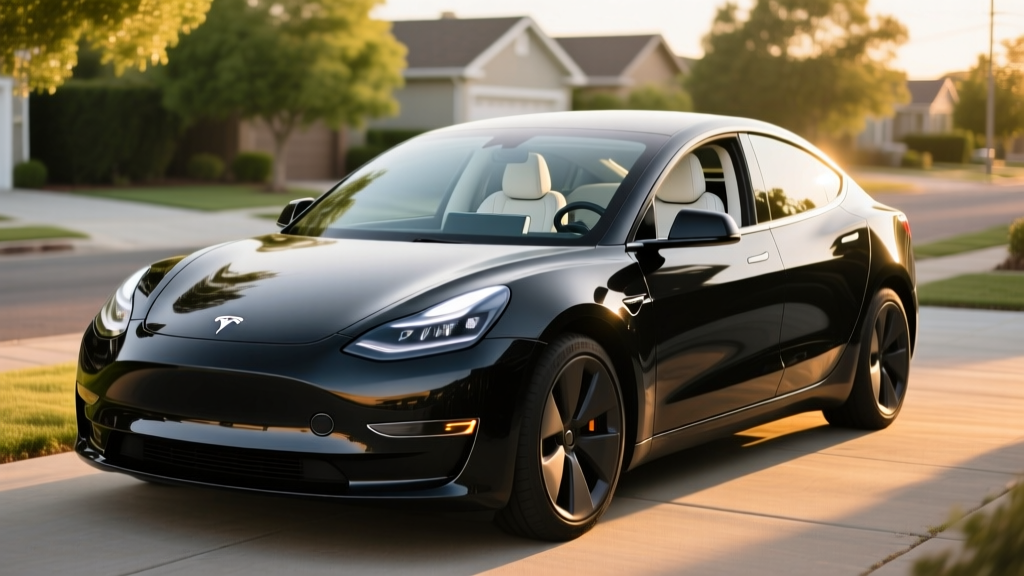
When buyers search for Tesla's AC motor, they're usually trying to understand one thing: why does the Model 3 extract more miles per kilowatt-hour than nearly every rival sedan on the market? The answer lies in Tesla's dual-motor architecture — a permanent magnet synchronous reluctance motor (PMSRM) on the rear axle paired with an AC induction motor up front. This isn't just an engineering trivia point; it's the reason the 2026 Tesla Model 3 Long Range AWD delivers an EPA-estimated 363 miles of range while hitting 60 mph in 4.2 seconds.
The Model 3 remains one of the most efficient electric vehicles sold in the United States. For 2026, Tesla continues to refine the Highland-refresh platform introduced in late 2023, with incremental software and thermal-management improvements that keep it competitive against the Hyundai Ioniq 6, BMW i4, and Polestar 2. Below, we break down every spec that matters — from battery chemistry and charging curves to real-world range and federal tax credit eligibility — so you can decide if this is the right EV for your garage.
Range, Efficiency, and the Motor That Makes It Possible
| Spec | Long Range AWD | Performance AWD | RWD (Standard) |
|---|---|---|---|
| EPA Range | 363 mi | 330 mi | 272 mi |
| Battery (usable) | ~75 kWh (NMC) | ~75 kWh (NMC) | ~57.5 kWh (LFP) |
| MPGe (combined) | 132 MPGe | 121 MPGe | 132 MPGe |
| Efficiency | 25 kWh/100 mi | 28 kWh/100 mi | 25 kWh/100 mi |
| 0–60 mph | 4.2 sec | 2.9 sec | 5.8 sec |
| Horsepower | ~346 hp | ~510 hp | ~271 hp |
| Drivetrain | Dual-motor AWD | Dual-motor AWD | Rear-motor RWD |
| Base MSRP | $47,740 | $52,740 | $38,990 |
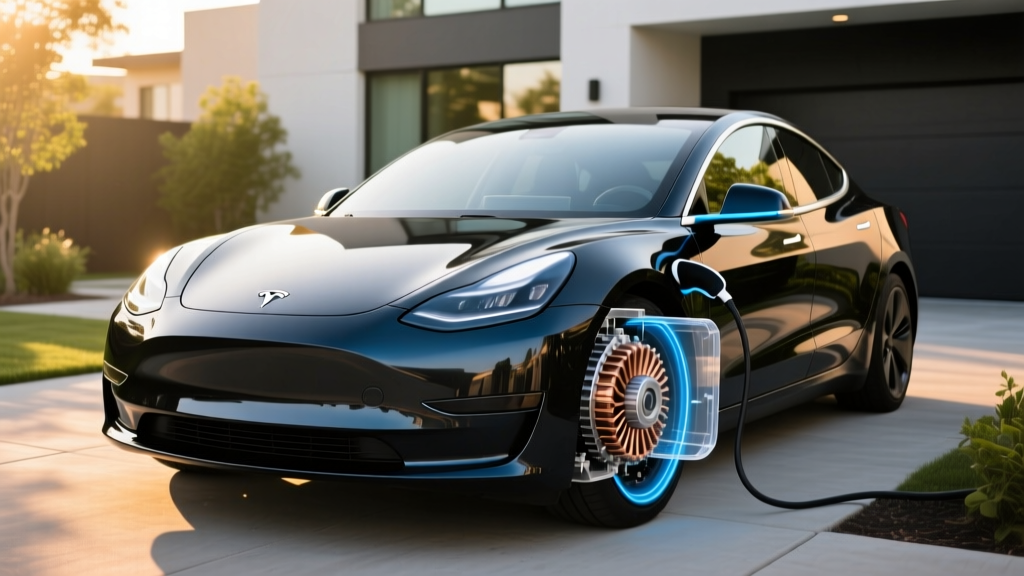
The secret to the Model 3's class-leading efficiency is the interplay between its two motor types. The rear PMSRM — technically a synchronous reluctance motor with embedded permanent magnets — delivers high torque at low speeds with minimal electrical losses. The front AC induction motor, meanwhile, can be completely de-energized during cruising, creating zero drag when all-wheel-drive traction isn't needed. This means the car effectively operates as a rear-wheel-drive vehicle on the highway, reducing parasitic losses and extending range.
According to fueleconomy.gov, the Model 3 Long Range AWD achieves 132 MPGe combined — a figure that outpaces the BMW i4 eDrive40 (119 MPGe) and matches the Hyundai Ioniq 6 SE Long Range (140 MPGe). That efficiency directly translates to lower charging costs and fewer stops on road trips.
EPA: 363 miles (Long Range AWD). In mixed highway driving at 70–75 mph, expect 300–320 miles. In cold weather (below 32°F), range drops to 250–280 miles due to cabin heating demands and increased battery resistance. City driving with regenerative braking can meet or slightly exceed the EPA figure. The RWD model's LFP battery handles cold slightly worse than NMC — budget 30% loss in deep winter.
Charging Speed: DC Fast, Level 2, and the Charge Curve Reality
Charging speed is where Tesla's Supercharger network advantage remains tangible, though the gap has narrowed as CCS networks expand and Tesla opens Superchargers to NACS-equipped rivals.
| Charging Level | Max Rate | Speed / Time |
|---|---|---|
| DC Fast Charge (Supercharger V3/V4) | 250 kW peak | 10–80% in ~25 min (Long Range) |
| DC Fast Charge (typical sustained) | ~170 kW avg (10–80%) | ~175 miles added in 15 min |
| Level 2 (home / destination, 48A) | 11.5 kW | ~44 miles per hour of charging |
| Level 2 (standard 32A) | 7.7 kW | ~30 miles per hour |
| Level 1 (120V household) | ~1.4 kW | ~3–5 miles per hour |
A critical detail often missed: the 250 kW peak only holds between roughly 10–30% state of charge. By 50% SoC, the rate tapers to around 150 kW, and above 80% it drops sharply to protect the NMC cells. This charge curve means a 10–80% session takes about 25 minutes, but pushing from 80–100% can add another 25 minutes — so plan your road-trip stops accordingly.
The RWD model with its LFP (lithium iron phosphate) battery accepts a slightly lower DC peak of approximately 170 kW but can be charged to 100% regularly without the degradation concerns of NMC chemistry. Tesla recommends daily charging to 100% for LFP packs to maintain cell-balancing accuracy.
For home Level 2 charging, Tesla's Wall Connector at 48 amps delivers 11.5 kW, replenishing a full Long Range battery in roughly 7 hours. Installation typically requires a 60-amp dedicated circuit; budget $800–$2,000 for professional installation depending on your panel's proximity to the garage.
Understanding Tesla's AC Motor Architecture
The dual-motor setup in the Model 3 Long Range and Performance isn't just about all-wheel-drive grip — it's a deliberate efficiency strategy rooted in motor physics.
Rear motor (PMSRM): This permanent magnet synchronous reluctance motor handles the bulk of propulsion. Synchronous reluctance rotors use the natural magnetic saliency of shaped iron laminations, augmented with embedded rare-earth magnets, to produce high torque density with exceptional efficiency across a wide RPM band. This is the motor you feel during hard acceleration and the one doing most of the work in city driving.
Front motor (AC induction): The front axle uses a traditional three-phase AC induction motor — the same motor type Nikola Tesla pioneered over a century ago. Its key advantage in this application is that when no front torque is required (highway cruising, light acceleration), the inverter simply stops energizing the stator windings. The rotor spins freely with virtually no cogging torque or magnetic drag. In a permanent magnet motor, by contrast, the magnets always create some back-EMF resistance even when unpowered.
This combination means the Model 3 gets the best of both worlds: the low-speed punch and efficiency of permanent magnets from the rear, and a drag-free front motor that only engages when traction demands it. It's one reason the Model 3 Long Range achieves 4.0–4.2 kWh per mile in real-world highway testing — a number that many heavier or less aerodynamic competitors can't match.
Interior, Cargo, and Daily Practicality
The post-Highland Model 3 interior trades some physical controls for a cleaner aesthetic. The 15.4-inch center touchscreen handles everything from climate to mirrors, while a rear 8-inch screen gives back-seat passengers control over ventilation and media. Ambient lighting, ventilated front seats, and improved acoustic glass (a 30% reduction in road noise vs. pre-2024 models) elevate the cabin experience.
- Front legroom: 42.2 inches
- Rear legroom: 35.2 inches
- Cargo (trunk): 21.0 cu ft
- Frunk (front trunk): 3.1 cu ft
- Total cargo: 24.1 cu ft (25.5 cu ft with rear seats folded)
Cargo space is adequate for a family of four on a week-long trip, though the sloping roofline limits larger items. The frunk is small compared to the Hyundai Ioniq 5's 2.0 cu ft front storage but remains useful for charging cables and groceries. If cargo is a priority, the Model Y offers 30.2 cu ft behind the rear seats — worth considering within Tesla's lineup.
Pricing, Trims, and Federal Tax Credit Eligibility
| Trim | Base MSRP | Est. §30D Credit | Effective Price |
|---|---|---|---|
| RWD (Standard) | $38,990 | Up to $7,500 | ~$31,490* |
| Long Range AWD | $47,740 | Up to $7,500 | ~$40,240* |
| Performance AWD | $52,740 | Up to $7,500 | ~$45,240* |
*Effective price assumes full §30D credit eligibility. Actual credit varies.
The IRS §30D federal tax credit provides up to $7,500 for qualifying new EVs, but eligibility depends on several factors that change periodically:
- MSRP cap: Sedans must be priced at or below $55,000. All current Model 3 trims qualify.
- Buyer income cap: Modified AGI ≤ $150,000 (single), $225,000 (head of household), or $300,000 (joint).
- Battery sourcing: The $7,500 credit splits into two halves — $3,750 for critical minerals and $3,750 for battery component sourcing. Vehicles with battery components from a "foreign entity of concern" (FEOC) may lose one or both halves. Tesla's US-assembled battery packs have largely maintained eligibility, but always verify current status on the IRS clean vehicle credit page before purchasing.
- Point-of-sale transfer: Since 2024, buyers can transfer the credit to the dealer at purchase, reducing the upfront price rather than waiting for a tax refund.
Consult a tax professional to confirm your personal eligibility. State incentives (California's CVRP, Colorado's Innovative Motor Vehicle Credit, etc.) may stack on top but vary by jurisdiction and funding availability.
Warranty, Longevity, and Battery Health
Tesla's warranty structure is competitive with the EV industry standard:
- Basic vehicle: 4 years / 50,000 miles
- Battery & drive unit (Long Range/Performance): 8 years / 120,000 miles, with ≥70% capacity retention guaranteed
- Battery & drive unit (RWD): 8 years / 100,000 miles, with ≥70% capacity retention guaranteed
The Model 3's motor design contributes to long-term reliability. AC induction motors have no brushes, no commutators, and no permanent magnets subject to thermal demagnetization on the front axle. The rear PMSRM uses high-grade neodymium magnets rated well beyond normal operating temperatures. In practice, Tesla's drive units have demonstrated longevity well past 200,000 miles in fleet and taxi service — motor failure is rare compared to early-production battery degradation.
For the LFP-equipped RWD model, degradation is even slower: LFP chemistry typically retains 90%+ capacity after 2,000 full charge cycles, which translates to roughly 500,000 miles of theoretical use. The trade-off is lower energy density (hence the shorter 272-mile range) and slightly worse cold-weather performance.
Autopilot, FSD, and Driver Assistance
Tesla Autopilot and Full Self-Driving (Supervised) are SAE Level 2 driver-assistance systems. The driver must remain engaged, monitor the road, and be prepared to take over at any time. These systems are not self-driving. Only Level 4 services like Waymo operate without a human driver in defined areas.
All 2026 Model 3 vehicles include Tesla Autopilot (Traffic-Aware Cruise Control + Autosteer) as standard. FSD (Supervised) remains a $8,000 add-on or $99/month subscription and adds Navigate on Autopilot, Auto Lane Change, Autopark, and Smart Summon. The current FSD version uses an end-to-end neural network approach that has improved urban driving smoothness, but it still requires active supervision and can struggle with construction zones, unmapped roads, and adverse weather.
Standard safety features include automatic emergency braking, blind-spot monitoring, lane departure warning, and 360-degree cameras. The Model 3 earned a 5-star overall rating from NHTSA and Top Safety Pick+ from IIHS.
- Class-leading efficiency (25 kWh/100 mi)
- Access to Tesla Supercharger network (17,000+ US stalls)
- Strong real-world range (300+ mi highway, Long Range)
- Excellent acceleration across all trims
- Over-the-air updates continuously add features
- Low operating cost (~$0.04–0.06/mi on home charging)
- No physical controls for climate, mirrors, or glovebox
- Rear visibility limited by sloping roofline
- FSD ($8,000) remains Level 2, not autonomous
- Ride quality firm on rough pavement (19" sport wheels)
- Turn signal stalk removed — steering wheel buttons instead
- Insurance premiums above segment average
Who Should Buy the 2026 Tesla Model 3?
- Choose the RWD ($38,990) if: You commute under 60 miles daily, have reliable home charging, want the lowest entry price, and don't need AWD. The LFP battery's daily-charge-to-100% tolerance is ideal for routine use.
- Choose the Long Range AWD ($47,740) if: You take regular road trips, live in a cold-weather state, or want the best blend of range and performance. This is the sweet-spot trim for most buyers.
- Choose the Performance ($52,740) if: You prioritize track capability and sub-3-second 0–60 times and accept the 33-mile range penalty. Adaptive dampers and Track Mode set it apart.
- Look elsewhere if: You need maximum rear-seat space (consider Model Y or Ioniq 5), prefer physical buttons (BMW i4, Hyundai Ioniq 6), or want a luxury badge (BMW i4, Mercedes EQB).
Frequently Asked Questions
What is the real-world range of the Tesla Model 3?
The Long Range AWD achieves an EPA-estimated 363 miles, but real-world highway driving at 70–75 mph typically yields 300–320 miles. In freezing temperatures, expect 250–280 miles. The RWD model (272 mi EPA) delivers around 220–240 miles in mixed real-world use and less in cold weather due to its LFP battery chemistry.
How fast does the Model 3 charge at home and on the road?
On a 250 kW Supercharger, the Long Range charges from 10–80% in approximately 25 minutes. At home with a 48-amp Level 2 Wall Connector (11.5 kW), you'll add about 44 miles per hour of charging — a full charge overnight in roughly 7 hours. Standard 32-amp Level 2 adds about 30 miles per hour.
Does the 2026 Model 3 qualify for the $7,500 federal EV tax credit?
All Model 3 trims fall under the $55,000 MSRP sedan cap. However, the full $7,500 credit depends on battery critical-mineral and component sourcing requirements, which are subject to change. Your personal income must also fall below IRS thresholds ($150K single / $300K joint). Verify current eligibility at IRS.gov before purchasing.
Is the Model 3 worth buying vs. the Hyundai Ioniq 6 or BMW i4?
The Model 3 Long Range wins on Supercharger network access, efficiency, and software ecosystem. The Ioniq 6 offers comparable range (361 mi EPA), faster 800V charging (10–80% in ~18 min), and physical controls. The BMW i4 delivers a more traditional luxury interior and strong driving dynamics but trails on range (307 mi) and charging speed. If Supercharger access matters for your road trips, the Model 3 retains a practical edge.
Why does Tesla use an AC induction motor on the front axle?
An AC induction motor can be fully de-energized when front-wheel torque isn't needed, eliminating magnetic drag during highway cruising. A permanent magnet motor always produces some cogging resistance even when unpowered. This front induction / rear PMSRM combination is a key reason the Model 3 achieves 132 MPGe combined despite offering AWD capability.
How long will the Model 3's battery last?
Tesla warranties the Long Range/Performance battery for 8 years or 120,000 miles (whichever comes first) with guaranteed 70%+ capacity retention. Real-world data from high-mileage owners and fleet operators suggests NMC packs retain 85–90% capacity at 100,000 miles with normal charging habits (20–80% daily, occasional 100% for trips). The LFP battery in the RWD model shows even slower degradation due to the chemistry's inherent cycle-life advantage.