The Two Motors Under Tesla's Floor: Why It Matters in 2026
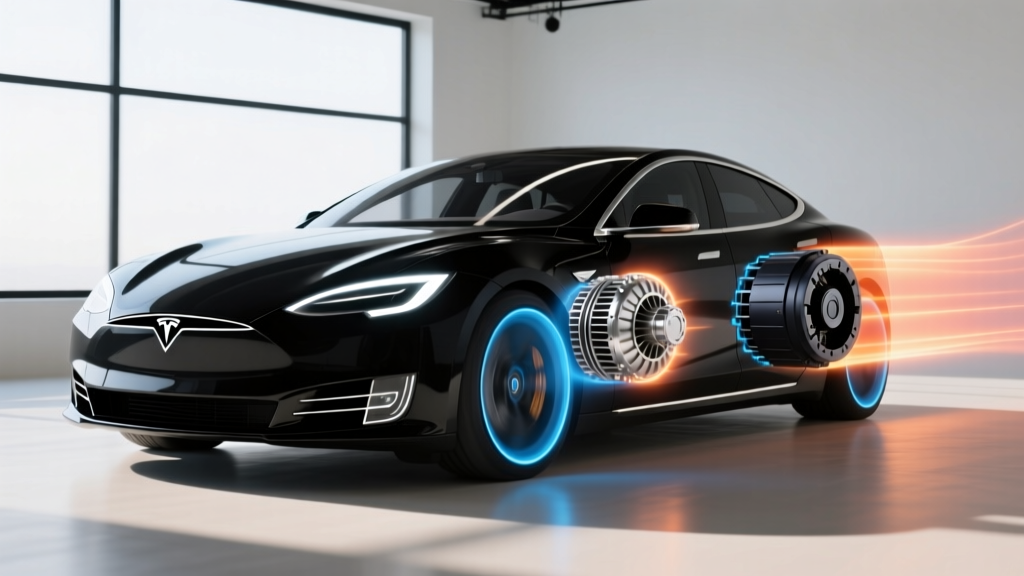
Not every Tesla drives the same way — and a big reason is the motor underneath. Tesla uses two fundamentally different electric motor architectures across its lineup: the AC induction motor (the original Tesla Motors design dating back to the Roadster) and the permanent magnet synchronous reluctance motor (PMSRM). The choice between them directly shapes EPA range, cold-weather efficiency, highway energy consumption, and even how the car coasts when you lift off the accelerator.
If you've been searching for "tesla motors ac motor" to understand what actually powers these cars and whether it affects your ownership experience, this is the technical breakdown. We'll map each motor type to the 2026 Tesla models that use them, then run the real numbers — range, charging speed, efficiency, and total cost — so you can pick the right powertrain for your driving pattern.
Which 2026 Teslas Use AC Induction vs. Permanent Magnet Motors?
Tesla's current strategy is a split architecture. The Model S and Model X use a dual-motor setup pairing a permanent magnet motor on the rear axle with an AC induction motor on the front axle. The Model 3 and Model Y (Rear-Wheel Drive and Long Range) use permanent magnet motors exclusively, while the Performance variants add an AC induction front motor for all-wheel drive.
| Model / Trim | Rear Motor | Front Motor | Drivetrain |
|---|---|---|---|
| Model 3 RWD | Permanent Magnet | None | RWD |
| Model 3 Long Range AWD | Permanent Magnet | AC Induction | AWD |
| Model Y RWD | Permanent Magnet | None | RWD |
| Model Y Long Range AWD | Permanent Magnet | AC Induction | AWD |
| Model S (Dual Motor) | Permanent Magnet | AC Induction | AWD |
| Model S Plaid (Tri-Motor) | 2× Permanent Magnet | AC Induction | AWD |
| Model X (Dual Motor) | Permanent Magnet | AC Induction | AWD |
The engineering logic is deliberate. Permanent magnet motors deliver higher torque density and better low-speed efficiency — ideal as the primary drive motor. AC induction motors, meanwhile, can be completely de-energized when not needed: they produce zero drag when unpowered, unlike permanent magnet motors which always generate some back-EMF. That's why Tesla puts the AC induction motor on the front axle of AWD models — during steady-state highway cruising, the front motor freewheels with essentially zero parasitic loss, extending range.
Range and Efficiency: Real-World Numbers by Motor Type
Motor architecture alone doesn't determine range — battery size, vehicle weight, and aerodynamics play huge roles — but it shapes the efficiency curve. Permanent magnet motors peak at low-to-mid speeds (city driving), while the AC induction front motor's freewheeling advantage shines at sustained highway speeds.
- Model 3 RWD (PM motor): EPA 272 mi — expect ~240 mi highway, ~200 mi in sub-30°F cold
- Model 3 Long Range AWD (PM + AC induction): EPA 341 mi — expect ~295 mi highway, ~245 mi cold
- Model Y Long Range AWD (PM + AC induction): EPA 320 mi — expect ~275 mi highway, ~230 mi cold
- Model S Dual Motor (PM + AC induction): EPA 402 mi — expect ~340 mi highway, ~285 mi cold
- Model X Dual Motor (PM + AC induction): EPA 335 mi — expect ~280 mi highway, ~235 mi cold
Real-world estimates based on 70 mph highway driving and LFP/NMC cold-weather degradation patterns. Source: fueleconomy.gov EPA estimates; real-world figures reflect typical owner-reported and third-party testing data.
| Model | Battery (kWh usable) | Chemistry | MPGe (combined) | kWh/100mi | 0-60 mph | HP |
|---|---|---|---|---|---|---|
| Model 3 RWD | 57.5 | LFP | 132 | 25 | 5.8s | 271 |
| Model 3 LR AWD | 78.1 | NMC | 134 | 25 | 4.2s | 384 |
| Model Y LR AWD | 78.1 | NMC | 122 | 28 | 4.8s | 384 |
| Model S Dual Motor | 95.0 | NMC | 120 | 28 | 3.1s | 670 |
| Model X Dual Motor | 95.0 | NMC | 102 | 33 | 3.8s | 670 |
The AC induction front motor's freewheeling capability is most visible in the Model S Long Range, which achieves 402 EPA miles partly because the front motor disengages during light-load cruising. In contrast, the Model 3 RWD — despite being lighter and using only a permanent magnet motor — posts slightly lower combined MPGe because it can't shed a front motor's drag (it doesn't have one to shed).
Charging Speed: DC Fast Charge and Home Level 2
Motor type doesn't directly affect charging speed — that's determined by battery chemistry, thermal management, and the vehicle's charge controller — but it's worth mapping the full charging picture for each model since you're evaluating the complete package.
| Model | Max DC Fast Charge (kW) | 10-80% Time | Level 2 Home Rate (kW) | Miles Added/Hr (L2) |
|---|---|---|---|---|
| Model 3 RWD (LFP) | 170 | ~32 min | 11.5 | ~37 |
| Model 3 LR AWD (NMC) | 250 | ~25 min | 11.5 | ~44 |
| Model Y LR AWD (NMC) | 250 | ~27 min | 11.5 | ~41 |
| Model S Dual Motor | 250 | ~30 min | 11.5 | ~41 |
| Model X Dual Motor | 250 | ~32 min | 11.5 | ~34 |
A critical nuance: peak kW is not sustained kW. Teslas on V3 Superchargers (250 kW capable) typically hold peak rate only between roughly 10-30% SoC, then taper progressively. Your 10-80% time reflects this taper curve, not the peak number. LFP-equipped Model 3 RWD batteries charge at a lower peak (170 kW) and have a flatter charge curve, meaning the taper is less dramatic but the ceiling is lower. Tesla recommends charging LFP batteries to 100% regularly for accurate SoC calibration, while NMC batteries should be set to 80% daily for longevity.
For home charging, all 2026 Teslas accept 11.5 kW on Level 2 (48 amps on a 60-amp circuit). A Tesla Wall Connector installed by a licensed electrician on a 240V/60A circuit delivers roughly 37-44 miles of range per hour of charging — enough to fully replenish any model overnight. Expect installation costs of $800-$2,500 depending on panel proximity and whether a service upgrade is needed.
Pricing, Tax Credits, and Total Cost in 2026
Federal tax credit eligibility under IRS §30D remains a moving target. Here's where each 2026 Tesla stands based on current MSRP caps, buyer income limits, and battery-component/critical-mineral sourcing requirements.
| Model / Trim | Base MSRP | As-Tested (typical) | §30D Credit Eligible? | Effective Price (est.) |
|---|---|---|---|---|
| Model 3 RWD | $38,990 | $40,490 | Partial — $3,750 | ~$35,240 |
| Model 3 LR AWD | $45,240 | $48,740 | Partial — $3,750 | ~$41,490 |
| Model Y LR AWD | $44,990 | $49,990 | Partial — $3,750 | ~$41,240 |
| Model S Dual Motor | $79,990 | $87,490 | No (MSRP exceeds $55K sedan cap) | $79,990 |
| Model X Dual Motor | $79,990 | $89,990 | No (MSRP exceeds $80K SUV cap) | $79,990 |
Key §30D caveats: The credit phases based on battery component and critical mineral sourcing requirements that tighten annually. In 2026, meeting both thresholds yields the full $7,500; meeting only one yields $3,750. Buyer income caps apply ($150K single / $300K joint modified AGI). MSRP caps are $55,000 for sedans (Model 3) and $80,000 for SUVs/trucks (Model Y, X). The credit can be transferred at point of sale as a purchase-price reduction. Always verify current eligibility on IRS.gov or with a tax professional before purchasing — sourcing rules change frequently.
Tech, Driver Assistance, and What the Motors Enable
Tesla's motor architecture enables features beyond propulsion. The AC induction front motor's instant disengagement allows seamless torque vectoring: under hard acceleration, both motors drive; during light cruising, only the rear permanent magnet motor operates. This transition is imperceptible to the driver but continuously optimizes efficiency.
Autopilot and FSD (Supervised): All 2026 Teslas include basic Autopilot (traffic-aware cruise control + lane centering). Full Self-Driving (Supervised) is an $8,000 option or $99/month subscription. FSD remains a SAE Level 2 system — the driver must remain fully engaged, hands on or near the wheel, eyes on the road at all times. It is not autonomous driving.
Infotainment: Tesla's 15.4-inch center touchscreen (Model 3/Y) or 17-inch (Model S/X) runs the proprietary Tesla OS with native navigation, streaming, and vehicle controls. No Apple CarPlay or Android Auto — a persistent drawback for buyers expecting smartphone integration. Over-the-air updates continuously add features.
Cargo and Passenger Space:
- Model 3: 23 cu ft trunk + frunk; 42.3" front / 37.8" rear legroom
- Model Y: 30.2 cu ft behind 2nd row (76.2 cu ft folded) + frunk; 41.8" front / 41.6" rear legroom
- Model S: 28 cu ft trunk + frunk; 42.4" front / 38.5" rear legroom
- Model X: Up to 88.1 cu ft (5-seat, folded) + frunk; 41.2" front / 38.4" rear legroom
Warranty and Battery Longevity
Tesla's warranty coverage is consistent across the lineup:
- Basic Vehicle: 4 years / 50,000 miles
- Battery & Drive Unit (Model 3/Y RWD with LFP): 8 years / 100,000 miles
- Battery & Drive Unit (Model 3/Y LR, Model S/X): 8 years / 120,000 miles
- Capacity retention guarantee: Minimum 70% over the warranty period
LFP batteries (Model 3 RWD) generally exhibit slower degradation than NMC — often retaining 90%+ capacity at 100,000 miles based on fleet data — but they are heavier and less energy-dense, which is why they appear only in the RWD trim with the smaller pack. The AC induction motor itself has minimal wear components (no brushes, no permanent magnets to demagnetize under normal use) and is expected to outlast the vehicle. Motor-related warranty claims are rare compared to battery degradation concerns.
Pros and Cons: The Motor-Architecture Verdict
- Dual-motor AWD models get highway range boost from AC induction freewheeling
- LFP Model 3 RWD offers excellent battery longevity and 100% daily charging
- Supercharger network remains the most reliable DC fast-charging ecosystem
- OTA updates continuously improve efficiency maps and motor control
- Class-leading energy efficiency (kWh/100mi) across the lineup
- No Apple CarPlay / Android Auto — dealbreaker for some buyers
- Model S/X priced out of federal tax credit eligibility
- LFP batteries lose more range in extreme cold than NMC (~30-40%)
- FSD (Supervised) costs $8,000 and still requires full driver attention
- Build quality inconsistencies persist, though improved in 2025-2026
Who Should Buy Which Tesla in 2026?
Choose the Model 3 RWD (LFP, permanent magnet only) if: You commute under 50 miles daily, can charge at home, live in a moderate climate, and want the lowest entry price with maximum battery cycle life. The LFP chemistry tolerates daily 100% charging, so your usable range is the full 272 EPA miles every day.
Choose the Model 3 Long Range AWD (PM + AC induction) if: You take regular road trips, need AWD for snow, and want the best efficiency-to-range ratio in the lineup. The AC induction front motor's freewheeling makes this the most highway-efficient Model 3.
Choose the Model Y Long Range AWD if: You need SUV cargo space and family seating with minimal range compromise. The 320 EPA miles and 30.2 cu ft of cargo behind the second row make it the practical volume seller for good reason.
Choose the Model S if: You want 400+ mile range, premium sedan comfort, and don't need the tax credit. The AC induction front motor's efficiency contribution is maximized here thanks to the large 95 kWh pack and low drag coefficient.
Frequently Asked Questions
What is the real-world range of a Tesla with an AC induction motor?
Models pairing a permanent magnet rear motor with an AC induction front motor (Model 3 LR, Model Y LR, Model S, Model X) achieve their best real-world efficiency at steady highway speeds because the front AC induction motor freewheels with zero drag. Expect roughly 85% of EPA range on highway trips in moderate weather, dropping to 65-75% in sub-freezing temperatures due to battery resistance and cabin heating loads.
How fast does a Tesla charge at home and on the road?
All 2026 Teslas charge at 11.5 kW on Level 2 (home), adding 34-44 miles per hour depending on the model. DC fast charging peaks at 170 kW (Model 3 RWD LFP) or 250 kW (all others), with 10-80% times of 25-32 minutes. Real-world Supercharger sessions vary based on battery temperature, SoC, and station congestion — precondition the battery via navigation routing to the charger for optimal speed.
Does the Tesla Model 3 qualify for the federal EV tax credit?
The 2026 Model 3 qualifies for a partial $3,750 credit under IRS §30D, as it meets one of the two battery-sourcing thresholds but not both as of current rules. Eligibility also requires buyer income below $150K (single) or $300K (joint) and the vehicle's MSRP must be under $55,000 for sedans. The credit can be applied at point of sale. Always verify current status at IRS.gov.
Is Tesla's AC induction motor more reliable than permanent magnet?
Both motor types are highly reliable with no routine maintenance. AC induction motors have no permanent magnets (which can theoretically weaken under extreme heat over very long periods), giving them a slight theoretical longevity edge. In practice, Tesla's permanent magnet motors show negligible degradation in real-world fleet data. The more relevant difference is efficiency characteristics, not reliability.
Is a Tesla worth buying vs. competitors in 2026?
Tesla's efficiency (kWh/100mi) and Supercharger network remain advantages. The Hyundai Ioniq 6 offers comparable range and CarPlay; the BMW i4 offers a more traditional luxury interior; the Ford Mustang Mach-E provides competitive pricing. Tesla wins on charging infrastructure and software integration, but loses on interior material quality, smartphone mirroring, and — for Model S/X — tax credit eligibility. Test drive competitors before committing.