Quick Verdict: A Niche Family Hauler With Trade-Offs
The 2026 Tesla Model Y with the optional third row is an unusual proposition: a compact electric crossover that squeezes in seven passengers at the cost of cargo versatility and third-row comfort. For families with small children who need occasional extra seating — carpools, visiting grandparents, short school runs — the 7-seat Model Y fills a gap no other EV in its price bracket addresses. But buyers expecting minivan-like space will be disappointed. This is a 5+2 configuration, not a true three-row family vehicle, and understanding that distinction is the key to deciding whether it works for your household.
Below, we break down the exact specs, real-world range expectations, charging performance, and ownership economics so you can decide whether the 7-seat Model Y earns a spot in your garage — or whether a 5-seat Model Y, a larger EV SUV, or a PHEV minivan better fits your needs.
Range, Battery & Efficiency: What the Numbers Actually Mean
The 2026 Tesla Model Y Long Range AWD — the only trim offering the 7-seat option — carries a 75 kWh usable battery pack (approximately 82 kWh gross) using NMC (nickel manganese cobalt) chemistry. NMC offers higher energy density than LFP, which is why Tesla reserves it for Long Range and Performance variants where maximizing miles per charge matters most.
| Specification | Value |
|---|---|
| EPA Estimated Range | 308 miles (5-seat); ~303 miles (7-seat) |
| Battery Capacity (Usable) | 75 kWh (NMC) |
| Efficiency | 117 MPGe combined / 29 kWh/100mi |
| Drivetrain | Dual-Motor AWD |
| Horsepower | 384 hp (combined) |
| 0–60 mph | 4.8 seconds |
| Top Speed | 135 mph |
| Max DC Fast Charge | 250 kW (peak) |
| 10–80% DC Fast Charge | ~25 minutes |
| Level 2 Home Charging | 11.5 kW / ~44 mi/hr |
| Base MSRP (7-Seat) | $52,490 (includes $2,000 7-seat option) |
| Battery Warranty | 8 years / 120,000 miles |
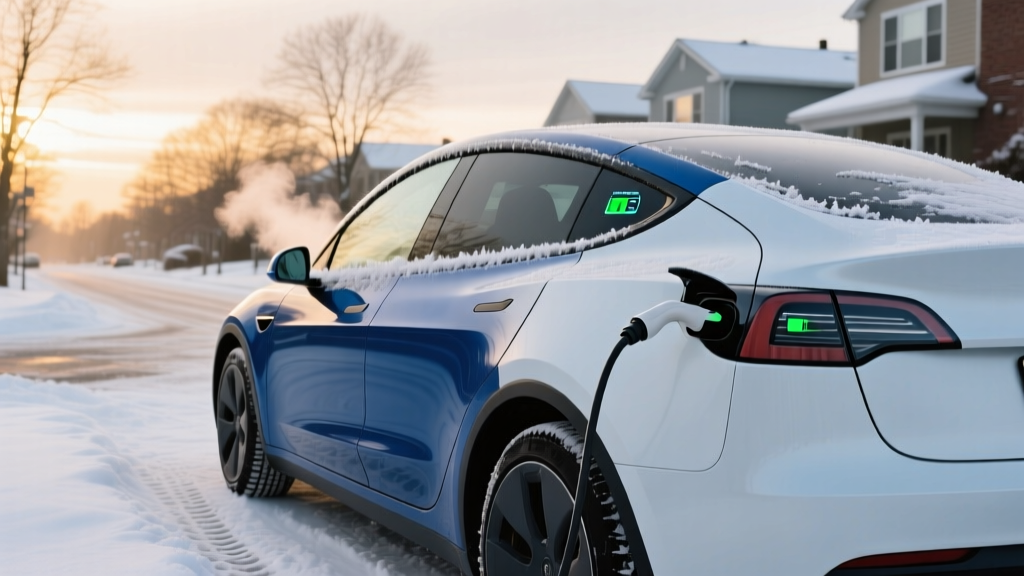
The EPA rates the 7-seat Model Y Long Range AWD at approximately 303 miles. In real-world highway driving at 70–75 mph with climate control active, expect 250–270 miles of usable range. In cold weather (below 32°F), range drops an additional 15–25%, bringing realistic winter highway range to roughly 210–230 miles. City driving with frequent regenerative braking recovers energy and can push range closer to — or slightly above — the EPA sticker. The 7-seat option adds roughly 60 lbs and marginally increases rolling resistance, shaving a few miles versus the 5-seat configuration.
The Model Y's heat pump (standard since the 2021 refresh) significantly reduces cold-weather energy consumption compared to resistive cabin heaters. Owners in northern climates will still notice range loss, but it's less severe than in older EVs lacking thermal management sophistication. Source: fueleconomy.gov.
Charging Speed: DC Fast Charging & Home Setup
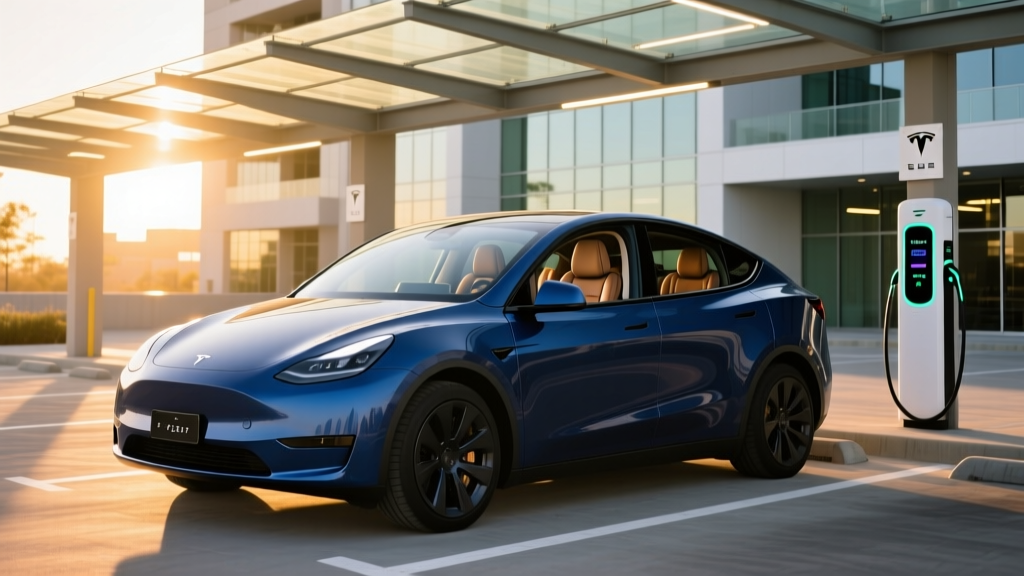
Charging speed is where Tesla's Supercharger network advantage remains tangible. The 2026 Model Y Long Range supports a peak DC fast-charge rate of 250 kW at V3 Superchargers and compatible CCS/NACS stations. However, peak rate is not sustained rate — the charge curve tapers significantly above 50% state of charge.
| Charging Level | Power (kW) | Speed (Miles/Hour) | Typical Use Case |
|---|---|---|---|
| Level 1 (120V) | ~1.4 kW | ~5 mi/hr | Emergency / overnight trickle |
| Level 2 (240V, 48A) | 11.5 kW | ~44 mi/hr | Home daily charging |
| DC Fast (V3 Supercharger) | Up to 250 kW | ~1,000+ mi/hr (peak) | Road trips, 10–80% in ~25 min |
| DC Fast (V4 Supercharger) | Up to 250 kW | Similar to V3 | Newer Tesla stations |
Understanding the charge curve: From 10% to roughly 45% SoC, the Model Y can sustain 200–250 kW. From 45% to 80%, power tapers to 80–120 kW. Above 80%, charging slows dramatically to protect battery longevity — expect 30+ minutes to go from 80% to 100%. For road trips, the practical strategy is to charge from 10–80% in about 25 minutes and move on. Tesla's navigation system automatically preconditions the battery when a Supercharger is set as your destination, warming the pack to optimize charge acceptance.
For home Level 2 charging, Tesla's Wall Connector delivers up to 11.5 kW (48 amps) on a 60-amp circuit, adding roughly 44 miles of range per hour — enough to fully replenish the battery overnight. Installation costs typically range from $500 to $2,000 depending on electrical panel capacity and run distance. If your home has a 200-amp panel with spare capacity, expect the lower end; a panel upgrade to 200A or 400A adds $1,500–$4,000.
Third-Row Space, Cargo & Passenger Dimensions
This is where the 7-seat Model Y reveals its fundamental compromise. The third row is best described as occasional-use seating for children or smaller adults on short trips. Here are the critical dimensions:
- Third-row legroom: ~26.5 inches — tight for anyone over 5'4"
- Third-row headroom: ~37.0 inches — adequate for children, snug for adults
- Cargo behind 3rd row: ~12.0 cu ft — enough for a couple of grocery bags or small backpacks
- Cargo with 3rd row folded (5-seat mode): ~30.2 cu ft
- Max cargo (2nd & 3rd rows folded): ~72.0 cu ft
- Front trunk (frunk): ~4.1 cu ft
To put this in context, a Honda Odyssey minivan offers 144.7 cu ft of max cargo and genuine adult-sized third-row seating. The Model Y's third row is closer in spirit to a Mazda CX-5's optional rear jump seat — functional for a 20-minute school carpool, not for a cross-country family road trip with luggage for seven.
When the third row is in use, cargo space shrinks to a modest 12 cu ft. For families who regularly need both seven seats and cargo capacity, this is a dealbreaker. For those who need extra seats perhaps twice a week and can fold them flat the rest of the time, the trade-off is manageable. The 60/40 split-folding second row and flat-folding third row make reconfiguration straightforward.
Performance, Ride Quality & Driver Assistance
The dual-motor AWD powertrain delivers 384 combined horsepower and a 4.8-second 0–60 mph time. That's genuinely quick for a family crossover — merging onto highways and passing slower traffic is effortless. The low center of gravity from the under-floor battery pack keeps body roll controlled through corners, though the ride quality is firmer than competitors like the Hyundai Ioniq 5 or Kia EV6. Road imperfections are felt more acutely, especially with the larger 20-inch wheels available on higher trims.
Tesla's Autopilot (standard) and Full Self-Driving Supervised ($8,000 option or $99/month subscription) are SAE Level 2 driver-assistance systems. They provide adaptive cruise control, lane centering, and automatic lane changes, but the driver must remain fully engaged — hands on or near the wheel, eyes on the road. Tesla's cabin camera monitors driver attention. FSD Supervised is not autonomous driving; no consumer vehicle currently sold in the U.S. is. Only Level 4 services like Waymo operate without a human driver, and only in geofenced areas. Source: NHTSA.
The 15.4-inch center touchscreen runs Tesla's proprietary infotainment system — no Apple CarPlay or Android Auto, but Tesla's native navigation, media streaming, and vehicle controls are responsive and well-integrated. Over-the-air updates continue to add features post-purchase. The minimalist interior (nearly all controls are screen-based) appeals to some buyers and frustrates others. Physical stalks for turn signals and gear selection remain, but climate and mirror adjustments are touchscreen-only.
Pricing, Trims & Federal Tax Credit Eligibility
| Configuration | MSRP | Est. After Federal Credit |
|---|---|---|
| Long Range AWD (5-seat) | $50,490 | ~$42,990* |
| Long Range AWD (7-seat) | $52,490 | ~$44,990* |
| Performance (5-seat only) | $54,490 | ~$46,990* |
*Federal credit amount depends on individual eligibility. See checklist below.
The 7-seat option adds $2,000 to the Long Range AWD base price, bringing the total to $52,490 before destination fees and any state-level incentives. Adding FSD Supervised, a premium color, or 20-inch wheels can push the as-tested price above $62,000.
- Vehicle MSRP cap: SUVs/crossovers must be under $80,000 — Model Y qualifies ✓
- Buyer income cap: AGI ≤ $150,000 (single), $225,000 (head of household), $300,000 (joint) ✓
- Battery sourcing: Critical minerals and battery components must meet phased-in domestic/free-trade sourcing requirements — verify current-year compliance on the IRS qualified vehicles list
- Point-of-sale transfer: Eligible buyers can transfer the credit to the dealer at purchase, reducing the purchase price upfront rather than waiting for a tax refund
- Credit amount: Up to $7,500 — split between critical minerals ($3,750) and battery components ($3,750); partial credit possible if only one requirement is met
Rules change periodically. Always verify eligibility at IRS.gov and consult a tax professional before relying on credit estimates.
Warranty & Long-Term Ownership
Tesla covers the Model Y's battery and drive unit for 8 years or 120,000 miles (whichever comes first), with a guaranteed minimum 70% capacity retention over that period. The basic vehicle limited warranty covers 4 years or 50,000 miles. These terms are competitive with the segment — Hyundai offers 10yr/100,000mi on the battery, which is more generous.
Real-world degradation data from Tesla's fleet suggests NMC packs lose approximately 5–8% capacity over the first 50,000 miles, after which degradation slows considerably. Many high-mileage Model Y owners report 90%+ state of health at 80,000 miles. Proper charging habits — avoiding frequent 100% charges, minimizing DC fast charging when Level 2 is available, and using scheduled charging — help preserve long-term battery health.
Insurance costs for the Model Y tend to run 15–30% higher than comparable gas-powered crossovers, reflecting higher repair costs after collisions and Tesla's integrated body construction. Get quotes before purchasing to budget accurately.
How It Compares: 7-Seat Model Y vs. the Alternatives
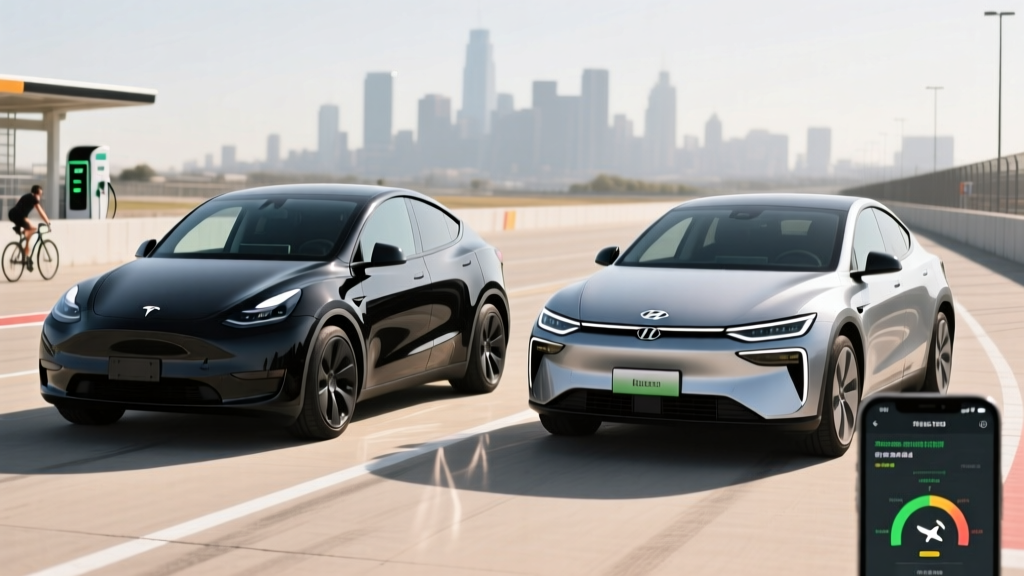
The 7-seat Model Y occupies a narrow niche. Here's how it stacks up against realistic alternatives for a family needing occasional extra seating:
- Tesla Model Y 7-seat vs. Kia EV9 (3-row EV SUV): The EV9 is larger, offers genuine adult-friendly third-row space, and starts around $54,900. It sacrifices some range (EPA ~270 mi for the Long Range AWD) and some Supercharger-network convenience (though NACS adoption is expanding). If third-row space is a priority, the EV9 is the stronger choice.
- Tesla Model Y 7-seat vs. Model X: The Model X offers a true three-row layout with falcon-wing rear doors and more cargo space, but starts above $80,000 — above the §30D MSRP cap for SUVs. It's a significantly more expensive solution.
- Tesla Model Y 7-seat vs. Chrysler Pacifica PHEV: The Pacifica Hybrid offers 32 miles of electric-only range, genuine minivan space, and a lower starting price (~$50,000). For families who drive longer distances regularly and need true 7-passenger comfort, a PHEV minivan may be more practical — you get electric commuting with gas flexibility for road trips.
- Tesla Model Y 7-seat vs. Model Y 5-seat: If you rarely need more than five seats, the 5-seat configuration preserves cargo space, saves $2,000, and gains a few miles of range. The 7-seat option only makes sense if you have a concrete, recurring need for extra seating.
Choose the 7-seat Model Y if: You have 2–3 small children and need carpool seating 2–3 times per week, you value Tesla's Supercharger network and OTA updates, and your daily driving is under 200 miles round-trip.
Choose the Kia EV9 or a PHEV minivan instead if: You regularly carry more than 5 passengers, need adult-sized third-row seating, or require substantial cargo room with all seats in use.
Choose the 5-seat Model Y if: You never need more than five seats — the savings and cargo space are worth more than an unused third row.
Pros, Cons & Bottom Line
- Only compact EV crossover offering 7 seats near this price point
- Access to Tesla Supercharger network (most reliable DC fast-charging in the U.S.)
- Strong efficiency: 117 MPGe combined
- Quick acceleration (4.8s 0–60) even with the extra weight
- Heat pump standard — better cold-weather range retention
- OTA updates continue improving the vehicle post-purchase
- Eligible for up to $7,500 federal tax credit (subject to sourcing/income rules)
- Third row is cramped — children only, and only for short trips
- Cargo space with third row up is just ~12 cu ft
- No Apple CarPlay or Android Auto
- Touchscreen-only climate/mirror controls frustrate some drivers
- Insurance premiums run higher than segment average
- FSD Supervised ($8,000) remains Level 2 — not autonomous
- Ride quality is firm, especially on 20-inch wheels
Frequently Asked Questions
What is the real-world range of the 7-seat Tesla Model Y?
The EPA estimates 303 miles for the Long Range AWD with the 7-seat option. In real-world highway driving at 70+ mph, expect 250–270 miles. In winter conditions below freezing, plan for 210–230 miles. City driving with regenerative braking can approach or exceed the EPA number.
How fast does the 7-seat Model Y charge at home and on the road?
At a V3 Supercharger (250 kW peak), 10–80% takes approximately 25 minutes. At home on a Level 2 Wall Connector (11.5 kW), the battery fully replenishes in roughly 7 hours, adding about 44 miles of range per hour. A standard 120V outlet adds only ~5 miles per hour — useful for emergencies, not daily use.
Does the 7-seat Model Y qualify for the $7,500 federal EV tax credit?
The Model Y Long Range AWD at $52,490 is below the $80,000 SUV MSRP cap, making it potentially eligible. However, eligibility also depends on buyer income (AGI caps apply), battery component sourcing requirements, and current-year IRS rules. The credit can be transferred at point of sale to reduce your purchase price. Always verify at IRS.gov.
Can adults fit in the Model Y's third row?
Technically yes, but not comfortably for more than 15–20 minutes. Legroom is approximately 26.5 inches — comparable to the back row of a small sedan. This third row is designed for children, smaller teens, or very short trips. For regular adult passengers in the third row, a larger vehicle like the Kia EV9 or a minivan is far more suitable.
Is the 7-seat Model Y worth buying over the Kia EV9?
It depends on your priority. If Supercharger network access, efficiency, and a lower purchase price matter most, and you only need extra seats occasionally for kids, the Model Y 7-seat is compelling. If you need genuine adult-capable third-row seating and more cargo space, the EV9 is the more practical family vehicle — though it costs slightly more and sacrifices some range.
What is the battery warranty on the 2026 Model Y?
Tesla covers the battery and drive unit for 8 years or 120,000 miles, whichever comes first, with a guaranteed minimum 70% capacity retention. The basic vehicle warranty covers 4 years or 50,000 miles. Battery replacement outside warranty, if ever needed, currently ranges from $12,000 to $16,000 depending on pack configuration and labor.