The Reality of Buying a Tesla With Bad Credit
Let's address the question directly: can you get a Tesla with a 500 credit score? The short answer is no — not through Tesla's in-house financing or most mainstream lenders. A FICO score of 500 falls into the "poor" credit tier (below 580), and Tesla typically works with lending partners that require a minimum score of around 660-680 for competitive rates, though some may approve borrowers in the low 600s at significantly higher APRs.
However, a 500 credit score doesn't mean owning an EV is impossible. It means you need a strategy: a substantial down payment, a co-signer, improving your score first, or exploring the used EV market where the §25E used EV tax credit (up to $4,000) can help. This guide covers exactly what Tesla's 2026 lineup costs, what financing options exist, and how to realistically get into one.
Tesla's 2026 Lineup: Pricing, Range, and Specs
Before tackling financing, you need to know what you're shopping for. Here's the current Tesla portfolio with EPA-verified figures:
| Model | Base MSRP | EPA Range | Battery (kWh / Chemistry) | 0-60 mph | Drivetrain | MPGe (Combined) |
|---|---|---|---|---|---|---|
| Model 3 RWD | $38,990 | 272 mi | ~60 kWh / LFP | 5.8 sec | RWD | 132 MPGe |
| Model 3 Long Range AWD | $44,990 | 341 mi | ~79 kWh / NMC | 4.2 sec | AWD Dual Motor | 134 MPGe |
| Model Y RWD | $39,990 | 270 mi | ~60 kWh / LFP | 6.6 sec | RWD | 127 MPGe |
| Model Y Long Range AWD | $44,990 | 311 mi | ~79 kWh / NMC | 4.8 sec | AWD Dual Motor | 125 MPGe |
| Model S Long Range | $74,990 | 402 mi | ~100 kWh / NMC | 3.1 sec | AWD Dual Motor | 120 MPGe |
| Model X Long Range | $79,990 | 335 mi | ~100 kWh / NMC | 3.8 sec | AWD Dual Motor | 110 MPGe |
| Cybertruck AWD | $57,490 | 340 mi | ~123 kWh / NMC | 4.1 sec | AWD Tri-Motor | 67 MPGe |
Source: fueleconomy.gov and Tesla spec sheets. Prices reflect 2026 MSRP before destination fees or incentives.
Charging Speed: What Tesla Owners Actually Experience
Charging speed determines daily livability. Here's what each tier of Tesla charging delivers:
| Charging Level | Power (kW) | Miles Added per Hour | Typical Use Case |
|---|---|---|---|
| Level 1 (120V outlet) | 1.4 kW | 3-5 mi/hr | Emergency/overnight trickle |
| Level 2 (240V, 48A Wall Connector) | 11.5 kW | 30-44 mi/hr | Daily home charging |
| DC Fast Charge (V3 Supercharger) | Up to 250 kW | ~200 mi in 15 min (peak) | Road trips, quick top-ups |
| DC Fast Charge (V4 Supercharger) | Up to 350 kW (Cable) | Faster peak for newer models | Next-gen Supercharger sites |
Important charging-curve reality: Tesla's advertised 250 kW peak on V3 Superchargers only applies roughly between 10-30% state of charge. By 50%, you're typically seeing 120-150 kW; by 80%, it drops to 40-60 kW. A realistic 10-80% session on a Model 3 Long Range takes approximately 28-32 minutes. The LFP-equipped RWD models precondition well but peak at similar rates — the smaller battery simply fills faster in absolute time (~25 minutes 10-80%).
Financing a Tesla With a 500 Credit Score: Your Real Options
Tesla doesn't directly lend money. They work with a panel of banks and credit unions (including U.S. Bank, Wells Fargo, and regional lenders) to offer financing through their online purchase flow. Here's how credit tiers affect your path:
| Credit Score Range | Tier | Tesla Financing Likelihood | Expected APR Range |
|---|---|---|---|
| 740+ | Excellent | High — best rates available | 3.5-5.5% |
| 680-739 | Good | Likely approved | 5.5-8.0% |
| 620-679 | Fair | Possible — higher rates, larger down payment | 8.0-14.0% |
| 580-619 | Poor | Unlikely through Tesla's panel | 14%+ if approved |
| Below 580 (e.g., 500) | Very Poor | Not approved through standard channels | N/A |
What You Can Do at 500
A 500 score isn't a permanent barrier — it's a timeline issue. Here are realistic paths to Tesla ownership:
- Credit-building first (6-18 months): Secured credit cards, paying down revolving balances, and disputing errors can move a 500 score into the 620+ range. This alone could save you $5,000-$10,000 in interest over a 72-month loan.
- Co-signer with strong credit: A co-signer with a 700+ score can unlock approval, but they assume full liability if you default. Only pursue this with someone who understands the risk.
- Large down payment (20-30%+): Some lenders in the "subprime" space will approve auto loans at lower scores with significant equity in the deal. You'd put $8,000-$12,000 down on a Model 3 RWD.
- Used Tesla + §25E credit: A 2022-2023 Model 3 might sell for $22,000-$28,000 from an independent dealer. The federal used EV tax credit offers up to $4,000 (or 30% of the sale price, whichever is lower) for buyers with income under $75,000 (single) or $150,000 (joint). The used market has more flexible financing options through local credit unions.
- Lease assumption or third-party lease: Some platforms allow you to take over someone else's Tesla lease, often with lower credit requirements than originating a new one.
Federal Tax Credits: What Actually Applies in 2026
The §30D new EV tax credit remains complex. Here are the 2026 rules that determine whether you qualify:
- MSRP Cap: Sedans (Model 3/S) must be under $55,000. SUVs/trucks (Model Y/X/Cybertruck) must be under $80,000.
- Buyer Income Cap: AGI must not exceed $150,000 (single), $225,000 (head of household), or $300,000 (joint filing).
- Battery Sourcing: Critical minerals and battery components must meet escalating domestic/free-trade-partner sourcing thresholds. Tesla's LFP batteries (CATL-sourced for RWD models) may not qualify for the full $7,500 due to China-origin materials — typically earning $3,750 or $0 depending on the specific battery pack and current-year rules.
- Point-of-Sale Transfer: You can apply the credit as an upfront discount at purchase rather than waiting for tax filing. The dealer/lender handles the IRS paperwork.
- Tax Liability: The credit is non-refundable — you must owe at least $7,500 in federal taxes to capture the full amount (unless transferred at point of sale under the 2024+ rules, which changed this limitation for POS transfers).
Always verify current eligibility at irs.gov and consult a tax professional. Rules shift with regulatory guidance.
For a Model 3 Long Range AWD ($44,990 MSRP): Under $55,000 cap ✓. If the NMC battery meets sourcing requirements and your income qualifies, you could receive up to $7,500 — bringing the effective price to ~$37,490. The RWD variant with LFP chemistry is more likely to receive a partial credit ($3,750) or none at all, depending on 2026 critical-mineral thresholds.
| Model | MSRP | Estimated Credit | Effective Price |
|---|---|---|---|
| Model 3 RWD | $38,990 | $0 - $3,750 | $35,240 - $38,990 |
| Model 3 LR AWD | $44,990 | $3,750 - $7,500 | $37,490 - $41,240 |
| Model Y RWD | $39,990 | $0 - $3,750 | $36,240 - $39,990 |
| Model Y LR AWD | $44,990 | $3,750 - $7,500 | $37,490 - $41,240 |
Warranty, Cargo, and Ownership Practicalities
Tesla's warranty structure is straightforward but worth understanding before committing:
- Basic Vehicle Warranty: 4 years / 50,000 miles (whichever comes first)
- Battery & Drive Unit Warranty: 8 years / 100,000 miles (Model 3 RWD) or 8 years / 120,000 miles (Long Range, Model Y, Model S/X). Tesla guarantees the battery will retain at least 70% of its original capacity during this period.
- No scheduled maintenance: No oil changes, no spark plugs, no transmission fluid. Brake pads last significantly longer due to regenerative braking. Budget for cabin air filter replacement (~every 2 years) and tire rotation (~every 6,250 miles).
Cargo and interior space (Model 3): 23 cu ft trunk + 3.1 cu ft frunk = ~26 cu ft total. Rear legroom is 35.2 inches — adequate for adults on shorter trips but tighter than a Model Y. The Model Y offers 30.2 cu ft behind the second row (76.2 cu ft with seats folded) plus 4.1 cu ft frunk, making it the clear choice for families.
Standout tech: Tesla's 15.4-inch touchscreen handles all vehicle functions, navigation, and entertainment. Over-the-air updates add features continuously. Basic Autopilot (lane centering + adaptive cruise) is standard; Full Self-Driving (Supervised) is an $8,000 add-on or $99/month subscription. Note: FSD is SAE Level 2 — you must remain engaged and responsible at all times. It is not autonomous driving.
Pros and Cons: Honest Assessment
- Access to the Supercharger network — the most reliable DC fast-charging ecosystem in North America
- Class-leading efficiency (kWh/100mi) translates to lower charging costs
- Over-the-air updates improve the car over time
- Strong resale value relative to most EVs
- LFP battery option (RWD models) offers longer cycle life and can be charged to 100% daily without degradation concern
- Minimal maintenance costs
- Everything runs through the touchscreen — no physical buttons for climate, mirrors, or glovebox
- No Apple CarPlay or Android Auto
- Panel gaps and paint quality still inconsistent on some deliveries
- Insurance costs run 20-40% higher than comparable gas sedans (Tesla-specific repair costs)
- FSD (Supervised) remains Level 2 despite its name — marketing outpaces capability
- RWD LFP models lose meaningful range in cold climates
- Service center wait times can stretch weeks in less-dense markets
Is a Tesla Worth It vs. Competitors?
At the $38,000-$45,000 price point (Model 3/Y), Tesla competes with the Hyundai Ioniq 6, Chevrolet Equinox EV, Ford Mustang Mach-E, and Volkswagen ID.4. Tesla's advantages remain the Supercharger network and efficiency. Competitors offer physical buttons, CarPlay, and sometimes more competitive tax-credit positioning (Hyundai's U.S.-built models with domestic battery sourcing).
- Choose Tesla if: You prioritize Supercharger access, over-the-air feature improvements, and proven efficiency. You're comfortable with touchscreen-only controls.
- Choose a competitor if: You need Apple CarPlay, prefer physical controls, want to maximize the $7,500 credit with guaranteed U.S.-sourced batteries, or live in an area with limited Tesla service centers.
- Choose a used Tesla if: Your credit score (500) prevents new-car financing. A $22,000-$28,000 used Model 3 from 2022 with the $4,000 used EV credit becomes a viable entry point while you rebuild credit for a future upgrade.
Frequently Asked Questions
What is the real-world range of the cheapest Tesla?
The Model 3 RWD carries an EPA rating of 272 miles. In real-world highway driving at 75 mph, expect 230-245 miles. In winter conditions (below freezing), plan for 190-215 miles before needing a charge. The LFP battery's usable buffer is slightly smaller than NMC, but the chemistry is more resilient to daily 100% charging.
How fast does a Tesla charge at home?
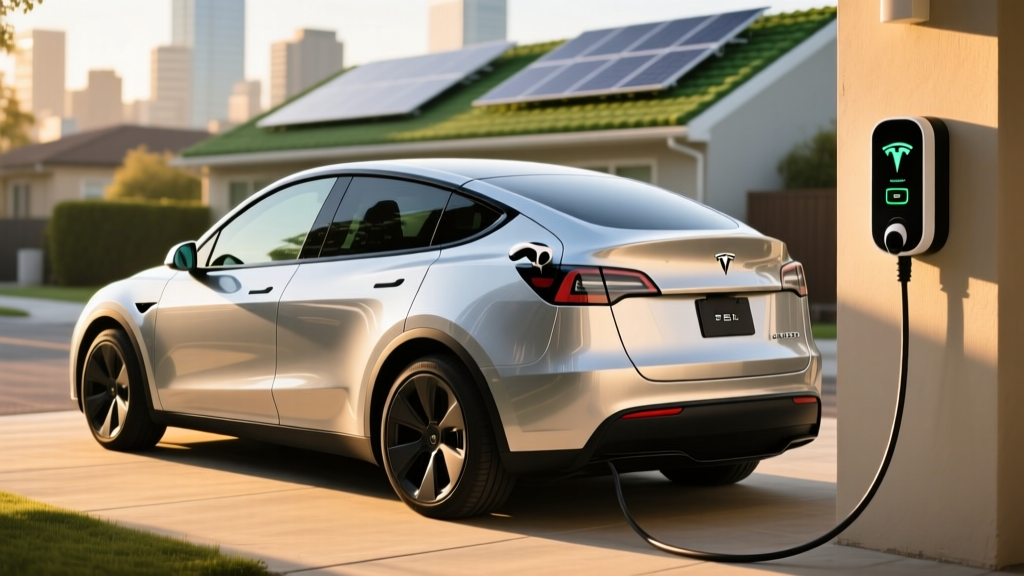
Using a Tesla Wall Connector on a 60-amp circuit (48 amps continuous), you'll add approximately 30-44 miles of range per hour depending on the model. A full overnight charge (8-10 hours) easily replenishes a daily commute. Installation costs $500-$2,000 depending on your electrical panel's capacity and distance from the panel to the parking spot. A licensed electrician should evaluate whether your 200-amp panel has headroom or if an upgrade is needed.
Does Tesla offer subprime financing for bad credit?
Not directly. Tesla's financing panel consists of mainstream banks that generally require 620+ scores. For a 500 score, you'll need to work with a subprime auto lender (expect 15-24% APR), use a co-signer, or improve your credit first. The interest cost difference between a 5% and 18% APR on a $35,000 loan over 72 months is approximately $14,000 — credit repair first is almost always the smarter financial move.
Does the Tesla Model 3 qualify for the full $7,500 federal tax credit?
It depends on the trim and your income. The Model 3 Long Range AWD has a better chance at the full credit due to its NMC battery sourcing, while the RWD's LFP battery (with China-sourced minerals) often qualifies for a partial $3,750 credit or none, depending on current-year critical-mineral thresholds. Your AGI must be under $150,000 (single) or $300,000 (joint). Verify at fueleconomy.gov for the latest qualifying configurations.
What's the total cost of ownership vs. a gas car?
Electricity costs roughly $0.13-$0.16/kWh nationally (home charging), translating to about $0.04-$0.05 per mile in a Model 3. Gas at $3.50/gallon in a 30-MPG sedan is $0.12/mile. Over 5 years and 75,000 miles, you'd save $5,000-$6,000 on fuel alone. Add $2,000-$3,000 in avoided maintenance (oil, filters, transmission). However, insurance will cost $500-$1,500 more per year, partially offsetting these savings. Net savings over 5 years typically run $3,000-$5,000 depending on your local electricity rates and insurance profile.
Can I lease a Tesla with a 500 credit score?
Tesla leases (offered in select states) still require credit approval through their lending partners, so a 500 score faces the same barriers. Third-party lease takeover platforms (like Swapalease) sometimes have more flexible requirements since you're assuming an existing lease rather than originating one. A lease transfer typically requires approval from the original lessor, but the credit bar can be lower since the original lessee may remain partially liable.