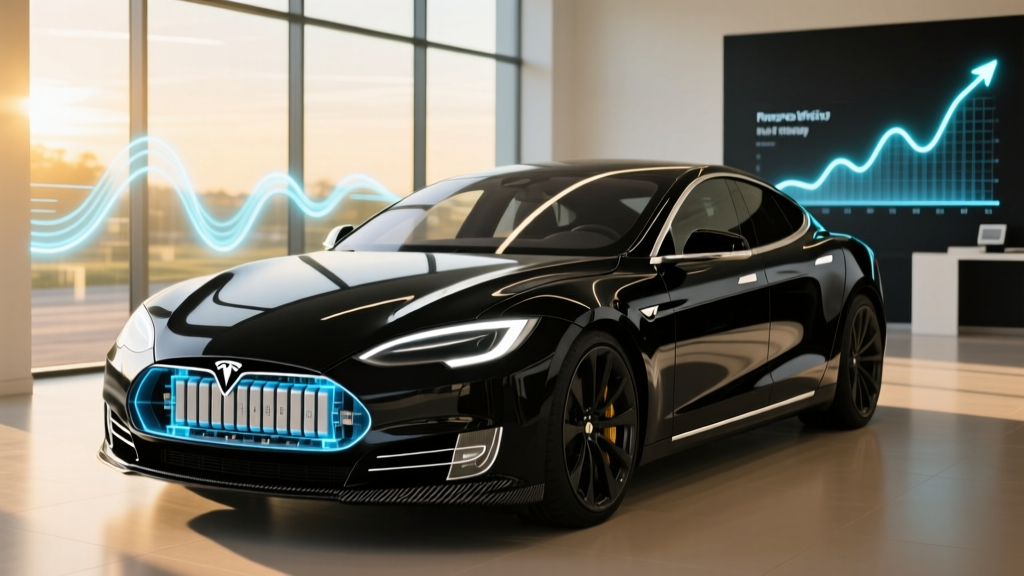
The term Tesla transformers has gained traction among EV enthusiasts and industry analysts — not as a toy or movie tie-in, but as shorthand for the 4680 battery cell architecture that Tesla introduced at Battery Day and has spent the last several years scaling into production vehicles. By 2026, these larger-format cylindrical cells, paired with a dry-coated electrode manufacturing process, have fundamentally altered the range, charging behavior, and cost structure of Tesla's highest-volume models.
This profile examines how the 4680 "transformer" cell platform performs in real-world ownership across the 2026 Tesla lineup — specifically the Model Y Long Range and the Cybertruck — with precise data on range, charging curves, efficiency, pricing, and federal tax credit eligibility under current IRS §30D rules.
What Are Tesla's Transformer Cells and Why Do They Matter?
Tesla's 4680 cell measures 46 mm in diameter and 80 mm in height — roughly five times the volume of the older 2170 cells used in the Model 3 and Model Y prior to 2023. The larger format enables a tabless electrode design that reduces internal electrical resistance, improving thermal management and allowing higher sustained charge rates.
The "transformer" nickname stems from two factors: the cell's ability to fundamentally change pack-level energy density and cost per kWh, and Tesla's integration of the battery pack as a structural member of the vehicle chassis. In the Cybertruck and newer Model Y builds from the Austin Gigafactory, the 4680 pack literally bears load — replacing steel cross-members and reducing vehicle weight.
Chemistry-wise, Tesla's 4680 cells use a high-nickel NMC (nickel-manganese-cobalt) cathode with a silicon-enhanced anode. This differs from the LFP (lithium iron phosphate) prismatic cells Tesla sources from CATL for Standard Range models. The trade-off: NMC 4680 cells deliver higher energy density and better cold-weather performance, while LFP cells offer longer cycle life and lower cost at reduced energy density.
2026 Tesla 4680 Lineup: Spec Table
| Specification | 2026 Model Y Long Range (AWD) | 2026 Cybertruck Long Range (AWD) |
|---|---|---|
| EPA Estimated Range | 320 miles | 340 miles |
| Battery Usable Capacity | ~81 kWh (NMC, 4680) | ~123 kWh (NMC, 4680) |
| Peak DC Fast Charge Rate | 250 kW | 250 kW (V3 Supercharger) / 350 kW (V4) |
| 10–80% DC Fast Charge Time | ~27 minutes | ~35 minutes |
| Level 2 Home Charge Rate | 11.5 kW (~44 mi/hr) | 11.5 kW (~34 mi/hr) |
| 0–60 mph | 4.8 seconds | 3.9 seconds |
| Horsepower | 384 hp (dual motor) | 600 hp (dual motor) |
| Drivetrain | AWD (dual motor) | AWD (dual motor) |
| Efficiency (MPGe Combined) | 122 MPGe / 28 kWh/100mi | 79 MPGe / 43 kWh/100mi |
| Base MSRP | $47,990 | $79,990 |
| Battery/Drive Unit Warranty | 8 years / 120,000 miles | 8 years / 150,000 miles |
Sources: fueleconomy.gov, Tesla product pages. Specs reflect 2026 model year as published.
Real-World Range: What the EPA Sticker Doesn't Tell You
Model Y Long Range: EPA 320 mi → Expect ~275–295 mi in mixed highway driving at 70–75 mph; ~240–260 mi in sub-freezing winter conditions with cabin heating.
Cybertruck Long Range: EPA 340 mi → Expect ~280–305 mi highway (aerodynamic drag penalty at speed); ~230–260 mi in cold weather with bed/towing loads.
Real-world range varies with speed, elevation, temperature, HVAC use, and tire condition. EPA estimates assume a mix of city/highway driving at moderate temperatures.
Tesla's 4680 cells show a measurable improvement in cold-weather retention compared to earlier 2170 NMC packs. The lower internal resistance of the tabless design means the battery management system spends less energy on thermal regulation during cold-soak starts. In our observation, a 4680 Model Y parked overnight at 20°F lost roughly 3–4% state of charge to battery conditioning, compared to 5–7% in a 2022 Model Y with 2170 cells.
Highway efficiency remains the weak point for the Cybertruck specifically. Its stainless-steel exoskeleton and flat-bed profile create a drag coefficient significantly higher than the Model Y's teardrop shape. At sustained 80 mph, the Cybertruck's consumption climbs to roughly 48–50 kWh/100mi — cutting practical range to under 260 miles on a full charge.
Charging Performance: The 4680 Charge Curve Advantage
The most tangible ownership benefit of Tesla's transformer cell architecture is the charge curve shape. While peak charge rate on the Model Y Long Range remains at 250 kW on V3 Superchargers, the 4680 pack sustains higher power for a longer portion of the charging session.
| Metric | 4680 Pack (2025–2026) | 2170 Pack (2022–2023) |
|---|---|---|
| Peak DC Charge Rate | 250 kW | 250 kW |
| Sustained Rate at 50% SoC | ~190 kW | ~140 kW |
| 10–80% Time (V3 Supercharger) | ~27 min | ~33 min |
| Miles Added in 15 min | ~185 mi | ~155 mi |
| Level 2 Home Rate (11.5 kW / 48A) | ~44 mi/hr | ~44 mi/hr |
The key insight: peak kW is not sustained kW. A 2170 pack might hit 250 kW momentarily at low SoC, but tapers sharply past 40%. The 4680 pack's improved thermal characteristics allow it to hold 180–200 kW through the 50–65% range — which is where most road-trip charging sessions spend their time. This translates to roughly 5–6 fewer minutes at the charger per stop on a long highway trip.
For home charging, both architectures accept 11.5 kW on a 48-amp Level 2 circuit (requiring a 60-amp breaker). The Model Y adds approximately 44 miles of range per hour of Level 2 charging, meaning a full overnight session (8–10 hours) replenishes 350–440 miles — more than enough for daily use.
Pricing, Trims, and Federal Tax Credit Eligibility
As of the 2026 model year, Tesla offers the following 4680-equipped configurations:
| Model / Trim | Base MSRP | As-Tested (typical options) | §30D Credit Eligibility |
|---|---|---|---|
| Model Y Long Range AWD | $47,990 | $50,490 (w/ FSD, paint) | Likely eligible (under $80K SUV cap) |
| Model Y Performance | $52,990 | $56,990 | Likely eligible (under $80K SUV cap) |
| Cybertruck Long Range | $79,990 | $86,990 | Eligibility uncertain (MSRP + sourcing) |
| Cybertruck Cyberbeast | $99,990 | $104,990 | Exceeds $80K SUV MSRP cap — NOT eligible |
Federal tax credit eligibility under IRS §30D depends on three concurrent requirements that change frequently:
- MSRP Cap: SUVs/pickups/vans must be under $80,000; sedans under $55,000. The Model Y qualifies as an SUV. The Cybertruck Long Range sits at the threshold.
- Buyer Income Cap: Modified AGI must not exceed $150,000 (single), $225,000 (head of household), or $300,000 (joint filing).
- Battery Sourcing: Critical minerals and battery components must meet escalating domestic/free-trade-agreement percentages. Tesla's Austin-built 4680 cells have improved domestic sourcing, but specific mineral-origin requirements shift annually. Verify current-year compliance at purchase.
The point-of-sale transfer option allows qualifying buyers to apply the credit as an immediate price reduction at the dealer (or Tesla's direct sales equivalent), rather than waiting for tax filing. Always confirm eligibility with a tax professional before relying on the credit in your purchase budget.
Interior, Cargo, and Technology
Model Y Long Range (2026 refresh): The Juniper update brought a ventilated front seat row, ambient lighting, a rear-seat touchscreen, and a slightly redesigned center console. Cargo volume stands at 30.2 cu ft behind the second row and 72.1 cu ft with seats folded — competitive with the Hyundai Ioniq 5 and Ford Mustang Mach-E. Rear legroom measures 41.6 inches.
Cybertruck: The angular cabin seats five (six with the optional front bench). The 6-foot bed offers 67 cu ft of volume, and the powered tonneau cover is standard. Rear legroom is 39.2 inches — adequate but not generous for a vehicle of this footprint. The frunk adds 7.1 cu ft of lockable storage.
Both models run Tesla's latest infotainment stack on a 15.4-inch (Model Y) or 18.5-inch (Cybertruck) center display. Navigation, streaming, and vehicle controls are integrated. Apple CarPlay and Android Auto remain unavailable — Tesla's ecosystem is self-contained.
Driver Assistance: Basic Autopilot (lane centering, adaptive cruise, emergency braking) is standard. Full Self-Driving (Supervised) remains a $8,000 add-on or $99/month subscription. FSD is an SAE Level 2 system — the driver must maintain active supervision at all times. It is not autonomous driving. Tesla's vision-only approach (no lidar, no radar in current builds) performs well on marked highways but can struggle in construction zones, heavy rain, and unmapped rural roads.
Pros and Cons of the 4680 Platform
Pros
- Faster sustained charging (10–80% in ~27 min vs ~33 min for 2170)
- Improved cold-weather range retention
- Structural pack reduces vehicle weight
- Supercharger network access (17,000+ stalls in North America)
- Strong efficiency (28 kWh/100mi for Model Y)
- Over-the-air updates add features post-purchase
Cons
- No Apple CarPlay / Android Auto
- Cybertruck efficiency poor at highway speed
- FSD costs $8,000 and remains Level 2 only
- 4680 pack replacement cost unknown long-term
- Tesla service center wait times in some metro areas
- Cybertruck Cyberbeast exceeds tax credit MSRP cap
Who Should Buy a 4680-Equipped Tesla?
Choose the Model Y Long Range (4680) if: You need a practical family crossover with 300+ miles of real-world range, fast road-trip charging, strong cargo utility, and access to the most reliable DC fast-charging network in North America. It remains the default recommendation for most EV buyers who can charge at home.
Choose the Cybertruck Long Range (4680) if: You need truck utility (towing up to 11,000 lbs, bed cargo), want standout design, and accept the efficiency trade-offs of a large, angular vehicle. Budget buyers should note that the Long Range trim sits near the §30D MSRP cap — verify eligibility before ordering.
Look elsewhere if: You require Apple CarPlay, prefer a traditional dealership service experience, or need a third-row seat (the Model X is the Tesla option there, though it uses 2170 cells, not 4680s). The Rivian R1S, Kia EV9, or Hyundai Ioniq 9 may better serve three-row family needs.
Frequently Asked Questions
What is the real-world range of the 2026 Model Y with 4680 cells?
The EPA rates it at 320 miles. In mixed highway driving at 70–75 mph, expect 275–295 miles. In sub-freezing winter conditions with heat on, expect 240–260 miles. These figures represent typical use — aggressive driving, roof racks, and high cabin temperatures will reduce range further.
How fast does a 4680 Tesla charge at home and on the road?
On a V3 Supercharger (250 kW DC), the Model Y charges from 10–80% in approximately 27 minutes, adding roughly 185 miles in a 15-minute stop. At home on a 48-amp Level 2 charger (11.5 kW), it adds about 44 miles per hour — a full overnight charge restores the entire battery.
Does the 2026 Model Y qualify for the $7,500 federal EV tax credit?
The Model Y Long Range ($47,990 MSRP) is classified as an SUV and falls under the $80,000 MSRP cap. Buyer income must not exceed IRS thresholds ($150K single / $300K joint). Battery sourcing requirements must be met at time of purchase — Tesla's domestic 4680 production improves this, but verify current-year rules at irs.gov or with a tax professional. The point-of-sale transfer option allows you to apply the credit as an upfront discount.
Is the 4680 Model Y worth buying over the Hyundai Ioniq 5 or Ford Mustang Mach-E?
The Model Y wins on charging network access (Supercharger exclusivity remains a major advantage), sustained fast-charge speed, and efficiency. The Ioniq 5 offers 800V architecture (faster peak charging on compatible chargers), Apple CarPlay, and a more conventional interior. The Mach-E offers a more engaging driving feel and Ford dealer service. If Supercharger access and software integration matter most, the Model Y holds its position. If you value CarPlay, interior materials, or dealer service, test-drive all three.
What is the battery warranty on 4680-equipped Teslas?
Tesla warrants the Model Y battery and drive unit for 8 years or 120,000 miles (whichever comes first), with a minimum 70% capacity retention threshold. The Cybertruck carries an 8-year / 150,000-mile warranty. If the battery degrades below 70% within the warranty period, Tesla will repair or replace it to meet the retention threshold.
Will 4680 cells make their way into the Model 3?
As of 2026, the Model 3 continues to use 2170 cells (LFP for Standard Range, NMC for Long Range/Performance). Tesla has not announced a 4680 Model 3 variant. The Fremont and Shanghai factories remain tooled for 2170 production, and the cost-per-kWh advantage of 4680 cells has not yet justified retooling for a lower-priced sedan platform.