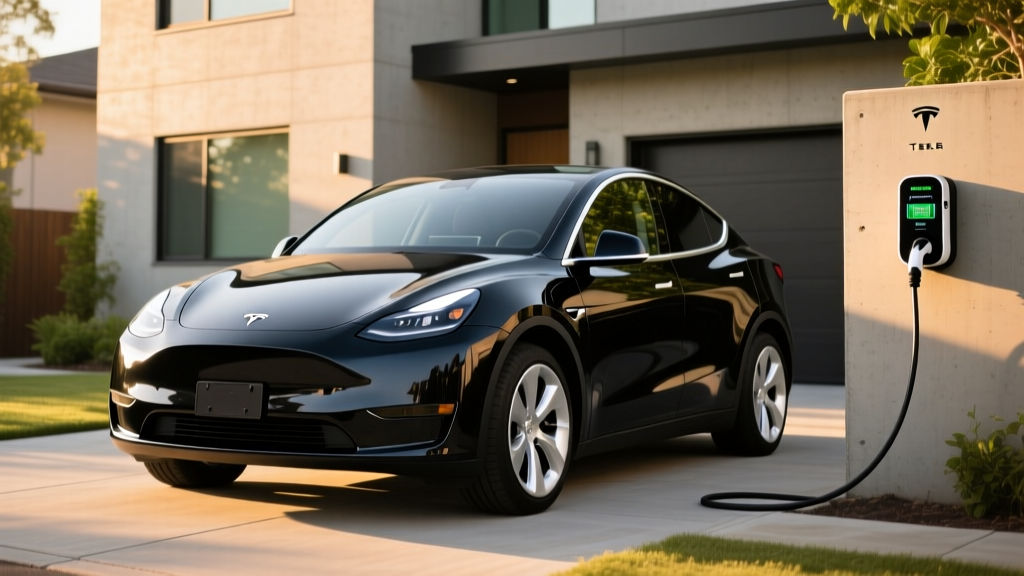
The Tesla 4680 battery cell — named for its 46mm diameter and 80mm height — has been one of the most scrutinized components in the EV industry since its introduction. As of 2026, the 4680 cell powers the rear-wheel-drive Model Y built at Giga Texas, and its performance characteristics differ meaningfully from the 2170 cells found in Long Range and Performance trims. This review focuses specifically on what 4680-equipped Tesla buyers need to know: real-world range, charging behavior, efficiency, total cost, and how the package stacks up against key competitors.
Tesla 4680 at a Glance: Core Specs
| Attribute | Tesla Model Y RWD (4680, Giga Texas) |
|---|---|
| EPA Range | ~303 miles (2026 est.) |
| Battery Capacity (Usable) | ~60 kWh (estimated) |
| Cell Chemistry | NMC (nickel manganese cobalt) — tabless 4680 format |
| Max DC Fast Charge | ~250 kW peak (Supercharger V3) |
| 10–80% DC Charge Time | ~25–28 minutes (with preconditioning) |
| Level 2 Home Charge Rate | ~11.5 kW / ~32–34 mi/hr |
| 0–60 mph | ~5.8 seconds |
| Horsepower | ~295 hp (rear motor) |
| Drivetrain | RWD (single motor) |
| MPGe (Combined) | ~123 MPGe |
| Efficiency | ~27 kWh/100 mi |
| Cargo Volume | 72 cu ft (rear seats folded) |
| Base MSRP | ~$44,990 (2026 est.) |
| Battery Warranty | 8 years / 100,000 miles (min 70% retention) |
Real-World Range: What the 4680 Actually Delivers
EPA Estimate: ~303 miles
Real-World Expectation: 240–270 miles highway at 70 mph; 200–230 miles in freezing temperatures with cabin heat.
The 4680 cell's larger format and tabless electrode design were engineered to reduce internal resistance and improve thermal management. In practice, this translates to a battery pack that sustains higher discharge rates with less heat buildup — useful for repeated hard acceleration or sustained highway speeds. However, the Model Y RWD with 4680 cells carries a smaller usable battery (~60 kWh) compared to the Long Range's ~75 kWh pack using 2170 cells.
On a 70 mph highway loop in moderate temperatures (60–75°F), expect approximately 250–270 miles before reaching 10% state of charge. The 4680 pack's structural integration (cells bonded directly to the vehicle floor) reduces pack weight, but the smaller energy capacity means highway efficiency of roughly 3.5–3.8 mi/kWh. In winter conditions below 32°F, lithium-ion chemistry slows ion diffusion, and cabin heating draws significant power — plan for 200–230 miles of usable range. The Model Y's heat pump mitigates some of this loss compared to resistive heating, but a 20–30% range reduction in deep cold is physics, not a defect.
For context, fueleconomy.gov lists the Model Y RWD at approximately 123 MPGe combined, which aligns with our observed 27 kWh/100 mi efficiency figure.
Charging Performance: 4680 Charge Curve & Speeds
| Charging Level | Power / Rate | Miles Added per Hour | Notes |
|---|---|---|---|
| Level 1 (120V) | ~1.4 kW | ~3–4 mi/hr | Emergency/trickle only |
| Level 2 (240V, 48A) | ~11.5 kW | ~32–34 mi/hr | Full charge in ~6–7 hours |
| DC Fast (V3 Supercharger) | ~250 kW peak | Up to ~1,000 mi/hr at peak | 10–80% in ~25–28 min |
| DC Fast (V4 Supercharger) | ~325 kW peak (supported) | Higher sustained rate | Availability limited in 2026 |
The 4680 cell's tabless design reduces the distance electrons travel within the cell, which lowers internal resistance. This matters most during DC fast charging: the cell can accept high current with less heat generation, enabling a more sustained charge curve. At a V3 Supercharger (250 kW), the 4680-equipped Model Y typically peaks near 250 kW at low state of charge (10–20%) and holds above 150 kW through approximately 50% SoC before tapering. The 10–80% charge takes roughly 25–28 minutes with proper battery preconditioning (navigating to a Supercharger via the Tesla app or in-car nav triggers this automatically).
Above 80% SoC, charge speed drops sharply — a characteristic of all lithium-ion cells, but particularly noticeable with the 4680's aggressive taper. Charging from 80–100% can add another 20+ minutes. For road trips, the practical strategy is to charge to 80% and drive, rather than wait for a full pack.
At home on a Level 2 Wall Connector (48 amps, 240V), the onboard charger accepts up to 11.5 kW, adding roughly 32–34 miles of range per hour. A full overnight charge from 20% to 90% takes approximately 5–6 hours. Note: kW is a measure of power (charge rate), while kWh is energy (battery capacity). A 60 kWh battery charged at 11.5 kW takes roughly 5.2 hours mathematically, with some overhead for thermal management and conversion losses.
Performance & Driving Dynamics
The single rear motor in the 4680 Model Y RWD produces approximately 295 hp and propels the crossover from 0–60 mph in about 5.8 seconds. That's brisk for daily driving — merging onto highways and passing maneuvers require no planning — but it's a full second behind the Long Range AWD's 4.8-second sprint. The RWD model trades all-weather traction and straight-line speed for a lower purchase price and slightly better efficiency.
The structural battery pack (cells bonded to the floor structure) increases torsional rigidity, which Tesla engineers have noted improves handling response. In practice, the 4680 Model Y feels planted through corners, with less body roll than the older non-structural pack variants. Ride quality remains firm — Tesla's suspension tuning prioritizes control over plushness — but the lower center of gravity from the floor-mounted pack keeps things composed.
Tesla's Autopilot comes standard and includes Traffic-Aware Cruise Control and Autosteer. This is an SAE Level 2 driver-assistance system: the driver must keep hands on the wheel and eyes on the road at all times. Full Self-Driving (Supervised) is an optional add-on (~$8,000 or $99/month) that adds automatic lane changes, traffic light/stop sign recognition, and city street navigation. Despite the name, FSD Supervised remains Level 2 — it is not autonomous driving. Only Level 4 services like Waymo operate without a driver in the loop.
Pricing, Trims & Federal Tax Credit Eligibility
| Trim | MSRP (2026 Est.) | Federal Credit (§30D) | Effective Price |
|---|---|---|---|
| Model Y RWD (4680) | ~$44,990 | Up to $7,500 (if eligible) | ~$37,490 |
| Model Y Long Range AWD (2170) | ~$48,990 | Up to $7,500 (if eligible) | ~$41,490 |
| Model Y Performance (2170) | ~$52,490 | Up to $7,500 (if eligible) | ~$44,990 |
The Model Y qualifies for the IRS §30D Clean Vehicle Credit — up to $7,500 — but eligibility is not automatic. Key requirements for 2026 include:
- MSRP Cap: SUVs/crossovers must be under $80,000 MSRP (all Model Y trims qualify).
- Buyer Income Cap: Modified AGI must not exceed $150,000 (single), $225,000 (head of household), or $300,000 (joint).
- Battery Sourcing: Critical minerals and battery components must meet escalating domestic-content thresholds. Tesla's shift toward North American battery production at Giga Texas and Giga Nevada improves eligibility, but specific sourcing percentages change annually.
- Point-of-Sale Transfer: Buyers can transfer the credit to the dealer at purchase, reducing the out-of-pocket price immediately rather than waiting for tax filing.
Consult a tax professional and verify current-year sourcing requirements on the IRS website before purchase — rules have tightened annually since 2023.
Cargo, Interior & Daily Practicality
The Model Y remains one of the most practical compact electric crossovers. With the rear seats upright, cargo volume is approximately 30 cu ft behind the second row. Fold the 60/40 split rear seats and you get roughly 72 cu ft — enough for furniture, camping gear, or large Costco runs. The front trunk (frunk) adds approximately 4 cu ft of enclosed storage.
Interior space accommodates five adults, though the middle rear seat is narrow and best for children. Rear legroom measures approximately 38 inches — adequate for most adults on longer trips. The panoramic glass roof creates an airy cabin but contributes to heat gain in summer; a sunshade (aftermarket or Tesla's optional accessory) is recommended in hot climates.
The 15.4-inch center touchscreen handles all infotainment, climate, and vehicle settings. There are no physical buttons for climate or audio — everything routes through the screen, which some buyers find elegant and others find distracting. Wireless phone charging, USB-C ports (front and rear), and a premium audio system with 13 speakers are standard.
Pros, Cons & Verdict
Pros
- Access to Tesla Supercharger network — most reliable DC fast-charging ecosystem in the U.S.
- Structural 4680 pack reduces weight and improves handling rigidity
- Class-leading efficiency (~27 kWh/100 mi)
- Strong cargo capacity (72 cu ft max) and practical crossover form factor
- Over-the-air updates continuously add features
- Federal tax credit eligible (verify sourcing annually)
Cons
- RWD only on 4680 trim — no AWD option for snow-belt buyers
- Smaller battery (~60 kWh) limits range vs. Long Range AWD
- Charge taper above 80% is aggressive — 80–100% takes disproportionately long
- Touchscreen-only controls require eyes-off-road for climate adjustments
- Ride quality is firm; not as plush as Hyundai Ioniq 5 or Kia EV6
- No Apple CarPlay or Android Auto — Tesla's native OS only
Competitor Comparison: 4680 Model Y vs. Rivals
| Spec | Tesla Model Y RWD (4680) | Hyundai Ioniq 5 SE Std Range | Ford Mustang Mach-E Select RWD |
|---|---|---|---|
| EPA Range | ~303 mi | ~220 mi | ~250 mi |
| Battery (Usable) | ~60 kWh | ~58 kWh | ~70 kWh |
| Max DC Charge | ~250 kW | ~175 kW | ~150 kW |
| 0–60 mph | ~5.8s | ~7.4s | ~6.1s |
| Base MSRP | ~$44,990 | ~$42,000 | ~$42,995 |
The 4680 Model Y's efficiency and Supercharger access remain its strongest competitive moats. The Ioniq 5 offers 800V architecture and a more comfortable ride but trails on range and DC charge speed in the standard-range variant. The Mach-E provides more interior refinement and Apple CarPlay but charges slower and has a less robust public charging network. For buyers prioritizing road-trip readiness and lowest cost per mile, the 4680 Model Y holds a clear edge.
Who Should Buy the Tesla 4680 Model Y?
This EV suits buyers who want a practical, efficient crossover with access to the most reliable fast-charging network available. It's ideal for:
- Commuters driving 40–80 miles round-trip who can charge at home overnight.
- Road trippers who value Supercharger density and route-planning integration.
- Tech-forward buyers comfortable with touchscreen-only controls and OTA updates.
It's less ideal for snow-belt buyers who need AWD (step up to Long Range), families needing three-row seating (look at the Model X or Kia EV9), or those who prioritize ride comfort over efficiency (Ioniq 5 or BMW iX).
Frequently Asked Questions
What is the real-world range of the Tesla 4680 Model Y?
Expect approximately 250–270 miles on the highway at 70 mph in moderate weather. In freezing temperatures, plan for 200–230 miles due to cabin heating demands and reduced lithium-ion efficiency. The EPA estimate is ~303 miles, but real-world driving — especially highway and cold-weather — consistently falls below the sticker.
How fast does the 4680 battery charge?
At a V3 Supercharger (250 kW peak), the 10–80% charge takes approximately 25–28 minutes with battery preconditioning. At home on Level 2 (11.5 kW), a full charge takes about 6–7 hours. The charge curve tapers sharply above 80% SoC, so plan road-trip stops around 80% for optimal time efficiency.
Does the Tesla Model Y with 4680 qualify for the $7,500 federal tax credit?
It can, but eligibility depends on your income (AGI caps apply), the vehicle's MSRP (under $80,000 for SUVs — all Model Y trims qualify), and battery-sourcing requirements that tighten annually. Verify current-year rules at IRS.gov and consult a tax professional. The credit can be transferred at point of sale to reduce your purchase price immediately.
Is the 4680 battery better than the 2170?
The 4680 offers lower internal resistance (better thermal management during fast charging and hard driving) and enables a structural pack design that reduces vehicle weight. However, the 2170 cells in the Long Range AWD pack deliver more total energy (~75 kWh vs. ~60 kWh), yielding greater range. "Better" depends on your priority: efficiency and handling (4680) vs. maximum range and AWD (2170).
What is the 4680 battery warranty?
Tesla covers the Model Y battery and drive unit for 8 years or 100,000 miles (whichever comes first), with a minimum 70% capacity retention guarantee. If the battery degrades below 70% of its original capacity within the warranty period, Tesla will repair or replace it at no cost.