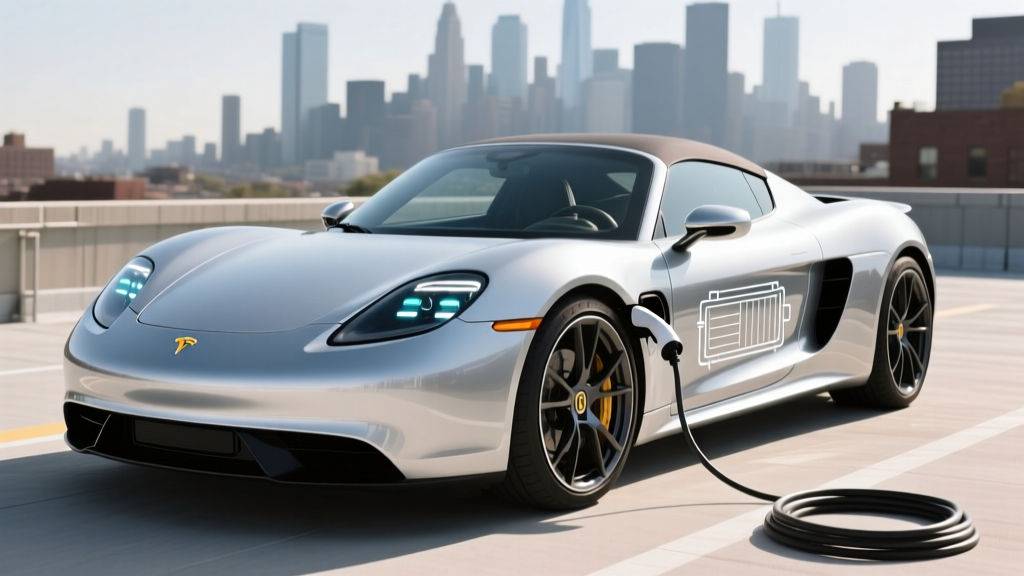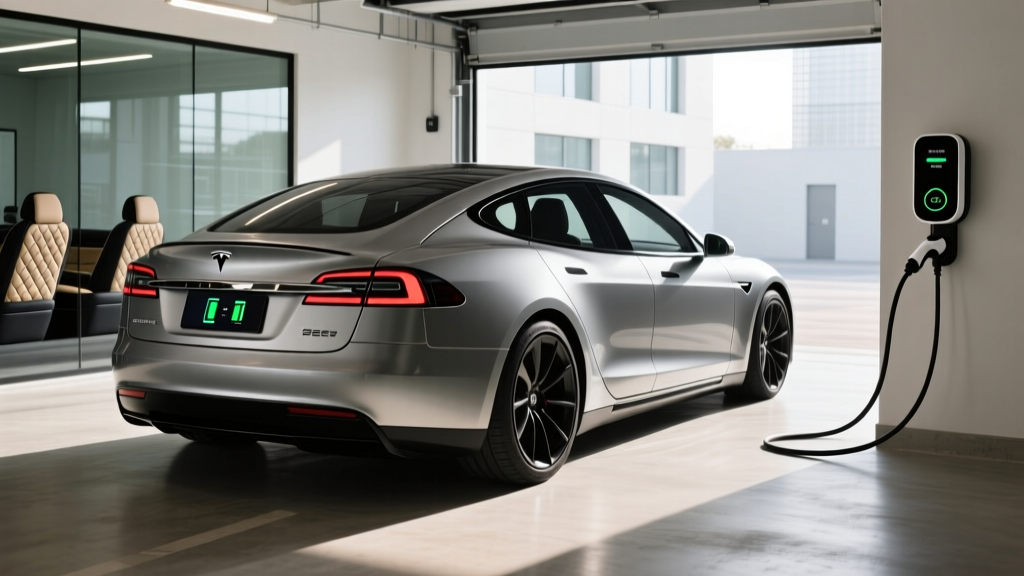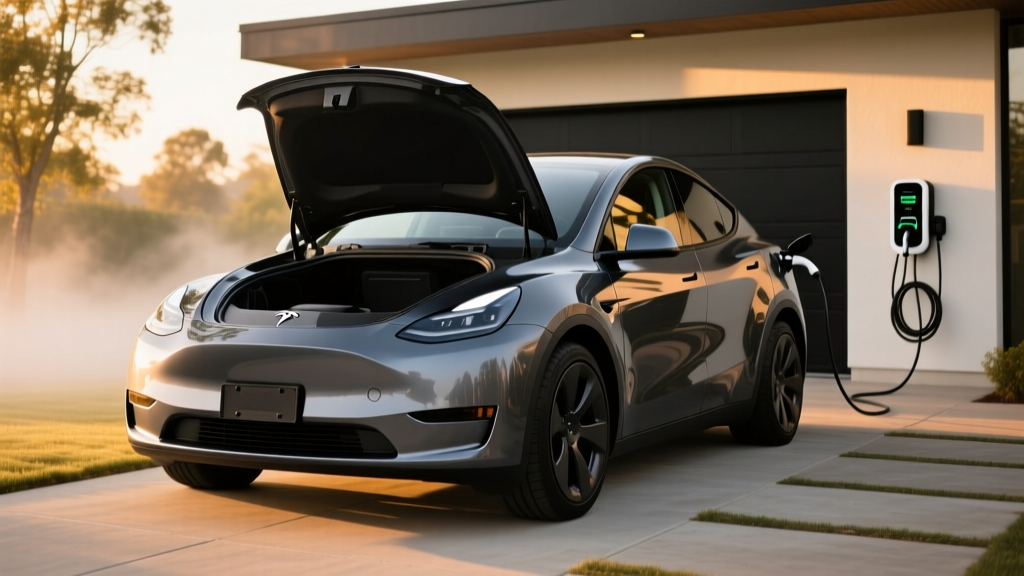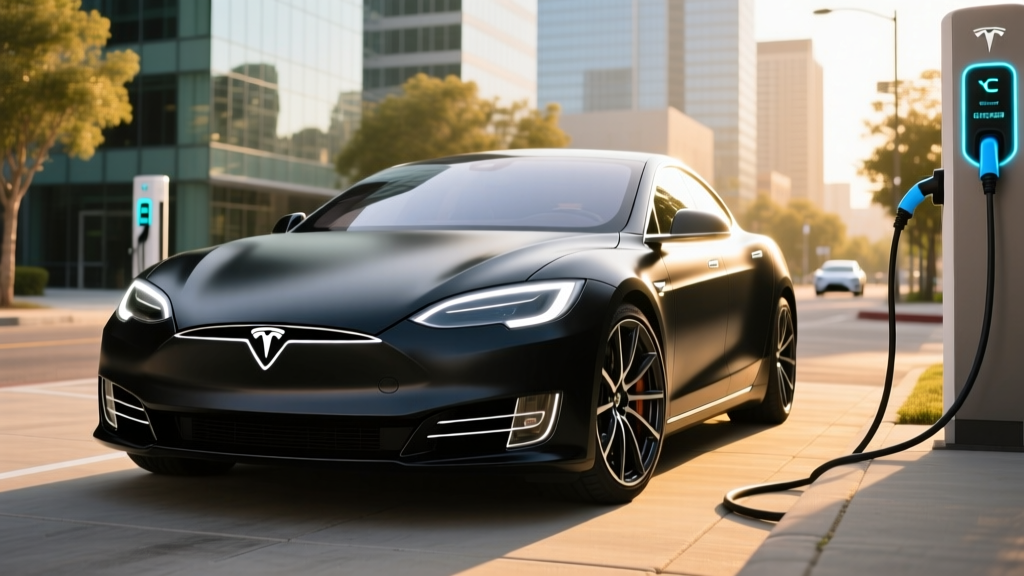
Tesla's Model S and Model X have been the benchmarks of premium electric sedans and SUVs for over a decade. Now, the company has confirmed what many industry watchers suspected: the end of the line. Tesla launched the 350 final limited-edition Signature Series Model S and Model X — a capped-production farewell run that bundles the highest-output powertrains, exclusive cosmetic treatments, and every available option into two halo vehicles. Only 350 units total will be built across both nameplates, split roughly evenly between the sedan and the SUV.
This review breaks down everything buyers and enthusiasts need to know about the Signature Series — from real-world range and charging performance to tax-credit eligibility and whether these final editions justify their premium over the standard Plaid trims.
What the Signature Series Actually Is
The Signature Series represents a production-capped farewell for Tesla's original vehicle architectures. Both the Model S Signature and Model X Signature are mechanically based on the current Plaid variants but receive:
- Exclusive "Signature 350" badging with a serialized plaque (e.g., 047/175) on the center console
- Unique "Obsidian Frost" exterior paint — a multi-coat metallic unavailable on any other Tesla
- 21-inch "Arachnid Noir" forged wheels with carbon-fiber aero covers
- Semi-aniline leather interior in a Signature-exclusive black-and-cream colorway with contrast stitching
- Alcantara headliner and dash trim, a first for any Tesla production vehicle
- All available software features pre-loaded, including FSD (Supervised) capability at no additional cost
- Complimentary Supercharging for the life of the vehicle (transferable to one subsequent owner)
Production is limited to approximately 175 Model S units and 175 Model X units. Tesla has stated these are the final vehicles to roll off the Fremont production line for these nameplates before the platform transitions to next-generation architectures.
Signature Series Model S: Full Specifications
| Specification | Model S Signature |
|---|---|
| Drivetrain | Tri-Motor AWD (Plaid) |
| Horsepower | 1,020 hp |
| 0-60 mph | 1.99 seconds (with rollout) |
| Top Speed | 200 mph |
| Battery Capacity (usable) | ~100 kWh (NMC) |
| EPA Estimated Range | 396 miles |
| Efficiency | 120 MPGe / 28 kWh/100 mi |
| Max DC Fast Charge | 250 kW (V3 Supercharger) |
| 10-80% DC Charge Time | ~27 minutes |
| Level 2 Home Charge Rate | 11.5 kW (~44 mi/hr) |
| Cargo Volume (rear seats up) | 28 cu ft (incl. frunk) |
| Front Legroom | 42.7 in |
| Rear Legroom | 35.4 in |
| Curb Weight | ~4,766 lbs |
| Battery/Drive Unit Warranty | 8 years / 150,000 miles |
| Base MSRP | $139,990 |
Signature Series Model X: Full Specifications
| Specification | Model X Signature |
|---|---|
| Drivetrain | Tri-Motor AWD (Plaid) |
| Horsepower | 1,020 hp |
| 0-60 mph | 2.5 seconds (with rollout) |
| Top Speed | 163 mph |
| Battery Capacity (usable) | ~100 kWh (NMC) |
| EPA Estimated Range | 348 miles |
| Efficiency | 109 MPGe / 31 kWh/100 mi |
| Max DC Fast Charge | 250 kW (V3 Supercharger) |
| 10-80% DC Charge Time | ~30 minutes |
| Level 2 Home Charge Rate | 11.5 kW (~36 mi/hr) |
| Cargo Volume (behind 2nd row) | 57 cu ft (incl. frunk) |
| Front Legroom | 41.2 in |
| Rear Legroom | 41.9 in (6-seat config) |
| Towing Capacity | 5,000 lbs |
| Curb Weight | ~5,185 lbs |
| Battery/Drive Unit Warranty | 8 years / 150,000 miles |
| Base MSRP | $149,990 |
Real-World Range: What to Actually Expect
Model S Signature: EPA 396 miles. Expect ~320-340 miles in mixed highway driving at 70-80 mph; ~260-290 miles in sustained cold weather (below 32°F) with cabin heating.
Model X Signature: EPA 348 miles. Expect ~275-300 miles highway at 70-80 mph; ~225-255 miles in cold conditions. The SUV's larger frontal area and greater mass penalize efficiency noticeably at speed.
The tri-motor Plaid powertrain prioritizes performance, and that shows in real-world efficiency. The Model S Signature's 28 kWh/100 mi is reasonable for a 1,020-hp sedan, but highway driving above 75 mph pushes consumption closer to 33-35 kWh/100 mi. The Model X, with its falcon-wing doors adding weight and its boxier profile, suffers more at highway speeds — expect 34-38 kWh/100 mi on long road trips.
Both vehicles use nickel-manganese-cobalt (NMC) battery chemistry, which provides higher energy density than LFP but is more sensitive to sustained 100% state-of-charge storage. Tesla recommends daily charging to 80-90% for battery longevity, reserving 100% for road trips. The Tesla battery care guide provides detailed guidance.
Cold-weather preconditioning remains critical. When you navigate to a Supercharger, the car automatically warms the battery pack to optimize charge acceptance — skip this, and your first 10-15 minutes of DC fast charging will be noticeably slower, especially below freezing.
Charging Performance: DC Fast, Level 2, and Real-World Speeds
| Charge Level | Power / Rate | Model S Mi Added/Hr | Model X Mi Added/Hr |
|---|---|---|---|
| Level 1 (120V household) | ~1.4 kW | ~3 mi/hr | ~3 mi/hr |
| Level 2 (240V, 48A Wall Connector) | 11.5 kW | ~44 mi/hr | ~36 mi/hr |
| DC Fast (V3 Supercharger) | Peak 250 kW | ~200 mi in 15 min | ~175 mi in 15 min |
| DC Fast (CCS adapter, 350 kW station) | Limited to ~250 kW | Same as V3 | Same as V3 |
The Signature Series vehicles charge at up to 250 kW on Tesla's V3 Supercharger network. That peak rate is available between roughly 10-30% state-of-charge; beyond 50%, the charge curve tapers progressively. By 80%, you're typically seeing 80-100 kW. The full 10-80% session takes approximately 27 minutes in the Model S and 30 minutes in the Model X under ideal thermal conditions.
At home, the Tesla Wall Connector at 48 amps (11.5 kW) will replenish a depleted Model S battery in roughly 9 hours — practical for overnight charging. The Model X takes about 10.5 hours for a full charge at the same rate. Both vehicles accept the full 11.5 kW, which requires a 60-amp dedicated circuit. If your electrical panel only supports a 50-amp circuit (40-amp breaker), you'll be limited to 9.6 kW, adding roughly 15-20% to charge times.
One notable limitation: these vehicles use Tesla's proprietary NACS connector natively. While Tesla has opened Superchargers to non-Tesla EVs, the Signature Series cars don't gain any additional network compatibility — they already have access to the most reliable DC fast-charging network in North America. For non-Tesla CCS stations, a CCS-to-NACS adapter is included in the Signature Series package.
Pricing, Tax Credits, and Total Cost
| Item | Model S Signature | Model X Signature |
|---|---|---|
| Base MSRP | $139,990 | $149,990 |
| Destination Fee | $1,990 | $1,990 |
| As-Tested Price (all-in) | $141,980 | $151,980 |
| Federal §30D Tax Credit | Not eligible | Not eligible |
| Estimated Out-of-Pocket | $141,980 | $151,980 |
Neither Signature Series model qualifies for the federal §30D clean vehicle tax credit. The reason is straightforward: the credit carries an MSRP cap of $55,000 for sedans and $80,000 for SUVs/vans/pickups. At $139,990 and $149,990 respectively, both vehicles exceed their category caps by a wide margin. Additionally, buyer income caps ($150,000 single / $300,000 joint for modified AGI) would exclude many buyers in this price bracket regardless.
Battery sourcing and critical-mineral requirements under §30D are moot here — the MSRP cap is the binding constraint. State-level incentives may still apply (California's CVRP, for example, has its own income and price caps that likely exclude these vehicles as well), so consult your state's energy office for specifics.
For ownership cost context: insuring a $140,000+ tri-motor Tesla will run $3,500-$5,500 annually depending on your state and driving record. Tesla's own insurance product may offer competitive rates in eligible states. Electricity costs for charging average $0.15-$0.18/kWh at home nationally, translating to roughly $550-$700 per year for 12,000 miles of driving in the Model S — a fraction of what a comparable V8 luxury sedan would consume in fuel.
Performance, Tech, and Standout Features
The tri-motor Plaid powertrain needs little introduction: one front motor and two rear motors produce a combined 1,020 horsepower. The Model S Signature's 1.99-second 0-60 mph time (with the standard one-foot rollout subtracted) remains one of the quickest production-car times ever recorded. The Model X, despite carrying nearly 5,200 pounds, hits 60 in 2.5 seconds — faster than most supercars from five years ago.
Signature-exclusive tech and features include:
- 17-inch center touchscreen with a new "Signature" boot animation and themed UI
- 22-speaker audio system with active road-noise cancellation
- FSD (Supervised) capability pre-loaded — a $8,000 value included at no extra cost
- Yoke and round steering wheel both included; buyer selects at delivery
- HEPA air filtration (Bioweapon Defense Mode) with upgraded Signature-series filter media
- Adaptive air suspension with automatic ride-height adjustment
- Power-folding second-row seats (Model X) with one-touch cargo access
The infotainment system remains Tesla's strongest suit: fast, responsive, and continuously updated over-the-air. Wireless phone mirroring, a full web browser, and native streaming apps (Netflix, YouTube, Spotify) are all present. The rear-seat 8-inch touchscreen provides climate and entertainment controls for passengers.
Tesla's Autopilot and Full Self-Driving (Supervised) are SAE Level 2 driver-assistance systems. The driver must remain attentive, keep hands on the wheel (or demonstrate engagement via the cabin camera), and is legally responsible for the vehicle at all times. These are not "self-driving" systems. True driverless operation (SAE Level 4) is currently limited to geofenced robotaxi services like Waymo in select cities.
Notable drawbacks persist. The Model S rear seat remains tighter than competitors like the Lucid Air or Mercedes EQS, with 35.4 inches of legroom feeling cramped for taller adults on long trips. Build quality, while improved from earlier years, still shows occasional panel-gap inconsistency that's hard to justify at this price. The yoke steering wheel, while included, remains divisive for low-speed maneuvering. And the Model X's falcon-wing doors, though dramatic, can be slow to operate and have historically been a maintenance concern — though Tesla has revised the mechanism multiple times.
How the Signature Series Stacks Up Against Competitors
At this price point, the competitive landscape is narrow but formidable:
- Lucid Air Sapphire ($249,000): 1,234 hp, EPA 427 miles, significantly more rear-seat space. More expensive, but the efficiency and range king of performance sedans.
- Mercedes-AMG EQS 53 (~$148,000): 649 hp, EPA 277 miles. Far less range and power, but superior interior materials and ride refinement.
- Porsche Taycan Turbo GT (~$230,000): 1,092 hp, EPA 269 miles. The handling benchmark, but with dramatically less range and a much higher price.
- BMW iX M60 (~$111,000): 610 hp, EPA 296 miles. A credible luxury SUV alternative at a lower price, though it can't match the Model X Plaid's acceleration.
The Signature Series models occupy a specific niche: maximum Tesla performance with collectible exclusivity. If your priority is the quickest sedan Tesla has ever built with a serialized production number, there's no substitute. If you want the most efficient, most spacious, or most refined luxury EV, competitors make compelling arguments.
- Sub-2-second 0-60 (Model S) — among the fastest production cars ever
- Serialized limited edition with exclusive cosmetic treatments
- Complimentary lifetime Supercharging (transferable)
- FSD (Supervised) included — $8,000 value
- Access to Tesla Supercharger network — the most reliable in North America
- Over-the-air updates continue to add features post-purchase
- Strong collector/enthusiast demand likely to support resale
- No federal or most state tax-credit eligibility due to MSRP caps
- Rear-seat space in Model S is tight for the price class
- 250 kW peak DC charge rate trails Hyundai/Kia's 800V architectures
- Model X falcon-wing doors add complexity and potential service cost
- No Apple CarPlay or Android Auto integration
- Insurance premiums significantly above average
- Platform is aging — newer architectures offer better efficiency
Who Should Buy the Signature Series?
These vehicles suit a narrow buyer profile, and that's by design:
- The Tesla loyalist and collector: You've owned multiple Teslas, you appreciate the brand's trajectory, and you want a serialized piece of its history. The Signature Series will likely hold value better than a standard Plaid due to scarcity.
- The performance-EV buyer who wants exclusivity: You want tri-motor, 1,020-hp AWD performance but don't want to spend $250,000 on a Lucid Air Sapphire. The Model S Signature delivers 90% of the performance at 60% of the Lucid's price.
- The family road-tripper (Model X): You need three rows, 5,000-lb towing, Supercharger network access, and you want the last Model X Tesla will build on this platform. The lifetime Supercharging sweetens long-distance ownership considerably.
Who should skip these vehicles? Buyers who prioritize interior luxury refinement (Mercedes EQS or BMW iX), maximum range and efficiency (Lucid Air Grand Touring), or cutting-edge 800V charging architecture (Hyundai Ioniq 5 N, Porsche Taycan). The Signature Series is a celebration of what Tesla built — not a showcase of what's next.
Frequently Asked Questions
What is the real-world range of the Signature Series Model S and Model X?
The Model S Signature achieves an EPA-estimated 396 miles, but plan for 320-340 miles in real-world highway driving and 260-290 miles in cold weather. The Model X Signature is EPA-rated at 348 miles, with real-world highway range around 275-300 miles and cold-weather range around 225-255 miles. Both figures assume moderate climate-control use and tire pressures at spec.
How fast do these vehicles charge at home and on the road?
On a V3 Supercharger at 250 kW peak, both vehicles add roughly 200 miles of range in 15 minutes, with a full 10-80% session taking 27-30 minutes. At home on a 48-amp Tesla Wall Connector (11.5 kW), the Model S adds about 44 miles per hour of charging and the Model X adds about 36 miles per hour. A full overnight charge from near-empty takes 9-10.5 hours.
Does either Signature Series model qualify for the federal EV tax credit?
No. Under current IRS §30D rules, the Model S exceeds the $55,000 sedan MSRP cap and the Model X exceeds the $80,000 SUV/van cap. Both vehicles are ineligible for the up-to-$7,500 federal clean vehicle credit regardless of buyer income or battery sourcing. Consult a tax professional for any state-level incentive eligibility.
Is the Signature Series worth buying over a standard Model S/X Plaid?
Mechanically, they're identical — same 1,020 hp, same battery, same range. The premium pays for exclusivity (serialized 1-of-175), the Obsidian Frost paint, semi-aniline leather, Alcantara trim, included FSD, and lifetime Supercharging. If you value collectibility and the "last of its kind" status, the Signature Series commands a justifiable premium. If you simply want the performance, a standard Plaid saves $20,000-$30,000 with no measurable difference in acceleration or range.
What is the warranty coverage?
Tesla covers the battery pack and drive units for 8 years or 150,000 miles, whichever comes first, with a minimum 70% capacity retention threshold. The basic vehicle limited warranty covers 4 years or 50,000 miles. The Signature Series does not include an extended warranty beyond standard coverage, though Tesla's extended service agreement may be available at delivery.
Will these vehicles appreciate in value?
Limited-production, end-of-line vehicles from iconic brands often hold value well — particularly when serialized. The original Tesla Roadster and early Model S "Signature" editions from 2012 have shown collector interest. However, EV depreciation is heavily influenced by battery health and advancing technology. While scarcity supports the floor, predicting appreciation is speculative. Buy it because you want it, not as a financial instrument.