The Quest for a Tesla 3 Rows: Two Real Options in 2026
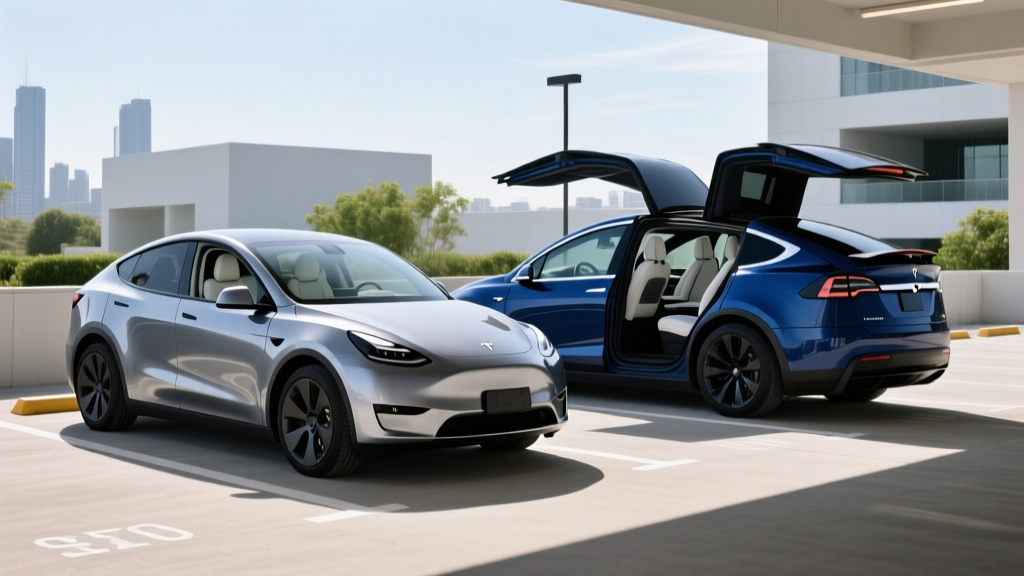
Families shopping for a Tesla 3 rows of seating have exactly two choices in the 2026 lineup: the compact Model Y with its optional third row, and the full-size Model X built from the ground up as a six- or seven-passenger SUV. Tesla's long-promised "Model Y 7-seat" package remains a niche option, while the Model X continues as the brand's flagship family hauler. This review breaks down both vehicles on the metrics that matter most to three-row buyers — real-world range, charging speed, usable cargo space, and total cost after federal tax credits.
The 2026 Model Y Long Range AWD (7-seat) carries an EPA-estimated 310 miles of range. Expect 260–280 miles on highway road trips at 70+ mph, and 200–230 miles in sub-freezing winter conditions. The Model X Long Range AWD (6-seat) is EPA-rated at 320 miles, with real-world highway driving yielding 255–275 miles and cold-weather drops to roughly 210–240 miles. Always precondition the battery before fast charging to reclaim peak charge rates.
Spec Comparison: Model Y 7-Seat vs Model X
| Spec | 2026 Model Y LR AWD (7-Seat) | 2026 Model X LR AWD (6-Seat) |
|---|---|---|
| EPA Range | 310 miles | 320 miles |
| Battery (Usable) | ~75 kWh (NMC) | ~95 kWh (NMC) |
| Drivetrain | Dual-Motor AWD | Dual-Motor AWD |
| Horsepower | 384 hp | 670 hp |
| 0–60 mph | 5.0 seconds | 3.8 seconds |
| Max DC Fast Charge | 250 kW | 250 kW |
| 10–80% DC Time | ~27 minutes | ~31 minutes |
| Level 2 Home Charge | 11.5 kW (~44 mi/hr) | 11.5 kW (~34 mi/hr) |
| MPGe (Combined) | 117 MPGe | 102 MPGe |
| Efficiency | 28 kWh/100mi | 33 kWh/100mi |
| Cargo (Behind 3rd Row) | 12.8 cu ft | 15.8 cu ft |
| Cargo (All Rows Folded) | 72.1 cu ft | 88.1 cu ft |
| 3rd-Row Legroom | 26.5 inches | 32.7 inches |
| Base MSRP | $52,490 | $79,990 |
| Warranty (Battery) | 8 yr / 120,000 mi | 8 yr / 150,000 mi |
Range, Efficiency, and Real-World Driving
The Model Y's 75 kWh (usable) NMC battery delivers 310 EPA miles, but three-row families should plan conservatively. At highway speeds with a full cabin of passengers and cargo, energy consumption rises to roughly 30–32 kWh/100mi, shrinking effective range to 235–260 miles before needing a charge stop. Cold weather (below 32°F) compounds this by 15–25%, making winter road trips a 200–220-mile proposition between stops.
The Model X's larger 95 kWh pack provides a 320-mile EPA sticker and more buffer for loaded highway driving. Its real-world highway range of 255–275 miles is more comfortable for long stretches, and the larger battery means cold-weather degradation — while still significant — leaves you with a more usable 210–240 miles. According to fueleconomy.gov, the Model Y achieves 117 MPGe combined versus the Model X's 102 MPGe, reflecting the lighter vehicle's efficiency advantage.
Charging Speed: DC Fast and Home Level 2
Both vehicles peak at 250 kW on DC fast chargers, but their charge curves differ significantly. The Model Y's smaller battery reaches peak rate briefly before tapering, completing a 10–80% charge in approximately 27 minutes. The Model X, with its larger pack, sustains high charge rates slightly longer but still requires about 31 minutes for the same 10–80% session.
| Charge Level | Model Y 7-Seat | Model X 6-Seat |
|---|---|---|
| Level 1 (120V / 12A) | ~1.4 kW (~5 mi/hr) | ~1.4 kW (~4 mi/hr) |
| Level 2 (240V / 48A) | 11.5 kW (~44 mi/hr) | 11.5 kW (~34 mi/hr) |
| DC Fast (Peak) | 250 kW | 250 kW |
| DC 10–80% Time | ~27 min | ~31 min |
| Connector | NACS (native) | NACS (native) |
At home on a Level 2 wall connector, the Model Y adds roughly 44 miles of range per hour of charging, while the Model X adds about 34 miles per hour due to its lower efficiency. A full overnight charge (8–10 hours) replenishes either vehicle completely. Both use the NACS connector natively, granting full access to Tesla's Supercharger network — a decisive advantage for road-trip families in charging-desert regions.
Passenger Space, Cargo, and Family Practicality
This is where the "Tesla 3 rows" search gets complicated. The Model Y's third row is best described as occasional-use: with 26.5 inches of legroom, it accommodates children or smaller teens for short trips. Adults will find it cramped beyond 20-minute drives. Behind that third row, you get just 12.8 cubic feet of cargo — enough for a couple of grocery bags or a small stroller, but not luggage for a family road trip. Fold the third row, and cargo space expands to a usable 30.2 cubic feet; fold both rear rows for 72.1 cubic feet.
The Model X was engineered as a genuine three-row vehicle. Its 32.7 inches of third-row legroom fits adults on longer journeys, and the 15.8 cubic feet behind the third row handles more gear. The available six-seat configuration with second-row captain's chairs improves passenger comfort and access to the third row. With all rows folded, the Model X offers 88.1 cubic feet — substantially more than the Model Y and competitive with midsize SUVs like the Kia EV9.
Pricing, Trims, and Federal Tax Credit Eligibility
| Trim | Base MSRP | Est. After §30D Credit* |
|---|---|---|
| Model Y LR AWD (7-Seat Option) | $52,490 | $44,990 |
| Model X LR AWD (6-Seat) | $79,990 | $79,990 (ineligible) |
| Model X Plaid (6-Seat) | $94,990 | $94,990 (ineligible) |
*Federal tax credit eligibility under IRS §30D requires the buyer to meet income caps ($150,000 single / $300,000 joint modified AGI), the vehicle MSRP must not exceed $80,000 for SUVs, and battery components and critical minerals must meet domestic-sourcing thresholds that tighten annually. The Model Y qualifies for up to $7,500 when all sourcing requirements are met — and as of 2026, the point-of-sale transfer option lets dealers apply the credit directly at purchase. The Model X exceeds the $80,000 SUV MSRP cap and is not eligible for the federal credit regardless of buyer income. Consult IRS.gov §30D guidelines and a tax professional to confirm your eligibility.
Technology, Driver Assistance, and Ownership
Both vehicles ship with Tesla's 15.4-inch central touchscreen running the latest Tesla OS, over-the-air updates, and the full Supercharger ecosystem. Autopilot (adaptive cruise + lane centering) is standard; Full Self-Driving (Supervised) remains a paid add-on. It is critical to understand that both Autopilot and FSD Supervised are SAE Level 2 systems — the driver must remain attentive, hands available, and ready to intervene at all times. These are not self-driving systems.
Standout features include Tesla's app-based climate preconditioning (essential for maximizing range and charge speed in cold weather), Sentry Mode dashcam recording, and the HEPA air filtration system in the Model X ("Bioweapon Defense Mode"). Drawbacks include the Model Y's firm ride quality over rough pavement, limited physical controls requiring touchscreen interaction for most functions, and the absence of Apple CarPlay or Android Auto in both vehicles.
- Most affordable Tesla with 3 rows ($52,490 before credit)
- Eligible for up to $7,500 federal tax credit
- 117 MPGe combined — highly efficient
- Full Supercharger network access (NACS native)
- Compact footprint for parking and city driving
- Third row fits only children; 26.5" legroom
- Just 12.8 cu ft cargo behind third row
- Real-world range drops to ~200 mi in cold weather
- Firm ride quality, especially when loaded
- No Apple CarPlay / Android Auto
- Genuine adult-capable third row (32.7" legroom)
- 670 hp, 3.8-second 0–60 — fastest 3-row SUV
- 88.1 cu ft max cargo volume
- Falcon-wing rear doors for easy child-seat access
- HEPA air filtration standard
- $79,990+ MSRP — exceeds federal tax credit cap
- 33 kWh/100mi — least efficient Tesla in the lineup
- Falcon-wing doors can be slow and problematic in tight garages
- Large footprint challenging in urban parking
- 31-minute 10–80% charge time on road trips
Who Should Buy a Tesla 3 Rows?
Choose the Model Y 7-Seat if: You need an occasional third row for short school runs or errands with young children, you want the lowest entry price into a Tesla SUV, you qualify for the §30D federal credit, and your daily driving is under 200 miles with home charging available.
Choose the Model X if: You regularly carry six or seven passengers including adults, you need genuine cargo space behind the third row, you value performance (670 hp, 3.8s 0–60), and the $80,000+ price without federal credit fits your budget.
Consider competitors if: You want a more usable third row at a lower price (Kia EV9 starts around $56,000 with 279 miles of range and federal credit eligibility), or you need a more traditional SUV layout with physical controls (Hyundai Palisade EV, arriving late 2026).
Frequently Asked Questions
Does the Tesla Model Y third row fit adults?
Not comfortably. With 26.5 inches of legroom, the Model Y's third row is designed for children or very short trips. Adults will find knees pressed against the second-row seatback. For regular adult passengers in the third row, the Model X (32.7 inches) or a competitor like the Kia EV9 is a better choice.
How much does a Tesla 3 rows cost after tax credits?
The 2026 Model Y Long Range AWD with the 7-seat option starts at $52,490. If you meet all §30D requirements (income caps, battery sourcing), the point-of-sale credit reduces the effective price to approximately $44,990. The Model X starts at $79,990 and does not qualify for the federal credit due to its MSRP exceeding the $80,000 SUV cap.
Can I charge a 7-seat Model Y at home overnight?
Yes. A Level 2 Tesla Wall Connector (240V, 48A) delivers 11.5 kW, adding roughly 44 miles of range per hour. A full charge from 10% to 100% takes about 7–8 hours, easily accomplished overnight. Installation costs typically range from $800–$2,000 depending on your electrical panel capacity and distance from the panel to the charger location.
Is the Model X worth $27,000 more than the Model Y 7-seat?
It depends on your needs. The Model X delivers a genuine adult-usable third row, 30% more cargo space, 670 hp, and falcon-wing doors for easy child-seat loading. If those features justify $27,500 (and the loss of the federal credit), the Model X is the superior family vehicle. If your third-row use is occasional and budget-conscious, the Model Y delivers more value per dollar.
What is the battery warranty on both vehicles?
The Model Y battery and drive unit are warrantied for 8 years or 120,000 miles (whichever comes first), with Tesla guaranteeing at least 70% capacity retention. The Model X battery warranty extends to 8 years or 150,000 miles, also with a 70% minimum retention threshold. Real-world degradation data from Tesla's fleet suggests most packs retain 85–90% capacity at 100,000 miles.
Does Autopilot make either vehicle self-driving?
No. Both Autopilot and the optional Full Self-Driving (Supervised) are SAE Level 2 driver-assistance systems. The driver must remain fully engaged, monitor the road, and be prepared to take control instantly. No Tesla vehicle currently sold is capable of autonomous (Level 4 or 5) driving. For context on automation levels, see NHTSA's automated vehicle safety guidelines.