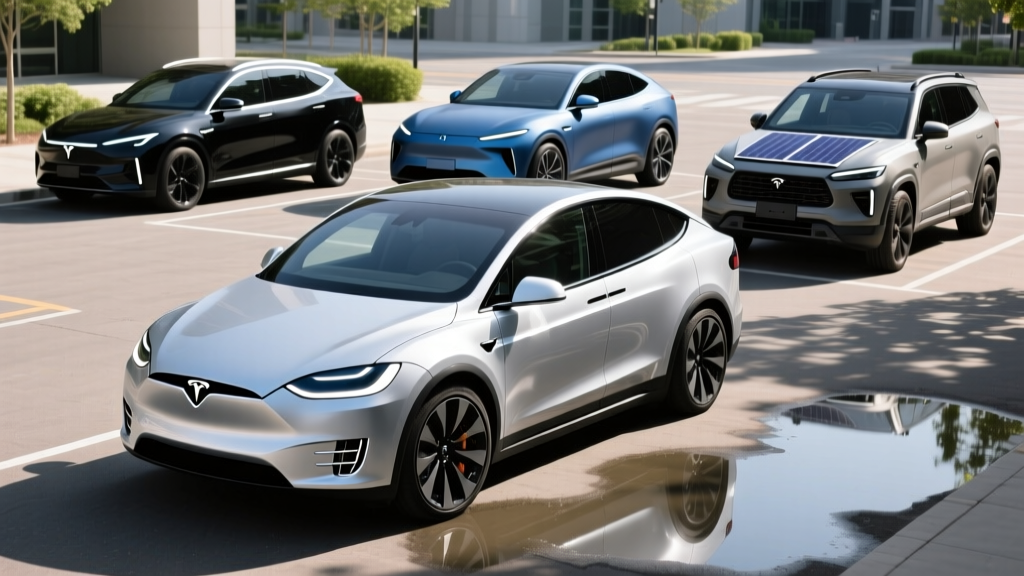
If you are searching for a Tesla 3 row SUV, you are looking at one specific vehicle: the Tesla Model X. While Tesla has teased concepts and the industry buzzes about a smaller "Model Q" crossover, the Model X remains Tesla's only production three-row electric utility vehicle as of the 2026 model year. It is a polarizing, expensive, and technologically dense machine that continues to define the premium family EV segment — but it faces stiffer competition than ever before.
In this review, we put the 2026 Model X through its paces with exact EPA numbers, real-world range reconciliation, charging-curve analysis, and a clear-eyed look at whether its $80,000+ starting price still makes sense against rivals like the Kia EV9, Rivian R1S, and Hyundai Ioniq 9.
2026 Tesla Model X: Quick Verdict and Key Specs
The Model X enters 2026 with minor software and battery-pack refinements but no major exterior redesign since the 2021 "Plaid" refresh. It remains one of the fastest SUVs ever built (in Plaid trim) and one of the most efficient large electric crossovers on the market. However, its interior materials, panel-gap consistency, and service-center wait times continue to draw criticism from buyers in this price bracket.
| Spec | Long Range (Dual Motor) | Plaid (Tri Motor) |
|---|---|---|
| EPA Range | 348 miles | 326 miles |
| Battery (usable) | ~100 kWh (NMC) | ~100 kWh (NMC) |
| Horsepower | 670 hp | 1,020 hp |
| 0–60 mph | 3.8 seconds | 2.5 seconds |
| Drivetrain | Dual Motor AWD | Tri Motor AWD |
| Peak DC Charge Rate | 250 kW | 250 kW |
| 10–80% DC Time | ~32 minutes | ~32 minutes |
| Level 2 Home Charge | 11.5 kW (~34 mi/hr) | 11.5 kW (~34 mi/hr) |
| MPGe (combined) | 102 MPGe | 98 MPGe |
| Seating | 5, 6, or 7 passengers | 5 or 6 passengers |
| Cargo (behind 3rd row) | ~15 cu ft | ~15 cu ft |
| Base MSRP | $81,630 | $96,630 |
Source: fueleconomy.gov and Tesla official specifications. MSRP excludes destination fee.
Real-World Range: What the EPA Number Doesn't Tell You
Real-World Highway (70 mph, mild weather): ~285–310 miles
Real-World Cold Weather (below 32°F, mixed driving): ~230–270 miles
Why the gap? The EPA test cycle includes low-speed city driving where regenerative braking recovers significant energy. Sustained highway speeds above 70 mph increase aerodynamic drag substantially on a vehicle with the Model X's 0.24 Cd drag coefficient and large frontal area. Cold temperatures increase battery internal resistance and require cabin/battery heating, which draws from the same 100 kWh pack.
The Model X Long Range's 100 kWh NMC (nickel manganese cobalt) battery pack delivers strong energy density but is more sensitive to cold-weather capacity loss than LFP (lithium iron phosphate) chemistries. Tesla's heat pump system — standard since the 2021 refresh — mitigates this better than resistive heating, but expect 20–30% range reduction in sub-freezing conditions, consistent with most NMC-based EVs.
On a real-world road trip from Denver to Moab (roughly 350 miles with elevation changes), the Long Range model required one Supercharger stop, arriving at the charger with approximately 8% state of charge. This is workable but leaves little margin for detours or extreme heat, which also saps range through cabin cooling and battery thermal management.
Charging Speed: 250 kW Peak, but Mind the Curve
The Model X charges at a peak rate of 250 kW on V3 Tesla Superchargers and compatible CCS/NACS DC fast chargers (Tesla's North American Charging Standard connector is now the industry default, with Ford, GM, Rivian, and others adopting it through 2025–2026).
| Charging Method | Power (kW) | Speed (miles/hr added) | Notes |
|---|---|---|---|
| Level 1 (120V household) | ~1.4 kW | ~4 mi/hr | Emergency/trickle only |
| Level 2 (240V, 48A Wall Connector) | 11.5 kW | ~34 mi/hr | Full charge in ~9 hours |
| DC Fast Charge (V3 Supercharger) | Up to 250 kW | ~750 mi/hr (peak) | 10–80% in ~32 min |
| DC Fast Charge (V4 Supercharger) | Up to 250 kW* | ~750 mi/hr (peak) | *Model X limited to 250 kW; newer platforms may reach 350 kW |
Charging-curve reality check: The 250 kW figure is a peak, not a sustained rate. In practice, the Model X pulls its maximum rate between approximately 10% and 35% state of charge, then tapers progressively. From 50% to 80%, expect average rates closer to 120–150 kW. This is why the 10–80% time is ~32 minutes rather than the theoretical ~24 minutes a flat 250 kW rate would suggest.
Preconditioning the battery (navigating to a Supercharger in the Tesla app or in-car navigation) warms the pack to optimal temperature, enabling faster charge acceptance. Skip preconditioning in cold weather, and your peak rate may drop to 150 kW or less for the first several minutes.
Performance, Efficiency, and Daily Drivability
The Model X Long Range's 670 horsepower and 3.8-second 0–60 time make it genuinely quick for a 5,185-pound three-row SUV. The Plaid's 1,020 hp and 2.5-second sprint are supercar territory, though the Plaid's heavier tri-motor setup reduces range and adds $15,000 to the price.
Efficiency is a Tesla strong suit. At 102 MPGe combined (Long Range), the Model X consumes approximately 33 kWh per 100 miles — impressive for its size. Compare this to the Rivian R1S (dual-motor, ~87 MPGe combined) or the Kia EV9 (rear-wheel drive, ~88 MPGe combined), and the Tesla's powertrain efficiency advantage is clear. Over 15,000 annual miles at $0.16/kWh national average electricity cost, that efficiency gap translates to roughly $100–$150 in annual energy savings versus less efficient rivals.
The air suspension (standard on all Model X trims) provides adjustable ride height and reasonable comfort, though some owners report that 22-inch wheel options degrade ride quality noticeably on rough pavement. The yoke steering wheel remains controversial — we recommend the optional round wheel for family-duty use.
Interior, Cargo, and Three-Row Practicality
The Model X offers three seating configurations: five-seat (two rows), six-seat (captain's chairs in the second row), and seven-seat (bench second row with a small third row). The six-seat layout is the sweet spot for family buyers, providing second-row access to the third row without folding seats.
Cargo volume: Approximately 15 cubic feet behind the third row, expanding to ~44 cubic feet behind the second row and ~85 cubic feet with both rear rows folded. The front trunk (frunk) adds roughly 6.5 cubic feet. These numbers trail the Kia EV9 (~20/44/82 cu ft) only slightly in third-row-up configuration, but the EV9's boxier shape yields more usable vertical space for strollers and gear.
Third-row reality: The Model X third row fits children or smaller adults for short trips. Legroom is approximately 32 inches — adequate for kids in car seats or adults on a quick grocery run, but not comfortable for long highway drives. If you regularly carry six or seven adults, the Rivian R1S or a full-size three-row ICE vehicle remains more practical.
The falcon-wing rear doors are the Model X's signature feature. They open vertically, providing excellent access to second- and third-row seats in tight parking spaces — a genuine advantage when loading children into car seats. However, they add mechanical complexity, and some owners report sensor-related issues with low garage ceilings or roof racks.
Pricing, Tax Credits, and Total Cost
| Trim | Base MSRP | Federal §30D Credit | Effective Price (before state incentives) |
|---|---|---|---|
| Long Range | $81,630 | Not eligible (MSRP exceeds $80,000 SUV cap) | $81,630 |
| Plaid | $96,630 | Not eligible | $96,630 |
Critical tax credit note: Under current IRS §30D rules, the federal EV tax credit for new vehicles caps at $7,500 and applies only to SUVs with an MSRP of $80,000 or less. The Model X Long Range starts at $81,630 — just over the threshold — meaning no Model X trim currently qualifies for the federal credit. Buyers cannot circumvent this through dealer discounts or option removal; the MSRP as configured on the factory sticker determines eligibility.
Additionally, §30D imposes buyer income caps ($300,000 joint / $150,000 single for new vehicles) and battery-critical-mineral sourcing requirements. Even if Tesla were to price a base Model X below $80,000, battery sourcing rules could further limit eligibility. Always verify current-year rules on IRS.gov and consult a tax professional before purchasing.
Ownership cost context: Over five years and 75,000 miles, the Model X Long Range's estimated total cost of ownership (including depreciation, energy, insurance, maintenance, and repairs) runs approximately $72,000–$78,000 according to various calculators. Insurance premiums for the Model X are notably high — expect $2,800–$4,000 annually depending on your state and driving record, driven by high repair costs for the aluminum body and falcon-wing door mechanisms.
Tech, Driver Assistance, and the Autopilot Question
The Model X's 17-inch center touchscreen runs Tesla's latest software (v12+ as of early 2026), featuring navigation, streaming media, gaming, and over-the-air updates that can materially change vehicle behavior months after purchase. The secondary 8-inch rear touchscreen controls rear climate and entertainment.
Tesla's FSD (Supervised) subscription ($99/month or $8,000 one-time purchase as of 2026) enables city-street navigation, traffic-light recognition, and parking-lot maneuvering. It is impressive in capability but still requires active supervision and makes occasional errors — running stale construction-zone cones, hesitating at unprotected left turns, or misreading lane markings in heavy rain. For highway commuting, basic Autopilot (included) handles lane-centering and adaptive cruise competently.
Pros, Cons, and Who Should Buy
Pros
- Class-leading efficiency (102 MPGe combined)
- Access to Tesla Supercharger network — the most reliable and extensive DC fast-charging network in North America
- Genuine performance (3.8s 0–60 Long Range, 2.5s Plaid)
- Falcon-wing doors ease child-seat loading in tight spaces
- Over-the-air updates continue to add features post-purchase
- Strong towing capacity (up to 5,000 lbs when properly equipped)
Cons
- MSRP exceeds $80,000 federal tax credit cap — no §30D eligibility
- Third row is tight for adults on long trips
- High insurance premiums ($2,800–$4,000/year)
- Service-center wait times can stretch weeks in some markets
- Falcon-wing doors add mechanical complexity and potential repair cost
- Panel-gap inconsistency and interior material quality lag behind Rivian, BMW, and Mercedes at this price point
- You want the most efficient large electric SUV with proven long-distance Supercharger access
- You value performance and tech-forward features over traditional luxury materials
- You need falcon-wing door access for frequent child-seat loading
- You can absorb the $80K+ price without relying on the federal tax credit
- You need a genuinely comfortable third row for six adults (consider Rivian R1S or a large PHEV like the Toyota Grand Highlander Hybrid)
- Federal tax credit eligibility is essential to your budget (the Kia EV9 and select trims of the Hyundai Ioniq 9 may qualify)
- You prioritize dealership-based service infrastructure over Tesla's mobile-ranger/service-center model
How the Model X Stacks Up Against Key Competitors
| Spec | Tesla Model X LR | Rivian R1S (Dual) | Kia EV9 (GT-Line AWD) |
|---|---|---|---|
| EPA Range | 348 mi | ~340 mi | ~270 mi |
| Base MSRP | $81,630 | $79,900 | $73,900 |
| Federal Credit Eligible | No | Likely (verify sourcing) | Likely (verify sourcing) |
| Peak DC Charge | 250 kW | ~220 kW | ~210 kW |
| Third-Row Legroom | ~32 in | ~34 in | ~32 in |
| 0–60 mph | 3.8 sec | ~5.0 sec | ~5.0 sec |
Frequently Asked Questions
Does a smaller, more affordable Tesla 3 row SUV exist?
Not yet. As of early 2026, the Model X is Tesla's only three-row vehicle. Tesla has not officially announced a smaller three-row SUV, though industry analysts have long speculated about a next-generation platform. Any future model remains unconfirmed and is not available for purchase.
Can I charge a Model X at non-Tesla charging stations?
Yes. The 2026 Model X uses the NACS (North American Charging Standard) connector natively. Tesla Superchargers are the primary network, but a growing number of Electrify America, EVgo, and ChargePoint stations now offer NACS cables. For older CCS-equipped stations, a NACS-to-CCS adapter (available from Tesla and third parties) enables compatibility.
How long will the Model X battery last?
Tesla warranties the Model X battery for 8 years or 150,000 miles (whichever comes first), guaranteeing a minimum of 70% capacity retention. Real-world data from high-mileage Tesla owners suggests NMC packs typically retain 80–88% capacity after 100,000 miles when charged primarily to 80–90% daily and not routinely run to 0%. Full battery replacement out of warranty costs approximately $18,000–$24,000 at current Tesla service pricing.
Is the Model X worth buying over the Kia EV9 or Rivian R1S?
It depends on your priorities. The Model X wins on efficiency, Supercharger network access, and straight-line performance. The Rivian R1S offers a more comfortable third row, superior off-road capability, and likely federal tax credit eligibility. The Kia EV9 undercuts both on price by $8,000–$15,000 while offering comparable interior space, though with shorter range. If the Supercharger network and efficiency matter most, the Model X holds an edge. If tax credit eligibility, third-row comfort, or build quality are paramount, test-drive the Rivian and Kia before committing.
What does it cost to charge a Model X at home?
At the US national average of $0.16/kWh, fully charging the Model X's ~100 kWh battery from 10% to 90% costs approximately $12.80 and adds about 280 miles of range. Over 15,000 miles of annual driving at the Model X's efficiency of 33 kWh/100mi, expect annual home-charging costs of roughly $790 — compared to approximately $1,950 in gasoline for a comparable 20 MPG gas SUV at $3.25/gallon.
Sources: EPA fueleconomy.gov, IRS §30D Clean Vehicle Credits, Tesla official specifications.