The Reality of Tesla 3 Row Seating in 2026
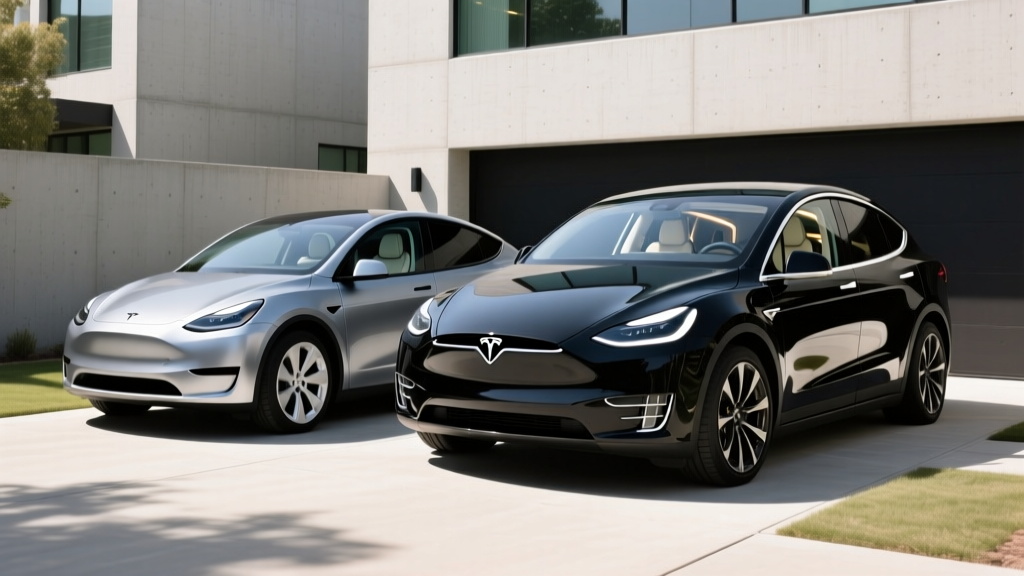
When families search for Tesla 3 row seating, they're usually weighing two very different vehicles: the compact crossover Tesla Model Y with its optional third-row bench, and the full-size luxury Tesla Model X with its standard six- or optional seven-seat layout. The third row in each vehicle serves fundamentally different use cases, and understanding those differences is the key to making the right purchase.
This review breaks down the specs, real-world usability, charging economics, and ownership costs for both Tesla SUVs offering three rows, so you can decide which configuration actually fits your family — and which one is more marketing checkbox than practical solution.
Spec Table: Model Y vs Model X at a Glance
| Specification | 2026 Model Y Long Range AWD (7-seat) | 2026 Model X Long Range AWD (6-seat) |
|---|---|---|
| EPA Range | 308 miles | 326 miles |
| Battery Capacity (usable) | ~75 kWh (NMC) | ~95 kWh (NMC) |
| Drivetrain | Dual-Motor AWD | Dual-Motor AWD |
| Horsepower | 384 hp | 670 hp |
| 0-60 mph | 4.8 seconds | 3.8 seconds |
| Peak DC Fast Charge | 250 kW | 250 kW |
| 10-80% DC Charge Time | ~28 minutes | ~35 minutes |
| Level 2 Charge Rate | 11.5 kW (~44 mi/hr) | 11.5 kW (~37 mi/hr) |
| MPGe (combined) | 122 MPGe | 102 MPGe |
| Efficiency | 28 kWh/100 mi | 33 kWh/100 mi |
| Base MSRP | $48,990 (+$2,500 7-seat) | $79,990 |
| Battery Warranty | 8 yr / 120,000 mi | 8 yr / 150,000 mi |
Real-World Range: What the EPA Numbers Don't Tell You
Model Y Long Range AWD: EPA 308 mi. Expect ~260-280 mi highway (75 mph); ~200-220 mi in sub-freezing weather.
Model X Long Range AWD: EPA 326 mi. Expect ~270-290 mi highway; ~210-240 mi in sub-freezing weather.
Both vehicles use nickel-manganese-cobalt (NMC) battery chemistry, which offers higher energy density than lithium iron phosphate (LFP) but comes with a more pronounced state-of-charge management curve. Tesla recommends daily charging to 80% for NMC batteries and 100% only for longer trips — meaning your practical daily range in the Model Y is closer to 246 miles, and in the Model X, about 260 miles.
Cold weather is the equalizer for all EVs. Tesla's heat pump system — standard on both models — recovers waste heat from the drivetrain to warm the cabin, reducing winter range loss compared to older resistance-heater designs. But physics still applies: expect 25-35% range reduction at 20°F compared to 70°F ambient temperatures, particularly on shorter trips where the battery doesn't reach optimal thermal operating temperature. Data from fueleconomy.gov confirms these real-world variances across testing conditions.
Charging Speed: DC Fast Charge and Home Level 2
Both the Model Y and Model X peak at 250 kW on V3 Tesla Superchargers, but sustained charge rates tell the fuller story. The Model Y's smaller ~75 kWh battery reaches its peak charge rate briefly before tapering — a typical 10-80% session takes about 28 minutes. The Model X, with its larger ~95 kWh pack, sustains higher wattage longer but still requires roughly 35 minutes for the same 10-80% window.
| Charging Method | Model Y 7-Seat | Model X 6-Seat |
|---|---|---|
| Level 1 (120V, 12A) | ~1.4 kW / 5 mi/hr | ~1.4 kW / 4 mi/hr |
| Level 2 (240V, 48A) | 11.5 kW / ~44 mi/hr | 11.5 kW / ~37 mi/hr |
| DC Fast Charge (peak) | 250 kW / ~175 mi in 15 min | 250 kW / ~150 mi in 15 min |
| 10-80% DCFC Time | ~28 minutes | ~35 minutes |
At home on a 48-amp Level 2 circuit (requiring a 60-amp breaker), the Model Y adds roughly 44 miles of range per hour, while the Model X adds about 37. Overnight charging from 20% to 80% takes approximately 6-7 hours for either vehicle — easily accomplished while you sleep.
One practical note: Tesla's NACS connector is now the North American standard, and both models include native NACS ports. Adapters for legacy CCS stations are available, and an expanding number of non-Tesla networks (Electrify America, EVgo) now support NACS directly.
Third-Row Usability: The Honest Assessment
This is where the two vehicles diverge dramatically, and where most buyers either get pleasantly surprised or bitterly disappointed.
Model Y Third Row: The optional third-row bench ($2,500 add-on) is best described as a +2 occasional seat. Legroom measures approximately 26.5 inches in the third row — tight for adults on anything beyond a short errand. Children under about 5'2" can ride comfortably for moderate trips. The seat folds flat, but when deployed, cargo space behind the third row shrinks to roughly 12.8 cubic feet — enough for a couple of grocery bags or a compact stroller, not much more. With the third row folded, cargo volume expands to a generous 30.2 cubic feet, and with both rear rows flat, you get 72.1 cubic feet.
Model X Third Row: The Model X offers genuine adult-capable third-row seating in its seven-seat configuration, with approximately 32.7 inches of legroom. The six-seat layout (standard) replaces the second-row bench with two captain's chairs and a walk-through gap, making third-row access easier but reducing total seating to six. Cargo behind the third row measures 15.8 cubic feet, growing to 70.9 cubic feet with all rear seats folded — comparable to the Model Y but with a lower load floor and wider opening thanks to the larger vehicle footprint.
The Model X also features a power-folding third row operated from the touchscreen or a button in the cargo area — a meaningful convenience upgrade over the Model Y's manual fold mechanism.
Pricing, Tax Credits, and Total Cost of Ownership
| Cost Factor | Model Y LR AWD (7-seat) | Model X LR AWD (6-seat) |
|---|---|---|
| Base MSRP | $48,990 | $79,990 |
| 7-Seat / 6-Seat Option | +$2,500 | Included (6-seat std) |
| As-Tested (typical config) | $52,490 (w/ FSD, paint) | $87,490 (w/ FSD, wheels) |
| Federal §30D Credit Eligible? | Yes — up to $7,500* | No — exceeds MSRP cap |
| Est. Price After Credit | ~$44,990* | $87,490 (no credit) |
*Federal tax credit eligibility under IRS §30D requires the buyer to meet income caps ($150,000 single / $300,000 joint AGI), the vehicle MSRP must not exceed $80,000 for SUVs, and battery components and critical minerals must meet domestic-sourcing thresholds that tighten annually. The Model Y qualifies; the Model X does not due to its MSRP. The credit can now be transferred at point of sale as a price reduction. Always consult a tax professional for your specific situation.
On the operating-cost side, the Model Y's superior efficiency (28 kWh/100 mi vs 33) means cheaper per-mile charging. At the national average electricity rate of ~$0.16/kWh and average residential charging, the Model Y costs roughly $4.48 per 100 miles to fuel, compared to $5.28 for the Model X. Over 15,000 annual miles, that's a ~$120/year difference — modest, but it compounds.
Tesla's battery warranty covers 8 years/120,000 miles on the Model Y and 8 years/150,000 miles on the Model X, with a guaranteed minimum 70% capacity retention. Real-world degradation data from fleet analyses suggests most Tesla NMC packs lose approximately 10-12% capacity in the first 100,000 miles before the degradation curve flattens considerably.
Driver Assistance and Standout Technology
Tesla Autopilot and Full Self-Driving (Supervised) are SAE Level 2 driver-assistance systems. The driver must remain fully attentive, keep hands available for steering input, and is legally responsible for the vehicle at all times. These systems are not self-driving.
Both vehicles ship with Tesla's latest hardware suite and Autopilot standard (traffic-aware cruise control, lane centering, automatic emergency steering). Full Self-Driving (Supervised) remains an $8,000 add-on or $99/month subscription, adding features like automatic lane changes, navigation-guided on/off-ramp transitions, traffic-light recognition, and a supervised city-street driving mode. FSD capability continues to improve via over-the-air updates, but it remains a driver-supervision system — not a replacement for an attentive human behind the wheel.
Other standout tech includes Tesla's 15.4-inch central touchscreen (which handles virtually all vehicle controls), over-the-air software updates that add features post-purchase, a HEPA air filtration system with "Bioweapon Defense Mode" on the Model X, and the Model X's signature falcon-wing rear doors that dramatically improve third-row access in tight parking spaces (though they add mechanical complexity and have been a reliability concern in earlier model years).
The Model Y runs on Tesla's newer vehicle architecture with improved cabin insulation, a rear-seat touchscreen for climate and media control, and ventilated front seats — refinements that close the luxury gap with the Model X considerably.
Pros and Cons: Both Vehicles Side by Side
✅ Model Y 7-Seat Pros
- Qualifies for up to $7,500 federal tax credit
- Best-in-class efficiency (122 MPGe combined)
- Access to Tesla Supercharger network (17,000+ stalls in US)
- Competitive 0-60 in 4.8 seconds
- Lower insurance and maintenance costs than Model X
❌ Model Y 7-Seat Cons
- Third row is child-only — ~26.5" legroom
- Minimal cargo space (12.8 cu ft) with third row up
- Manual third-row fold mechanism
- No air suspension — firmer ride quality
- NMC battery requires 80% daily charge limit
✅ Model X Pros
- Genuine adult-capable third row (~32.7" legroom)
- Falcon-wing doors ease third-row access
- Adaptive air suspension standard
- 670 hp and 3.8-second 0-60 in a 5,000-lb SUV
- HEPA cabin filtration system
❌ Model X Cons
- No federal tax credit (exceeds $80K MSRP cap)
- $87K+ as-tested pricing is steep
- Falcon-wing door complexity and repair cost
- Lower efficiency (102 MPGe) means higher charging costs
- Longer 10-80% charge time (~35 min)
Who Should Buy Which Tesla 3-Row SUV?
Choose the Model Y 7-Seat if: You have young children (under ~10) who can use the third row, you want federal tax-credit savings, you prioritize efficiency and lower operating costs, and you primarily need the extra seats for school runs and short trips.
Choose the Model X if: You regularly carry teenagers or adults in the third row, you need maximum cargo flexibility, you value air suspension ride quality and falcon-wing access, and the $80K+ price tag (with no federal credit) fits your budget.
Look elsewhere if: You need a genuinely spacious and affordable 3-row EV. Consider the Kia EV9 (EPA 304 mi, ~$55K, federal credit eligible) or the Rivian R1S (3-row standard, ~$75K, credit eligible under SUV MSRP cap) as strong alternatives.
Frequently Asked Questions
What is the real-world range of the Tesla Model Y with 3-row seating?
The 2026 Model Y Long Range AWD with the 7-seat option carries an EPA rating of 308 miles. In real-world highway driving at 75 mph, expect approximately 260-280 miles. In cold weather (below freezing), that drops to roughly 200-220 miles due to battery thermal management demands and cabin heating loads. Preconditioning the battery before departure while plugged in mitigates some cold-weather loss.
How fast does the Model Y charge at home and on the road?
On a 48-amp Level 2 home charger (240V), the Model Y charges at 11.5 kW, adding approximately 44 miles of range per hour — a full overnight session easily replenishes a depleted battery. On a V3 Tesla Supercharger (250 kW peak DC), a 10-80% session takes about 28 minutes, though the charge curve tapers significantly above 80%, so charging to full takes considerably longer.
Does the Tesla Model Y 7-seat qualify for the federal EV tax credit?
Yes — as of 2026, the Model Y Long Range AWD qualifies for up to $7,500 under IRS §30D, provided the buyer meets income thresholds ($300,000 joint / $150,000 single AGI) and the vehicle meets battery-sourcing requirements. The credit can be applied as a point-of-sale price reduction through a participating dealer. The Model X does not qualify because its MSRP exceeds the $80,000 SUV cap.
Is the Model Y third row actually usable for adults?
No. The Model Y's third row offers approximately 26.5 inches of legroom and limited headroom due to the sloping roofline. It's designed for children roughly under 5'2" and best suited for short trips. Adults will find it cramped and uncomfortable beyond a few miles. If you regularly transport adults in a third row, the Model X or a competitor like the Kia EV9 is a far better choice.
Is the Tesla Model X worth buying over the Model Y for families?
The Model X is worth the premium only if you need genuine adult-capable third-row seating, value the adaptive air suspension, and can absorb the higher purchase price without a federal tax credit. For most families with younger children, the Model Y 7-seat — at roughly $30,000 less after the tax credit — delivers better value, efficiency, and nearly identical tech. Test both third rows with your actual passengers before deciding.
What are the biggest pros and cons of Tesla's 3-row SUVs?
The biggest advantage across both vehicles is access to the Tesla Supercharger network, industry-leading software and OTA updates, strong performance, and the Model Y's tax-credit eligibility. The biggest drawbacks are the Model Y's child-only third row with minimal cargo space, and the Model X's high price, lack of federal credit eligibility, and falcon-wing door complexity. Neither offers LFP battery chemistry, which means daily charging should be limited to 80% for longevity.