The electric vehicle market has been buzzing with speculation ever since reports surfaced that Tesla executives were alarmed by Musk's denial of $25K EV cancellation. For years, the promise of an affordable Tesla — colloquially dubbed the "Model 2" — has anchored the company's long-term growth narrative and kept budget-conscious EV shoppers waiting. But as 2026 unfolds, the reality is starkly different: Tesla's most affordable new vehicle remains the Model 3 Rear-Wheel Drive at $38,990, and the sub-$30K Tesla appears no closer to production than it was in 2024.
Rather than speculate further on corporate drama, this review focuses on what matters to buyers right now: a complete, spec-driven breakdown of Tesla's actual entry-point vehicle, the 2026 Tesla Model 3 RWD, plus a clear-eyed assessment of whether waiting for a cheaper Tesla makes sense — or whether competitors have already filled that gap.
2026 Tesla Model 3 RWD: The Real Entry-Point Tesla
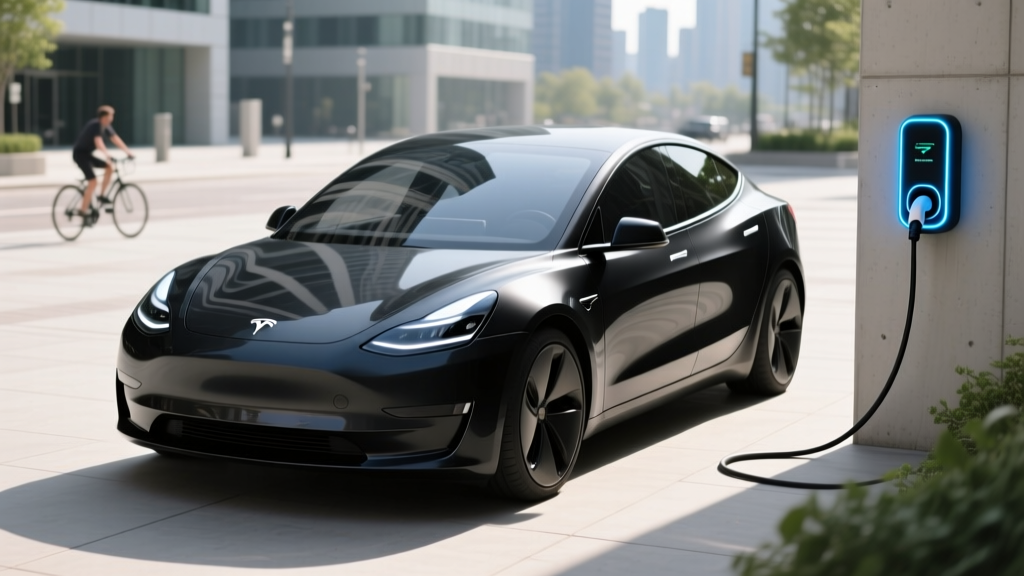
With the hypothetical $25K Tesla effectively off the table, the Model 3 RWD stands as the cheapest way into a new Tesla. Following the "Highland" refresh that debuted for the 2024 model year, the 2026 Model 3 RWD carries forward with incremental software and efficiency refinements rather than major hardware changes.
| Spec | Value |
|---|---|
| EPA Range | 272 miles |
| Battery Capacity (usable) | ~57.5 kWh |
| Battery Chemistry | LFP (Lithium Iron Phosphate) |
| Drivetrain | Rear-Wheel Drive (single motor) |
| Horsepower | 271 hp |
| 0–60 mph | 5.8 seconds |
| Top Speed | 125 mph |
| Max DC Fast Charge | 170 kW (peak) |
| 10–80% DCFC Time | ~25 minutes |
| Level 2 Home Charge | 11.5 kW (~44 mi/hr) |
| MPGe (combined) | 142 MPGe |
| Efficiency | 24 kWh/100 mi |
| Cargo Volume (trunk + frunk) | 23 cu ft (trunk) + 3.1 cu ft (frunk) |
| Rear Legroom | 35.2 inches |
| Base MSRP | $38,990 |
| Federal Tax Credit (§30D) | Up to $7,500 (eligibility varies) |
| Warranty — Basic | 4 years / 50,000 miles |
| Warranty — Battery & Drive Unit | 8 years / 100,000 miles |
Real-World Range: What 272 EPA Miles Actually Means on the Road
Real-World Highway (70 mph, moderate temps): ~240–255 miles
Real-World Highway (30°F / cold weather): ~195–220 miles
City / Stop-and-Go (mild weather): ~275–290 miles (regen advantage)
The Model 3 RWD's 272-mile EPA figure is respectable for a single-motor sedan, but real-world results depend heavily on conditions. Highway driving at sustained speeds above 70 mph typically yields 240–255 miles before you'd want to find a charger. In winter conditions — especially below freezing — expect a 20–30% reduction, bringing usable range down to roughly 200 miles on a full charge.
The LFP battery chemistry plays a role here. LFP cells are less energy-dense than NMC (nickel manganese cobalt), which is why the RWD carries a smaller pack than the Long Range AWD variant. However, LFP has a significant practical advantage: Tesla recommends charging it to 100% daily, meaning you can regularly access the full 272 miles. With NMC packs, daily charging to 80% is recommended for longevity, effectively reducing usable daily range by 20%.
For a daily commute under 80 miles round-trip with home charging, the Model 3 RWD's real-world range is more than sufficient. Road-trippers will need to plan Supercharger stops roughly every 200–220 miles to maintain a comfortable buffer.
Charging Speed and Infrastructure
| Level | Power | Speed (miles added) | Notes |
|---|---|---|---|
| Level 1 (120V outlet) | ~1.4 kW | ~4–5 mi/hr | Emergency / overnight trickle only |
| Level 2 (240V home, 48A) | 11.5 kW | ~44 mi/hr | Full charge in ~5.5 hours |
| DC Fast Charge (Tesla Supercharger V3) | 170 kW peak | ~15 min for 170 mi | Tapers significantly above 60% SoC |
| DC Fast Charge (CCS via adapter) | ~150 kW peak | Varies by station | Requires $250 CCS adapter |
The Model 3 RWD's peak DC fast-charge rate of 170 kW is notably slower than the Long Range AWD variant (which peaks around 250 kW). In practice, you'll see the RWD sustain approximately 150–160 kW from 10–40% state of charge, after which the charge curve tapers. A 10–80% session takes roughly 25 minutes at a V3 Supercharger — adequate for road trips, but you'll notice the difference if you've experienced the Long Range's faster curve.
Home charging at 11.5 kW (using a Tesla Wall Connector on a 60A circuit) adds roughly 44 miles of range per hour. Most owners charge overnight and wake to a full battery every morning. Installation costs for a home Level 2 setup typically range from $500–$2,500 depending on electrical panel capacity and run length — a licensed electrician should assess your panel before purchasing equipment.
Tesla's Supercharger network remains the most reliable public charging infrastructure in the US, with over 6,500 stations nationwide. The Model 3 RWD uses the NACS connector natively, and with a CCS adapter, it can access Electrify America, EVgo, and other non-Tesla networks — though reliability on those networks remains inconsistent in many regions.
Tax Credit Eligibility and True Cost
| Item | Amount |
|---|---|
| Base MSRP | $38,990 |
| Destination Fee | $1,390 |
| Federal Tax Credit (§30D) — max | –$7,500 |
| Effective Price (if fully eligible) | ~$32,880 |
| With FSD (Supervised) add-on | +$8,000 |
The federal EV tax credit under IRS §30D can reduce the effective cost of the Model 3 RWD to approximately $32,880 — but eligibility is far from guaranteed and depends on several factors:
- MSRP Cap: Sedans must be under $55,000 MSRP. The Model 3 RWD at $38,990 qualifies.
- Buyer Income Cap: Modified AGI must not exceed $150,000 (single), $225,000 (head of household), or $300,000 (joint filers).
- Battery Sourcing: Critical minerals and battery component requirements phase in annually. As of 2026, sourcing rules are stringent — Tesla has worked to qualify the Model 3's LFP battery, but the exact credit amount (full $7,500 vs. partial $3,750) can shift based on supply-chain compliance. Verify current eligibility on fueleconomy.gov before purchasing.
- Point-of-Sale Transfer: As of 2024, buyers can transfer the credit to the dealer at purchase, reducing the upfront cost immediately rather than waiting for a tax refund.
Important: Tax credit rules change frequently. Always confirm eligibility with your tax professional and check the latest IRS guidance before relying on the credit in your budget.
Technology, Driver Assistance, and Interior
The 2026 Model 3 continues with Tesla's minimalist interior philosophy: a single 15.4-inch center touchscreen handles all infotainment, climate, and vehicle controls. The Highland refresh brought ventilated front seats, ambient lighting, a rear-seat touchscreen, and improved sound insulation — addressing many of the prior generation's comfort complaints.
Autopilot and FSD (Supervised): Every Model 3 ships with basic Autopilot (traffic-aware cruise control and lane centering). Tesla's Full Self-Driving (Supervised) package adds automated lane changes, city-street navigation, and traffic-light recognition for an additional $8,000 (or $99/month subscription).
Both Autopilot and FSD (Supervised) are driver-assist systems, not self-driving. The driver must remain fully attentive, keep hands on the steering wheel, and be prepared to take over at any moment. These are not Level 4 autonomous systems like Waymo's robotaxi service.
The Model 3 earns strong safety marks, with a 5-star overall rating from NHTSA and top scores from IIHS. Standard active-safety features include automatic emergency braking, blind-spot monitoring, and lane-departure warning.
Notable drawbacks: The absence of physical buttons for climate and wiper controls remains polarizing. The turn-signal stalks were removed in the Highland refresh (replaced by steering-wheel buttons), which many drivers find less intuitive. Rear-seat headroom is tight for passengers over 6 feet, and there is no Apple CarPlay or Android Auto — Tesla's proprietary infotainment is the only option.
How the Model 3 RWD Compares to Key Competitors
| Spec | Tesla Model 3 RWD | Hyundai Ioniq 6 SE | BMW i4 eDrive35 |
|---|---|---|---|
| Base MSRP | $38,990 | $38,650 | $52,200 |
| EPA Range | 272 mi | 361 mi | 279 mi |
| Battery (kWh) | ~57.5 (LFP) | 77.4 (NMC) | 70.2 (NMC) |
| Max DCFC | 170 kW | 240 kW | 180 kW |
| 10–80% Time | ~25 min | ~18 min | ~31 min |
| 0–60 mph | 5.8 sec | 6.9 sec | 5.6 sec |
| MPGe (combined) | 142 | 140 | 109 |
| Tax Credit | Up to $7,500 | Up to $7,500 | Up to $7,500 |
The Hyundai Ioniq 6 SE is the most direct competitor, offering significantly more EPA range (361 miles) and faster DC charging at a slightly lower MSRP. However, it lacks access to Tesla's Supercharger network natively (though NACS adoption is expanding) and its rear-seat visibility and infotainment lag behind Tesla's. The BMW i4 is a premium alternative with superior build quality but at a substantially higher price point.
For buyers specifically drawn to the Tesla ecosystem — Supercharger reliability, over-the-air updates, and the Tesla mobile app — the Model 3 RWD remains compelling despite its range deficit versus Hyundai. For those prioritizing maximum range per dollar, the Ioniq 6 SE is the stronger pick.
- Access to Tesla Supercharger network (most reliable DCFC in the US)
- LFP battery can be charged to 100% daily without degradation concerns
- Industry-leading software, OTA updates, and mobile app integration
- Strong safety ratings (5-star NHTSA, IIHS Top Safety Pick+)
- Excellent efficiency (142 MPGe combined)
- Point-of-sale tax credit transfer reduces upfront cost
- Range (272 mi) trails competitors like Ioniq 6 SE (361 mi)
- DC fast-charge speed (170 kW peak) is slower than rivals
- No physical controls for climate, wipers, or turn signals
- No Apple CarPlay or Android Auto support
- FSD (Supervised) remains expensive and is not autonomous driving
- Rear-seat space is tight for taller passengers
Who Should Buy the 2026 Model 3 RWD — and Who Should Wait?
- You want the most affordable entry into the Tesla/Supercharger ecosystem
- Your daily commute is under 80 miles round-trip with home charging
- You value software integration, OTA updates, and app-based vehicle management
- You can take advantage of the full $7,500 federal tax credit
- You regularly drive more than 250 miles between charges (Ioniq 6 offers 361 mi)
- You need faster DC charging for frequent road trips
- You prefer physical buttons and Apple CarPlay/Android Auto
- You were specifically waiting for a sub-$30K Tesla — that vehicle does not exist in 2026 and has no confirmed timeline
The reports of Tesla executives alarmed by Musk's denial of $25K EV cancellation reflect an internal tension between growth ambitions and production reality. Tesla has pivoted much of its future strategy toward robotaxi development and AI, rather than competing in the budget EV segment where Chinese manufacturers (and increasingly, Hyundai/Kia) dominate on price and range.
For budget EV buyers, the practical takeaway is clear: the $25K Tesla is not coming in 2026, and likely not in 2027 either. The Model 3 RWD at roughly $32,880 after tax credits is the affordable Tesla that actually exists — and it's a competent, efficient sedan with best-in-class software. But if range and charging speed are your top priorities, the competition has moved on.
Frequently Asked Questions
Is Tesla really cancelling the $25K Model 2?
Elon Musk has repeatedly denied plans for a dedicated $25K vehicle, and as of early 2026, no such model is in production or officially on Tesla's announced roadmap. Tesla has instead focused on lower-cost variants of existing models (like the Model 3 RWD) and on autonomous-driving technology. Industry reports suggest internal debate about the project's viability, but nothing has been formally confirmed or cancelled because it was never officially announced as a production program.
What is the real-world range of the 2026 Model 3 RWD?
The EPA rates it at 272 miles. In real-world highway driving at 70 mph in moderate temperatures, expect 240–255 miles. In cold weather (below 30°F), that drops to roughly 195–220 miles. City driving with regenerative braking can match or slightly exceed the EPA figure.
How fast does the Model 3 RWD charge?
On a Tesla V3 Supercharger, it peaks at 170 kW and charges from 10–80% in approximately 25 minutes. At home on a Level 2 Wall Connector (11.5 kW), it adds about 44 miles of range per hour, fully charging in roughly 5.5 hours.
Does the Model 3 RWD qualify for the $7,500 federal EV tax credit?
It can, but eligibility depends on your income (AGI caps apply), the vehicle's battery-sourcing compliance (which can change), and the MSRP cap (sedans must be under $55,000 — the Model 3 RWD qualifies). Always verify current eligibility on fueleconomy.gov and consult a tax professional before purchasing.
Is the Model 3 RWD worth buying over the Hyundai Ioniq 6?
If Supercharger access, Tesla's software ecosystem, and LFP battery longevity are priorities, yes. If maximum range (361 mi vs. 272 mi) and faster DC charging (240 kW vs. 170 kW) matter more, the Ioniq 6 SE is the stronger value. Test-drive both before deciding.
What are the biggest pros and cons of the Model 3 RWD?
Pros: Supercharger network, LFP daily charging to 100%, best-in-class software, strong safety ratings, good efficiency. Cons: Below-average range for the class, slower DC charging than competitors, no physical controls, no CarPlay/Android Auto, rear-seat space limitations.