For years, the phrase "tesla 25000" has dominated EV forums, investor calls, and wishlist articles. Elon Musk first floated the idea of a $25,000 Tesla in 2018, repeated it at Battery Day in 2020, and teased it again during 2024 earnings calls. As of early 2026, Tesla has not officially launched a standalone $25,000 model. What has happened is a significant price compression across the lineup—particularly the Model 3 and the refreshed Model Y—pushing entry prices into the mid-$20,000s after federal incentives. Meanwhile, reports from Bloomberg, Reuters, and supply-chain analysts indicate that a next-generation compact Tesla platform (often referred to internally as "Redwood" or the "next-gen platform") is targeted for production start at Gigafactory Texas, with a base MSRP aiming squarely at the $25,000 mark.
This article breaks down exactly where the Tesla $25,000 EV stands today: what's been confirmed, what's estimated from reliable supply-chain reporting, and how the current Model 3 RWD—the closest thing Tesla sells to a $25,000 EV right now—stacks up on range, charging, and ownership cost. Every spec below is labeled as confirmed (current production vehicle) or preliminary/estimated (next-gen compact platform).
Where the $25,000 Tesla Stands in 2026
Tesla's investor communications have been deliberately vague about a sub-$30K vehicle. What we know from earnings transcripts and reporting:
- Platform: A next-generation unboxed manufacturing process designed to cut production cost roughly in half versus the Model 3/Y platform.
- Production timeline: Initial reports targeted late 2025; as of early 2026, supply-chain sources suggest pilot production is underway with volume delivery expected in the second half of 2026 or early 2027.
- Target MSRP: ~$25,000 base before incentives, per multiple analyst reports citing internal Tesla targets.
- Form factor: Likely a compact crossover/hatchback, smaller than Model Y, competing with the Chevrolet Bolt EUV successor, Volvo EX30, and BYD Atto 3 in global markets.
The Closest Reality: 2026 Tesla Model 3 RWD
Until the next-gen compact launches, the 2026 Tesla Model 3 RWD (Highland refresh) is Tesla's most affordable offering and the vehicle most buyers land on when searching for a "Tesla 25000." Here's what you're actually getting at this price point.
| Spec | Value |
|---|---|
| Base MSRP | $38,990 (before incentives) |
| EPA Range | 341 miles |
| Battery (usable) | ~60 kWh, LFP chemistry |
| Drivetrain | Rear-wheel drive (single motor) |
| Horsepower | 271 hp |
| 0–60 mph | 5.8 seconds |
| Top Speed | 125 mph |
| MPGe (combined) | 132 MPGe |
| Efficiency | 25 kWh/100 mi |
| Max DC Fast Charge | 170 kW peak |
| 10–80% DC Charge | ~25 minutes |
| Level 2 Home Charge | 11.5 kW (~44 mi/hr) |
| Cargo Volume | 23 cu ft (rear) + 3.1 cu ft (frunk) |
| Rear Legroom | 35.3 inches |
| Battery/Drive Warranty | 8 years / 100,000 miles |
| Basic Warranty | 4 years / 50,000 miles |
Source: fueleconomy.gov, Tesla.com specifications.
Real-World Range: What the EPA Sticker Doesn't Tell You
EPA Estimated: 341 miles
Real-World Highway (70–80 mph, moderate climate): ~270–295 miles
Real-World City/Mixed Driving: ~310–335 miles (regen braking recovers energy)
Cold Weather (below 32°F, highway): ~220–260 miles (LFP chemistry is more cold-sensitive than NMC)
The Model 3 RWD's 341-mile EPA figure is legitimate for mixed driving in mild weather. However, LFP (lithium iron phosphate) batteries—which Tesla uses in the RWD trim to keep costs down—lose more usable capacity in freezing temperatures than the NMC (nickel manganese cobalt) packs in Long Range and Performance trims. If you live in the upper Midwest or Northeast and commute in winter, budget for roughly 70% of the EPA number on cold highway trips. Tesla's heat pump (standard on Highland) mitigates cabin-heating energy draw, but the cell chemistry itself is the limiting factor.
On the positive side, LFP batteries tolerate repeated charging to 100% without accelerated degradation. Tesla recommends you charge to 100% at least once per week with the LFP pack to keep the BMS (battery management system) calibrated—a notable advantage over NMC, which prefers an 80% daily ceiling.
Charging Speed: DC Fast, Level 2, and the Supercharger Advantage
Charging speed remains one of the most consequential ownership variables, and the Model 3 RWD is competent but not class-leading.
| Level | Power | Speed | Notes |
|---|---|---|---|
| Level 1 (120V) | ~1.4 kW | ~4 mi/hr | Emergency/top-up only |
| Level 2 (240V, 48A) | 11.5 kW | ~44 mi/hr | Full charge in ~6.5 hours |
| DC Fast (Supercharger V3/V4) | 170 kW peak | ~175 mi in 15 min | 10–80% in ~25 min; tapers sharply above 80% |
The 170 kW peak is lower than the 250 kW peak on Long Range/Performance trims (which use NMC cells with higher C-rate tolerance). In practice, the charge curve holds near peak from roughly 10% to 50% SoC, then ramps down. Expect 10–80% in about 25 minutes at a V3 Supercharger. Above 80%, charging slows dramatically—plan to unplug at 80% on road trips unless you need the final stretch.
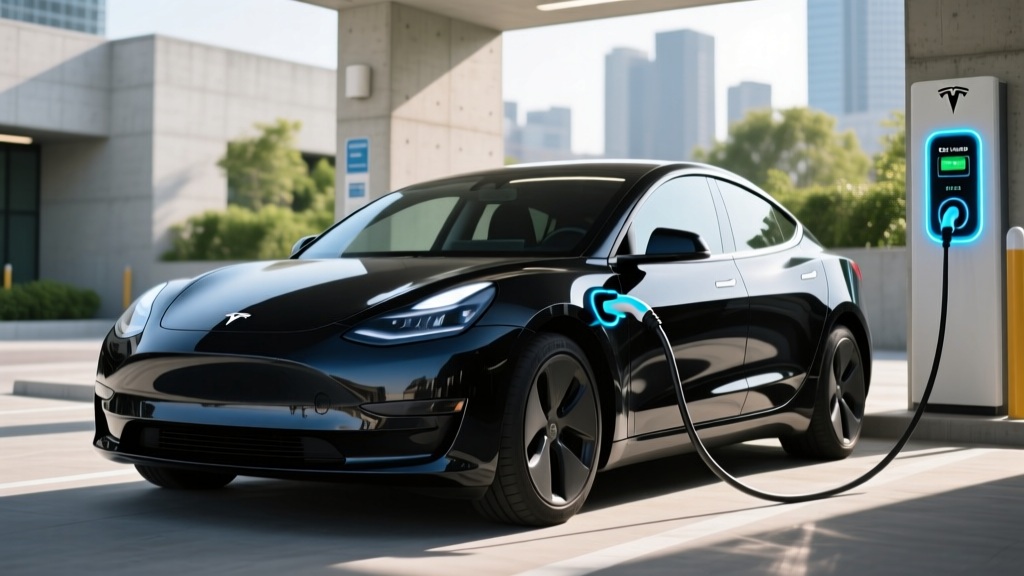
The Model 3 uses the NACS (North American Charging Standard) connector natively, giving it seamless access to Tesla's Supercharger network—over 20,000 stalls in North America and consistently the most reliable public charging infrastructure available, per J.D. Power EV experience studies. With a NACS-to-CCS adapter (included with some vehicles, ~$200 aftermarket), you can also access Electrify America, EVgo, and other CCS networks.
Pricing, Tax Credits, and the Path to $25,000
Here's where the "tesla 25000" search intent meets reality. The Model 3 RWD starts at $38,990. After the federal §30D tax credit, the effective cost drops substantially—but with critical caveats.
| Item | Amount |
|---|---|
| Base MSRP | $38,990 |
| Destination Fee | $1,390 |
| Federal §30D Tax Credit (if eligible) | Up to $7,500 |
| Effective Price (after max credit) | ~$32,880 |
As of 2026, the IRS §30D clean vehicle credit offers up to $7,500 for qualifying new EVs, but eligibility hinges on three factors that change frequently:
- MSRP Cap: Sedans must be under $55,000 MSRP. The Model 3 RWD clears this easily.
- Buyer Income Cap: Modified AGI must not exceed $150,000 (single), $225,000 (head of household), or $300,000 (joint).
- Battery Sourcing: The $7,500 credit splits into two halves—$3,750 for critical-minerals sourcing and $3,750 for battery-component assembly. Treasury Department FEOC (Foreign Entity of Concern) rules tighten annually, and Tesla's LFP cells have historically relied on CATL-sourced materials. Depending on the current sourcing determination, the Model 3 RWD may qualify for the full $7,500, a partial $3,750, or potentially zero. Always verify on the IRS clean vehicle credit portal before purchasing.
Starting in 2024, buyers can transfer the credit to the dealer as a point-of-sale rebate, reducing the purchase price at delivery rather than waiting for a tax refund. This effectively brings the Model 3 RWD to ~$32,880 out the door for eligible buyers—still above $25,000, but competitive with mid-trim compact crossovers.
Next-Gen Compact: How Tesla Could Actually Hit $25,000
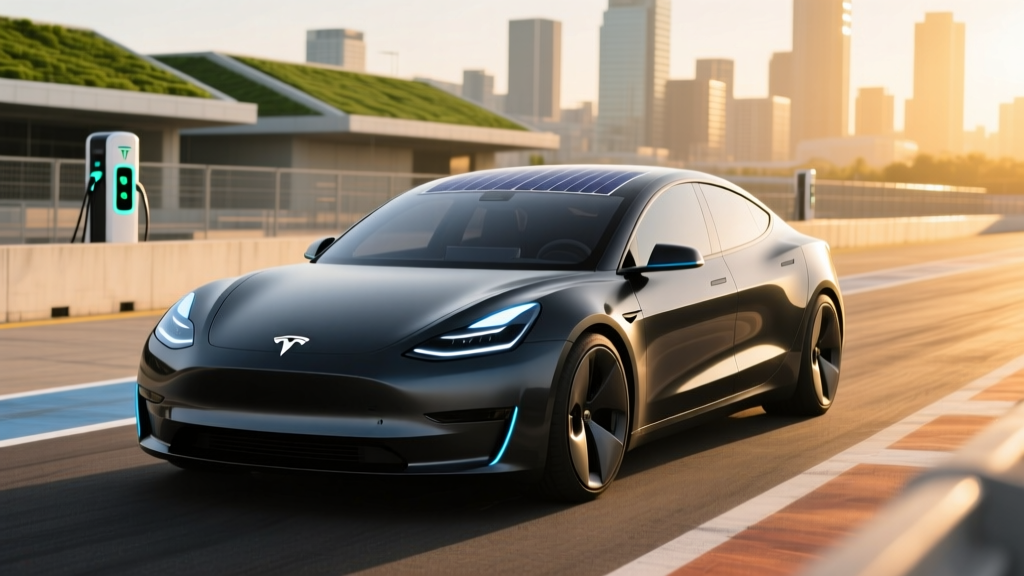
If and when the next-generation compact platform reaches production, here are the estimated specifications based on Tesla's stated engineering targets, supply-chain reporting, and platform scaling logic. These are not confirmed:
- Target MSRP: $25,000 (base, before incentives)
- Battery: ~50–55 kWh, likely LFP with structural pack integration
- EPA Range (est.): 250–280 miles
- Platform: Compact crossover/hatchback, shorter wheelbase than Model 3
- Manufacturing: "Unboxed" process—Tesla claims 50% reduction in factory floor space and significant cost savings per unit
- Autonomy hardware: HW5/AI5 suite standard (Tesla's strategy is to embed FSD hardware in all vehicles)
At $25,000 before incentives, the full $7,500 §30D credit would bring this vehicle to roughly $17,500 effective—a price point that would reshape the entire entry-level EV market. However, the battery-sourcing rules remain the wildcard. A compact Tesla using CATL LFP cells may struggle to clear the FEOC requirements for the full credit. Tesla would need to secure compliant LFP supply from a non-FEOC source (potentially a new gigafactory partner or a North American LFP supplier) to deliver the headline price.
Tech, Driver Assistance, and Interior
The current Model 3 Highland sets the technology baseline that the $25,000 compact would inherit (in simplified form):
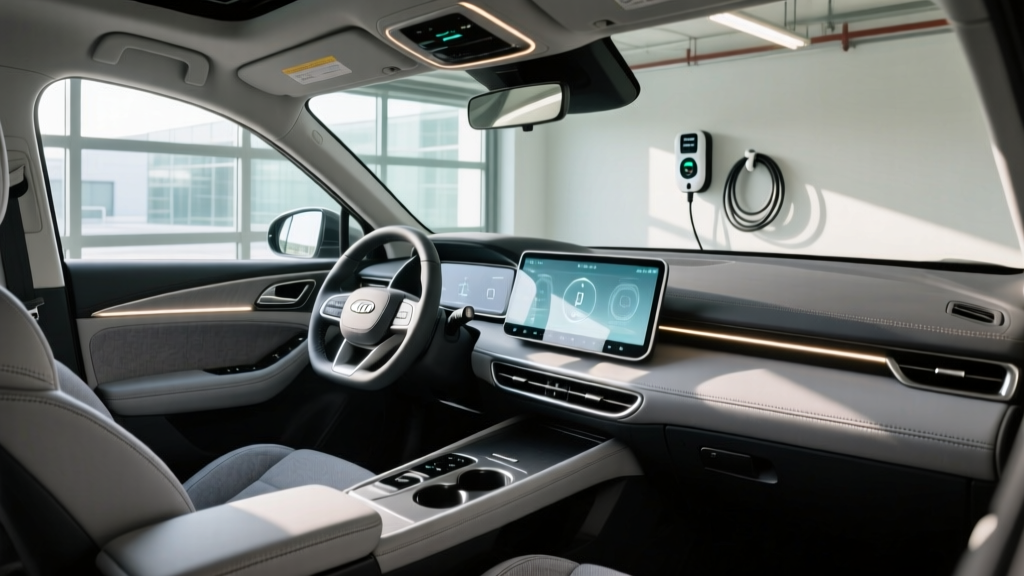
- Infotainment: 15.4-inch center touchscreen, no instrument cluster. All vehicle info, navigation, and media run through the central display.
- Autopilot (standard): SAE Level 2 driver assistance—adaptive cruise, lane-keeping, autosteer. Requires continuous driver supervision. This is not self-driving.
- FSD Supervised (optional, ~$8,000 or $99/mo): Adds automatic lane changes, navigation-on-autopilot, traffic-light recognition, and parking assist. Still Level 2—driver must remain engaged.
- Ventilated front seats, ambient lighting, rear 8-inch touchscreen (Highland additions)
- Over-the-air updates: Continuous feature additions and performance refinements
Notable drawbacks: The Model 3's minimalist interior remains polarizing—no physical stalks (turn signals are steering-wheel buttons on Highland), no traditional instrument cluster, and rear-seat space is tighter than in the Model Y or Hyundai Ioniq 5. The single-motor RWD is quick but not thrilling; if performance matters, the Long Range AWD ($44,990) is a meaningful step up.
Who Should Buy This EV — and Who Should Wait?
✅ Best For
- Commuters with home charging: 341 EPA miles means charging once or twice a week on Level 2
- Supercharger-reliant road trippers: NACS access to the most reliable DC network
- Tech-forward buyers: OTA updates, app integration, and software ecosystem are best-in-class
- Cost-conscious EV adopters: Lowest effective price in Tesla's lineup after incentives
❌ Consider Alternatives If
- You need family cargo space: 23 cu ft trails the Model Y (76 cu ft) and Ioniq 5 significantly
- You live in extreme cold: LFP range loss in sub-freezing temps is real—consider NMC (Long Range) or a heat-pump-equipped competitor
- You want physical controls: The button-turn-signal and all-touchscreen interface frustrates some drivers
- You're waiting for $25K: If budget is strictly $25,000 out-the-door, the next-gen compact or a used Model 3 may be the play
Competitor Comparison at the ~$33K Effective Price Point
| Spec | Tesla Model 3 RWD | Chevrolet Equinox EV 2LT | Hyundai Ioniq 5 SE Std Range |
|---|---|---|---|
| Base MSRP | $38,990 | ~$33,000 | ~$39,000 |
| EPA Range | 341 mi | 319 mi | 220 mi |
| Max DC Charge | 170 kW | 150 kW | 175 kW |
| 10–80% Time | ~25 min | ~30 min | ~18 min |
| Connector | NACS | CCS (NACS adapter avail.) | CCS (NACS by 2025+) |
| Cargo | 23 cu ft | 26.4 cu ft | 27.2 cu ft |
| 0–60 mph | 5.8 sec | ~7.5 sec | ~7.4 sec |
The Model 3 RWD wins on range and performance per dollar. The Equinox EV wins on cargo and starting price. The Ioniq 5 wins on DC charging speed and interior versatility. None of them are the $25,000 Tesla—but they define the bracket that Tesla's next-gen compact will need to beat.
Frequently Asked Questions
Is there a $25,000 Tesla available to buy right now?
No. As of early 2026, Tesla does not sell a $25,000 vehicle. The most affordable current model is the Model 3 RWD at $38,990 MSRP (~$32,880 after the maximum federal tax credit, if eligible). A next-generation compact platform targeting ~$25,000 MSRP is in development but has not entered volume production.
What is the real-world range of the Tesla Model 3 RWD?
The EPA rates it at 341 miles. In real-world highway driving at 70–80 mph in moderate temperatures, expect 270–295 miles. In freezing weather on the highway, range can drop to 220–260 miles due to LFP chemistry sensitivity to cold.
Does the Tesla Model 3 qualify for the $7,500 federal EV tax credit?
It may qualify for the full $7,500, a partial $3,750, or zero depending on current battery-sourcing determinations under IRS §30D rules. The MSRP ($38,990) clears the $55,000 sedan cap, and most buyers clear the income cap. However, the LFP battery's critical-mineral and component sourcing must meet FEOC requirements that tighten annually. Verify eligibility on the IRS clean vehicle credit page before purchasing.
How fast does the Model 3 RWD charge at home and on the road?
On a 48-amp Level 2 home charger (240V), it charges at 11.5 kW, adding roughly 44 miles of range per hour—a full charge in about 6.5 hours. On a Tesla V3 Supercharger, it peaks at 170 kW and charges from 10% to 80% in approximately 25 minutes.
Should I wait for the $25,000 Tesla compact or buy a Model 3 now?
If you need a vehicle in 2026 and can work with the ~$33K effective price (after incentives), the Model 3 RWD is a proven, well-reviewed EV with excellent range and Supercharger access. If your budget is strictly $25,000 or below, waiting for the next-gen compact—or exploring used Model 3 inventory and the $4,000 used EV credit—are your best paths. The next-gen compact's production timeline and tax-credit eligibility remain uncertain.
Is Tesla's Autopilot self-driving?
No. Tesla Autopilot and FSD (Supervised) are SAE Level 2 driver-assistance systems. They require continuous driver attention and hands-on or eyes-on engagement at all times. You are legally and operationally responsible for the vehicle. These systems assist with steering, acceleration, and braking but do not replace the driver.