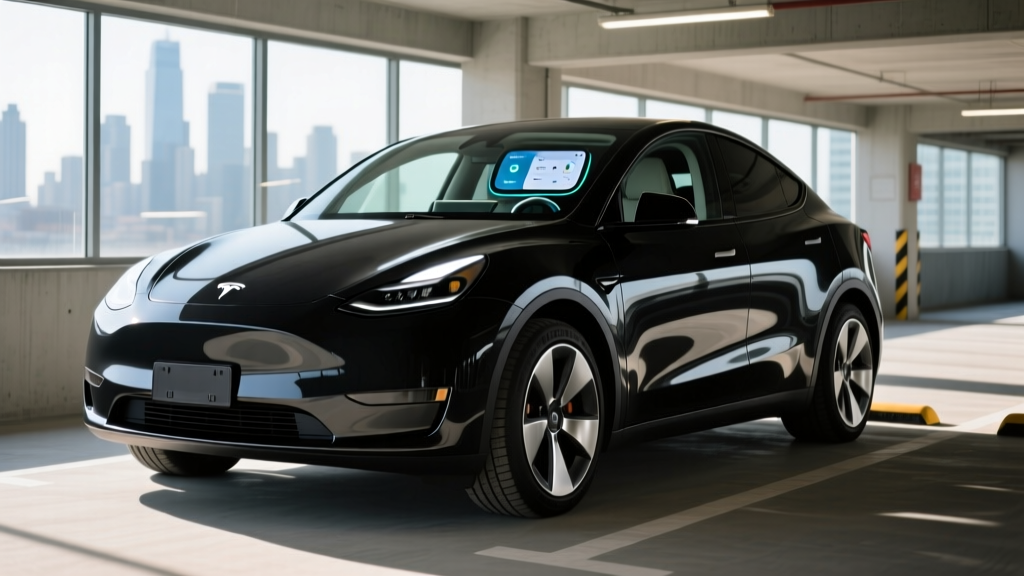
When Tesla has started rolling out a new software update, it rarely means just a few bug fixes. The latest over-the-air (OTA) deployment touching 2026 Model Y vehicles layers new driver-assist behavior, revised thermal-management logic, and updated infotainment features on top of an already capable electric crossover. But software only matters if the hardware underneath delivers. This review examines the 2026 Tesla Model Y end-to-end—range, charging speed, battery chemistry, pricing, federal tax credit eligibility, and whether this OTA-enhanced package still beats its key rivals.
2026 Model Y Trim Lineup and Core Specs
The 2026 Model Y continues in three primary trims: Long Range AWD, Performance AWD, and a base Rear-Wheel Drive (RWD) variant that Tesla reintroduced at a lower entry price. All trims share the same Juniper-generation platform introduced for the 2025 refresh, with improved aerodynamics, a revised interior, and ambient lighting.
| Spec | Long Range AWD | Performance AWD | RWD (Base) |
|---|---|---|---|
| EPA Range | 320 mi | 295 mi | 275 mi |
| Battery (usable) | ~75 kWh (NMC) | ~75 kWh (NMC) | ~60 kWh (LFP) |
| Drivetrain | Dual-Motor AWD | Dual-Motor AWD | Single-Motor RWD |
| Horsepower | 384 hp | 456 hp | 295 hp |
| 0–60 mph | 4.8 sec | 3.5 sec | 6.6 sec |
| Max DC Fast Charge | 250 kW | 250 kW | 170 kW |
| 10–80% DC Time | ~25 min | ~25 min | ~30 min |
| Level 2 Home Rate | 11.5 kW (~44 mi/hr) | 11.5 kW (~44 mi/hr) | 11.5 kW (~44 mi/hr) |
| MPGe (combined) | 111 MPGe | 103 MPGe | 118 MPGe |
| Base MSRP | $46,630 | $51,630 | $39,990 |
Source: EPA / fueleconomy.gov and Tesla's official specifications page. Figures reflect 2026 model-year data.
Real-World Range: What the EPA Sticker Doesn't Tell You
EPA sticker: 320 miles. Expect ~270–290 miles in mixed highway driving at 70–75 mph. In cold weather (below 32°F), plan for 230–260 miles of usable range before needing to charge. The RWD LFP trim will see proportionally larger cold-weather losses due to its smaller battery buffer.
The 2026 Model Y Long Range's 320-mile EPA rating places it near the top of the compact electric SUV segment. However, EPA testing uses a city-heavy cycle with moderate speeds that flatters efficiency. On a 300-mile highway road trip at sustained 75 mph, the Long Range AWD typically delivers between 270 and 290 miles before the battery buffer warning engages. This is consistent with independent testing by EV analysts and aligns with the physics of aerodynamic drag, which increases with the square of speed.
Cold weather compounds the loss. LFP chemistry (used in the RWD trim) is more susceptible to low-temperature range reduction than the NMC packs in the Long Range and Performance models. If you commute in Minnesota winters, budget for a 20–25% range reduction on the LFP variant. The latest software update adds improved battery preconditioning logic that warms the pack more aggressively when a Supercharger is set as the navigation destination—this helps recover some of that cold-weather charging speed, though it doesn't fully eliminate range loss.
Charging Speed and Network Access
Charging speed remains a decisive factor for road-trip viability. The Long Range and Performance trims peak at 250 kW on a V3 or V4 Tesla Supercharger, while the RWD trim is capped at 170 kW due to its smaller LFP battery's charge-rate limitations.
| Charging Level | Power / Connector | Speed (Miles per Hour) | Notes |
|---|---|---|---|
| Level 1 (120V) | ~1.4 kW / NACS | ~4–5 mi/hr | Emergency/trickle only |
| Level 2 (240V home) | 11.5 kW / NACS or J1772 w/ adapter | ~44 mi/hr | Full overnight charge in ~7 hrs (LR) |
| DC Fast (Supercharger) | 250 kW peak (LR/Perf) / 170 kW (RWD) | ~1,000 mi/hr at peak | 10–80% in ~25 min (LR); tapers above 80% |
The 10–80% charge time of roughly 25 minutes for the Long Range is competitive, though not class-leading. Hyundai's Ioniq 5, with its 800-volt architecture, achieves 10–80% in about 18 minutes at a 350 kW charger. Tesla's advantage is network density: the Supercharger network now exceeds 6,000 U.S. stations, and with the NACS connector standard on the 2026 Model Y, adapters are no longer needed at Tesla stalls. Non-Tesla chargers using CCS1 require a NACS-to-CCS adapter (included with the vehicle).
A critical nuance: the 250 kW figure is a peak, not a sustained rate. In real-world charging, the Model Y Long Range holds roughly 220–250 kW between 10% and 40% state of charge, then tapers to ~150 kW by 60% SoC, and drops below 50 kW past 85%. This charge-curve taper is why the 10–80% metric matters more than peak kW alone.
What's New in the Latest Tesla Software Update
Tesla has started rolling out a new software update (version 2026.8.x) that brings several owner-visible changes:
- Adaptive cruise tuning: Smoother acceleration and braking profiles in Traffic-Aware Cruise Control, reducing the "lurching" behavior some owners reported in stop-and-go traffic.
- Enhanced preconditioning: The battery thermal-management system now preheats more aggressively when navigating to a Supercharger in cold conditions, reducing the time to reach peak charge rate by an estimated 3–5 minutes at temperatures below freezing.
- FSD (Supervised) v13 improvements: Improved lane-change decision-making and better handling of unprotected left turns. Note that FSD remains an SAE Level 2 system—driver supervision is mandatory at all times.
- Cabin overheat protection refinement: Lower energy consumption while parked in hot climates, addressing a common complaint about phantom drain.
- UI refresh: Updated map rendering and a new "trip planner" overlay that shows real-time Supercharger stall availability.
Autopilot and FSD (Supervised) are SAE Level 2 driver-assistance systems. The driver must keep hands on the wheel (or demonstrate attentiveness via the cabin camera) and remain fully responsible for vehicle control. These are not self-driving systems. Only Level 4 robotaxi services like Waymo operate without a human driver.
Interior, Cargo, and Daily Practicality
The Juniper-refreshed interior is noticeably quieter than the pre-2025 Model Y, thanks to acoustic glass and additional sound deadening. The 15.4-inch center touchscreen remains the primary interface for nearly all vehicle controls—a design choice that continues to polarize buyers who prefer physical buttons for climate and volume.
Cargo volume stands at 30.2 cubic feet behind the second row and 72.1 cubic feet with the rear seats folded, competitive with the Ford Mustang Mach-E (29.7 / 59.7 cu ft) and slightly behind the Hyundai Ioniq 5 (27.2 / 59.3 cu ft). The front trunk (frunk) adds 4.1 cubic feet—useful for charging cables and small bags.
Rear legroom measures 40.5 inches, adequate for adults on longer trips. The panoramic glass roof creates an airy feel but contributes to cabin heat soak in summer; the new software update's cabin overheat refinement helps mitigate this.
Pricing, Tax Credits, and Ownership Cost
| Trim | Base MSRP | As-Tested (w/ FSD) | §30D Credit Eligible? | Effective Price After Credit |
|---|---|---|---|---|
| RWD (Base) | $39,990 | $47,490 | Yes (if sourcing rules met) | ~$32,490 |
| Long Range AWD | $46,630 | $54,130 | Yes (if sourcing rules met) | ~$39,130 |
| Performance AWD | $51,630 | $59,130 | Yes (if sourcing rules met) | ~$44,130 |
Critical tax credit caveats: The IRS §30D federal EV tax credit provides up to $7,500, but eligibility depends on three factors that change frequently: (1) buyer income caps ($150K single / $300K joint modified AGI), (2) vehicle MSRP caps ($80K for SUVs—Model Y qualifies), and (3) battery critical-mineral and component sourcing requirements that the IRS updates annually. Tesla has historically met sourcing thresholds, but buyers should verify current-year eligibility at IRS.gov before purchasing. The credit can now be transferred to the dealer at point of sale, reducing your out-of-pocket cost immediately rather than waiting for a tax refund.
FSD (Supervised) adds $8,000 to the purchase price or $99/month as a subscription. Given that FSD remains Level 2 and does not eliminate driver responsibility, many buyers are better off using the included Basic Autopilot and subscribing to FSD only for road trips where its highway lane-change features add value.
Pros, Cons, and Who Should Buy
- Supercharger network access—most reliable DC fast-charging ecosystem in the U.S.
- Strong real-world efficiency (111 MPGe combined, ~28 kWh/100mi)
- Continuous OTA improvements that add features post-purchase
- Competitive cargo space and practical crossover form factor
- Available point-of-sale tax credit transfer reduces upfront cost
- No physical buttons—screen-only controls frustrate some drivers
- DC fast-charge speed (250 kW peak) trails 800V competitors like Ioniq 5
- FSD costs $8,000 extra and remains Level 2 (not autonomous)
- Ride quality on 20-inch Performance wheels can be firm over rough pavement
- LFP battery in RWD trim has less cold-weather range resilience
Best for: Daily commuters who can charge at home, tech-forward buyers who value OTA updates, and road-trippers who prioritize Supercharger network reliability. The Long Range AWD at ~$39,130 after the federal credit is the value sweet spot for most buyers.
Consider instead if: You need the fastest possible DC charging (look at the Hyundai Ioniq 5 or Kia EV6 with 800V architecture), you prefer physical controls (Volkswagen ID.4), or you need three-row seating (Kia EV9).
Battery Warranty and Long-Term Ownership
Tesla covers the Model Y battery and drive unit with an 8-year / 120,000-mile warranty (Long Range and Performance) or 8-year / 100,000-mile warranty (RWD), whichever comes first. The warranty guarantees a minimum of 70% battery capacity retention over the coverage period. Based on fleet data from Tesla's impact reports and third-party analyses, Model Y NMC packs typically degrade 8–12% over the first 100,000 miles, with the steepest drop occurring in the first 20,000 miles before leveling off.
LFP packs in the RWD trim have a longer cycle-life chemistry and can tolerate regular 100% charging without accelerated degradation—a practical advantage for daily commuters who want maximum available range every morning. Tesla's in-app battery health display now shows estimated State of Health (SoH), a feature added in recent software updates.
Frequently Asked Questions
What is the real-world range of the 2026 Tesla Model Y?
The Long Range AWD delivers an EPA-estimated 320 miles, but expect roughly 270–290 miles in real-world highway driving at 70–75 mph, and 230–260 miles in freezing temperatures. The RWD LFP trim rates at 275 miles EPA but will see larger cold-weather losses.
How fast does the Model Y charge at home and on the road?
At home on a 240V Level 2 charger, the Model Y adds about 44 miles of range per hour (11.5 kW), fully charging overnight in roughly 7 hours for the Long Range. On a Tesla Supercharger, the Long Range peaks at 250 kW and charges 10–80% in about 25 minutes. The RWD trim peaks at 170 kW with a 10–80% time of approximately 30 minutes.
How much does the 2026 Model Y cost after the federal tax credit?
The Long Range AWD starts at $46,630 MSRP and drops to approximately $39,130 after the maximum $7,500 §30D credit, assuming you meet income caps and the vehicle meets current-year battery-sourcing requirements. Verify eligibility at IRS.gov before purchasing.
Does the 2026 Model Y qualify for the federal EV tax credit?
As of early 2026, the Model Y qualifies for up to $7,500 under IRS §30D, provided the buyer's modified AGI is within limits ($150K single / $300K joint) and the vehicle's battery meets critical-mineral and component-sourcing thresholds. The MSRP cap for SUVs is $80,000, which all Model Y trims fall under. Rules can change—always check the IRS clean vehicle credits page.
Is the Model Y worth buying versus the Ford Mustang Mach-E or Hyundai Ioniq 5?
The Model Y wins on Supercharger network access, OTA software improvements, and overall efficiency. The Ioniq 5 charges faster (800V, ~18 min 10–80%) and has a more conventional interior. The Mach-E offers a sportier driving feel but trails on range and charging infrastructure. If Supercharger reliability is your priority, the Model Y remains the default choice.
What's the biggest change in Tesla's latest software update?
The 2026.8.x update refines FSD (Supervised) v13 with improved lane-change logic, adds more aggressive battery preconditioning for cold-weather Supercharging, and smooths out adaptive cruise control behavior in stop-and-go traffic. It's an incremental but meaningful improvement for daily driving comfort.