The 2026 Tesla Lineup at a Glance
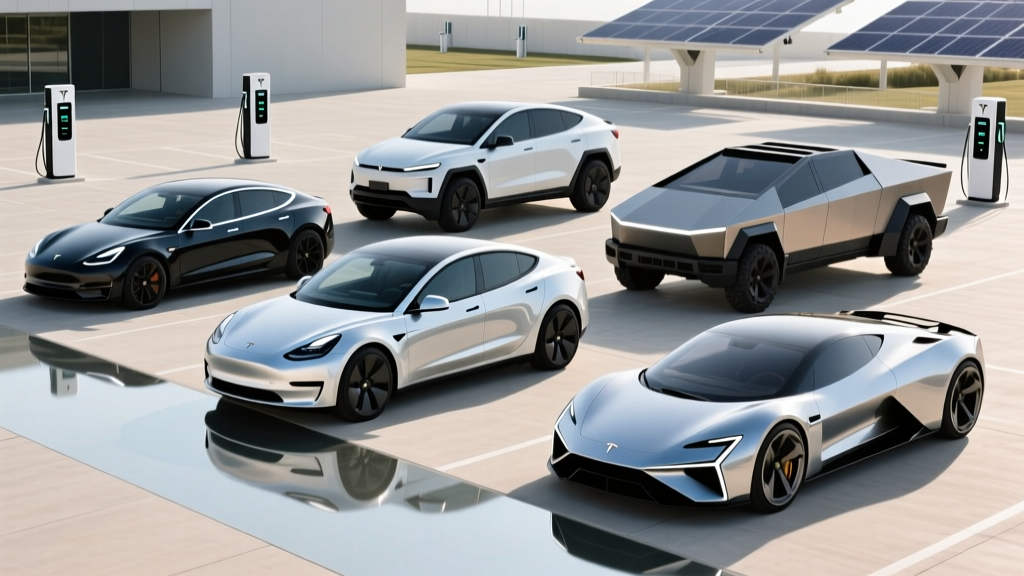
If you're shopping for an electric vehicle and wondering how many models of Tesla are there currently available for purchase in the U.S., the answer is five: the Model 3, Model Y, Model S, Model X, and the Cybertruck. Each targets a distinct buyer profile — from the budget-conscious commuter to the three-row family hauler to the off-road-capable truck buyer. Tesla also has the next-generation Roadster and a promised more affordable compact in the pipeline, but neither is available for delivery as of early 2026.
Below, we profile every current-production Tesla with the exact numbers that matter: EPA range, battery chemistry, peak and sustained DC fast-charge rates, real-world highway and cold-weather expectations, 0-60 times, cargo dimensions, MSRP by trim, and federal §30D tax credit eligibility. This is the buyer's cheat sheet — no marketing fluff, just data.
| Model | EPA Range | Battery (kWh / Chemistry) | Peak DC kW | 10–80% Time | 0–60 mph | Base MSRP |
|---|---|---|---|---|---|---|
| Model 3 RWD | 363 mi | ~60 / LFP | 170 kW | ~25 min | 5.8 s | $38,990 |
| Model 3 Long Range AWD | 363 mi | ~79 / NMC | 250 kW | ~22 min | 4.2 s | $45,240 |
| Model Y Long Range AWD | 320 mi | ~79 / NMC | 250 kW | ~22 min | 4.8 s | $44,990 |
| Model S Long Range | 402 mi | ~100 / NMC | 250 kW | ~27 min | 3.1 s | $79,990 |
| Model X Long Range | 335 mi | ~100 / NMC | 250 kW | ~28 min | 3.8 s | $84,990 |
| Cybertruck AWD | 340 mi | ~123 / NMC | 250 kW | ~30 min | 4.1 s | $79,990 |
Sources: fueleconomy.gov, Tesla.com order pages (2026 model year). Specs reflect base trims; Performance/Plaid variants differ.
Tesla Model 3: The Entry Point
The refreshed Model 3 (internally called "Highland" and its 2025-2026 updates) remains Tesla's volume sedan and the most affordable way into the Supercharger network. The RWD base model uses a lithium iron phosphate (LFP) battery — roughly 60 kWh usable — which trades some energy density for exceptional cycle life and the ability to charge routinely to 100% without long-term degradation concerns. Tesla recommends 100% daily charges for LFP packs, a meaningful convenience advantage over NMC chemistry.
Real-World Range Reality — Model 3 RWD: The EPA rates the RWD at 363 miles, but expect ~290–310 miles at sustained 75 mph highway speeds in mild weather, and ~230–260 miles in freezing temperatures due to cabin heating and increased battery resistance. The Long Range AWD (NMC, ~79 kWh) holds up better on road trips with its heat pump and larger buffer, delivering roughly 310–330 real highway miles.
Charging the Model 3 RWD peaks at roughly 170 kW on V3 Superchargers — adequate but not class-leading. The Long Range variant peaks at 250 kW and sustains strong charge rates through 50% SoC before tapering, making it the better road-trip choice. Level 2 home charging at 11.5 kW (48A) adds approximately 44 miles per hour of charging on either variant, meaning a full overnight replenishment is trivial for most commutes.
Efficiency is a Tesla hallmark: the Model 3 Long Range achieves an EPA-rated 132 MPGe combined, translating to roughly 25 kWh per 100 miles — among the most efficient vehicles in its class. Inside, cargo space measures 23 cu ft (trunk + frunk combined), and rear legroom is a comfortable 35.3 inches. The minimalist interior consolidates nearly all controls into the 15.4-inch center display — no stalks, no instrument cluster — which some buyers love and others find distracting.
Tesla Model Y: The Best-Seller
The Model Y is not only Tesla's best-selling vehicle — it has been the best-selling vehicle globally, period, in recent years. The 2025 "Juniper" refresh carries into 2026 with a quieter cabin, updated suspension tuning, a ventilated front row, and a rear touchscreen for passengers. It rides on the same platform as the Model 3 but adds crossover ride height, a hatchback cargo area, and an optional (though tight) third row for small children.
With 320 miles EPA for the Long Range AWD and a ~79 kWh NMC pack, the Model Y hits a sweet spot for families. Real-world highway range settles around 265–285 miles at 75 mph, and cold weather (below 30°F) can drop that to 220–240 miles. The Model Y Long Range peaks at 250 kW DC fast charging, reaching 10–80% in approximately 22 minutes at a V3 or V4 Supercharger — though expect 25–28 minutes in real-world conditions when the battery isn't perfectly preconditioned.
Cargo volume is the Model Y's ace: 76 cu ft behind the front seats with the second row folded, and 30 cu ft behind the second row — genuinely competitive with midsize gas SUVs. The optional third row is best reserved for children under 5'4" and short trips. Efficiency sits at 122 MPGe combined (~28 kWh/100 mi), slightly behind the Model 3 due to the taller, heavier body.
Tesla Model S and Model X: The Flagships
The Model S sedan and Model X SUV continue as Tesla's premium offerings, though both ride on an older platform architecture that has received fewer structural updates than the 3 and Y. The Model S Long Range still posts an impressive 402 miles EPA — the highest of any current Tesla — thanks to its ~100 kWh NMC battery and aerodynamic sedan profile. The Plaid variant (1,020 hp, 1.99s 0–60) trades roughly 50 miles of range for supercar acceleration.
The Model X offers falcon-wing rear doors, standard AWD, and genuine three-row seating for up to seven adults. Its 335-mile EPA rating translates to roughly 275–290 real highway miles in fair weather. Both flagships peak at 250 kW on DC fast chargers, though the larger battery means 10–80% takes closer to 27–28 minutes. Home Level 2 charging at 11.5 kW adds ~35 miles per hour — adequate for overnight but slower than a depleted day requires if you lack home charging.
Neither the Model S nor Model X qualifies for the federal §30D new-vehicle tax credit due to their MSRPs exceeding the statutory caps ($55,000 for sedans, $80,000 for SUVs/vans/trucks). The Model X at $84,990 squeaks above the SUV cap, eliminating the credit for most buyers.
Tesla Cybertruck: The Polarizing Pickup
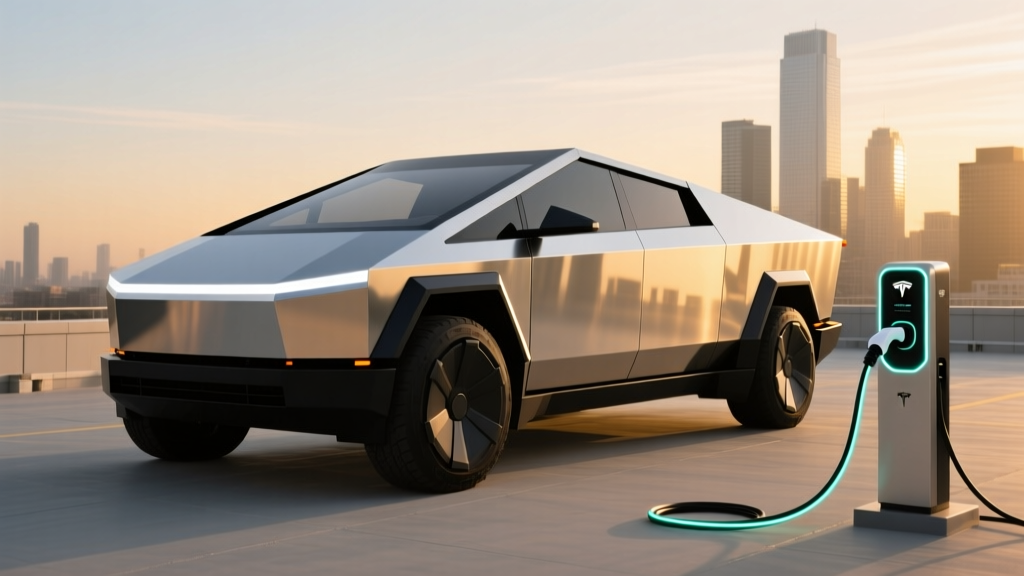
The stainless-steel Cybertruck entered production in late 2023 and remains Tesla's most debated vehicle. The dual-motor AWD variant delivers 340 miles EPA from a massive ~123 kWh NMC pack — one of the largest batteries in any consumer EV. Real-world range is highly dependent on driving style and speed: at 75 mph, expect 270–290 miles; towing a 5,000-lb trailer can halve that figure to 150–180 miles.
Peak DC charging reaches 250 kW, but the enormous battery means 10–80% takes approximately 30 minutes under ideal conditions. The 800V-class architecture helps sustain charge rates deeper into the curve than older Teslas. The Cybertruck's 48-volt electrical architecture and steer-by-wire system represent genuine engineering departures, though long-term reliability data remains limited given the short production history.
Cargo capacity includes a 6-foot bed with a motorized tonneau cover and a front trunk (frunk) large enough for a carry-on. The Cybertruck's base MSRP of $79,990 places it at the §30D truck MSRP cap of $80,000 — meaning it technically qualifies if all other criteria (income limits, battery sourcing, final assembly) are met, though buyers should verify with a tax professional before counting on the credit.
Charging, Tax Credits, and Ownership Costs
Every current Tesla uses the NACS (North American Charging Standard) connector natively — the same plug now adopted by Ford, GM, Rivian, Hyundai, and most major automakers. This gives Tesla owners seamless access to the Supercharger network (over 20,000 stalls in North America) without adapters, a significant reliability advantage over CCS-based competitors still dealing with third-party network uptime issues.
| Level | Power | Typical Miles Added per Hour | Use Case |
|---|---|---|---|
| Level 1 (120V) | ~1.4 kW | 3–5 mi/hr | Emergency/trickle |
| Level 2 (240V, 48A) | 11.5 kW | 35–44 mi/hr | Home daily charging |
| DC Fast (V3 Supercharger) | Up to 250 kW | ~180 mi in 15 min (peak) | Road trips |
| Model | Base MSRP | §30D Credit Eligible? | Effective Price (est.) |
|---|---|---|---|
| Model 3 RWD | $38,990 | Yes (if income/sourcing met) | ~$31,490 |
| Model 3 Long Range | $45,240 | Yes (if income/sourcing met) | ~$37,740 |
| Model Y Long Range | $44,990 | Yes (if income/sourcing met) | ~$37,490 |
| Model S Long Range | $79,990 | No (over $55K sedan cap) | $79,990 |
| Model X Long Range | $84,990 | No (over $80K SUV cap) | $84,990 |
| Cybertruck AWD | $79,990 | Borderline (at $80K truck cap) | Verify with tax pro |
Eligibility for the up-to-$7,500 §30D credit requires: buyer AGI below $150K single / $300K joint; vehicle MSRP within category caps; battery critical-mineral and component sourcing thresholds met; final assembly in North America. Rules evolve — confirm at IRS.gov and consult a tax professional. Point-of-sale transfer is available at participating dealers.
All Teslas carry an 8-year/100,000-mile battery and drive unit warranty (120,000 miles for Model S/X), with a guaranteed minimum 70% capacity retention over the warranty period. Tesla's over-the-air update cadence remains industry-leading, adding features post-purchase — though some previously free features (like basic turn-signal stalk functionality in refreshed models) have drawn owner criticism.
Driver Assistance: Autopilot and FSD Supervised
SAE Level 2 — Not Self-Driving: Tesla's Autopilot (standard) and Full Self-Driving Supervised ($8,000 option or $99/month subscription) are SAE Level 2 driver-assistance systems. The driver must remain attentive, keep hands on the wheel (or demonstrate engagement via cabin monitoring), and be prepared to take over instantly. These are not autonomous systems. Tesla's branding ("Full Self-Driving") has drawn regulatory scrutiny from NHTSA and consumer-protection advocates. Do not sleep, read, or disengage mentally while using FSD.
In practice, Autopilot handles highway lane-centering and adaptive cruise competently. FSD Supervised adds city-street navigation, stop-sign/light recognition, and turn execution — impressive in well-marked suburban areas but occasionally hesitant in construction zones or unmapped intersections. Compared to GM's Super Cruise (which restricts operation to pre-mapped divided highways for added predictability) or Ford's BlueCruise, Tesla's approach is more permissive geographically but demands more vigilance from the driver.
Who Should Buy Which Tesla?
Choose the Model 3 RWD if: You commute under 60 miles daily, have home Level 2 charging, want the lowest entry price with tax-credit potential, and don't need cargo space.
Choose the Model 3 Long Range if: You take regular road trips of 200+ miles and want faster DC charging and AWD traction.
Choose the Model Y Long Range if: You need a family vehicle with genuine cargo versatility, optional (child-sized) third-row seating, and hatchback practicality.
Choose the Model S if: You want maximum range (402 mi EPA), a premium sedan experience, and don't need the tax credit.
Choose the Model X if: You need three-row adult-capable seating and value the falcon-wing doors for tight parking-space access.
Choose the Cybertruck if: You need a pickup bed, want standout design, and accept that real-world towing range is limited.
Tesla Lineup — Pros
- Supercharger network reliability (best-in-class uptime)
- Industry-leading efficiency (kWh/100mi)
- Over-the-air updates add features post-purchase
- LFP option on Model 3 RWD allows routine 100% charging
- Strong resale value relative to most EV competitors
Tesla Lineup — Cons
- No physical controls for wipers, turn signals (refreshed 3/Y)
- Model S/X on aging platform; refresh overdue
- FSD Supervised remains Level 2 despite the name
- Cybertruck real-world towing range is severely limited
- Service center wait times can stretch weeks in some markets
Frequently Asked Questions
How many models of Tesla are there currently on sale?
Five: Model 3, Model Y, Model S, Model X, and Cybertruck. The next-generation Roadster and a rumored compact model are announced but not available for delivery as of 2026.
Which Tesla has the longest real-world range?
The Model S Long Range posts the highest EPA rating at 402 miles. In real-world highway driving at 75 mph, expect roughly 330–350 miles in mild weather. The Model 3 Long Range is a close second in efficiency if not absolute miles.
Does Tesla qualify for the $7,500 federal tax credit?
The Model 3 and Model Y generally qualify if buyer income and battery-sourcing requirements are met. The Model S and Model X exceed MSRP caps and do not qualify. The Cybertruck sits at the $80,000 truck cap and requires careful verification. Always confirm current rules at IRS.gov.
How fast does a Tesla charge at home?
On a 240V/48A Level 2 home charger (11.5 kW), Teslas add roughly 35–44 miles of range per hour. A full overnight charge (8 hours) replenishes 280–350 miles — more than enough for virtually any daily commute.
Is Tesla's FSD actually self-driving?
No. FSD (Supervised) is an SAE Level 2 driver-assist system. The driver must remain fully attentive and prepared to intervene at any moment. Only Level 4 services like Waymo operate without a human driver, and those are limited to specific geofenced areas.
Is a Tesla worth it vs. Hyundai, Ford, or Rivian?
Tesla still leads in charging-network reliability and energy efficiency. Competitors like the Hyundai Ioniq 5 (faster 800V charging on CCS networks), Ford Mustang Mach-E (more conventional interior controls), and Rivian R1S/R1T (superior off-road and three-row capability) each have distinct advantages. The right choice depends on your priorities — test-drive at least two before committing.