What the Tesla 2025 Holiday Update Actually Delivers
Tesla's annual holiday software update has historically been one of the most anticipated OTA drops in the EV world — and the Tesla 2025 holiday update continues that tradition. Rolled out to Model 3 and Model Y vehicles in late 2025, this over-the-air release bundles interface refinements, driver-assistance tweaks, and quality-of-life features that affect how the current fleet drives, charges, and interacts with its owner. Unlike a traditional model-year refresh, the 2025 holiday update is a software layer applied to existing hardware — meaning the battery chemistry, motor configuration, and peak charge rates remain unchanged from the 2025 model year.
This review evaluates the 2025 Tesla Model 3 Long Range AWD and Model Y Long Range AWD as they stand post-update: EPA range, real-world efficiency, DC fast-charging behavior, interior utility, pricing after federal incentives, and whether these vehicles remain the default EV recommendation heading into 2026.
Model 3 Long Range AWD: EPA 341 miles (60 kWh usable, NMC). Expect ~280–305 miles in mixed highway driving at 70–75 mph; ~230–260 miles in sub-freezing winter conditions with cabin heat active.
Model Y Long Range AWD: EPA 320 miles (~75 kWh usable, NMC). Expect ~260–285 miles highway; ~215–245 miles in cold weather. The taller SUV profile and greater mass cost it roughly 20 miles vs. the sedan on the highway.
Spec Table: 2025 Model 3 vs. Model Y Long Range AWD (Post-Update)
| Spec | Model 3 LR AWD | Model Y LR AWD |
|---|---|---|
| EPA Range | 341 mi | 320 mi |
| Battery (usable) | ~60 kWh (NMC) | ~75 kWh (NMC) |
| Drivetrain | Dual-motor AWD | Dual-motor AWD |
| Horsepower | 346 hp (combined) | 384 hp (combined) |
| 0–60 mph | 4.2 sec | 4.8 sec |
| Peak DC Charge Rate | 170 kW | 250 kW |
| 10–80% DCFC Time | ~25 min | ~27 min |
| Level 2 Home Charge | 11.5 kW (~44 mi/hr) | 11.5 kW (~37 mi/hr) |
| MPGe (combined) | 134 MPGe | 122 MPGe |
| Efficiency | 25 kWh/100 mi | 28 kWh/100 mi |
| Cargo Volume | 23 cu ft (rear) / 65 cu ft (folded) | 30 cu ft (rear) / 72 cu ft (folded) |
| Rear Legroom | 35.2 in | 41.6 in |
| Battery Warranty | 8 yr / 120,000 mi | 8 yr / 120,000 mi |
| Base MSRP | $47,740 | $48,240 |
Sources: fueleconomy.gov (EPA data), Tesla official specs.
Charging Speed: DC Fast Charge, Level 2, and the Curve Reality
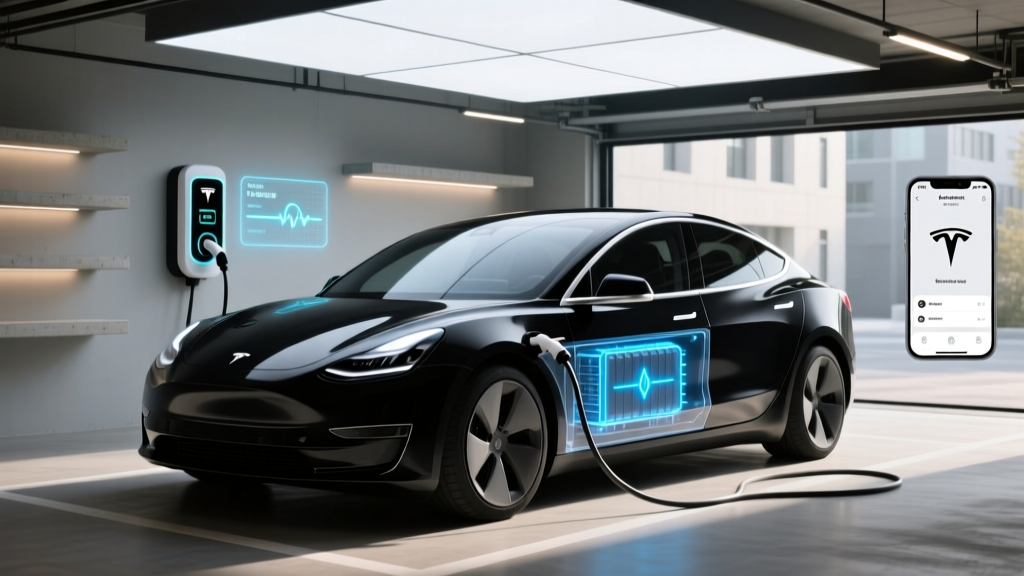
One of the most owner-critical metrics in 2026 isn't peak kW — it's sustained charge behavior across the curve. The Model 3 Long Range AWD peaks at 170 kW at a Supercharger V4 stall but tapers noticeably past 55% State of Charge (SoC), averaging roughly 120 kW across the full 10–80% session. That yields a ~25-minute stop under ideal thermal conditions (battery preconditioned via in-car navigation routing to the charger).
The Model Y Long Range AWD peaks at 250 kW on V3 Superchargers and sustains above 200 kW through roughly 40% SoC before tapering. The 10–80% time of ~27 minutes is competitive with Hyundai's E-GMP platform (Ioniq 5/6), though Tesla's proprietary Supercharger network reliability remains a tangible advantage — especially in rural corridors where Electrify America and EVgo uptime can be inconsistent.
| Charge Level | Model 3 LR AWD | Model Y LR AWD |
|---|---|---|
| Level 1 (120V / 12A) | ~1.4 kW (~5 mi/hr) | ~1.4 kW (~4 mi/hr) |
| Level 2 (240V / 48A) | 11.5 kW (~44 mi/hr) | 11.5 kW (~37 mi/hr) |
| DC Fast Charge (peak) | 170 kW | 250 kW |
| DCFC 10–80% | ~25 min | ~27 min |
| Connector (2025+) | NACS (native) | NACS (native) |
Both vehicles now ship with the North American Charging Standard (NACS) port natively — no adapter needed at Tesla Superchargers, and increasingly compatible with third-party networks (EVgo, Electrify America, and ChargePoint have deployed NACS cables at new stations through 2025–2026).
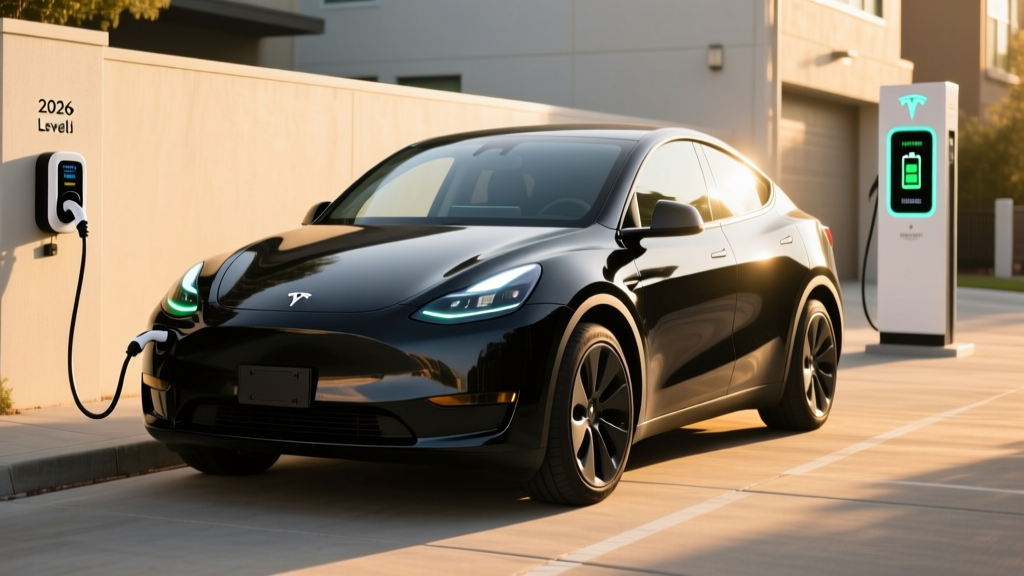
Home Level 2 charging on a 48-amp circuit (60-amp breaker) adds roughly 44 miles per hour of charging to the Model 3 and 37 to the Model Y. A full overnight session from 20% to 80% takes about 5 hours — sufficient for virtually any daily commute pattern. Expect home installation of a Tesla Wall Connector or equivalent 48A unit to run $800–$1,800 depending on panel proximity and whether a 200-amp service upgrade is needed.
What the 2025 Holiday Update Actually Changes
Tesla does not publish granular changelogs, but based on owner reports, release notes, and community analysis, the 2025 holiday update (software version 2025.44.x series) includes the following meaningful additions:
- Enhanced battery preconditioning logic: More aggressive thermal management when navigating to a Supercharger, reducing cold-soak charge penalties by an estimated 10–15% in sub-40°F conditions.
- Adaptive regen tuning: Smoother one-pedal driving transitions at low speeds, reducing the "lurch" effect that earlier software versions exhibited in stop-and-go traffic.
- Updated Autopilot visualization: Improved lane-line rendering and pedestrian/cyclist detection icons on the instrument cluster, consistent with the HW4 sensor suite.
- Cabin overheat protection refinement: More granular temperature thresholds, reducing unnecessary HVAC cycling in moderate climates.
- Trip planner integration: Navigation now factors in real-time Supercharger stall availability (not just stall count) when suggesting charge stops on long routes.
- Sentry Mode power optimization: Reduced phantom drain during extended Sentry Mode activation — approximately 0.8% SoC per hour, down from ~1.2% in prior software.
Notably absent: any change to peak DC charge rates (hardware-limited), battery chemistry, or motor output. The holiday update is a software refinement, not a powertrain revision.
All Tesla driver-assistance features — Basic Autopilot, Enhanced Autopilot, and Full Self-Driving (Supervised) — are SAE Level 2 systems. The driver must remain engaged, hands on or near the wheel, eyes on the road, and ready to intervene instantly. FSD (Supervised) can navigate intersections and change lanes, but it does not constitute autonomous (Level 4) driving. Only Waymo-style robotaxi services currently operate at Level 4 in limited geofenced areas.
Pricing, Trims, and Federal Tax Credit Eligibility
As of early 2026, Tesla's pricing has stabilized after several years of volatility. Here is the current lineup for the most popular configurations:
| Trim | MSRP | Est. After §30D Credit | §30D Eligible? |
|---|---|---|---|
| Model 3 RWD | $38,990 | ~$31,490 | Yes (if sourcing rules met) |
| Model 3 Long Range AWD | $47,740 | ~$40,240 | Yes (if sourcing rules met) |
| Model 3 Performance | $54,990 | ~$47,490 | Yes (if sourcing rules met) |
| Model Y RWD | $44,990 | ~$37,490 | Yes (if sourcing rules met) |
| Model Y Long Range AWD | $48,240 | ~$40,740 | Yes (if sourcing rules met) |
| Model Y Performance | $52,490 | ~$44,990 | Yes (if sourcing rules met) |
Critical §30D caveats (per IRS guidelines):
- Income caps: Modified AGI must not exceed $150,000 (single), $225,000 (head of household), or $300,000 (joint filers).
- MSRP caps: Sedans (Model 3) must be under $55,000; SUVs/trucks/vans (Model Y) under $80,000. All current trims qualify.
- Battery sourcing: A percentage of critical minerals and battery components must be sourced from the U.S. or free-trade-agreement partners. Tesla's Fremont and Austin-built vehicles have generally met these thresholds, but the exact credit amount ($3,750 or $7,500) depends on the specific VIN's supply chain compliance at time of delivery.
- Point-of-sale transfer: Buyers can transfer the credit to the dealer at purchase, reducing the out-of-pocket price immediately — no need to wait for tax filing.
Always verify your specific vehicle's eligibility via the IRS VIN lookup tool at fueleconomy.gov before finalizing a purchase. Credit rules are subject to legislative change.
Interior, Cargo, and Daily Livability
The Model 3 Highland refresh (introduced for 2024) carries forward into 2025 and 2026 with its ventilated front seats, ambient lighting, rear-seat touchscreen, and improved cabin noise insulation. Rear legroom at 35.2 inches remains tight for adults on long trips — this is where the Model Y's 41.6 inches of rear legroom becomes a meaningful family advantage.
Cargo capacity tells a similar story:
- Model 3: 23 cu ft behind the rear seats (trunk + frunk combined: ~27 cu ft). Fold the 60/40 rear bench and you get 65 cu ft — enough for a week's camping gear for two, but not furniture-hauling territory.
- Model Y: 30 cu ft behind the rear seats (with frunk: ~34 cu ft). Fold the rear bench for 72 cu ft — competitive with compact SUVs like the RAV4 and significantly more practical for families, strollers, and road-trip luggage.
The Model Y also offers an optional third-row seat (for very small children), though it eliminates most rear cargo space when deployed.
Pros, Cons, and the Competition
- Supercharger network remains the most reliable public DC charging ecosystem in the U.S.
- Class-leading efficiency (25–28 kWh/100 mi) translates to lower per-mile electricity cost
- OTA updates continue to add value years after purchase
- NACS connector is now the de facto North American standard
- Strong resale value relative to most EV competitors
- FSD (Supervised) offers the most widely deployed Level 2+ system in the U.S.
- Model 3 rear seat remains cramped for tall adults
- Model 3 DCFC peak (170 kW) trails Hyundai/Kia's 800V architecture (240+ kW)
- No Apple CarPlay or Android Auto — Tesla's ecosystem is closed
- FSD (Supervised) costs $8,000 upfront or $99/month and still requires full driver engagement
- Minimal physical controls — everything routes through the center touchscreen
- Insurance premiums remain 20–40% higher than comparable ICE sedans/SUVs in most states
Key competitors to cross-shop:
- Hyundai Ioniq 6 (Long Range AWD): EPA 316 mi, 800V architecture (peak 240 kW, 10–80% in ~18 min), lower starting price (~$42,500). Weaker public charging network access, but faster DCFC sessions.
- Kia EV6 (Long Range AWD): EPA 310 mi, similar 800V advantage, more conventional interior with physical buttons. Slightly less cargo space than Model Y.
- Ford Mustang Mach-E (Extended Range AWD): EPA 320 mi, BlueCruise hands-free on mapped highways (Level 2), competitive pricing. Charge network reliance on third parties.
- Chevrolet Equinox EV (3RS AWD): EPA 307 mi, significantly lower price (~$38,000 before credit), but slower DCFC (~150 kW peak) and less refined ride.
Who Should Buy the 2025 Model 3 or Model Y in 2026?
- You commute 30–80 miles daily and want maximum efficiency (134 MPGe)
- You prioritize Supercharger network access for frequent road trips
- You don't regularly carry rear-seat passengers
- You value OTA software updates and a minimalist interior
- You have a family and need rear-seat legroom and cargo flexibility
- You road-trip 4+ times per year and want 320 miles of range with SUV utility
- You want the highest resale value in the EV SUV segment
- You occasionally need to haul bulky items (72 cu ft with seats folded)
- You want the fastest possible DC charging (Hyundai/Kia 800V is quicker)
- You require Apple CarPlay or Android Auto
- You prefer physical buttons and traditional gauge clusters
- You want a Level 2 hands-free system on mapped highways (Ford BlueCruise or GM Super Cruise)
Warranty and Long-Term Battery Outlook
Tesla provides an 8-year / 120,000-mile battery and drive unit warranty on both the Model 3 and Model Y Long Range AWD, with a minimum 70% capacity retention threshold over the warranty period. In practice, real-world fleet data from sources like Recurrent Auto shows NMC Tesla batteries retaining approximately 88–92% capacity at 100,000 miles — well above the warranty floor.
The 2025 holiday update's improved thermal preconditioning may marginally benefit long-term battery health by reducing cold-soak stress during fast charging, though this is difficult to quantify without multi-year longitudinal data.
The basic vehicle limited warranty covers 4 years / 50,000 miles — competitive with the industry but shorter than Hyundai/Kia's 5-year / 60,000-mile basic coverage.
Frequently Asked Questions
What is the real-world range of the 2025 Tesla Model 3 and Model Y?
The Model 3 Long Range AWD delivers an EPA-estimated 341 miles, but expect ~280–305 miles in real-world highway driving and ~230–260 miles in cold weather. The Model Y Long Range AWD is EPA-rated at 320 miles, with real-world highway driving yielding ~260–285 miles and cold-weather driving dropping to ~215–245 miles. Efficiency, tire pressure, and HVAC use all materially affect these numbers.
How fast does the Model 3 and Model Y charge at home and on the road?
On a 48-amp Level 2 home charger (11.5 kW), the Model 3 adds ~44 miles per hour and the Model Y adds ~37 miles per hour. At a DC fast charger, the Model 3 peaks at 170 kW (10–80% in ~25 minutes) and the Model Y peaks at 250 kW (10–80% in ~27 minutes). Both use the NACS connector natively.
How much does a Tesla Model 3 or Model Y cost after the federal tax credit?
After the maximum $7,500 §30D credit, a Model 3 Long Range AWD drops from $47,740 to approximately $40,240, and a Model Y Long Range AWD from $48,240 to approximately $40,740. Actual credit amounts depend on battery-sourcing compliance, buyer income limits, and MSRP caps. Always verify via the IRS VIN tool before purchase.
Does the 2025 Tesla Model 3 or Model Y qualify for the federal EV tax credit?
Yes — both vehicles fall under the §30D MSRP caps ($55,000 for sedans, $80,000 for SUVs), and Tesla's U.S.-manufactured vehicles have generally met critical-mineral and battery-component sourcing thresholds. However, the exact credit ($3,750 or $7,500) depends on the specific VIN. Buyer income must not exceed $150K (single) / $300K (joint). Verify at irs.gov.
Is the Tesla Model Y worth buying over the Hyundai Ioniq 5 or Kia EV6?
It depends on your priorities. The Model Y wins on Supercharger network access, cargo space (72 cu ft), and resale value. The Ioniq 5 and EV6 win on DC fast-charge speed (800V architecture, ~18-minute 10–80%), physical interior controls, and slightly lower pricing. If road-trip charging reliability is your top concern, Tesla's network edge is real. If you mostly charge at home and want the fastest possible DC stops, Hyundai/Kia's 800V platform is superior.
What are the biggest drawbacks of the 2025 Model 3 and Model Y?
The Model 3's rear seat is tight for adults, its 170 kW peak DC charge rate trails 800V competitors, and Tesla's closed software ecosystem means no Apple CarPlay or Android Auto. The Model Y's higher mass reduces efficiency vs. the sedan. Both vehicles rely entirely on a center touchscreen for climate and vehicle controls, which some drivers find distracting. Insurance costs remain elevated vs. ICE equivalents.
What did the 2025 holiday update actually add?
The 2025 holiday update (software 2025.44.x) refined battery preconditioning for cold-weather Supercharging, smoothed adaptive regen behavior, improved Autopilot visualization, optimized Sentry Mode power draw, and enhanced trip planner logic with real-time stall availability. It did not change peak charge rates, battery capacity, or motor output — those are hardware-limited.