Quick Verdict: The 2023 Model Y at a Glance in 2026
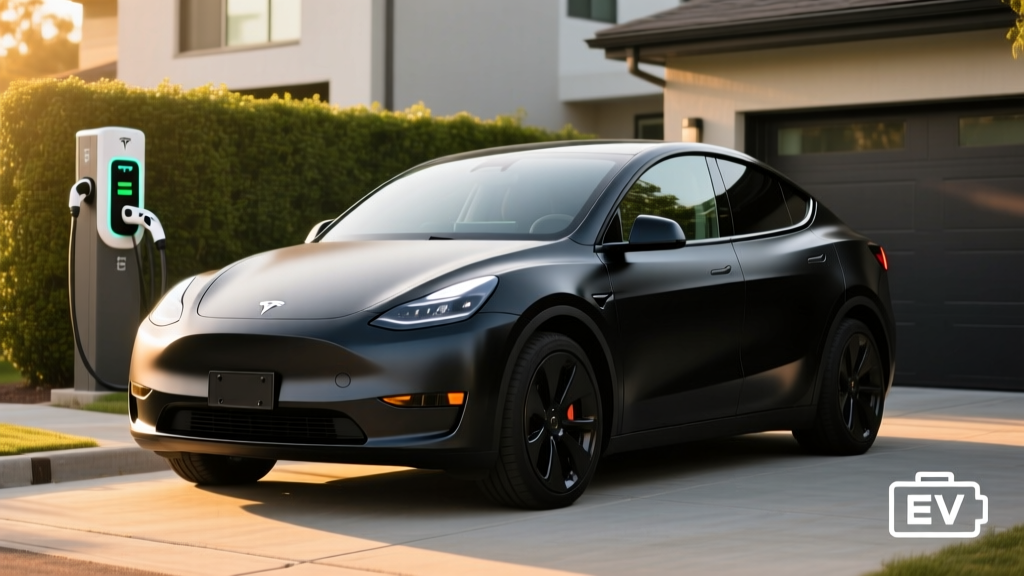
The 2023 Tesla Model Y remains one of the most-searched used and certified-pre-owned electric SUVs in 2026, and for good reason. With an EPA-estimated 330 miles of range (Long Range AWD), access to Tesla's 50,000+ Supercharger network, and eligibility for the used-EV tax credit under IRS §25E, it delivers a compelling value proposition on the secondary market. However, prospective buyers must navigate battery chemistry differences between trims, understand real-world range loss, and verify federal incentive eligibility before signing.
| Spec | Long Range AWD | Performance AWD | RWD (Standard Range) |
|---|---|---|---|
| EPA Range | 330 mi | 303 mi | 260 mi |
| Battery (usable) | ~75 kWh (NMC) | ~75 kWh (NMC) | ~60 kWh (LFP) |
| Peak DC Fast Charge | 250 kW | 250 kW | 170 kW |
| 10–80% DCFC Time | ~27 min | ~27 min | ~30 min |
| Level 2 Home Rate | 11.5 kW / 44 mi/hr | 11.5 kW / 44 mi/hr | 11.5 kW / 44 mi/hr |
| 0–60 mph | 4.8 sec | 3.5 sec | 6.6 sec |
| Horsepower | 384 hp | 456 hp | 295 hp |
| Drivetrain | Dual-Motor AWD | Dual-Motor AWD | RWD |
| MPGe (combined) | 117 MPGe | 111 MPGe | 123 MPGe |
| Efficiency | 28 kWh/100 mi | 30 kWh/100 mi | 26 kWh/100 mi |
| Cargo (rear seats up) | 30.2 cu ft | 30.2 cu ft | 30.2 cu ft |
| Cargo (seats folded) | 76.2 cu ft | 76.2 cu ft | 76.2 cu ft |
| Battery Warranty | 8 yr / 120,000 mi | 8 yr / 120,000 mi | 8 yr / 100,000 mi |
| Original Base MSRP | $52,990 | $57,990 | $47,740 |
Real-World Range: What the EPA Sticker Doesn't Tell You
Real-World Expectation: 270–300 miles highway (70–75 mph); 240–260 miles in sub-40°F weather; 310–330 miles city/mixed driving in mild conditions.
The EPA rates the 2023 Model Y Long Range at 330 miles, placing it among the most efficient electric SUVs in its class. But as any seasoned EV owner knows, the sticker number assumes a specific blend of city and highway driving at moderate temperatures.
In real-world highway testing at 70–75 mph, expect the Long Range AWD to deliver approximately 270–300 miles before needing a charge. The Model Y's aerodynamic profile helps, but sustained highway speeds increase energy consumption to roughly 32–34 kWh/100 mi compared to the EPA-rated 28 kWh/100 mi combined.
Cold weather is the great equalizer for all EVs. In temperatures below 40°F, lithium-ion batteries experience increased internal resistance, and cabin heating draws significant energy (the 2023 Model Y uses a heat pump, which helps, but resistance heating still activates in extreme cold). Expect a 20–30% range reduction, putting the Long Range at roughly 230–260 miles in winter conditions. The LFP-equipped RWD trim may see slightly steeper cold-weather losses—LFP chemistry is more sensitive to low temperatures than NMC.
Pro tip: Use Tesla's preconditioning feature when navigating to a Supercharger. This warms the battery to optimal temperature, enabling peak charge rates upon arrival—a critical advantage in cold climates.
Battery Chemistry: LFP vs NMC — Which 2023 Model Y Has Which?
The 2023 Model Y was offered with two distinct battery chemistries depending on trim, and this matters for long-term ownership:
| Attribute | LFP (RWD Trim) | NMC (Long Range / Performance) |
|---|---|---|
| Energy Density | Lower (~160 Wh/kg) | Higher (~250 Wh/kg) |
| Range | 260 mi EPA | 303–330 mi EPA |
| Cycle Life | 3,000+ cycles | 1,000–2,000 cycles |
| Daily Charging to 100% | Recommended | Limit to 80–90% for longevity |
| Cold-Weather Performance | More range loss | Better cold tolerance |
| Cost (original) | Lower | Higher |
| Typical Supplier | CATL | Panasonic / LG Energy Solution |
The RWD (base) trim uses a ~60 kWh LFP (lithium iron phosphate) battery, typically supplied by CATL. LFP cells offer exceptional cycle life—often exceeding 3,000 full charge cycles with minimal degradation—and Tesla recommends charging LFP batteries to 100% regularly to keep the battery management system (BMS) calibrated.
The Long Range and Performance trims use ~75 kWh NMC (nickel manganese cobalt) packs, supplied by Panasonic (at Giga Nevada) or LG Energy Solution. NMC offers higher energy density, translating to more range in a similar physical package. However, for optimal longevity, Tesla recommends daily charging limits of 80–90% for NMC batteries, reserving 100% charges for road trips.
For used buyers in 2026: Check the vehicle's battery health via the Tesla app or service menu. A 2023 Model Y with ~30,000–50,000 miles should still show 93–97% State of Health (SoH). Tesla's battery warranty guarantees at least 70% capacity retention over 8 years or 100,000–120,000 miles depending on trim.
Charging Speed: DC Fast Charging and Home Level 2
| Charging Level | Connector | Max Power | Rate (mi/hr) | Notes |
|---|---|---|---|---|
| Level 1 (120V) | NACS (Tesla) | ~1.4 kW | ~3–5 mi/hr | Emergency/trickle only |
| Level 2 (240V) | NACS (Tesla) | 11.5 kW | ~44 mi/hr | Home Wall Connector or J1772 w/ adapter |
| DC Fast Charge | NACS (Tesla) | 250 kW (LR/Perf) 170 kW (RWD) | ~1,000 mi/hr peak | 10–80% in ~27 min (LR); tapers above 80% |
| CCS Adapter (optional) | CCS1 via adapter | Up to 250 kW | Varies | Access to Electrify America, EVgo, etc. |
The 2023 Model Y uses Tesla's proprietary NACS (North American Charging Standard) connector, which is now becoming the industry standard—Ford, GM, Rivian, and others adopted it starting in 2024–2025. This means Model Y owners enjoy native access to Tesla's Supercharger network, which boasts over 50,000 connectors globally and consistently ranks highest in reliability among DC fast-charging networks.
DC Fast Charging: The Long Range and Performance trims peak at 250 kW at V3 Superchargers (and compatible third-party stations). However, peak rate is not sustained rate. The charge curve tapers significantly: you'll see 250 kW between roughly 10–30% State of Charge (SoC), dropping to ~150 kW by 50%, and ~60 kW by 80%. The 10–80% charge takes approximately 27 minutes under optimal conditions (warm battery, V3 stall). Above 80%, charging slows dramatically to protect the battery—a full 80–100% top-up can take an additional 20+ minutes.
The RWD (LFP) trim peaks at 170 kW, meaning a 10–80% session takes roughly 30 minutes. LFP batteries also tolerate frequent 100% charges better, so the practical impact of the slower peak rate is partially offset.
Home Level 2 Charging: The onboard charger accepts up to 11.5 kW (48 amps) on a 240V circuit. Using a Tesla Wall Connector on a 60-amp dedicated circuit, you'll add approximately 44 miles of range per hour—enough to fully replenish the Long Range battery overnight (~7.5 hours from empty). Installation costs for a home Level 2 setup typically range from $500–$2,500 depending on panel capacity and conduit run length. Homes with older 100-amp electrical panels may need a $1,500–$3,000 panel upgrade to support a 60-amp EV circuit.
Performance and Driving Dynamics
Even the base RWD Model Y delivers a respectable 6.6-second 0–60 mph time with 295 horsepower from a single rear motor. But the dual-motor variants are where Tesla's instant torque truly shines:
- Long Range AWD: 4.8 seconds, 384 hp. Dual-motor all-wheel drive provides confident traction in rain and light snow.
- Performance AWD: 3.5 seconds, 456 hp. Track Mode, lowered suspension, 21" Überturbine wheels, and performance brakes. Sacrifices ~27 miles of range for the speed advantage.
All trims feature regenerative braking with one-pedal driving capability (though Tesla removed the low-regen toggle in 2023 model-year vehicles). The steering is quick but numb—a common critique among enthusiasts. Ride quality improved with the 2023 "Comfort Suspension" update on later-build models, though it still firms up noticeably over broken pavement with the 20" or 21" wheel options.
Pricing, Tax Credits, and Total Cost in 2026
| Trim | Original MSRP | Est. Used Price (2026) | Federal Credit Available |
|---|---|---|---|
| RWD | $47,740 | $28,000–$33,000 | Up to $4,000 (§25E Used EV Credit) |
| Long Range AWD | $52,990 | $32,000–$38,000 | Up to $4,000 (§25E Used EV Credit) |
| Performance AWD | $57,990 | $36,000–$42,000 | Up to $4,000 (§25E Used EV Credit) |
Since the 2023 Model Y is no longer sold new in 2026, the original §30D new-vehicle tax credit no longer applies. However, buyers purchasing from a licensed dealer may qualify for the IRS §25E Used Clean Vehicle Credit, which provides up to $4,000 (30% of the sale price, capped at $4,000).
§25E Eligibility Requirements:
- Sale price must be $25,000 or less (this eliminates many Performance trims and low-mileage Long Range examples)
- Buyer AGI limits: $75,000 (single), $112,500 (head of household), $150,000 (joint)
- Vehicle must be at least 2 model years old (2023 qualifies in 2026)
- Must purchase from a licensed dealer (private-party sales do not qualify)
- Vehicle must have a battery capacity of at least 7 kWh (all Model Y trims qualify)
- Credit is non-refundable and cannot be transferred to the dealer as a point-of-sale discount (unlike §30D)
Total cost of ownership note: The Model Y's efficiency (26–30 kWh/100 mi) translates to roughly $0.04–$0.06 per mile when charging at home on a national average electricity rate of $0.16/kWh. Compare this to a 25 MPG gas SUV at $3.50/gallon ($0.14/mile), and the per-mile fuel savings are substantial—roughly $1,000–$1,500 annually for a 12,000-mile driver. Insurance premiums, however, tend to run 15–25% higher than comparable ICE SUVs, so factor that into your budget.
Interior, Tech, and Standout Features
The 2023 Model Y interior is polarizing: minimalist to a fault, with virtually every function routed through the 15" center touchscreen. There are no physical buttons for climate, mirrors, or glovebox—all are screen-controlled. This creates a clean aesthetic but demands attention diversion for simple adjustments.
Standout tech:
- 15" touchscreen with Netflix, YouTube, and gaming (including Cyberpunk 2077-level titles on AMD Ryzen chip)
- Over-the-air (OTA) updates that continuously add features—Tesla's software pipeline remains industry-leading
- Sentry Mode and Dashcam using the vehicle's external cameras for security and incident recording
- Autopilot (standard): SAE Level 2 driver assistance including Traffic-Aware Cruise Control and Autosteer. Requires continuous driver supervision—this is not self-driving.
- Full Self-Driving (Supervised) — optional ($8,000 or $199/mo): Adds Navigate on Autopilot, Auto Lane Change, Smart Summon, and traffic light/stop sign recognition. Still SAE Level 2; the driver must remain fully engaged at all times.
- Frunk (front trunk): 4.1 cu ft of additional storage
- Heat pump: Standard on all 2023 Model Y trims, improving cold-weather efficiency vs. resistive heating
Notable drawbacks:
- No Apple CarPlay or Android Auto—Tesla's proprietary system is the only option
- Rear-seat headroom is tight for passengers over 6'2" due to the sloping roofline
- Panel gaps and paint quality remain inconsistent, though improved from 2020–2022 builds
- No physical instrument cluster—speed and navigation info are displayed on the left portion of the center screen
- Rear visibility is compromised by the small rear window; rely on the backup camera
Who Should Buy the 2023 Model Y in 2026?
- You want access to the Supercharger network for road trips without adapter hassle
- You value OTA software updates and cutting-edge infotainment
- You need a practical family SUV with strong cargo space (76.2 cu ft seats-folded)
- You can charge at home and want low per-mile operating costs
- You prioritize acceleration and tech over traditional luxury materials
- You require Apple CarPlay/Android Auto for navigation or music
- You frequently tow (Model Y is rated for 3,500 lbs, but towing cuts range by 30–40%)
- You want a traditional instrument cluster and physical climate controls
- You need third-row seating (the 2023 Model Y's optional third row is extremely cramped and was rare)
- You live in a charging desert with no reliable public DCFC access and cannot install a home charger
- Class-leading Supercharger network access
- Up to 330 mi EPA range (Long Range)
- 250 kW DC fast charging (LR/Performance)
- Spacious cargo area (76.2 cu ft)
- Continuous OTA updates add new features
- Heat pump standard for cold-weather efficiency
- Strong safety ratings (NHTSA 5-star, IIHS Top Safety Pick+)
- No Apple CarPlay / Android Auto
- Minimalist interior lacks physical controls
- Rear headroom limited for tall passengers
- Insurance premiums above segment average
- Panel gap inconsistency on some builds
- LFP RWD trim has less range and colder-weather sensitivity
- FSD remains Level 2, not autonomous
2023 Model Y vs. Key Competitors
On the used market in 2026, the 2023 Model Y competes against several strong alternatives:
- 2023 Ford Mustang Mach-E Extended Range: 312 mi EPA, CCS charging (slower network access pre-2025 adapter), more traditional interior with physical controls, CarPlay support. Often priced $2,000–$4,000 less than an equivalent Model Y Long Range.
- 2023 Hyundai Ioniq 5: 303 mi EPA (RWD), 800V architecture enables 10–80% in ~18 min at 350 kW chargers, CCS native (NACS adapter available). More distinctive design, V2L capability, CarPlay standard. Slightly less cargo space (59.3 cu ft).
- 2023 Kia EV6: Shares Ioniq 5's 800V platform, 310 mi EPA (RWD), sportier driving dynamics, CarPlay standard. Rear visibility and cargo space trail the Model Y.
The Model Y's decisive advantage remains the Supercharger network. While competitors gained NACS adapter access starting in 2024–2025, Tesla owners still enjoy native plug-and-charge reliability and the densest fast-charging infrastructure in North America.
Frequently Asked Questions
What is the real-world range of the 2023 Tesla Model Y?
The EPA rates the Long Range AWD at 330 miles, but real-world highway driving at 70–75 mph yields approximately 270–300 miles. In cold weather (below 40°F), expect 230–260 miles. The RWD (LFP) trim delivers roughly 220–240 miles highway and 200–220 miles in winter conditions.
How fast does the 2023 Model Y charge?
At a V3 Supercharger (250 kW), the Long Range and Performance trims charge from 10–80% in approximately 27 minutes. The RWD (LFP) trim peaks at 170 kW, taking about 30 minutes for the same session. At home on a 240V/48A Level 2 charger, all trims add roughly 44 miles of range per hour.
Does the 2023 Model Y qualify for a federal tax credit in 2026?
Not the §30D new-vehicle credit, since it's no longer sold new. However, buyers purchasing a used 2023 Model Y from a licensed dealer for $25,000 or less may qualify for the IRS §25E Used Clean Vehicle Credit of up to $4,000, subject to buyer income limits ($75K single / $150K joint). Verify eligibility with a tax professional before purchase.
Is the 2023 Model Y worth buying vs. competitors in 2026?
If Supercharger access, cargo versatility, and software features are priorities, the Model Y is difficult to beat. If you prefer Apple CarPlay, a more traditional interior, or faster peak charging (800V platforms like the Ioniq 5), consider the alternatives. On the used market, pricing is competitive, but verify battery SoH and service history.
What are the biggest pros and cons?
Pros: Supercharger network, up to 330 mi range, 250 kW charging, spacious cargo area, OTA updates, strong safety ratings. Cons: No CarPlay, minimalist controls, higher insurance costs, LFP cold-weather sensitivity, FSD is Level 2 (not autonomous).
How long will the battery last?
Tesla warranties the battery for 8 years / 120,000 miles (Long Range/Performance) or 8 years / 100,000 miles (RWD), guaranteeing at least 70% capacity retention. Real-world data from Tesla's 2023 Impact Report shows an average of ~12% degradation at 150,000 miles across the fleet. LFP batteries in the RWD trim may outlast NMC packs in cycle count, though they start with less total capacity.
Can I charge a 2023 Model Y on non-Tesla chargers?
Yes. The 2023 Model Y uses the NACS connector natively (Tesla Superchargers and destination chargers). For CCS-based networks like Electrify America or EVgo, you'll need a NACS-to-CCS adapter (sold by Tesla and third parties for ~$200–$250). Since 2025, many new non-Tesla chargers have added NACS cables, reducing the adapter requirement over time.