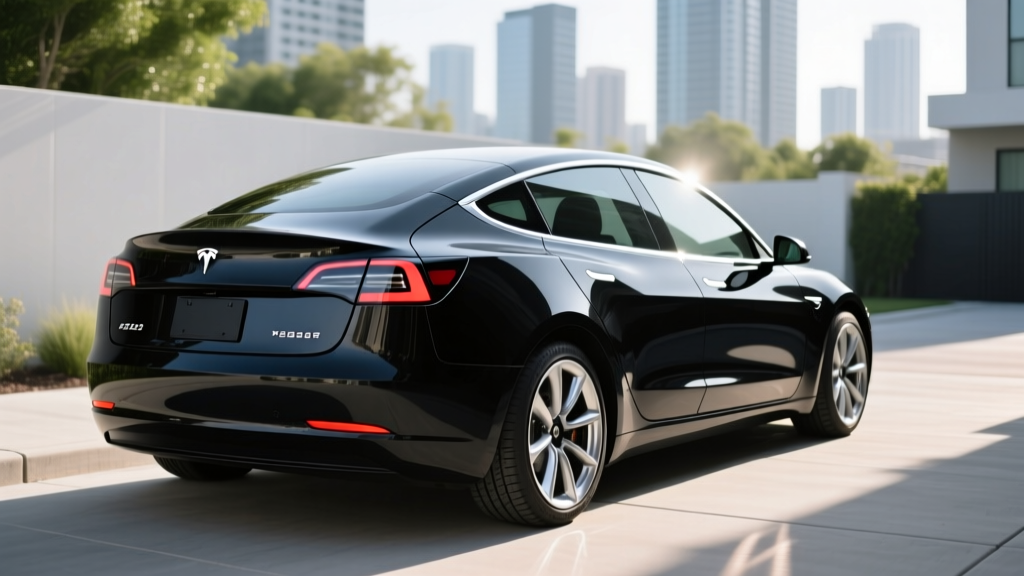
The Tesla Model 3 has been the default electric sedan benchmark since its launch, but buying a Tesla 2022 Model 3 on the used market in 2026 requires a closer look than the original sticker specs suggest. That model year straddled a critical battery-chemistry transition — early 2022 Standard Range cars used lithium iron phosphate (LFP) packs, while Long Range and Performance variants retained nickel-manganese-cobalt (NMC) chemistry. That distinction affects everything from daily charging habits to long-term degradation curves.
This review breaks down exactly what a 2022 Model 3 delivers four years into its life: real-world range expectations, DC fast-charging behavior (including the taper above 80% SoC), home Level 2 speeds, and whether the used-EV federal tax credit still applies. If you're cross-shopping against the Hyundai Ioniq 6, BMW i4, or a newer Model 3 Highland, the numbers below will tell you where the 2022 model still wins — and where it shows its age.
Quick Specs: Tesla 2022 Model 3 at a Glance
| Spec | RWD (Standard Range) | Long Range AWD | Performance AWD |
|---|---|---|---|
| EPA Range | 272 mi | 358 mi | 315 mi |
| Battery (usable) | ~57.5 kWh (LFP) | ~75 kWh (NMC) | ~75 kWh (NMC) |
| Horsepower | 283 hp | 346 hp | 450 hp |
| 0–60 mph | 5.8 sec | 4.2 sec | 3.1 sec |
| Drivetrain | RWD (single motor) | AWD (dual motor) | AWD (dual motor) |
| MPGe (combined) | 132 MPGe | 134 MPGe | 120 MPGe |
| kWh/100 mi | 25 | 25 | 28 |
| Peak DC Charge | 170 kW | 250 kW | 250 kW |
| 10–80% DC Time | ~30 min | ~28 min | ~28 min |
| Level 2 (11.5 kW) | ~37 mi/hr | ~44 mi/hr | ~44 mi/hr |
| Original MSRP | $46,990 | $53,990 | $60,990 |
Sources: fueleconomy.gov, Tesla 2022 spec archive.
Real-World Range: What the EPA Number Doesn't Tell You
The 2022 RWD trim's LFP battery has a practical advantage for range consistency: Tesla recommends charging LFP packs to 100% daily, so you actually get the full 272 miles of usable capacity. The Long Range's NMC pack is better kept at 80% for daily use (~286 miles), reserving 100% for road trips. This means the daily usable range gap between the two trims is narrower than the EPA numbers suggest — about 286 vs 272 miles for typical commutes.
On a 300-mile road trip from Denver to Grand Junction in 45°F weather, a Long Range 2022 Model 3 will typically need one Supercharger stop (15–20 minutes, 10–80%) to arrive comfortably. The RWD trim needs more planning, especially in mountain terrain where elevation and speed compound energy consumption beyond what fueleconomy.gov's flat-land testing reflects.
Charging Speed: DC Fast Charge and Home Level 2
Charging speed is where the trim gap matters most. The Long Range and Performance support up to 250 kW at a V3 Supercharger, but that's a peak — not a sustained rate. The charge curve ramps quickly to ~200 kW between 10–30% SoC, then progressively tapers: roughly 150 kW at 50%, 100 kW at 70%, and under 50 kW above 85%. This is why the 10–80% time is ~28 minutes, but a 10–100% session stretches past 50 minutes.
| Charging Level | Power / Rate | RWD Miles/Hr | Long Range Miles/Hr |
|---|---|---|---|
| Level 1 (120V, 12A) | ~1.4 kW | ~4 mi/hr | ~4 mi/hr |
| Level 2 (240V, 32A) | 7.7 kW | ~25 mi/hr | ~30 mi/hr |
| Level 2 (240V, 48A) | 11.5 kW | ~37 mi/hr | ~44 mi/hr |
| DC Fast (V3 Supercharger) | 170 kW / 250 kW | 10–80% ~30 min | 10–80% ~28 min |
At home on a 48-amp Level 2 circuit (the most common hardwired installation on a 60-amp breaker), the onboard 11.5 kW charger replenishes the Long Range in roughly 7 hours from 10% to full. The RWD's smaller pack fills in about 5 hours on the same circuit. For most owners, overnight Level 2 charging eliminates any need for daily DC fast charging, which preserves long-term battery health — particularly important for the NMC packs in Long Range and Performance trims.
One 2022-specific note: this model year uses the Tesla proprietary connector (now designated NACS) in North America. As of 2026, the vast majority of public DC networks — Electrify America, EVgo, ChargePoint — support NACS natively, so no adapter is needed for Superchargers, and CCS adapters are rarely required.
Performance, Efficiency, and Daily Driving
Even the base RWD 2022 Model 3 outperforms most gas sedans in the 0–60 sprint at 5.8 seconds. The Long Range's 4.2-second dual-motor pull is genuinely quick for a four-door, and the Performance's 3.1 seconds enters sports-car territory. All trims use Tesla's single-speed reduction gear — no transmission shift lag, just linear torque from a stop.
Efficiency is where the Model 3 historically leads its class. The RWD and Long Range both achieve roughly 25 kWh/100 miles (132–134 MPGe combined), which translates to about $0.04–$0.05 per mile on residential electricity at $0.16/kWh national average. That's roughly one-third the per-mile fuel cost of a 30-MPG gas sedan at $3.50/gallon. The Performance trim dips to 28 kWh/100 mi (120 MPGe) due to its stickier tires and more aggressive powertrain calibration — still excellent for a 450-hp AWD sedan.
Ride quality on the 2022 pre-Highland model is firm. Tesla's suspension tuning prioritizes handling over compliance, and you'll feel sharp pavement impacts more than in an Ioniq 6 or BMW i4. Road noise is noticeable above 70 mph — an area Tesla addressed in the 2024 Highland refresh with acoustic glass and revised dampers. If highway comfort is a priority, test-drive the 2022 back-to-back with a newer rival.
Interior, Tech, and Driver Assistance
The 2022 Model 3 cabin is defined by minimalism: a single 15-inch center touchscreen handles climate, navigation, media, and vehicle settings. There's no instrument cluster — speed and range live in the top-left corner of the main display. This approach polarizes buyers. If you prefer physical buttons or a dedicated gauge screen, the transition takes adjustment.
Cargo space is generous for the class: 23 cubic feet combined (15 cu ft trunk + 8 cu ft front trunk/frunk). Rear legroom measures 35.2 inches — adequate for adults on shorter trips but tighter than a midsize sedan. The glass roof creates an airy cabin but contributes to heat soak in summer; the 2024 Highland added a ventilated option that the 2022 lacks.
Driver assistance: Every 2022 Model 3 ships with Basic Autopilot (adaptive cruise + lane centering). Full Self-Driving (FSD) Capability was a $12,000 option at the time (later reduced). Crucially, both Autopilot and FSD Supervised are SAE Level 2 systems — the driver must remain attentive, hands on or near the wheel, and eyes on the road at all times. Tesla's camera-only vision stack (Tesla Vision, no radar) was controversial in 2022; phantom braking events were reported more frequently than on radar-equipped predecessors. If you're evaluating a used 2022, check whether FSD transfers with the vehicle (it typically does on Tesla-to-Tesla resale, but verify with the VIN).
Pricing, Tax Credits, and Total Cost of Ownership
As a used vehicle in 2026, the 2022 Model 3 is no longer eligible for the new-vehicle §30D federal tax credit. However, it may qualify for the Used Clean Vehicle Credit (§25E), which provides up to $4,000 or 30% of the sale price (whichever is less) if specific conditions are met.
| Requirement | Detail |
|---|---|
| Sale price cap | ≤ $25,000 |
| Buyer income cap (AGI) | $75K single / $112.5K HOH / $150K joint |
| Vehicle age | At least 2 model years old (2022 qualifies in 2026) |
| Battery capacity | ≥ 7 kWh (all Model 3 trims qualify) |
| Dealer requirement | Must purchase from a licensed dealer (private sales excluded) |
| Frequency limit | One used-EV credit per buyer per 3 years |
Source: IRS §25E guidelines. Verify current rules before purchase — income caps and sale-price thresholds are subject to legislative change.
Typical used pricing for a 2022 Model 3 in 2026 ranges from $22,000–$28,000 for the RWD and $27,000–$34,000 for the Long Range, depending on mileage and condition. Only the RWD consistently falls under the $25,000 credit cap. A buyer at or below the income threshold purchasing an RWD for $24,500 from a dealer could realize a $4,000 point-of-sale credit, effectively bringing the net cost to ~$20,500.
5-year ownership cost estimate (Long Range, 15K mi/yr):
- Purchase (used): ~$29,000
- Electricity (home Level 2, $0.16/kWh): ~$4,875
- Insurance (national EV avg): ~$9,500
- Maintenance (tires, cabin filter, fluid top-off): ~$2,200
- Estimated depreciation: ~$11,000
- Total 5-year: ~$45,575 (or ~$0.61/mile all-in)
Compare that to a 2022 Toyota Camry LE at ~$0.52/mile all-in over the same period — the Model 3 costs more upfront but eliminates fuel volatility exposure and offers substantially stronger acceleration and tech. Insurance remains a cost penalty for Teslas; get a quote before committing.
Battery Health, Warranty, and Longevity
Tesla's battery and drive unit warranty on the 2022 Model 3 is 8 years / 120,000 miles for the RWD and 8 years / 120,000 miles for Long Range and Performance (with a 70% minimum capacity retention threshold). A 2022 model's warranty remains active through the 2030 model year or until the odometer crosses 120K miles — meaning most 2022 cars in 2026 still have meaningful factory coverage remaining.
Degradation data from fleet analyses (Tevva, Recurrent) shows the 2022-era NMC Long Range packs typically retain 90–93% capacity at 60,000 miles, with the curve flattening significantly after the initial 5–8% loss in the first year. The LFP packs in the RWD show even slower degradation — often 95%+ retention at 60K miles — because LFP chemistry tolerates regular 100% charging without the accelerated wear NMC experiences at high SoC.
If you're buying used, pull the battery health report via the Tesla app or third-party services like Recurrent. Look for State of Health (SoH) above 90% — anything below 85% on a 40,000-mile car warrants investigation. Out-of-warranty battery replacement for a Model 3 currently runs $12,000–$16,000 at a Tesla Service Center, though third-party refurbishment options are emerging at lower cost.
Pros, Cons, and Who Should Buy
- Class-leading efficiency (25 kWh/100 mi)
- Extensive Supercharger network (NACS native)
- LFP option (RWD) with superior cycle life
- Over-the-air updates still active in 2026
- Strong used-EV credit eligibility for RWD
- 23 cu ft cargo with frunk utility
- Firm ride, noticeable road noise vs 2024+ Highland
- Tesla Vision phantom braking (pre-radar-delete fix)
- Rear legroom tight for tall passengers (35.2 in)
- Insurance premiums 20–30% above class average
- No Apple CarPlay / Android Auto
- FSD purchase may not transfer on third-party resale
Best for: Solo commuters or couples with moderate cargo needs who want low running costs, access to the Supercharger network, and daily home-charging convenience. The RWD is ideal for urban/suburban drivers under 50 miles/day. The Long Range suits road-trippers and cold-climate owners who need AWD and the 358-mile EPA buffer.
Look elsewhere if: You prioritize ride comfort (Ioniq 6, BMW i4), need back-seat space for tall teens (Hyundai Sonata Hybrid), or want Apple CarPlay integration (most non-Tesla EVs).
Frequently Asked Questions
What is the real-world range of a 2022 Tesla Model 3?
The RWD delivers roughly 220–240 highway miles and 260+ city miles on a full charge. The Long Range achieves 290–310 highway miles and up to 340 in city driving. Cold weather (below 30°F) reduces both by 20–30%. These figures assume tire pressures at spec and no roof cargo.
How fast does the 2022 Model 3 charge at home and on the road?
On a 48-amp Level 2 home charger (11.5 kW), expect ~37–44 miles of range per hour, or a full overnight fill in 5–7 hours. At a V3 Supercharger, the Long Range/Performance peaks at 250 kW with a 10–80% time of ~28 minutes. The RWD peaks at 170 kW with a 10–80% time of ~30 minutes.
Does a used 2022 Model 3 qualify for any federal tax credit?
Not the new-vehicle §30D credit, but it can qualify for the §25E Used Clean Vehicle Credit — up to $4,000 if the sale price is $25,000 or less, the buyer's AGI is under the income cap ($75K single / $150K joint), and the purchase is through a licensed dealer. The RWD trim most often falls under the price cap.
Is the 2022 Model 3 still worth buying vs newer competitors?
Yes, on value. A used RWD at ~$21,000 after credit undercuts nearly every new EV on the market and still delivers 272 EPA miles, Supercharger access, and OTA updates. However, the 2024+ Highland refresh meaningfully improved ride comfort, cabin noise, and added ventilated seats — worth the premium if those matter to you.
What's the biggest risk of buying a 2022 Model 3 in 2026?
Insurance cost and battery health uncertainty outside warranty. Get an insurance quote before purchase (expect $1,800–$2,400/yr depending on state and driving record), and verify SoH via Tesla's app or a Recurrent report. Also confirm whether any FSD purchase transfers with the VIN — it's not guaranteed on non-Tesla dealer sales.