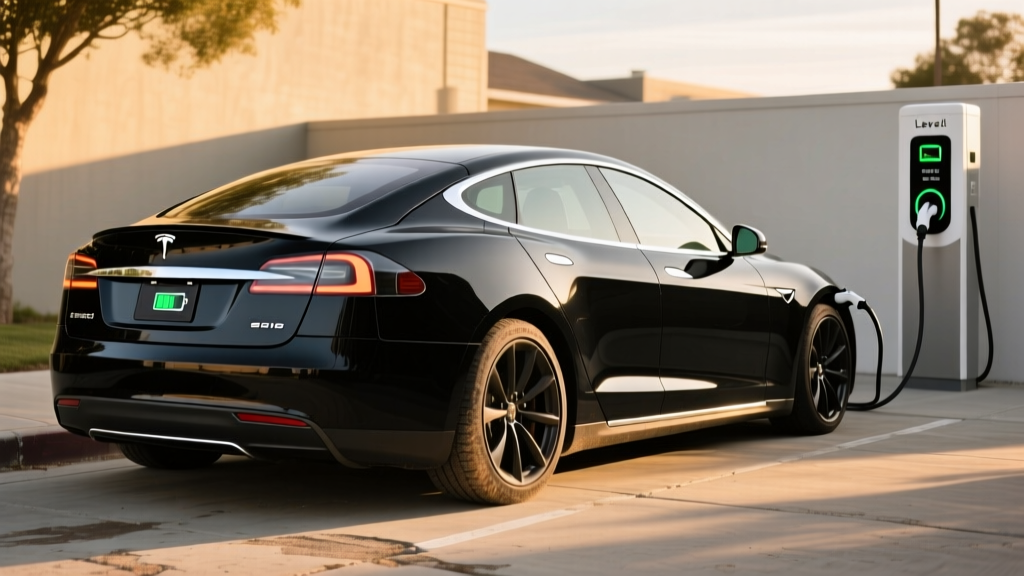
The Tesla 2015 Model S occupies a unique space in the used EV market. Originally launched with industry-leading range and performance, this second-generation sedan helped define what a modern electric vehicle could be. In 2026, nearly a decade after its debut year, buyers are asking a practical question: does a 2015 Model S still deliver as a daily driver, and what should you expect from a battery that's over ten years old?
This review covers the 2015 Tesla Model S trims — primarily the 85 kWh, 70D, and P85D — with exact specs, real-world range data, charging performance, and ownership economics. Whether you're eyeing a sub-$15,000 example or comparing it against newer budget EVs, here's what the numbers actually say.
2015 Tesla Model S: Core Specifications at a Glance
| Spec | Model S 85 (RWD) | Model S 70D (AWD) | Model S P85D (AWD) |
|---|---|---|---|
| EPA Range (original) | 265 mi | 242 mi | 253 mi |
| Battery Capacity (gross) | 85 kWh | 70 kWh | 85 kWh |
| Battery Chemistry | NMC (Panasonic 18650) | NMC (Panasonic 18650) | NMC (Panasonic 18650) |
| Horsepower | 362 hp | 329 hp | 691 hp |
| 0-60 mph | 5.4 sec | 5.2 sec | 3.2 sec |
| Drivetrain | RWD (single motor) | AWD (dual motor) | AWD (dual motor) |
| MPGe (combined, EPA) | 89 MPGe | 93 MPGe | 89 MPGe |
| Efficiency | 38 kWh/100 mi | 36 kWh/100 mi | 38 kWh/100 mi |
| Cargo Volume | 26.3 cu ft (rear) + 5.3 cu ft (frunk) | 26.3 cu ft + 5.3 cu ft | 26.3 cu ft + 5.3 cu ft |
| Seating | 5 adults (optional 7-seat) | 5 adults (optional 7-seat) | 5 adults |
| Original MSRP (base) | $74,970 | $71,470 | $104,470 |
| Used Price Range (2026) | $12,000–$20,000 | $11,000–$18,000 | $16,000–$28,000 |
| Battery Warranty (original) | 8 yr / unlimited mi | 8 yr / 120,000 mi | 8 yr / 120,000 mi |
Real-World Range: What the EPA Sticker Doesn't Tell You
The original EPA ratings for the 2015 Model S were ambitious for their time. The 85 kWh RWD variant was rated at 265 miles — a benchmark that few competitors could match in 2015. However, a decade of battery aging and real-world driving conditions paint a more nuanced picture.
EPA Sticker (Original): 265 miles (Model S 85)
Real-World Expectation in 2026: Expect 170–220 miles on a full charge depending on battery state of health (SoH). Most 2015 Model S batteries have degraded 15–30% from original capacity. Highway driving at 70+ mph will yield the lower end of that range. Cold-weather operation (below 32°F) can reduce range an additional 20–30%, dropping a degraded battery to as low as 120–140 miles in winter conditions.
Battery degradation in the 2015-era Panasonic 18650 NMC cells follows a predictable curve. Tesla data and third-party fleet analyses show that most 85 kWh packs lose roughly 10–12% capacity in the first 50,000 miles, then degrade more slowly. By 100,000–150,000 miles, typical retention sits between 72–82%. Before purchasing any used 2015 Model S, request a battery health report from the vehicle's service menu or a Tesla Service Center — the car displays remaining capacity as a percentage.
The 70D's smaller 70 kWh pack (which actually uses 85 kWh cells software-limited to a lower capacity) tends to show slightly better degradation percentages because the battery management system (BMS) uses a larger buffer. However, its starting range was lower, so absolute miles will be similar to a well-preserved 85.
Charging Performance: Supercharger and Home Charging Speeds
The 2015 Model S predates Tesla's V3/V4 Supercharger architecture and uses the proprietary Tesla connector (pre-NACS standardization). It charges on Tesla Superchargers via the legacy protocol and can use CCS or CHAdeMO adapters for non-Tesla DC fast charging — though with limitations.
| Charging Method | Peak Power | Rate / Time | Notes |
|---|---|---|---|
| Tesla Supercharger V2 (legacy) | ~120 kW peak | 10–80% in ~40–50 min | Peak only below 50% SoC; tapers sharply above 70% |
| Tesla Supercharger V3/V4 | ~145 kW (capped by vehicle) | 10–80% in ~35–45 min | 2015 Model S cannot reach 250 kW; onboard limit ~145 kW |
| CHAdeMO adapter | ~50 kW | 10–80% in ~90 min | Requires optional Tesla CHAdeMO adapter (~$450) |
| CCS adapter (aftermarket) | ~90 kW | 10–80% in ~55 min | Third-party CCS adapters available; not officially supported by Tesla for 2015 models |
| Level 2 Home (48A / 11.5 kW) | 11.5 kW | ~29 mi/hr of range | Using Tesla Wall Connector on 60A circuit; full charge in ~8–9 hours |
| Level 2 Home (32A / 7.7 kW) | 7.7 kW | ~20 mi/hr of range | Using Mobile Connector on NEMA 14-50; full charge in ~12 hours |
| Level 1 (120V / 12A) | 1.4 kW | ~3–4 mi/hr of range | Emergency/trickle only; full charge in 60+ hours |
The 2015 Model S uses a dual onboard charger setup (on higher trims) capable of accepting up to 40 amps AC, though many examples shipped with a single 40A charger. Tesla's Wall Connector on a dedicated 60-amp circuit delivers up to 48 amps (11.5 kW), which is the practical maximum for home charging. If your home electrical panel only supports a 50-amp circuit (NEMA 14-50), you'll get 32 amps (7.7 kW) — adequate for overnight charging of a degraded battery.
DC fast charging on this generation peaks early in the charge curve. Expect 120 kW from roughly 10–40% SoC, tapering to 60 kW by 60%, and dropping below 30 kW past 80%. Plan road trips around 25–30 minute charging stops to 70% rather than attempting full charges at Superchargers.
Performance and Drivetrain: Still Potent After a Decade
Even by 2026 standards, the 2015 Model S delivers strong performance. The base 85 kWh RWD model produces 362 hp and hits 60 mph in 5.4 seconds — competitive with current mid-range EVs. The P85D, with its dual-motor setup and Ludicrous mode (introduced via software update), remains genuinely quick at 3.2 seconds to 60 mph.
The dual-motor 70D and P85D models feature Tesla's all-wheel-drive system with independent front and rear motors. Traction in wet and light snow conditions is excellent, though the Model S's low ground clearance (6.0 inches) limits it in deep snow. Winter tires are strongly recommended for cold-climate owners.
Regenerative braking on the 2015 Model S is adjustable between Standard and Low modes. Unlike newer Teslas, it does not offer true one-pedal driving to a complete stop — the car will creep at very low speeds unless you apply the brake. This is a notable difference from the 2021+ refresh models.
Interior, Tech, and Driver Assistance
The 2015 Model S interior was a mixed bag even at launch, and it shows its age more clearly in 2026. The 17-inch center touchscreen was groundbreaking in 2015, but the resistive-capacitive hybrid panels and earlier-generation processors feel sluggish compared to the AMD Ryzen-powered Teslas of 2022+. Software updates have kept the interface functional, and Tesla continues to push OTA updates to these vehicles, though some newer features (theater mode, gaming, Netflix) are unavailable on the older MCU1 hardware.
MCU1 vs MCU2: Some 2015 Model S vehicles received the Media Control Unit 2 (MCU2) upgrade — either factory-installed on late-2015 builds or retrofitted via Tesla's $1,500–$2,500 upgrade program. MCU2 enables faster maps, streaming services, and Sentry Mode dashcam recording. Verify which MCU a used 2015 Model S has before purchasing; MCU1 vehicles are noticeably slower and lack modern infotainment features.
Driver assistance on the 2015 Model S depends on hardware version:
- Hardware 1 (AP1, through October 2015): Basic Autopilot with single-camera, single-radar setup. Supports adaptive cruise control and lane-keeping. No FSD capability.
- Hardware 2 (AP2, from October 2015): Enhanced sensor suite with 8 cameras, 12 ultrasonic sensors, and enhanced radar. Eligible for Enhanced Autopilot and Full Self-Driving (Supervised) software purchases, though performance on this hardware generation is not on par with HW3/HW4 vehicles.
Important: Autopilot and FSD (Supervised) on the 2015 Model S are SAE Level 2 driver-assistance systems. The driver must remain fully engaged, hands on or near the wheel, and eyes on the road at all times. These systems are not self-driving.
Pricing, Tax Credits, and Ownership Economics
The used 2015 Tesla Model S market in 2026 spans roughly $11,000 to $28,000 depending on trim, mileage, battery health, and condition. Here's what buyers should know about federal incentives and total cost of ownership.
| Trim | Used Price Range (2026) | Federal Used EV Credit (§25E) | Effective Price After Credit |
|---|---|---|---|
| Model S 70D | $11,000–$18,000 | Up to $4,000 (30% of sale price, capped at $4,000) | $7,000–$14,000 |
| Model S 85 (RWD) | $12,000–$20,000 | Up to $4,000 | $8,000–$16,000 |
| Model S P85D | $16,000–$28,000 | Up to $4,000 | $12,000–$24,000 |
Federal tax credit details for used EVs (IRS §25E):
- Credit amount: 30% of the sale price, up to a maximum of $4,000
- Vehicle price cap: The used vehicle must sell for $25,000 or less to qualify
- Buyer income limits: Adjusted gross income must not exceed $75,000 (single), $112,500 (head of household), or $150,000 (joint filers)
- Vehicle age requirement: The vehicle must be at least 2 model years old (the 2015 Model S easily qualifies)
- Dealer requirement: Must be purchased from a licensed dealer (private-party sales do not qualify)
- Point-of-sale transfer: The credit can be transferred to the dealer at purchase, reducing the sale price directly
- One-time use: Each buyer can claim the used EV credit once every 3 years
Note: The §30D new EV tax credit (up to $7,500) does not apply to used vehicle purchases. The §25E used EV credit is the relevant incentive. Consult a tax professional and review current rules at IRS.gov before purchasing.
Total cost of ownership considerations: Electricity costs for a 2015 Model S average $0.04–$0.06 per mile when charging at home (at $0.14/kWh national average and 36–38 kWh/100 mi efficiency). That compares favorably to a gas sedan at $0.12–$0.15/mile. However, insurance premiums for older Model S vehicles remain elevated — expect $1,800–$2,800/year depending on your state and driving record. Maintenance is generally low, but air suspension failures, drive unit replacements, and touchscreen/MCU repairs can cost $1,500–$5,000 out of warranty.
Warranty Status and Battery Replacement Costs
The original Tesla battery and drive unit warranty for the 2015 Model S has expired for nearly all vehicles. The 85 kWh RWD model carried an 8-year/unlimited-mile battery warranty, while the 70D and P85D carried 8-year/120,000-mile coverage. Since 2015 was more than 10 years ago, these warranties are no longer active regardless of mileage.
If battery replacement becomes necessary, Tesla offers remanufactured battery packs for 2015 Model S vehicles. Current pricing (2026) ranges from $12,000 to $16,000 including labor at a Tesla Service Center. Third-party EV battery shops can sometimes perform replacements for $8,000–$12,000 using refurbished packs. Some owners opt for individual module replacement (the 85 kWh pack contains 16 modules) at $500–$800 per module if only a subset has degraded significantly.
Before purchasing, check the battery's remaining capacity percentage (available in the vehicle's Service menu under "Battery Health") and review the charge/discharge history. A pack showing 80%+ SoH at 100,000+ miles is a good sign; anything below 70% means significant range loss and a potential replacement within a few years.
Pros, Cons, and the Verdict
Pros
- Spacious interior with 26.3 cu ft cargo + 5.3 cu ft frunk — more practical than most compact SUVs
- Access to Tesla Supercharger network (legacy connector; no adapter needed for Tesla stations)
- Strong performance even in base RWD trim (5.4 sec 0-60)
- Continued OTA software updates from Tesla
- Used pricing as low as $7,000 after federal credit — exceptional value for a large luxury EV
- Available air suspension for adjustable ride height
- Low operating cost: ~$0.05/mile on home electricity
Cons
- Battery degradation reduces real range to 170–220 mi (vs. original 265 mi EPA)
- Out-of-warranty repair risk: air suspension, drive unit, and MCU failures are expensive
- MCU1 hardware feels dated and slow; upgrade costs $1,500–$2,500
- No one-pedal driving to a full stop
- DC fast charging limited to ~145 kW peak — slower than modern EVs
- Insurance premiums remain high relative to vehicle value
- AP1 hardware vehicles cannot receive FSD or Enhanced Autopilot
Who Should Buy the 2015 Tesla Model S?
Choose the 2015 Model S if: You want a spacious, comfortable EV sedan for under $15,000 (after credit); you primarily commute under 100 miles round-trip; you have home Level 2 charging; and you're comfortable with potential out-of-warranty repair costs.
Look elsewhere if: You need 300+ miles of reliable range for frequent road trips; you want the latest infotainment and driver-assist hardware; you don't have access to home charging; or you're risk-averse about major repair bills on an aging luxury EV.
Frequently Asked Questions
What is the real-world range of the 2015 Tesla Model S in 2026?
Expect 170–220 miles on a full charge for an 85 kWh model, depending on battery health, driving style, and temperature. Highway driving and cold weather push range toward the lower end. Verify the specific vehicle's State of Health (SoH) before purchasing.
How fast does the 2015 Model S charge at a Supercharger?
Peak DC fast charging is approximately 120–145 kW on V2 and V3 Superchargers, with a 10–80% charge taking roughly 35–50 minutes. The charge curve tapers significantly above 70% SoC. Plan for 25–30 minute stops to 70% on road trips.
Does the 2015 Tesla Model S qualify for a federal tax credit?
Not the new-vehicle §30D credit. However, it may qualify for the IRS §25E used clean vehicle credit — up to $4,000 (30% of sale price) — if the vehicle sells for $25,000 or less, is purchased from a licensed dealer, and the buyer meets income limits ($75K single / $150K joint). Check IRS guidelines for current eligibility.
Is the 2015 Model S worth buying vs. a newer budget EV?
It depends on your priorities. A 2015 Model S at $12,000–$18,000 offers more space, performance, and Supercharger access than a new Chevrolet Equinox EV or Nissan Leaf. However, a newer EV will have a fresh battery warranty, modern infotainment, and faster charging. If you value low upfront cost and don't mind repair risk, the 2015 Model S is compelling. If you want predictability, a newer compact EV is safer.
How much does a battery replacement cost for a 2015 Model S?
Tesla remanufactured packs run $12,000–$16,000 installed. Third-party refurbished packs can be $8,000–$12,000. Individual module replacement (if only some modules fail) costs $500–$800 per module. Given the vehicle's used value of $11,000–$28,000, a full pack replacement may not be economically justified — buy a vehicle with healthy battery SoH to avoid this scenario.
Can the 2015 Model S use non-Tesla chargers?
Yes, but with adapters. Tesla sells a CHAdeMO adapter (~$450) for non-Tesla DC fast chargers. Third-party CCS adapters are also available. For Level 2 public charging, the Tesla Mobile Connector with a J1772 adapter (included with most vehicles) works at any standard public Level 2 station. As of 2024, Tesla opened its Supercharger network to non-Tesla EVs, but the 2015 Model S's proprietary connector means it can only use Tesla Superchargers without modification.
Sources: EPA range and efficiency data via fueleconomy.gov; IRS §25E used EV credit rules at irs.gov; Tesla owner's manual and spec archive.