The Original EV That Started It All
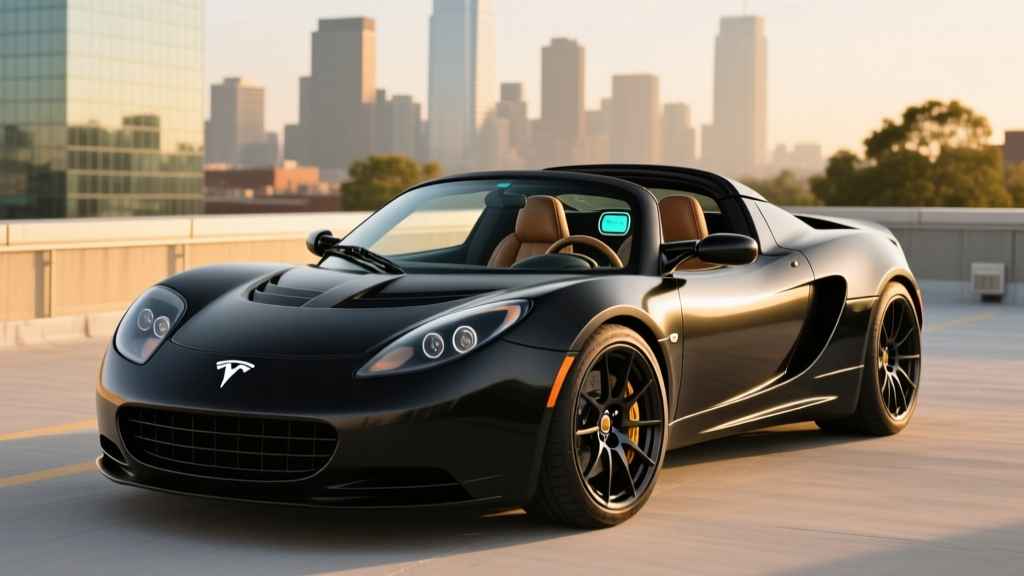
Before the Model S redefined the electric sedan and the Model 3 brought EVs to the mass market, there was the Tesla Roadster — the car that proved lithium-ion batteries could deliver genuine sports-car performance. Produced from 2008 through 2012, the 2009 Tesla Roadster remains a landmark vehicle in automotive history. With only 2,450 units built across all model years, it has transitioned from cutting-edge technology demonstrator to highly sought-after collector car.
This review examines the 2009 Roadster through the lens of a modern EV owner: how its specs hold up, what ownership looks like today, and whether this pioneering roadster still delivers in 2026.
Range, Battery, and the Chemistry That Paved the Way
Real-World Expectation (2026): 180–210 miles depending on battery health, driving style, and ambient temperature. Highway driving at 70+ mph reduces range to approximately 160–180 miles. Cold weather (below 40°F) can cut range by 20–30%, yielding as little as 130–150 miles.
The 2009 Roadster packs a 53 kWh lithium-ion battery — specifically, an NMC (nickel-manganese-cobalt) chemistry arranged in 6,831 individual 18650-format cells, the same type used in laptops at the time. This was a radical engineering decision in 2008 and directly inspired the cell-level architecture Tesla later scaled for the Model S.
After 16+ years, battery degradation is the central ownership question. Most surviving Roadsters have undergone at least one battery replacement or refurbishment through Tesla's service network. Original packs that haven't been replaced typically show 25–40% degradation, bringing usable capacity down to roughly 32–40 kWh. Tesla offered an 8-year/100,000-mile battery warranty on the original pack, though most units are now well past that coverage window.
| Spec | Value |
|---|---|
| EPA Range (Original) | 244 miles |
| Battery Capacity | 53 kWh (NMC, 18650 cells) |
| Motor | Single rear-mounted AC induction |
| Horsepower | 288 hp (215 kW) |
| Torque | 295 lb-ft |
| 0–60 mph | 3.7 seconds |
| Top Speed | 125 mph (electronically limited) |
| Drivetrain | RWD, 2-speed automatic (fixed 2nd gear on Sport) |
| Curb Weight | 2,690 lbs |
| EPA Efficiency | 135 MPGe (combined) / 25 kWh/100 mi |
| Cargo Volume | ~2.5 cu ft (rear trunk shelf) |
| Seating | 2 passengers |
Charging: A 2009 System in a 2026 World
The 2009 Roadster's charging capabilities reflect its era — and this is where prospective owners must adjust expectations significantly.
| Level | Power | Time (0–100%) | Notes |
|---|---|---|---|
| Level 1 (120V) | ~1.4 kW | ~38–44 hours | Emergency/trickle only |
| Level 2 (240V, Roadster HPC) | ~16.8 kW (70A) | ~3.5 hours | Original High Power Connector (proprietary) |
| Level 2 (240V, J1772 adapter) | ~6.6–7.2 kW (30–32A) | ~7–8 hours | Requires Tesla J1772 adapter |
| DC Fast Charging | Not supported | N/A | No CCS, CHAdeMO, or Supercharger access |
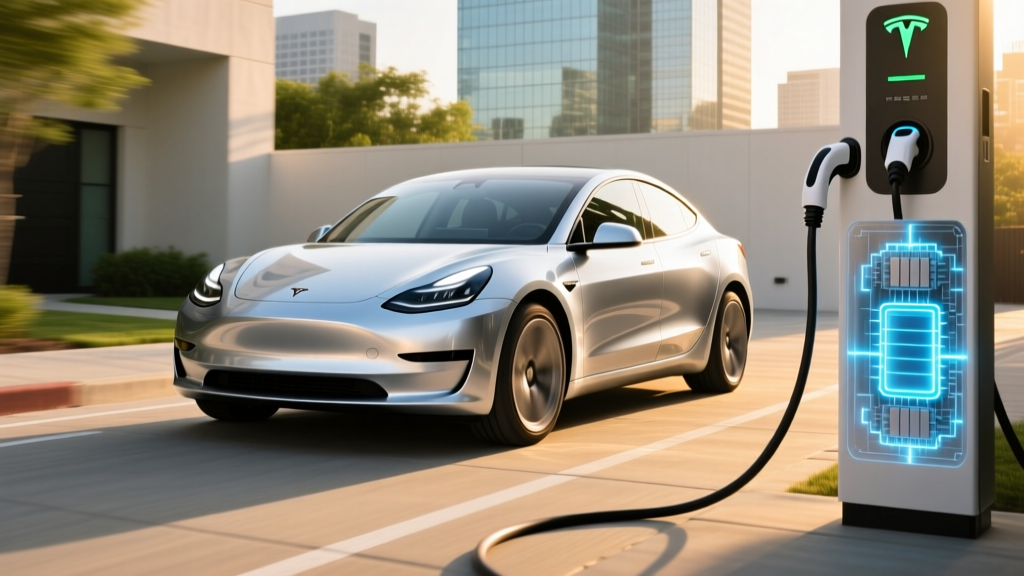
The most critical charging limitation: the 2009 Roadster cannot DC fast-charge. There is no CCS port, no CHAdeMO compatibility, and no Tesla Supercharger access. This vehicle predates the Supercharger network entirely. All charging is AC-only.
The Roadster used Tesla's proprietary High Power Connector (HPC), which delivered up to 70 amps / 16.8 kW — impressive for 2008 but irrelevant today because the connector is obsolete. Most owners rely on the Tesla J1772 adapter to use standard public Level 2 stations, which caps charging at roughly 30 amps (7.2 kW). At that rate, a full charge takes 7–8 hours.
For road trips, plan around overnight stops with Level 2 access. A 200-mile drive is feasible in a single charge, but multi-day touring requires careful route planning around charging availability. The Roadster is best suited as a weekend/collector car with reliable home Level 2 charging.
Performance That Still Turns Heads
The 2009 Roadster's performance numbers were shocking in 2009 and remain genuinely quick today. The rear-mounted AC induction motor produces 288 horsepower and 295 lb-ft of torque, available from zero RPM. The 0–60 mph sprint takes just 3.7 seconds — faster than a contemporary Porsche 911 Carrera and comparable to a 2026 BMW i4 eDrive40.
The driving experience is raw and analog by modern Tesla standards. There is no Autopilot, no regenerative one-pedal driving mode (regen is minimal), no over-the-air updates, and no touchscreen beyond a small center display. The 2-speed transmission (on early models) adds a mechanical quirk: the car shifts from first to second gear around 40 mph, which some drivers find engaging and others find abrupt. Later "Sport" models locked into second gear for a smoother, single-ratio feel.
The chassis is based on the Lotus Elise platform, meaning handling is sharp, steering is unassisted and heavy, and the ride is firm. At 2,690 lbs, the Roadster is dramatically lighter than any modern EV — a 2026 Model 3 weighs over 4,000 lbs. That lightness translates to communicative handling that no current Tesla can match.
Tech, Interior, and Daily Livability
By 2026 standards, the Roadster's technology suite is almost comically sparse:
- Infotainment: A small monochrome LCD display showing speed, range, energy consumption, and basic trip data. No navigation, no Bluetooth audio streaming, no smartphone integration.
- Driver Assistance: None. No ABS (on 2008–2009 models; added for 2010+), no traction control, no backup camera, no lane-keeping, no adaptive cruise.
- Climate: Basic A/C and heat. No heat pump, no preconditioning via app, no scheduled charging features.
- Storage: A shallow rear shelf behind the seats holds roughly 2.5 cubic feet — enough for a soft duffel bag, not a suitcase. No frunk.
- Entry: Key fob with manual door handles. No phone-as-key, no Tesla app connectivity.
The interior is Lotus-sourced: tight, low-slung, with minimal padding. Taller drivers (6'2"+) will find headroom and legroom marginal. The convertible soft top is manually operated and can leak in heavy rain. This is a sports car, not a daily driver.
Collector Market Pricing in 2026
The 2009 Roadster is no longer sold new — production ended in January 2012. Pricing today is entirely determined by the collector and auction market.
| Condition | Price Range (2026) | Notes |
|---|---|---|
| Original MSRP (2009) | $109,000 | Base price when new |
| Collector — Fair (high miles, original battery) | $90,000–$120,000 | Battery likely degraded 30%+ |
| Collector — Good (refurbished battery, moderate miles) | $130,000–$170,000 | Most common auction range |
| Collector — Excellent (low miles, full service history) | $175,000–$250,000+ | Signature/limited editions command premium |
Federal Tax Credit (IRS §30D): The 2009 Roadster does not qualify for the new-vehicle federal EV tax credit — it has not been manufactured or sold new since 2012. The Used Clean Vehicle Credit (up to $4,000 under §25E) requires the vehicle's original MSRP to be under $25,000 and the sale price to be under $25,000. Since Roadsters trade for $90,000+, no federal tax credit applies to any purchase scenario. Per IRS §25E guidelines, the price and MSRP caps are absolute.
Ownership Realities: Warranty, Service, and Costs
Warranty Status: The original 3-year/36,000-mile bumper-to-bumper and 8-year/100,000-mile battery warranty have expired on every 2009 Roadster. All repairs are out-of-pocket unless covered by an aftermarket collector-car warranty.
Battery Replacement: Tesla's official Roadster battery replacement program offered a refurbished ESS (Energy Storage System) for approximately $29,000 in the early 2020s. Third-party specialists now offer cell-level refurbishment for $12,000–$18,000, depending on how many cell modules need replacement. This is the single largest ownership cost risk.
Service Network: Tesla service centers can still work on Roadsters, but parts availability is limited. The Lotus-sourced suspension, brakes, and body panels require specialist sourcing. Owner communities and forums are often the best parts resource.
Insurance: Collector-car insurance (Hagerty, Grundy) is the standard approach, with agreed-value policies typically running $1,500–$3,000/year depending on mileage limits and storage conditions.
Who Should Buy the 2009 Tesla Roadster?
- You want a historically significant EV collectible with genuine sports-car dynamics
- You have reliable home Level 2 charging and plan weekend/fair-weather driving
- You appreciate raw, analog driving feel — no driver aids, heavy steering, firm ride
- You have a budget of $130,000+ and can absorb a potential $15,000–$29,000 battery service
- You need a daily driver with DC fast charging and road-trip capability
- You want modern safety features, driver assists, or infotainment
- You require more than 200 miles of range or need passenger/cargo space
- You're buying primarily for performance — a 2026 Model 3 Performance ($54,990) hits 0–60 in 2.9 seconds with full Supercharger access
Pros and Cons at a Glance
- Historically significant — the EV that launched the industry
- Sub-2,700-lb weight delivers exceptional handling feel
- 244-mile EPA range was class-leading in 2009; still adequate for weekend use
- Strong collector appreciation; values have risen steadily since 2020
- 288 hp and 3.7-second 0–60 remain genuinely quick
- No DC fast charging — road trips require overnight Level 2 stops
- Proprietary HPC connector is obsolete; requires J1772 adapter
- Battery degradation and $12K–$29K replacement cost
- No ABS (2008–2009), no driver assists, minimal safety equipment
- Tight cabin, minimal cargo, manual soft top, no modern infotainment
- No federal tax credit eligibility at collector-market prices
Frequently Asked Questions
What is the real-world range of the 2009 Tesla Roadster today?
With a healthy battery, expect 180–210 miles in mixed driving. Highway speeds above 70 mph reduce this to 160–180 miles. Cold weather (below 40°F) can drop range to 130–150 miles. Cars with original, unreplaced batteries may see only 130–160 miles total due to 25–40% degradation.
How fast does the 2009 Roadster charge?
Using a J1772 adapter at a public Level 2 station (30A/7.2 kW), a full charge takes 7–8 hours. With the original Tesla HPC wall connector (70A/16.8 kW), a full charge takes about 3.5 hours — but these connectors are rare and obsolete. There is no DC fast charging capability whatsoever.
Does the 2009 Tesla Roadster qualify for any federal EV tax credit?
No. The new-vehicle §30D credit does not apply (the car is not manufactured or sold new). The used-vehicle §25E credit requires a sale price under $25,000 — and Roadsters trade for $90,000 to $250,000+. No federal incentive is available. Check your state's alternative fuel vehicle incentives for possible local credits, though most also exclude vehicles of this age and price.
Is the 2009 Roadster worth buying versus a modern EV?
As a collector car and piece of automotive history, absolutely — values have appreciated and the driving experience is unique. As a practical EV for daily transportation, no. A 2026 Tesla Model 3, Hyundai Ioniq 6, or BMW i4 offers more range, DC fast charging, modern safety tech, warranty coverage, and daily usability for a fraction of the Roadster's collector price.
What is the biggest risk of owning a 2009 Roadster?
Battery replacement cost. An original 53 kWh NMC pack that hasn't been refurbished will show significant degradation, and replacement runs $12,000–$29,000 depending on whether you go third-party cell-level repair or Tesla-refurbished ESS. Factor this into your purchase budget.
Can the 2009 Roadster use Tesla Superchargers?
No. The Roadster predates the Supercharger network and has no compatible connector. It cannot charge at any Supercharger, Electrify America, EVgo, or other DC fast-charging station. All charging is AC Level 1 or Level 2 only.