Quick Verdict: The Tesla 2008 Roadster in 2026
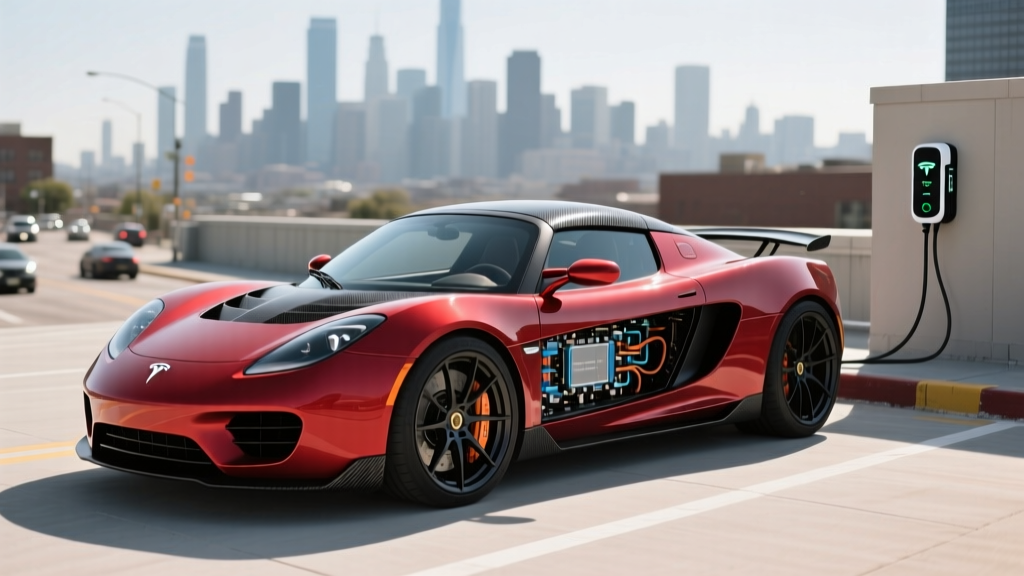
The original Tesla 2008 Roadster is not a car you buy for practicality — it's a car you buy for history. Produced between 2008 and 2012, Tesla's first production vehicle converted a Lotus Elise chassis into a battery-electric sports car and proved that EVs could be fast, desirable, and capable of real-world range. In 2026, the Roadster exists exclusively on the used and collector market. No new units are being sold, and Tesla's announced second-generation Roadster (first teased in 2017) remains unreleased with no confirmed production date.
This profile covers the original 2008–2012 Roadster and Roadster Sport as they exist today: specs, real-world ownership considerations, battery longevity, and what it takes to own one of the roughly 2,450 units ever built.
Spec Table: 2008–2012 Tesla Roadster at a Glance
| Specification | Roadster (2008–2012) |
|---|---|
| EPA Range | 244 miles (original rating) |
| Battery Capacity | 53 kWh usable (lithium-cobalt, NMC-type) |
| Motor | Single rear motor, RWD |
| Horsepower | 248 hp (Roadster); 288 hp (Roadster Sport) |
| 0–60 mph | 3.7 seconds (Sport: 3.4 seconds) |
| Top Speed | 125 mph (electronically limited) |
| Transmission | Single-speed (later units); 2-speed manual (early 2008) |
| DC Fast Charging | None (no DC fast-charge capability) |
| Level 2 Charging | Up to 16.8 kW via proprietary connector (70 A) |
| Level 1 Charging | ~1.4 kW (120 V portable cord) |
| MPGe (original EPA) | ~135 MPGe combined |
| Efficiency | ~280 Wh/mile |
| Cargo Space | ~2.5 cu ft (rear trunk, minimal) |
| Seating | 2 passengers |
| Curb Weight | ~2,690 lbs |
| Units Produced | ~2,450 (global) |
| Original MSRP | $109,000 (base); $129,000 (Sport) |
Range and Efficiency: 244 Miles Then, Less Now
EPA Original Rating: 244 miles
Real-World Expectation in 2026: 140–200 miles depending on battery health, ambient temperature, and driving style. Expect significant range loss from the original rating due to 13–18 years of lithium-cobalt cell degradation.
The Roadster's 53 kWh battery pack was cutting-edge in 2008, using lithium-cobalt oxide (LiCoO₂) cells — a chemistry chosen for energy density over longevity. Tesla rated the pack at 244 miles under the EPA's testing cycle, a number that shocked the auto industry at the time. For context, the Nissan Leaf launched in 2011 with just 73 miles of range.
However, lithium-cobalt chemistry degrades faster than the NMC (nickel manganese cobalt) or LFP (lithium iron phosphate) chemistries used in modern EVs. After more than a decade, most surviving Roadster packs have lost 20–40% of their original capacity. Owners reporting on Tesla forums and the Tesla Motors Club have documented real-world ranges between 140 and 200 miles depending on how the car was stored, charged, and maintained.
Cold-weather impact is severe. Lithium-cobalt cells suffer increased internal resistance below 40°F, and the Roadster lacks the sophisticated thermal management and heat pump systems found in current Teslas. Expect 30–40% range reduction in freezing conditions, bringing a degraded pack down to under 100 miles on a cold winter day.
Efficiency was rated at approximately 280 Wh/mile — respectable for a sports car but higher than modern EVs. The 2026 Tesla Model 3 RWD, for comparison, achieves around 25 kWh/100mi (250 Wh/mile) with far more interior space.
Charging: No DC Fast Charging, Slow by Modern Standards
This is the single biggest ownership limitation in 2026. The original Roadster has no DC fast-charging capability whatsoever. There is no CCS port, no CHAdeMO port, and no NACS connector. The car was designed before the DC fast-charging ecosystem existed.
| Charging Level | Power | Time (0–100%) | Miles Added per Hour |
|---|---|---|---|
| Level 1 (120 V portable) | ~1.4 kW | ~38 hours | ~5 mi/hr |
| Level 2 (240 V, proprietary connector) | Up to 16.8 kW (70 A) | ~3.5 hours | ~58 mi/hr |
| DC Fast Charge | N/A — not supported | N/A | N/A |
The Roadster's proprietary Level 2 connector (often called the "Roadster connector" or Tesla's pre-J1772 connector) is unique to this model. Tesla later offered an adapter to J1772 Level 2 stations, but availability of these adapters on the used market is limited and they command premium prices.
The 16.8 kW Level 2 rate was exceptional for 2008 — most public stations at the time offered 6.6 kW or less. But in 2026, with modern EVs charging at 11.5–22 kW on Level 2 and 250–350 kW on DC fast chargers, the Roadster's charging experience feels dated. A full charge from empty takes about 3.5 hours on a dedicated high-power Level 2 circuit, which is acceptable for overnight home charging but makes road trips impractical.
Plan for roughly $0.13–$0.17 per kWh at home (national average per the U.S. Energy Information Administration), translating to about $7–$9 for a full charge — comparable to filling a sports car's gas tank at a fraction of the per-mile cost.
Performance: Still Quick After All These Years
The Roadster's performance credentials hold up surprisingly well. The rear-mounted AC induction motor produces 248 hp and 270 lb-ft of torque in the standard Roadster, and 288 hp in the Roadster Sport. The Sport variant's hand-wound motor shaves the 0–60 mph time to 3.4 seconds — still competitive with many modern performance EVs.
The single rear motor and RWD layout, combined with a curb weight of just 2,690 lbs (lighter than a Mazda MX-5 Miata), give the Roadster a raw, analog driving feel that no current Tesla replicates. There is no traction control, no stability management, and no Autopilot. This is a driver's car in the most traditional sense.
Early 2008 models shipped with a 2-speed manual transmission (a Magna unit), which proved fragile and was replaced by a single-speed reduction gear in later production. If you're evaluating a used Roadster, confirm which transmission it has — the single-speed units are more reliable and preferred.
Top speed is electronically limited to 125 mph. Regenerative braking is aggressive and enables near one-pedal driving, though the system lacks the refinement and adjustability of modern Tesla regen profiles.
Interior, Tech, and Daily Usability
The Roadster's cabin is essentially a Lotus Elise interior with a Tesla-specific instrument cluster and a small touchscreen. Expect:
- Seating: Two passengers only, in fixed-back sport seats with minimal padding. Long drives are fatiguing.
- Cargo: Approximately 2.5 cu ft in a shallow rear trunk — enough for a weekend bag, nothing more.
- Infotainment: Basic touchscreen with navigation, Bluetooth audio, and vehicle settings. No streaming, no over-the-air updates, no app integration.
- Driver assistance: None. No Autopilot, no cruise control, no backup camera, no parking sensors. This is a pre-ADAS vehicle.
- Climate: Electric heater and A/C, but cabin preconditioning is rudimentary compared to modern systems.
The Roadster was never designed as a daily driver. It's a weekend sports car and collector piece. If you need cargo space, back seats, or modern infotainment, look at a used Tesla Model 3 Performance or a Porsche Taycan instead.
Pricing, Tax Credits, and Collector Market Value
Because the Roadster is long out of production, federal EV tax credits (§30D) do not apply to new purchases — the credit applies only to new vehicle purchases from authorized dealers, and Tesla has not manufactured Roadsters since 2012. The IRS §30D credit requires a new qualified clean vehicle with MSRP below caps ($55,000 for sedans, $80,000 for SUVs/trucks/vans), buyer income below thresholds ($150,000 single / $300,000 joint), and compliant battery sourcing. None of these conditions can be met by a 2008–2012 Roadster.
The used EV tax credit (§25E, up to $4,000) also has strict requirements including a sale price under $25,000 and purchase from a licensed dealer. Most Roadsters sell well above $25,000, effectively disqualifying them.
| Item | Cost |
|---|---|
| Original MSRP (2008) | $109,000 (base) / $129,000 (Sport) |
| Used Market (2026 est.) | $80,000–$180,000+ depending on condition, mileage, battery health |
| Federal Tax Credit | $0 — not eligible (new or used credit) |
| Battery Replacement (if available) | $29,000–$40,000+ (limited supply, aftermarket only) |
Collector values have appreciated significantly. Low-mileage examples (under 10,000 miles) with documented battery health can command $150,000 or more at auction. The Roadster's status as Tesla's first production car and its Lotus Elise underpinnings give it dual appeal to both EV enthusiasts and sports car collectors.
Battery Longevity and Warranty Reality
The original battery warranty was 3 years / 37,000 miles with a capacity retention guarantee of approximately 70%. That warranty expired over a decade ago for every Roadster on the road.
Tesla offered a battery replacement program at various points, with replacement packs priced around $29,000–$40,000. However, Tesla has largely discontinued support for original Roadster battery packs, and owners increasingly rely on third-party specialists and aftermarket refurbishers. A few companies offer cell-level rebuilds using modern 18650 or 2170 cells, which can restore or even exceed original capacity — but costs are substantial and turnaround times are long.
The lithium-cobalt chemistry used in the original pack is more susceptible to calendar degradation than modern chemistries. Even a Roadster that was rarely driven will have lost capacity simply from age. Storing the car at high state of charge (above 80%) or in hot climates accelerates degradation. According to data compiled by the Tesla battery support documentation, lithium-ion packs generally lose 1–2% capacity per year under ideal conditions, but the Roadster's chemistry and less advanced thermal management push that figure higher.
If you're evaluating a used Roadster, request a battery health report (State of Health, or SoH) and factor a potential $30,000+ battery replacement into your purchase budget.
Pros and Cons of Owning a 2008 Roadster in 2026
Pros
- Historically significant — the car that launched Tesla and the modern EV movement
- Lightweight (2,690 lbs) with raw, analog RWD sports car dynamics
- 0–60 mph in 3.4–3.7 seconds remains genuinely quick
- Strong collector appreciation potential
- Lotus Elise chassis provides exceptional handling
- Low running costs if battery is healthy (electricity vs. premium fuel)
Cons
- No DC fast charging — road trips are impractical
- Severe battery degradation; replacements are expensive and scarce
- Proprietary charging connector with limited adapter availability
- No driver-assistance features, backup camera, or modern safety tech
- Minimal cargo space (2.5 cu ft) and no practicality
- No manufacturer warranty remaining; Tesla support is limited
- Purchase price ($80K–$180K+) with no tax credit eligibility
Who Is the 2008 Roadster For?
The Tesla 2008 Roadster in 2026 suits a very specific buyer:
- Collectors and investors who recognize its historical significance and expect continued value appreciation.
- EV enthusiasts who want to own a piece of automotive history and understand the maintenance and battery risks.
- Sports car fans who appreciate the Lotus Elise chassis dynamics and don't mind the range and charging limitations.
It does not suit:
- Daily commuters needing reliability and charging convenience
- Families (no rear seats, no cargo space)
- Road-trippers (no DC fast charging)
- Buyers on a budget (purchase + potential battery replacement = $110K–$220K+)
If you want a modern Tesla sports car experience, a used Model 3 Performance ($35K–$45K on the used market) delivers a 3.1-second 0–60, 315+ miles of EPA range, Supercharger access, and full Autopilot capability — at a fraction of the Roadster's cost.
Frequently Asked Questions
What is the real-world range of the Tesla 2008 Roadster today?
Originally rated at 244 miles EPA, expect 140–200 miles in real-world 2026 driving depending on battery State of Health. Cold weather (below 40°F) can reduce that to under 100 miles. Battery degradation is the single biggest variable — always verify SoH before purchasing.
How fast does the Roadster charge?
Level 2 at up to 16.8 kW takes about 3.5 hours for a full charge. Level 1 (120 V) takes roughly 38 hours. There is no DC fast charging — the car predates the DC fast-charge ecosystem entirely. Plan all trips around the car's range.
Does the Tesla 2008 Roadster qualify for any federal tax credit?
No. The §30D new vehicle credit requires a new purchase from a dealer, and the §25E used EV credit caps the sale price at $25,000. Roadsters sell for $80,000–$180,000+, making them ineligible for both. Consult a tax professional or the IRS for current-year rules.
Is the Roadster worth buying versus a modern EV?
Only as a collector piece or historical artifact. For driving performance, range, charging speed, safety, and daily usability, any modern Tesla (Model 3, Model S Plaid) or Porsche Taycan is objectively superior. The Roadster's value is in its provenance, not its specs.
Can I replace the Roadster's battery?
Yes, but it's expensive and complex. Tesla's official support for original Roadster packs is minimal. Third-party specialists offer cell-level rebuilds for $29,000–$40,000+, sometimes using modern cells that improve capacity. Factor this into your purchase decision.
What about the new Tesla Roadster (2nd generation)?
Tesla announced a second-generation Roadster in November 2017 with claimed specs of 620+ miles of range, a 1.9-second 0–60, and a 250+ mph top speed. As of 2026, it has not entered production. Tesla has repeatedly delayed the timeline. All specs remain preliminary and the vehicle is not available for purchase.