The State of Tesla's Referral Program in 2026
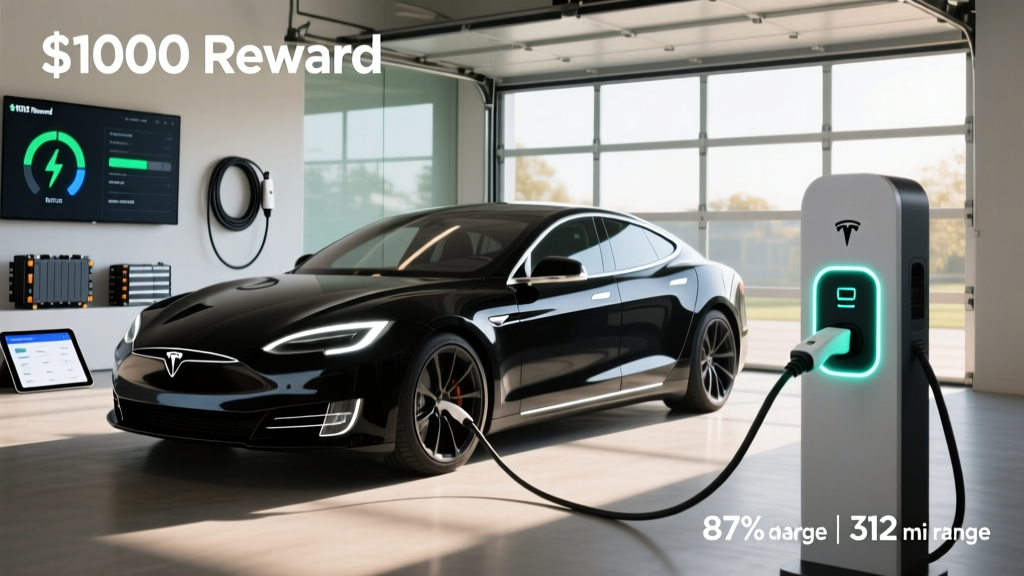
For years, the Tesla $1000 referral was one of the most recognizable incentives in the EV world — a straightforward way for existing owners to earn rewards while giving new buyers a discount. Tesla has revised, paused, and relaunched its referral program multiple times since 2023, shifting from direct cash discounts to Tesla Credits redeemable for Supercharging, accessories, or vehicle purchases. As of early 2026, Tesla's referral structure operates through the Tesla app, rewarding both referrer and referee — but the mechanics, reward amounts, and eligible vehicles change frequently.
This guide cuts through the confusion. We'll explain what Tesla's referral program actually offers right now, then dive into a data-driven look at the vehicles you can buy with it — the 2026 Tesla Model 3 and 2026 Tesla Model Y — including EPA range, charging speeds, real-world efficiency, tax credit eligibility, and total ownership cost. Whether you're chasing a referral discount or simply comparing Teslas against rivals, the numbers below will tell you exactly what you're getting.
How Tesla's Referral and Rewards System Works Now
Tesla's current referral program (accessed via the Tesla app's "Loot Box" or referral dashboard) awards Tesla Credits rather than a flat $1,000 cash discount applied at checkout. Here's how the structure generally operates:
- Referrer (existing owner): Earns Tesla Credits when a referred buyer takes delivery of a new Tesla vehicle or when a referred owner installs Tesla solar/Powerwall.
- Referee (new buyer): May receive a credit or discount — the exact amount varies by quarter, vehicle model, and region. In past iterations, this was a $1,000 discount; more recently, it has been structured as free Supercharging miles or a smaller purchase credit.
- Credit redemption: Tesla Credits can be applied toward Supercharging, vehicle accessories (floor mats, wall connectors), FSD subscriptions, or even a future vehicle purchase.
2026 Tesla Model 3: Range, Charging, and Performance
The refreshed Model 3 (internally called "Highland" and continuing into 2026 with minor updates) remains Tesla's entry-level sedan and one of the most efficient EVs on the market. Here are the hard numbers:
| Spec | RWD (Base) | Long Range AWD | Performance |
|---|---|---|---|
| EPA Range | 272 mi | 363 mi | 315 mi |
| Battery (usable) | ~57.5 kWh (LFP) | ~75 kWh (NMC) | ~75 kWh (NMC) |
| Drivetrain | RWD, single motor | AWD, dual motor | AWD, dual motor |
| Horsepower | 271 hp | 384 hp | 510 hp |
| 0-60 mph | 5.8 sec | 4.2 sec | 2.9 sec |
| MPGe (combined) | 132 MPGe | 134 MPGe | 125 MPGe |
| kWh/100 mi | 25 | 25 | 27 |
| Peak DC charge rate | 170 kW | 250 kW | 250 kW |
| 10-80% DCFC time | ~25 min | ~27 min | ~27 min |
| Level 2 (11.5 kW) | ~44 mi/hr | ~44 mi/hr | ~44 mi/hr |
| Base MSRP | $38,990 | $44,990 | $52,990 |
Battery Chemistry: LFP vs. NMC in the Model 3
The base Model 3 RWD uses a lithium iron phosphate (LFP) battery. LFP offers longer cycle life, lower degradation risk, and Tesla recommends charging to 100% regularly — a significant daily-use advantage. The trade-off: LFP has lower energy density (hence the smaller usable capacity and lower range) and performs worse in extreme cold without preconditioning.
The Long Range and Performance trims use NMC (nickel manganese cobalt) chemistry, which delivers higher energy density and better cold-weather performance but benefits from daily charge limits around 80-90% for longevity. For buyers in northern climates or those who regularly drive 200+ miles between charges, the NMC-equipped Long Range is the pragmatic pick.
2026 Tesla Model Y: The Family SUV Benchmark
The Model Y continues as Tesla's best-selling vehicle globally. The 2025 "Juniper" refresh brought updated styling, improved suspension, a ventilated-seat option, and a rear-seat entertainment screen — all carrying into 2026. Here's the data:
| Spec | RWD (Base) | Long Range AWD | Performance |
|---|---|---|---|
| EPA Range | 270 mi | 327 mi | 295 mi |
| Battery (usable) | ~57.5 kWh (LFP) | ~75 kWh (NMC) | ~75 kWh (NMC) |
| Drivetrain | RWD, single motor | AWD, dual motor | AWD, dual motor |
| Horsepower | 295 hp | 384 hp | 456 hp |
| 0-60 mph | 6.2 sec | 4.8 sec | 3.5 sec |
| MPGe (combined) | 122 MPGe | 125 MPGe | 118 MPGe |
| Peak DC charge rate | 170 kW | 250 kW | 250 kW |
| 10-80% DCFC time | ~25 min | ~27 min | ~27 min |
| Base MSRP | $44,990 | $48,990 | $53,990 |
Cargo and Passenger Space
The Model Y's crossover form factor is its core appeal for families:
- Cargo behind rear seats: 30.2 cu ft
- Cargo with rear seats folded: 72.1 cu ft
- Front trunk (frunk): 4.1 cu ft
- Rear legroom: 41.6 inches
- Front headroom: 40.7 inches
Compared to the Model 3's 23 cu ft trunk, the Model Y's hatchback layout swallows strollers, camping gear, and large Costco runs without fuss. The 72 cu ft maximum with folded seats rivals midsize SUVs like the Subaru Outback.
Charging Speed and Infrastructure: The Supercharger Advantage
Charging speed is where Tesla maintains a tangible edge over most competitors — not just in peak kW, but in network reliability and plug-and-charge simplicity.
| Level | Power (kW) | Miles Added per Hour | Use Case |
|---|---|---|---|
| Level 1 (120V household) | ~1.4 kW | ~3-5 mi/hr | Overnight trickle, emergencies |
| Level 2 (240V home Wall Connector) | 11.5 kW | ~44 mi/hr | Daily home charging (full overnight) |
| DC Fast (Supercharger V3) | Up to 250 kW | ~200 mi in 15 min | Road trips, highway corridors |
| DC Fast (Supercharger V4) | Up to 350 kW* | Faster taper curve | Newest stations, limited availability |
*V4 Supercharger cabinets support up to 350 kW, but current Tesla vehicles are hardware-limited to 250 kW peak at the vehicle inlet. Future vehicles may unlock higher rates.
One significant 2026 development: Tesla has opened its Supercharger network to non-Tesla EVs (via the NACS connector standard or built-in Magic Dock adapters at select stations). This expands the network's revenue but also means Tesla owners may encounter non-Tesla vehicles at busy corridors during peak travel times.
Federal Tax Credit: Does Tesla Qualify Under §30D?
The federal EV tax credit under IRS §30D remains one of the most impactful purchase incentives, but eligibility hinges on MSRP caps, buyer income limits, battery sourcing requirements, and point-of-sale transfer rules. Here's where Tesla models stand for 2026:
- MSRP cap: Sedans (Model 3) must be under $55,000; SUVs/trucks (Model Y) must be under $80,000. All current Model 3 and Model Y trims clear these caps.
- Buyner income cap (AGI): $150,000 single / $225,000 head of household / $300,000 married filing jointly.
- Battery sourcing: Vehicles must meet escalating critical-mineral and battery-component sourcing thresholds that tighten annually. Tesla's shift to LFP cells (many sourced from CATL in China) has created partial-credit situations where some configurations qualify for $3,750 (meeting one of two requirements) rather than the full $7,500.
- Point-of-sale transfer: Buyers can elect to transfer the credit to the dealer at purchase, reducing the out-of-pocket price immediately rather than waiting for a tax refund.
| Model / Trim | MSRP | Est. §30D Credit | Effective Price (est.) |
|---|---|---|---|
| Model 3 RWD | $38,990 | $3,750 (partial)* | ~$35,240 |
| Model 3 Long Range AWD | $44,990 | $7,500 (likely)** | ~$37,490 |
| Model Y RWD | $44,990 | $3,750 (partial)* | ~$41,240 |
| Model Y Long Range AWD | $48,990 | $7,500 (likely)** | ~$41,490 |
*LFP battery configurations with China-sourced cells may only meet the critical-mineral or battery-component requirement, not both, resulting in $3,750. **NMC configurations with North American-sourced components are more likely to qualify for the full $7,500. Always verify current eligibility on the fueleconomy.gov tax credit page and consult a tax professional. Rules change frequently per IRS §30D guidance.
Autopilot, FSD, and Driver Assistance — SAE Level 2
Every 2026 Tesla ships with Basic Autopilot (lane-centering and adaptive cruise control). The optional Full Self-Driving (Supervised) package ($8,000 one-time or $99/month subscription) adds automated lane changes, traffic-light/stop-sign recognition, and city-street navigation-assisted driving.
Who Should Buy a Tesla in 2026 — And Who Should Look Elsewhere
Pros
- Best-in-class Supercharger network reliability and coverage
- Industry-leading efficiency (kWh/100 mi) in both Model 3 and Model Y
- Over-the-air updates continuously add features post-purchase
- Strong resale value relative to most EV competitors
- Minimalist interior = low maintenance (no physical buttons to break)
- LFP option allows 100% daily charging without degradation anxiety
Cons
- Minimalist interior polarizes — no instrument cluster, turn-signal stalks removed in Highland/Juniper
- Panel gap quality and paint remain inconsistent vs. legacy automakers
- Service center wait times in some metro areas stretch to weeks
- FSD (Supervised) is expensive ($8,000) and still requires full driver attention
- No Apple CarPlay / Android Auto — Tesla's proprietary infotainment only
- LFP cold-weather range loss is significant without preconditioning
Best Use Cases
- Daily commuter with home charging: Model 3 RWD at ~$35K after credit is hard to beat for a 40-mile round-trip commute.
- Growing family needing cargo space: Model Y Long Range with 327 mi EPA range handles road trips and school runs without range stress.
- Road-trip enthusiast: Tesla's Supercharger network is still the most reliable DC fast-charging ecosystem in North America for long-distance travel.
- Tech-forward buyer: If you value OTA updates, app integration, and a screen-first UX, Tesla's software ecosystem is unmatched.
Look Elsewhere If…
- You want Apple CarPlay or physical buttons for climate/audio (consider Hyundai Ioniq 5 or BMW i4).
- You tow heavy loads regularly (Model Y max towing is 3,500 lbs — the Ford F-150 Lightning or Rivian R1S handle more).
- You live in a region with limited Tesla Service Centers and need dealer-based service convenience.
Frequently Asked Questions
Is the Tesla $1000 referral still available in 2026?
Tesla's referral program has shifted from a flat $1,000 discount to a Tesla Credits system that varies by quarter and region. Check the Tesla app or tesla.com/referral for the current reward structure. The "Tesla $1000 referral" headline often reflects past promotions — current credits may be higher or lower, and they're typically redeemable for Supercharging, accessories, or future purchases rather than applied as a direct price reduction at delivery.
What is the real-world range of the 2026 Model 3 and Model Y?
For the Model 3 Long Range AWD (EPA 363 mi), expect roughly 300-315 miles on the highway at 75 mph and 250-280 miles in freezing winter conditions. The Model Y Long Range AWD (EPA 327 mi) delivers approximately 280-295 real-world highway miles and 240-260 in cold weather. LFP-equipped RWD trims see greater cold-weather losses — budget 20-30% below EPA in sub-freezing temps.
How fast do Teslas charge at home and on the road?
At home on a Level 2 Tesla Wall Connector (11.5 kW / 48A), both Model 3 and Model Y add approximately 44 miles of range per hour — a full overnight charge from 20-80% takes about 5-6 hours. On the road, Long Range and Performance models peak at 250 kW on V3 Superchargers, achieving 10-80% in roughly 27 minutes. The RWD (LFP) trims peak at 170 kW, adding a few minutes to that curve.
Does a Tesla qualify for the $7,500 federal EV tax credit?
Most Model 3 and Model Y trims qualify for at least $3,750 under IRS §30D, and NMC-equipped Long Range/AWD trims are likely eligible for the full $7,500 — subject to buyer income limits ($150K/$225K/$300K AGI caps) and battery-sourcing requirements that tighten annually. Always verify on fueleconomy.gov before purchasing, as the eligible-vehicle list updates regularly.
Is a Tesla worth buying vs. competitors like the Hyundai Ioniq 5 or BMW i4?
Tesla's advantages are efficiency, Supercharger access, and software. The Hyundai Ioniq 5 charges faster on CCS networks (up to 350 kW peak, 10-80% in ~18 min on capable chargers) and offers a more conventional interior with physical controls. The BMW i4 provides superior build quality and Apple CarPlay. If Supercharger reliability and OTA features matter most, Tesla wins. If interior refinement or CarPlay are dealbreakers, test-drive the alternatives.
What's the battery warranty on a 2026 Tesla?
Tesla covers the battery and drive unit for 8 years / 100,000 miles on RWD trims and 8 years / 120,000 miles on Long Range and Performance trims, whichever comes first. The warranty guarantees a minimum 70% battery capacity retention over the warranty period. This is competitive with the industry standard (Hyundai offers 10yr/100K on the Ioniq 5 battery).