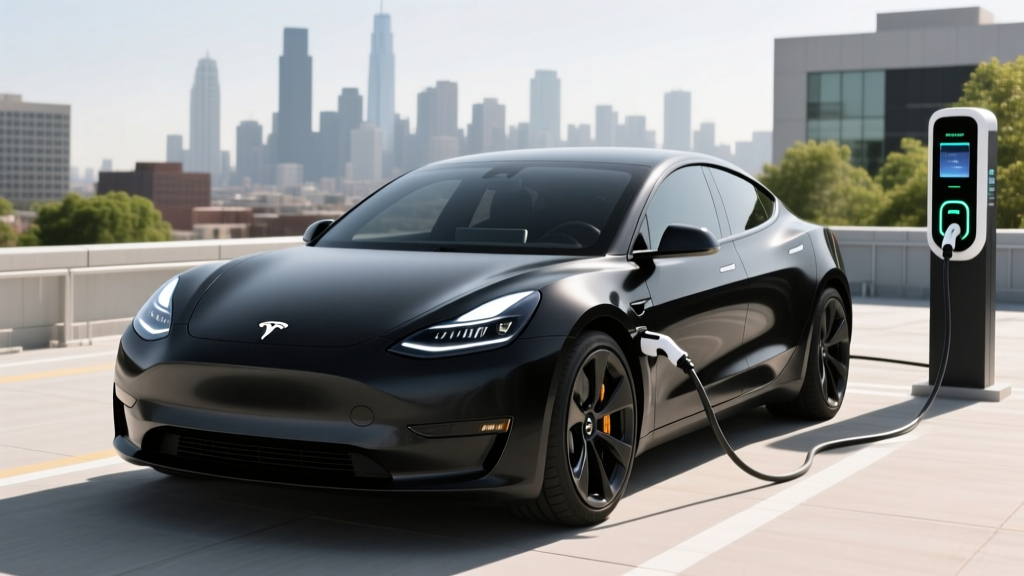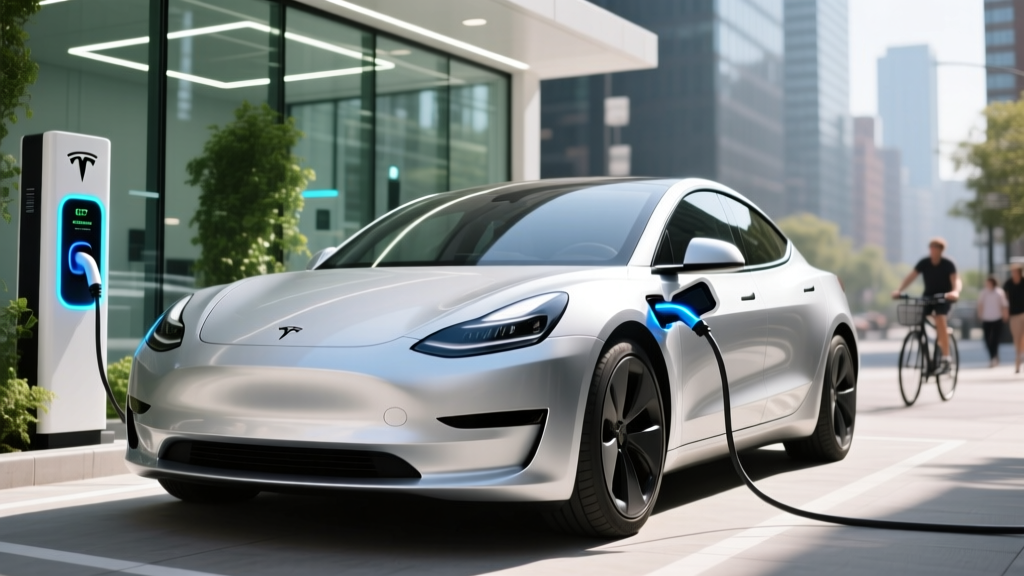
If you follow Tesla's engineering roadmap, you have probably seen the shorthand "Tesla 10/7" circulating in forums, earnings calls, and Supercharger discussions. It is not a new vehicle, a trim level, or a secret project codename. It is a charging-performance target: adding roughly 70% state of charge in about 10 minutes at a DC fast charger. For context, that is the kind of refill speed that makes a 320-mile EV feel almost as convenient as a gas car on a road trip — provided the charging network can actually deliver the power.
As of 2026, no production Tesla fully hits a literal 10-minute, 0-to-70% charge across every condition. But the Cybertruck, refreshed Model 3 Highland, and Model Y Juniper variants with 4680 cells and V4 Supercharger access are knocking on the door. Here is what the 10/7 benchmark actually requires, which current Teslas come closest, and what it means for your next purchase.
What "Tesla 10/7" Actually Means
The "10/7" shorthand refers to a charge-curve milestone, not a sustained power number. Specifically:
- 10 = minutes spent at the charger
- 7 = tens of percent of battery capacity added (i.e., ~70% SoC gain, typically measured from ~10% to ~80%)
For a 75 kWh usable battery, adding 70% means pushing roughly 52.5 kWh into the pack in 10 minutes. That requires an average charge rate of about 315 kW across the entire session — not a peak number, but a sustained average through the steep part of the curve. For reference, most 2026 EVs peak between 170 and 270 kW and average far less due to taper above 50-60% SoC.
| Metric | Value |
|---|---|
| Battery capacity (usable) | 75 kWh (typical Tesla) |
| Energy added (10% → 80%) | ~52.5 kWh |
| Time window | 10 minutes (0.167 hours) |
| Required average power | ~315 kW |
| Current V3 Supercharger peak | 250 kW |
| Current V4 Supercharger peak | ~350 kW (cabinet-dependent) |
The math shows why 10/7 is aspirational for most of today's fleet — and why it depends as much on the charger as the vehicle. Tesla's V4 Supercharger cabinets, rolling out through 2025-2026, are designed to support up to 350 kW on capable vehicles, but the car's battery chemistry, thermal management, and charge-curve programming determine how much of that it can actually accept.
Which 2026 Teslas Come Closest to 10/7
Not every Tesla is built for extreme charge rates. The limiting factors are cell chemistry, pack architecture, and thermal preconditioning. Here is how the current lineup stacks up against the 10/7 benchmark.
| Model | Usable kWh | Cell Type | Peak DC kW | 10-80% Time | Est. 10-Min SoC Gain |
|---|---|---|---|---|---|
| Model 3 RWD (Highland) | ~57.5 | LFP | ~170 kW | ~25 min | ~35-40% |
| Model 3 Long Range AWD | ~75 | NMC (2170) | ~250 kW | ~22 min | ~50-55% |
| Model Y LR (Juniper) | ~75 | NMC (2170) | ~250 kW | ~22 min | ~50-55% |
| Cybertruck AWD | ~123 | NMC (4680) | ~250-350 kW* | ~15-18 min | ~55-65% |
| Model S Plaid | ~95 | NMC (2170/4680) | ~250 kW | ~20 min | ~50-55% |
*Cybertruck with 4680 cells on a V4 Supercharger cabinet capable of 350 kW; real-world sessions often peak ~280-320 kW and taper.
The Cybertruck with 4680 cells is the closest production Tesla to a 10/7-style experience, and even it falls a bit short of the literal benchmark. Its massive pack and tabless cell design allow higher sustained charge rates than older 2170 packs, but physics — specifically, lithium plating risk and heat generation — still force taper as SoC climbs past 60%.
Peak kW is a marketing number; average kW across the session is what determines your stop time. A Cybertruck that peaks at 320 kW but averages 240 kW from 10-80% will add about 40 kWh in 10 minutes — roughly 32% of its 123 kWh pack, or about 100-110 miles of real-world range at highway speeds. That is impressive, but it is not 70% in 10 minutes.
Why 10/7 Matters for Road-Trip Practicality
The reason engineers and owners obsess over the 10-80% window is that it mirrors how people actually road-trip: you arrive at a charger with 10-15% left, plug in, grab a snack, and leave at 75-80% to preserve battery health and avoid the brutal taper above 80%. If that window shrinks to 10 minutes, a 600-mile drive with two stops adds only ~20 minutes of total charging — comparable to gas-car rest stops.
Here is what 10/7-style performance translates to in miles added, by model:
- Model 3 LR (334 mi EPA): 70% of range = ~234 miles added. At 4 mi/kWh, that's ~58 kWh, requiring ~350 kW average. Not achievable today.
- Cybertruck AWD (340 mi EPA): 70% of range = ~238 miles. At ~2.3 mi/kWh, that's ~103 kWh. Physically impossible in 10 minutes with current infrastructure.
- Model 3 RWD (272 mi EPA): 70% of range = ~190 miles. At ~4.2 mi/kWh, that's ~45 kWh, requiring ~270 kW average. Plausible on next-gen V4 cabinets with preconditioned NMC packs — but not LFP.
The takeaway: 10/7 is most realistic on mid-size packs (60-80 kWh) with NMC chemistry and aggressive thermal preconditioning. Large-pack vehicles like the Cybertruck will never hit 70% in 10 minutes because the absolute energy requirement is too high.
Charging Infrastructure: The Other Half of 10/7
A car capable of 350 kW average charging is useless if the stall can only deliver 150 kW. As of early 2026, Tesla's Supercharger network includes a growing number of V4 cabinets rated for up to 350 kW (and eventually higher), but most stalls in the field are still V3 at 250 kW peak. Non-Tesla networks like Electrify America and EVgo also have 350 kW-capable hardware, but real-world delivery often falls short due to cabinet sharing, grid constraints, and cable limitations.
| Charger Type | Peak kW | Typical Avg kW (10-80%) | Miles Added in 10 Min (Model 3 LR) |
|---|---|---|---|
| V2 Supercharger | 150 kW | ~90-110 kW | ~50-60 mi |
| V3 Supercharger | 250 kW | ~150-180 kW | ~85-100 mi |
| V4 Supercharger | ~350 kW | ~200-260 kW* | ~115-150 mi |
*Depends on vehicle charge acceptance; LFP vehicles cap well below NMC.
For home charging, 10/7 is irrelevant. A Level 2 Tesla Wall Connector at 11.5 kW (48A on a 60A circuit) adds roughly 44-52 miles per hour depending on the model. Overnight charging from 20% to 80% takes 6-8 hours, which is the practical sweet spot for daily ownership.
Tax Credit, Pricing, and Which Trim Gets You Closest
If you are buying a Tesla specifically for fast-charge capability, the trim you choose matters enormously. The base RWD models with LFP batteries charge significantly slower than Long Range and Performance variants with NMC cells.
| Model / Trim | Base MSRP | §30D Credit Eligible? | Effective Price (Est.) |
|---|---|---|---|
| Model 3 RWD | ~$38,990 | Yes (if income/sourcing rules met) | ~$31,490 |
| Model 3 Long Range AWD | ~$45,490 | Yes (MSRP under $55K cap) | ~$37,990 |
| Model Y LR AWD | ~$46,630 | Yes (SUV cap $80K) | ~$39,130 |
| Cybertruck AWD | ~$79,990 | Yes (truck cap $80K, tight) | ~$72,490 |
| Model S LR | ~$79,990 | No (sedan MSRP cap $55K) | $79,990 |
Key §30D caveats (per IRS guidelines):
- Buyer AGI must not exceed $150K (single), $225K (head of household), or $300K (joint).
- Sedan MSRP cap is $55,000; SUV/truck/van cap is $80,000.
- Battery critical-mineral and component sourcing requirements apply and change annually — verify on fueleconomy.gov before purchasing.
- Credit can be transferred to the dealer at point of sale as a price reduction.
If 10/7-style charging speed is your priority, the Model 3 Long Range or Model Y Long Range with NMC cells is the sweet spot — they qualify for the credit, charge at up to 250 kW, and deliver the best balance of range and refill speed.
Pros, Cons, and Who Should Care About 10/7
Pros of Chasing 10/7 Performance
- Road-trip charging stops shrink to 12-18 minutes on V4 Superchargers
- Reduced "charging deserts" impact — less time per stop means fewer stalls needed
- NMC-equipped trims offer best balance of range + speed + cold-weather resilience
- 4680 cell architecture future-proofs for next-gen Supercharger rollouts
- Tesla's integrated navigation + preconditioning optimizes charge curves automatically
Cons and Limitations
- No 2026 production Tesla fully achieves 70% in 10 minutes
- V4 Supercharger stalls at 350 kW are still limited in geographic coverage
- LFP-equipped RWD trims charge substantially slower (~170 kW peak)
- Extreme charge rates accelerate long-term degradation if used frequently
- Cold weather can cut DC fast-charge speeds by 30-50% without adequate preconditioning
- 10/7 is a marketing shorthand, not an official Tesla spec — treat claims skeptically
Who should prioritize 10/7-style charging? Frequent road-trippers, rideshare drivers covering 200+ miles daily, and anyone without reliable home charging who depends on public DC fast charging. If you charge at home overnight 90% of the time, the difference between 22-minute and 15-minute DC stops is academic.
Competitor Comparison: Who Else Is Close to 10/7?
Tesla is not the only automaker pushing charge speeds. The Hyundai Ioniq 5 and Kia EV6 (800V architecture) have offered ~240 kW peak charging since 2022, and the Porsche Macan Electric and Audi Q6 e-tron push ~270 kW on 800V systems. The Lucid Air, with its 900V+ architecture, peaks above 300 kW in ideal conditions — arguably the closest production EV to a true 10/7 profile, albeit at a much higher price point.
Tesla's advantage is not peak vehicle capability but network integration. A Model 3 LR navigating to a V4 Supercharger with active preconditioning will typically deliver a more consistent charge session than a competitor hunting for a functional 350 kW stall on a third-party network.
What is the real-world range of a Tesla optimized for 10/7 charging?
The Model 3 Long Range AWD carries an EPA-estimated 334 miles. Real-world highway driving at 70-80 mph typically yields 280-300 miles; cold weather (below 32°F) can reduce that to 240-260 miles. The Cybertruck's 340-mile EPA estimate drops to roughly 270-290 miles at highway speeds due to its aerodynamic profile.
How fast does a 10/7-capable Tesla charge at home?
Home charging is unaffected by DC fast-charge capability. A Tesla Wall Connector at 11.5 kW (48A) adds ~44 miles per hour on a Model 3 LR and ~38 miles per hour on a Cybertruck. A full 10-80% charge overnight takes 6-8 hours regardless of DC fast-charge potential.
Does pursuing 10/7-style charging degrade the battery faster?
Frequent DC fast charging at extreme rates (above 200 kW sustained) does accelerate degradation compared to Level 2 home charging. Tesla's battery warranty covers 8 years or 120,000 miles (whichever comes first) with a minimum 70% capacity retention threshold. Owners who DC fast-charge daily should expect slightly higher degradation over 5 years — typically 12-18% vs. 8-12% for home-charged vehicles, based on fleet data.
Does a 10/7-optimized Tesla qualify for the federal EV tax credit?
Eligibility depends on the specific model, MSRP, buyer income, and battery sourcing — not on charging speed. The Model 3 LR and Model Y LR currently qualify (subject to IRS §30D rules). The Model S does not due to its sedan MSRP exceeding the $55,000 cap. Always verify current eligibility before purchasing.
Is it worth buying a Tesla now or waiting for true 10/7 capability?
If you need an EV today, the 2026 Model 3 LR and Model Y LR offer excellent real-world charging (10-80% in ~22 minutes on V3 stalls). True 10/7 performance — 70% in 10 minutes — will likely require next-generation 4680 cells, wider V4 deployment, and possibly 800V+ architecture, which Tesla has not confirmed for consumer vehicles before 2027-2028. Buying now and enjoying 22-minute stops is the pragmatic choice for most buyers.