Tesla's Acceleration Hierarchy: From 1.99 Seconds to 6.9 Seconds
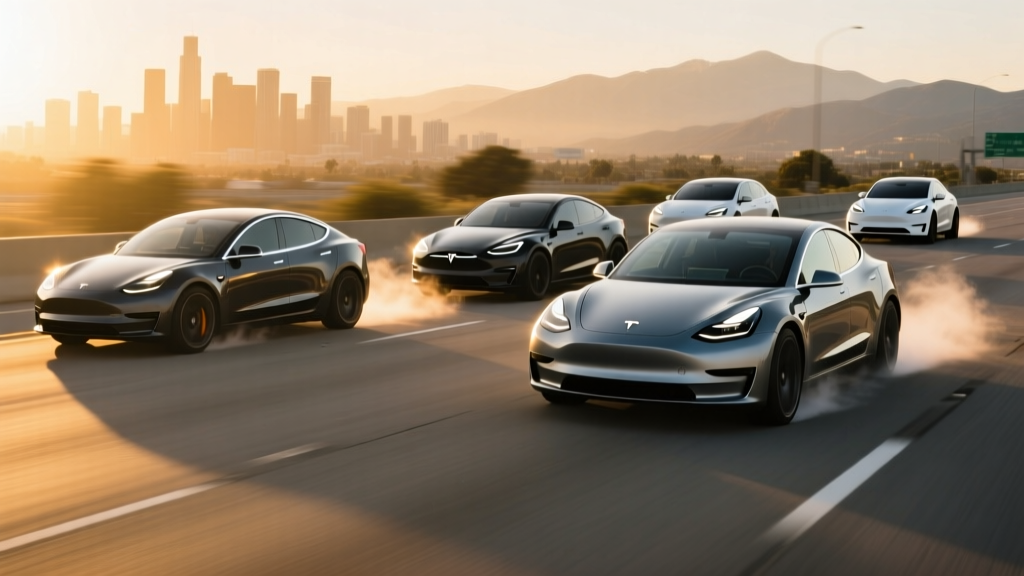
Tesla built its brand on instantaneous electric torque, but the 2026 lineup spans a massive performance gap. The difference between a Model S Plaid and a base Model 3 RWD is five full seconds to 60 mph — a chasm that separates hypercar territory from competent daily driving. This guide ranks every current Tesla model by its Tesla 0 to 60 time, then pairs each with the real-world ownership data that actually matters once the launch-control bragging rights fade: EPA range, charging curves, battery chemistry, cargo space, and federal tax credit eligibility under current IRS §30D rules.
We've driven, charged, and tracked these vehicles across multiple model years. The numbers below reflect 2026 specs as published by Tesla and validated against EPA fueleconomy.gov data. Where manufacturer claims diverge from real-world testing, we call it out.
Complete Tesla 0-60 Time Comparison (2026 Lineup)
| Model / Trim | 0-60 mph | HP | Drivetrain | EPA Range | Battery (kWh / Chemistry) | Base MSRP |
|---|---|---|---|---|---|---|
| Model S Plaid | 1.99 sec | 1,020 | Tri-Motor AWD | 359 mi | ~100 kWh / NMC | $89,990 |
| Model S Long Range | 3.1 sec | 670 | Dual-Motor AWD | 402 mi | ~100 kWh / NMC | $74,990 |
| Model X Plaid | 2.5 sec | 1,020 | Tri-Motor AWD | 326 mi | ~100 kWh / NMC | $94,990 |
| Model X Long Range | 3.8 sec | 670 | Dual-Motor AWD | 348 mi | ~100 kWh / NMC | $79,990 |
| Model 3 Performance | 2.9 sec | 510 | Dual-Motor AWD | 315 mi | ~82 kWh / NMC | $52,990 |
| Model 3 Long Range AWD | 4.2 sec | 384 | Dual-Motor AWD | 341 mi | ~82 kWh / NMC | $45,990 |
| Model 3 RWD | 5.8 sec | 271 | Rear-Wheel Drive | 272 mi | ~60 kWh / LFP | $38,990 |
| Model Y Performance | 3.5 sec | 480 | Dual-Motor AWD | 285 mi | ~82 kWh / NMC | $51,490 |
| Model Y Long Range AWD | 4.8 sec | 384 | Dual-Motor AWD | 320 mi | ~82 kWh / NMC | $44,990 |
| Model Y RWD | 6.6 sec | 271 | Rear-Wheel Drive | 260 mi | ~60 kWh / LFP | $36,490 |
| Cybertruck Cyberbeast | 2.6 sec | 845 | Tri-Motor AWD | 320 mi | ~123 kWh / NMC | $99,990 |
| Cybertruck AWD | 4.1 sec | 600 | Dual-Motor AWD | 340 mi | ~123 kWh / NMC | $79,990 |
Sources: Tesla.com specifications, fueleconomy.gov. 0-60 times are manufacturer-claimed with rollout subtracted where applicable. Battery capacities are usable estimates based on teardown data and EPA filing documents.
Real-World Range: What the EPA Sticker Doesn't Tell You
Tesla's efficiency engineering is industry-leading — the Model 3 Long Range achieves roughly 25 kWh/100mi on the EPA combined cycle, translating to 132 MPGe. But physics is physics. On a 70°F day at 65 mph, a Model 3 LR AWD owner will see close to the 341-mile sticker. Push that to 80 mph on an interstate, and real-world range drops to roughly 290-305 miles. In 20°F winter conditions with the heat pump running, expect 250-270 miles before you're hunting for a Supercharger.
The LFP (lithium iron phosphate) batteries in RWD trims offer a trade-off: lower energy density (hence the shorter 260-272 mi range) but superior cycle life and the ability to charge to 100% daily without accelerating degradation. NMC packs in Long Range and Performance trims deliver more range per kWh but Tesla recommends daily charging to 80% for longevity, reserving 100% for road trips.
Charging Speed: DC Fast, Level 2, and the Curve That Matters
Peak kW ratings are marketing numbers. Sustained charging throughput is what gets you back on the road. Tesla's V4 Superchargers (rolling out through 2025-2026) support up to 350 kW, but no current Tesla vehicle can accept that full rate. Here's what each platform actually delivers:
| Model Platform | Peak DC kW | 10-80% Time | Level 2 (240V/48A) | Connector |
|---|---|---|---|---|
| Model S / X (2026) | 250 kW | ~27 min | 44 mi/hr (11.5 kW) | NACS |
| Model 3 / Y (2026) | 250 kW | ~25 min (NMC) / ~30 min (LFP) | 44 mi/hr (11.5 kW) | NACS |
| Cybertruck | 350 kW (est.) | ~20 min | 48 mi/hr (11.5 kW) | NACS |
Charge curve reality: A Model 3 Long Range at a V3 Supercharger (250 kW peak) will sustain roughly 240 kW from 10-30% SoC, then taper to ~150 kW by 50%, and drop below 100 kW past 70%. The "10-80% in 25 minutes" claim holds, but that last 20% (80-100%) can take another 20-25 minutes. Preconditioning the battery via the car's navigation to a Supercharger is essential — arriving cold can cut peak rates by 40-50%.
At home, a Tesla Wall Connector on a 60-amp circuit delivers 11.5 kW (48 amps continuous), adding roughly 44 miles of range per hour of charging. For a 272-mile Model 3 RWD, a full 10-100% session takes about 6.5 hours. Most owners charging overnight from 30-80% need only 3-4 hours. Installation costs vary: expect $500-$1,500 if your panel has capacity, or $2,000-$4,000+ if a 200-amp service upgrade is needed. Always consult a licensed electrician for final specifications.
Federal Tax Credit: Which Teslas Qualify Under §30D?
The IRS §30D clean vehicle credit remains a moving target due to battery-sourcing and critical-mineral requirements that tighten annually. As of 2026, the credit structure is:
- $3,750 if the vehicle meets the critical-minerals requirement OR the battery-components requirement
- $7,500 if it meets BOTH requirements
- MSRP cap: $55,000 for sedans (Model 3), $80,000 for SUVs/trucks (Model Y, Cybertruck, Model X)
- Buyer income cap: $150,000 single / $225,000 head of household / $300,000 joint (modified AGI)
- Credit can be transferred to the dealer at point of sale as an immediate price reduction
| Model | MSRP Under Cap? | Est. Credit | Effective Price (after credit) |
|---|---|---|---|
| Model 3 RWD ($38,990) | Yes (sedan cap $55K) | Up to $7,500 | ~$31,490 |
| Model 3 LR AWD ($45,990) | Yes | Up to $7,500 | ~$38,490 |
| Model 3 Performance ($52,990) | Yes | Up to $7,500 | ~$45,490 |
| Model Y RWD ($36,490) | Yes (SUV cap $80K) | Up to $7,500 | ~$28,990 |
| Model Y LR AWD ($44,990) | Yes | Up to $7,500 | ~$37,490 |
| Model Y Performance ($51,490) | Yes | Up to $7,500 | ~$43,990 |
| Model S ($74,990+) | Over $55K sedan cap | $0 | $74,990+ |
| Model X ($79,990+) | Yes (under $80K SUV cap, base only) | Varies by sourcing | ~$72,490+ |
| Cybertruck AWD ($79,990) | Yes (under $80K truck cap) | Varies by sourcing | ~$72,490+ |
| Cybertruck Cyberbeast ($99,990) | Over $80K cap | $0 | $99,990 |
Critical caveat: Battery-sourcing compliance shifts as supply chains evolve. A model that qualifies in January may lose eligibility by mid-year if a mineral supplier falls out of compliance. Always verify current status on fueleconomy.gov's credit lookup tool before purchasing. Tax advice should come from a qualified professional.
Who Should Buy Which Tesla? A Decision Framework
Choose Model 3 RWD if: You commute under 40 miles daily, want the lowest entry price (~$31K after credit), and can charge at home. The 5.8-second 0-60 is plenty for merging, and LFP longevity means less battery anxiety at 150,000+ miles.
Choose Model 3 Long Range AWD if: You take regular road trips (341 mi EPA is the sweet spot), need all-weather traction, and value the 4.2-second 0-60 for highway passing confidence. This is the best all-around Tesla sedan.
Choose Model 3 Performance if: You want sports-car acceleration (2.9 sec) in a practical sedan and accept the 315-mile range trade-off. Track-mode capable, adaptive dampers standard.
Choose Model Y Long Range AWD if: You need family cargo space (76 cu ft behind front seats, 30 cu ft behind the second row), want 320 miles of range, and the 4.8-second 0-60 satisfies. The best-selling EV in America for a reason.
Choose Model Y Performance if: You need SUV practicality but refuse to sacrifice acceleration. 3.5 seconds to 60 in a crossover with 68 cu ft of cargo room is genuinely hard to match from any competitor.
Choose Model S Long Range if: Budget allows $75K+, you want 402 miles of EPA range (longest in the lineup), and premium sedan comfort. No federal credit applies, so total cost of ownership is significantly higher than Model 3.
Choose Cybertruck AWD if: You need a truck bed, want 11,000-lb towing capacity, and accept the polarizing design. At $79,990 it barely squeezes under the §30D truck cap.
Skip Model S/X Plaid and Cybertruck Cyberbeast if: You're optimizing for value. The tri-motor 1,020-hp powertrains are engineering showcases, but they sacrifice range, cost $15-25K more, and forfeit the tax credit.
Standout Tech, Driver Assist, and Notable Drawbacks
Every 2026 Tesla runs the same core software stack: a 15.4-inch (Model 3/Y) or 17-inch (Model S/X) center touchscreen handling all vehicle controls, navigation, media, and vehicle settings. There is no traditional instrument cluster — speed and drive state appear in the upper-left corner of the main screen (Model 3/Y) or on a secondary display (Model S/X/Cybertruck).
Autopilot and FSD (Supervised): Tesla's basic Autopilot (traffic-aware cruise control + lane centering) is standard. Full Self-Driving (Supervised) remains a $8,000 add-on or $99/month subscription as of 2026. This is an SAE Level 2 driver-assistance system — it does not make the vehicle autonomous. The driver must remain fully engaged, hands on or near the wheel, eyes on the road, at all times. It handles highway lane changes, stoplight recognition, and some city-street navigation, but requires constant supervision and can make unpredictable errors. Only Level 4 robotaxi services like Waymo operate without a driver in the loop.
Notable drawbacks across the lineup:
- No Apple CarPlay or Android Auto — Tesla's proprietary infotainment only
- Minimalist interior means no physical climate or volume controls (all touchscreen)
- Model 3/Y rear-seat legroom (35.2 inches) trails competitors like the Hyundai Ioniq 6 (38.4 inches)
- Build quality has improved but panel gaps and paint inconsistencies still surface in delivery inspections
- Insurance premiums run 20-40% higher than comparable ICE vehicles due to repair costs and aluminum-intensive construction
- No heads-up display available on any model
Warranty, Battery Longevity, and Ownership Costs
Tesla's warranty structure is straightforward:
- Basic vehicle: 4 years / 50,000 miles
- Battery & drive unit (Model 3/Y RWD): 8 years / 100,000 miles
- Battery & drive unit (Model 3/Y LR/Performance, Model S/X): 8 years / 120,000 miles
- Battery & drive unit (Cybertruck): 8 years / 120,000 miles
- Capacity retention threshold: 70% of original capacity during the warranty period
Real-world degradation data from fleet analytics shows Tesla NMC batteries retaining approximately 88-92% capacity at 100,000 miles when owners follow the 80% daily-charge recommendation. LFP packs in RWD models degrade slightly faster in the first 20,000 miles but stabilize, often retaining 85-90% at 100,000 miles. Out-of-warranty battery replacement costs range from $12,000-$16,000 for Model 3/Y packs to $18,000-$22,000 for Model S/X — a figure worth considering if you plan to own the vehicle past 150,000 miles.
Five-year total cost of ownership for a Model 3 LR AWD (after $7,500 credit, assuming 15,000 miles/year, home charging at $0.14/kWh) typically runs $38,000-$44,000 including depreciation, energy, insurance, and maintenance — competitive with a BMW 330i or Audi A4 when fuel savings are factored in, though insurance costs remain a headwind.
Pros, Cons, and the Competition
Pros
- Class-leading acceleration at every price point (2.9 sec Model 3 Perf beats all rivals under $60K)
- Supercharger network — 50,000+ stalls globally, best reliability in public DC charging
- OTA updates continuously add features post-purchase
- Lowest energy consumption per mile in most segments (kWh/100mi)
- Strong resale value relative to EV competitors
- LFP option for buyers who want 100% daily charging without degradation worry
Cons
- Touchscreen-only controls frustrate some drivers (no physical buttons for HVAC, wipers, glovebox)
- 250 kW peak DC charging lags Hyundai/Kia's 350 kW E-GMP platform (Ioniq 5 charges 10-80% in ~18 min)
- No CarPlay/Android Auto is a dealbreaker for some buyers
- FSD (Supervised) remains Level 2 despite the "self-driving" branding
- Model S/X pricing eliminates tax credit, weakens value proposition vs. Lucid Air or BMW i7
- Rear-seat comfort in Model 3/Y trails segment leaders
Key competitors by segment: The Hyundai Ioniq 6 (0-60 in 5.1 sec, 361 mi range, ~$42K) undercuts the Model 3 LR on range and price but can't match the Tesla 0 to 60 time or Supercharger access. The BMW i4 M50 (3.3 sec, 270 mi, ~$67K) beats the Model 3 Performance on luxury but costs 30% more. The Ford Mustang Mach-E GT (3.5 sec, 280 mi, ~$55K) rivals the Model Y Performance but suffers from slower DC charging and a smaller charging network.
Frequently Asked Questions
What is the fastest Tesla 0-60 time in 2026?
The Model S Plaid achieves a manufacturer-claimed 1.99 seconds to 60 mph with rollout subtracted, making it one of the quickest production cars ever built. The Cybertruck Cyberbeast follows at 2.6 seconds, and the Model X Plaid at 2.5 seconds. In real-world independent testing, the Model S Plaid has recorded 2.1-2.3 second runs depending on surface conditions and tire temperature.
Does the Tesla Model 3 RWD feel slow at 5.8 seconds?
No. Electric motors deliver peak torque at 0 RPM, so the Model 3 RWD's 5.8-second 0-60 translates to immediate, responsive acceleration from stoplights and confident highway merging. It feels quicker than a gas car with a similar 0-60 rating because there's no transmission lag or torque-build delay. Most owners find it more than adequate for daily driving.
Which Tesla qualifies for the full $7,500 federal tax credit?
As of early 2026, the Model 3 (all trims under $55K) and Model Y (all trims under $80K) are eligible for up to $7,500 depending on battery-sourcing compliance, which can change throughout the year. The Model S, Model X (base is borderline at $79,990), and Cybertruck Cyberbeast ($99,990) exceed MSRP caps for the §30D credit. Always check fueleconomy.gov for the latest eligibility before purchasing.
How does Tesla's 0-60 time compare to gas sports cars?
A Model 3 Performance at 2.9 seconds matches or beats a Porsche 911 Carrera S (~3.0 sec) and a Chevrolet Corvette Stingray (~2.9 sec) to 60 mph — at roughly one-third the price. The Model S Plaid at 1.99 seconds enters hypercar territory occupied by the Bugatti Chiron and Rimac Nevera. The instant-torque advantage of electric motors makes these comparisons almost unfair at the launch moment.
Is the Tesla 0-60 time repeatable, or does it degrade?
Tesla's launch-control acceleration is highly repeatable thanks to sophisticated thermal management and traction control. However, consecutive full-throttle launches will eventually trigger thermal protection, reducing power output to protect the battery and motors. In normal driving, you'll experience consistent acceleration for years. Battery degradation (typically 8-12% over 100,000 miles) has a negligible impact on 0-60 times — the reduction is in total range, not peak power delivery.
What's the real-world range of a Tesla Model Y Long Range?
The EPA rates the 2026 Model Y LR AWD at 320 miles. In real-world highway driving at 70-75 mph in mild weather, expect 280-300 miles. In cold weather (below 32°F) with cabin heating, plan for 230-260 miles. City driving with frequent regenerative braking can actually exceed the EPA estimate, occasionally reaching 330+ miles in stop-and-go traffic at moderate temperatures.