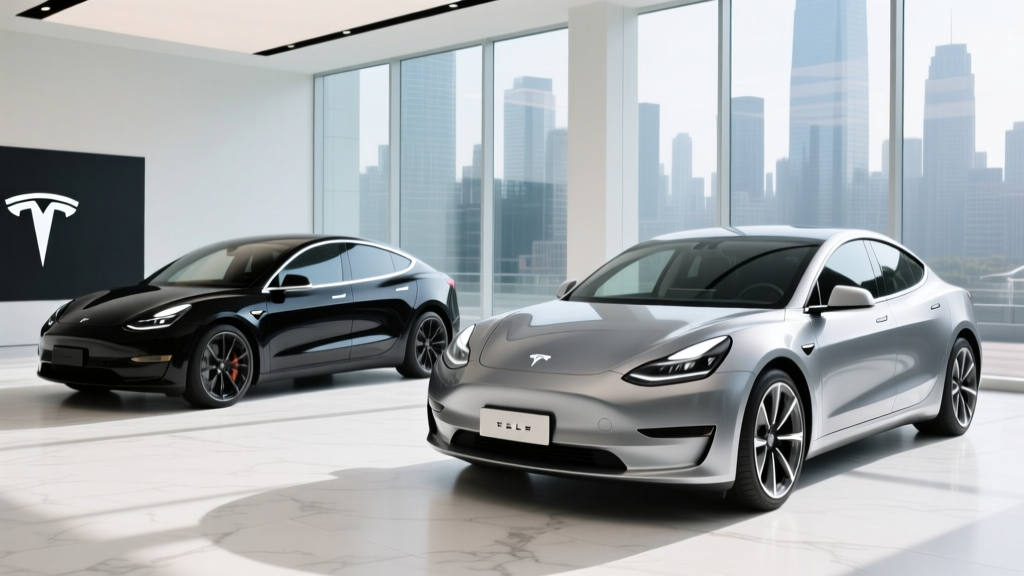
Tesla periodically rolls out promotional financing — including 0% APR offers on select trims — to move inventory and stay competitive in an increasingly crowded EV market. For 2026, these Tesla 0 percent finance promotions have appeared on specific Model 3 and Model Y configurations, effectively eliminating interest charges over a 36- to 60-month loan term. But a 0% APR deal only matters if the underlying vehicle delivers real-world value. Below, we profile the models most commonly eligible, dissect their specs, and calculate whether the math actually works in your favor.
Which Tesla Models Qualify for 0% Financing in 2026?
Tesla's promotional financing rotates by quarter and trim. As of early 2026, 0% APR offers have primarily targeted:
- Model 3 Long Range AWD — the volume seller with the best range-to-price ratio in the lineup
- Model Y Long Range AWD — the crossover variant most families cross-shop against the Hyundai Ioniq 5 and Ford Mustang Mach-E
- Model 3 RWD (base) — occasionally included during end-of-quarter pushes
Performance trims and the Cybertruck have not been part of 0% promotions. These deals are typically offered through Tesla's captive finance arm or partner banks and require well-qualified credit (generally 720+ FICO). Always check Tesla's current financing page for live offers, as terms change without notice.
Model 3 Long Range AWD: The Core 0% Finance Candidate
| Spec | 2026 Tesla Model 3 Long Range AWD |
|---|---|
| EPA Range | 341 miles |
| Battery (usable) | ~75 kWh, NMC (nickel manganese cobalt) |
| Max DC Fast Charge | 250 kW peak (V3 Supercharger) |
| 10-80% DC Charge Time | ~27 minutes |
| Level 2 Home Charge (11.5 kW / 48A) | ~44 miles per hour |
| 0-60 mph | 4.2 seconds |
| Horsepower | ~384 hp (dual motor) |
| Drivetrain | Dual-motor AWD |
| EPA Efficiency | 131 MPGe combined / 25 kWh/100 mi |
| Cargo Volume | 23 cu ft (rear trunk + frunk) |
| Rear Legroom | 35.2 inches |
| Battery Warranty | 8 years / 120,000 miles (min 70% retention) |
| Base MSRP | $47,740 (before destination) |
Real-World Range: What the EPA Sticker Doesn't Tell You
EPA Estimate: 341 miles
Real-World Highway (70-80 mph, 72°F): ~280-300 miles
Real-World Cold Weather (32°F, mixed driving): ~230-260 miles
City/Commuter (moderate speeds, regen-heavy): ~320-340 miles
The Model 3 Long Range's 341-mile EPA figure is among the best in its class, but EPA tests include substantial low-speed city driving where regenerative braking recaptures energy. On sustained highway trips at 75 mph, expect to use roughly 28-30 kWh/100 mi, which brings the effective range to around 280-300 miles before you'd want to stop. In freezing temperatures, NMC batteries lose 15-25% of their effective capacity due to increased internal resistance and cabin heating demands — even with Tesla's heat pump standard.
The practical takeaway: plan road trips around 220-250 mile legs in winter, and 260-280 mile legs in moderate weather. The Supercharger network's density makes this manageable on most corridors, but it's a real constraint in the Mountain West and rural Plains states.
Charging Speed: DC Fast and Home Level 2
| Charging Level | Power | Speed (Miles Added) | Notes |
|---|---|---|---|
| Level 1 (120V household) | ~1.4 kW | ~5 miles/hour | Emergency/overnight trickle only |
| Level 2 (240V, 48A hardwired) | 11.5 kW | ~44 miles/hour | Full charge in ~8 hours; ideal daily use |
| DC Fast (V3 Supercharger) | 250 kW peak | ~175 miles in 15 min | Peak only below 40% SoC; tapers sharply above 80% |
| DC Fast (V4 Supercharger) | ~250-300 kW | Similar to V3 for Model 3/Y | Model 3's 400V architecture limits V4 benefit |
Tesla's charge curve is aggressive at low states of charge but tapers significantly past 80%. The 27-minute 10-80% claim assumes a V3 Supercharger at optimal battery temperature (preconditioned via navigation routing). In practice, arriving at a Supercharger without preconditioning — or in cold weather — can add 5-10 minutes to that session. The Model 3 still uses a 400V battery architecture, meaning it cannot take full advantage of newer 350+ kW chargers the way 800V vehicles like the Hyundai Ioniq 5 or Porsche Taycan can.
For home charging, a hardwired 48-amp Level 2 wall connector on a 60-amp circuit delivers the full 11.5 kW the Model 3's onboard charger accepts. This adds roughly 44 miles per hour of charging — more than enough to replenish a daily commute overnight. Expect $500-$1,500 for a professional Level 2 installation depending on your panel's proximity to the garage and whether a panel upgrade is needed.
Pricing, Tax Credits, and the True Cost of 0% Financing
| Cost Element | Model 3 Long Range AWD | Model Y Long Range AWD |
|---|---|---|
| Base MSRP | $47,740 | $50,240 |
| Destination Fee | $1,390 | $1,390 |
| Typical As-Tested (w/ paint + FSD) | $56,130 | $58,630 |
| Federal Tax Credit (§30D) | Up to $7,500* | Up to $7,500* |
| Effective Price After Credit | ~$40,130 (base) | ~$42,740 (base) |
| Monthly Payment (0% APR, 60 mo) | ~$669/mo | ~$712/mo |
| Monthly Payment (6.5% APR, 60 mo) | ~$779/mo | ~$830/mo |
| Total Interest Saved at 0% | ~$6,600 | ~$7,100 |
*Federal tax credit eligibility depends on multiple factors. See details below.
The 0% APR deal's value becomes clear in the interest-saved column: roughly $6,600-$7,100 over a 60-month term compared to prevailing auto loan rates of 6-7% in 2026. That's essentially equivalent to an additional price discount. However, Tesla sometimes offsets promotional financing by not stacking it with other price reductions or referral credits, so read the fine print.
Federal §30D Tax Credit Eligibility Checklist
- MSRP Cap: Sedans (Model 3) must be ≤$55,000; SUVs/trucks (Model Y) ≤$80,000. The Model 3 Long Range at $47,740 qualifies; a fully loaded Model 3 Performance at ~$55,000+ may not.
- Buyer Income Cap: AGI ≤$150,000 (single), ≤$225,000 (head of household), ≤$300,000 (joint). Exceed these and you forfeit the credit entirely.
- Battery Sourcing: The $7,500 credit splits into $3,750 for critical minerals and $3,750 for battery component assembly — both must meet escalating domestic-content thresholds set by the IRS. Tesla's shift to LFP cells from CATL for some base trims has affected eligibility on those configurations; NMC Long Range models have generally maintained full or partial credit.
- Point-of-Sale Transfer: You can apply the credit as a down-payment reduction at purchase rather than waiting to claim it on your tax return.
- Always verify: Eligibility rules change. Consult the IRS clean vehicle credit page and a tax professional before relying on a specific credit amount.
Technology, Driver Assistance, and Daily Ownership
The Model 3's 15.4-inch center touchscreen handles everything — navigation, climate, media, vehicle settings — with no physical buttons. The "Highland" refresh added ventilated front seats, ambient lighting, rear-seat ventilation controls, and improved sound insulation. Build quality has measurably improved over pre-2024 models, though panel gaps still trail German competitors.
Autopilot (standard) includes adaptive cruise control, lane-keeping assist, and automatic emergency braking — a competent SAE Level 2 system that requires continuous driver supervision. Full Self-Driving (Supervised), available as an $8,000 option or $99/month subscription, adds automatic lane changes, traffic-light recognition, and city-street navigation. Despite the name, FSD remains Level 2: you are the driver at all times. It handles many scenarios well but still requires intervention for construction zones, unusual lane markings, and complex intersections.
SAE Automation Level: Tesla Autopilot and FSD (Supervised) are both Level 2 driver-assistance systems. The driver must remain fully engaged, monitor the road, and be prepared to take over instantly. These are NOT self-driving systems. Only Level 4 services like Waymo operate without a human driver — and those are geofenced robotaxis, not consumer vehicles.
Unique Tesla advantages include the Supercharger network (20,000+ stalls in North America, consistently the most reliable DC fast-charging network), over-the-air software updates that add features post-purchase, and Sentry Mode dashcam recording while parked.
Pros, Cons, and Who Should Buy
Pros
- Class-leading efficiency (25 kWh/100 mi) and strong EPA range
- Supercharger network access — still the gold standard for road trips
- 0% APR financing saves $6,600+ vs. market-rate loans
- Strong OTA update track record; car improves over time
- Competitive 0-60 time and low center of gravity for handling
- 8-year/120,000-mile battery warranty
Cons
- 400V architecture limits peak charge speed vs. 800V rivals
- Touchscreen-only controls frustrate some drivers (no stalks on refreshed Model 3)
- FSD remains Level 2 despite the "self-driving" name and $8,000 price
- Rear seat space tighter than Model Y and some competitors
- Insurance premiums run 15-30% higher than comparable gas sedans
- Turn signals on steering wheel (not stalk) take adaptation
Who This EV Suits Best
Ideal for: Tech-forward commuters with home charging who want maximum range per dollar, frequent road-trippers who value Supercharger network density, and buyers with strong credit who can leverage 0% financing to minimize total cost.
Look elsewhere if: You need maximum rear-seat and cargo space (consider Model Y or Ioniq 5), you want physical buttons and stalks, you regularly tow (Model 3 is not rated for towing), or you live in an area with sparse Supercharger coverage and no home charging option.
How Does It Compare to Key Competitors?
At the 0%-financed, post-credit effective price of ~$40,000-$42,000, the Model 3 Long Range competes against:
- Hyundai Ioniq 5 Long Range AWD (~$52,000 MSRP): 800V architecture enables 10-80% in ~18 minutes at 350 kW chargers, more cargo space, physical controls. But lower EPA range (~290 mi) and no access to Tesla's Supercharger network without adapters (and even then, limited stall availability for non-Teslas).
- BMW i4 eDrive40 (~$57,000 MSRP): Premium interior, physical controls, excellent ride quality. But RWD only, higher price, and lower range (~301 mi EPA).
- Polestar 2 Long Range Dual Motor (~$54,000 MSRP): Strong build quality, Google-based infotainment. But significantly lower efficiency and range (~276 mi EPA).
Choose the Tesla Model 3 Long Range if: You prioritize range, efficiency, Supercharger access, and the lowest possible monthly payment via 0% financing.
Choose the Hyundai Ioniq 5 if: You want faster peak charging, more interior space, physical buttons, and don't mind slightly less range.
Choose the BMW i4 if: Premium interior quality and ride comfort matter more than outright value and you can absorb a higher price.
Frequently Asked Questions
Does the Tesla Model 3 qualify for the full $7,500 federal EV tax credit?
The Model 3 Long Range AWD has generally qualified for the full or partial §30D credit, but eligibility depends on battery sourcing requirements that shift periodically. The base RWD model with LFP cells from CATL has at times been limited to $3,750 or lost eligibility entirely. Always verify the specific VIN's credit status on the IRS qualified vehicles list before purchasing.
Is Tesla's 0% APR financing a better deal than a cash discount or competitor rebate?
It depends on the alternative. A 0% loan on a $48,000 vehicle over 60 months saves roughly $6,600 in interest vs. a 6.5% loan. If a competitor offers a $7,500 cash rebate but charges 6.5% interest, the net costs are similar. Run the numbers on your specific term and credit profile. A 0% deal is most valuable when you plan to hold the loan for the full term rather than pay off early.
What's the real-world highway range of the Model 3 Long Range?
Expect 280-300 miles at 70-80 mph in moderate temperatures (60-80°F). In winter conditions (below freezing), plan for 230-260 miles. City driving with regenerative braking can approach or match the 341-mile EPA figure.
How much does home charging installation cost for a Tesla?
A Tesla Wall Connector (hardware: ~$425) installed on a new 60-amp circuit typically costs $500-$1,500 total with a licensed electrician. If your electrical panel needs a 200-amp upgrade, add $1,500-$3,000. The Wall Connector delivers 11.5 kW / 44 miles per hour — enough to fully recharge overnight.
Is the Model 3 worth buying over the Model Y with 0% financing?
If you don't need crossover cargo space or rear headroom, the Model 3 Long Range is the better financial choice: lower MSRP, more range (341 vs. ~310 mi), better efficiency, and the same powertrain. The Model Y makes sense for families with car seats, frequent cargo hauling, or those who prefer a higher seating position. Both are often eligible for the same 0% promotions.
What is the battery warranty and expected degradation?
Tesla covers the Model 3 Long Range battery for 8 years or 120,000 miles (whichever comes first), guaranteeing at least 70% capacity retention. Real-world data from fueleconomy.gov and owner surveys suggest NMC packs in Teslas degrade roughly 10-12% over the first 100,000 miles, then slow considerably. Avoid routinely charging to 100% (set daily limit to 80%) to maximize longevity.