For years, the electric vehicle market has operated under a simple premise: you pay a premium for the battery, but you save on fuel. In 2026, Tesla has flipped that script by offering 0% APR financing on select trims of the Model 3 and Model Y. For data-driven buyers, this isn't just a marketing headline; it's a fundamental shift in the Total Cost of Ownership (TCO) equation. When the cost of borrowing is zero, the "price premium" of an EV effectively vanishes for those who finance.
This guide analyzes the financial mechanics of Tesla 0% APR deals, while providing a rigorous technical review of the vehicles you can actually buy under these terms: the 2026 Model 3 Highland and the refreshed Model 4245 (Juniper). We look past the sticker price to examine real-world range, charging curves, and the long-term value of LFP versus NMC battery chemistries.
The Financial Reality: 0% APR vs. Market Rates
Most auto loans in 2026 hover between 5% and 7% for borrowers with excellent credit. A 0% APR offer from Tesla is effectively a discount on the vehicle's purchase price, provided you don't negotiate a higher cash price to get it. Below is the "Interest Savings" analysis for a $45,000 vehicle financed over 60 months.
| Financing Scenario | APR | Monthly Payment | Total Interest Paid | Effective Vehicle Cost |
|---|---|---|---|---|
| Tesla 0% APR Offer | 0.00% | $750 | $0 | $45,000 |
| Competitor Standard Loan | 5.99% | $869 | $7,140 | $52,140 |
| Credit Union Loan | 4.50% | $838 | $5,280 | $50,280 |
The savings of over $5,000 to $7,000 in interest payments essentially covers the cost of home charging for the first five years of ownership. However, these deals are typically reserved for specific trims—usually the Long Range AWD versions—and require "well-qualified" buyer status (typically a FICO score above 720).
Model 3 (Highland) Technical Review
The 2026 Model 3 remains the benchmark for efficiency. The "Highland" refresh introduced acoustic glass and a more refined suspension, addressing the primary complaint of earlier models: ride harshness. From an engineering standpoint, the Model 3 RWD is one of the most efficient vehicles ever produced by a major OEM.
Battery Chemistry and Range Reconciliation
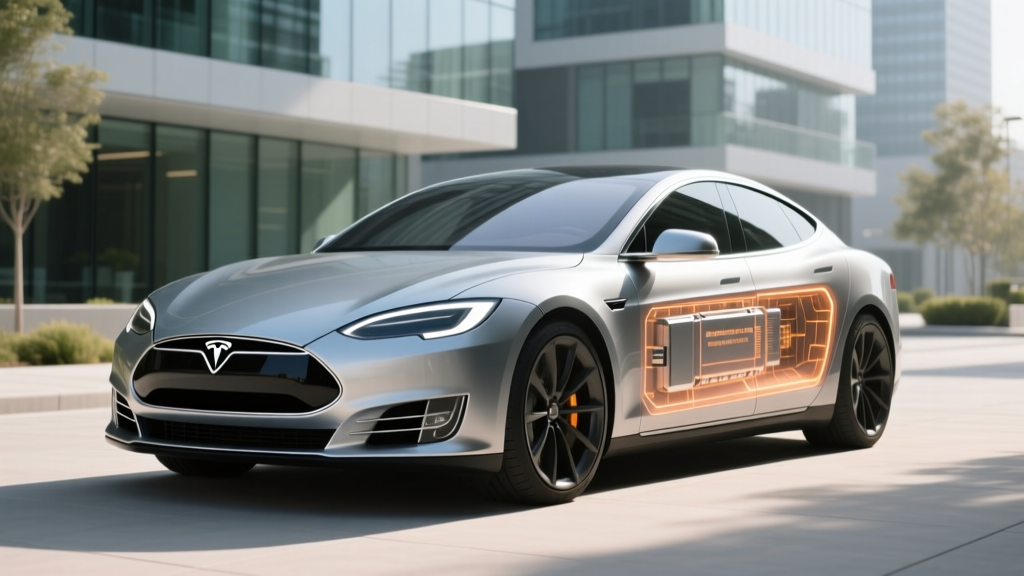
The Standard Range/RWD Model 3 utilizes a Lithium Iron Phosphate (LFP) battery. Unlike the Nickel Manganese Cobalt (NMC) batteries found in Long Range models, LFP chemistry is heavier but significantly more durable. You can (and should) charge LFP to 100% regularly without accelerating degradation, which is a major advantage for daily commuters.
EPA Estimated Range: 272 miles (RWD) / 341 miles (Long Range AWD).
Real-World Expectation: In mixed driving at 70 mph, expect 245 miles (RWD). In freezing temperatures (below 32°F), range can drop to ~215 miles due to cabin heating demands and internal battery resistance, even with the standard heat pump.
Charging Performance
Charging speed is defined by the "curve," not just the peak number. While the Model 3 Long Range can peak at 250 kW, it only holds that rate for a short window.
| Charging Level | Power/Rate | Time/Added Range |
|---|---|---|
| DC Fast Charge (Peak) | 250 kW (V3 Supercharger) | 10-80% in ~25 minutes |
| DC Fast Charge (Sustained) | ~150 kW (Average) | 175 miles in 15 minutes |
| Level 2 Home (48A) | 11.5 kW | ~44 miles per hour |
| Level 1 (120V) | 1.2 kW | ~3-4 miles per hour |
Model Y (Juniper) Technical Review
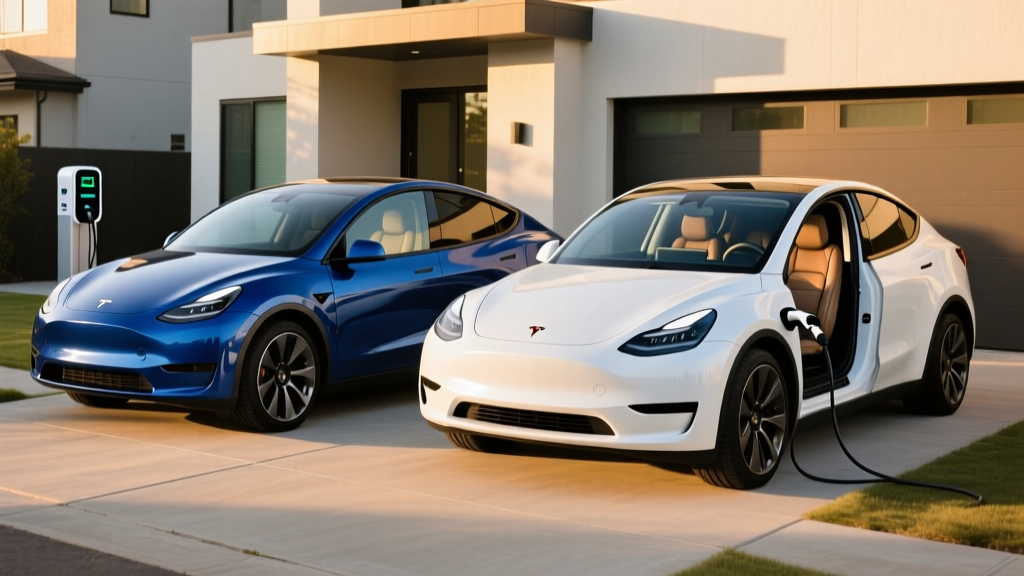
The Model Y is the best-selling vehicle in the world for a reason: it hits the exact intersection of utility and efficiency. The 2026 "Juniper" update brings the ambient lighting, ventilated seats, and quieter cabin of the Model 3 Highland to the crossover form factor.
Performance and Utility
The Long Range AWD Model Y produces approximately 384 horsepower and hits 0-60 mph in 4.8 seconds. While not "Plaid" fast, it is quicker than most gas-powered sports SUVs. The cargo space is the real story: 30.2 cubic feet behind the second row, expanding to 72.1 cubic feet with seats folded. The "frunk" (front trunk) adds another 4.1 cubic feet for charging cables or groceries.
Efficiency and MPGe
Despite its taller profile and larger frontal area, the Model Y Long Range achieves an EPA-estimated 122 MPGe combined (28 kWh/100mi). This is slightly lower than the Model 3's 132 MPGe, but class-leading for the SUV segment.
Federal Tax Credit Eligibility (§30D)
Qualifying for the $7,500 Federal Tax Credit is complex in 2026. Under current IRS guidelines, eligibility depends on three factors:
- MSRP Caps: The vehicle must be under $55,000 (sedans) or $80,000 (SUVs/trucks). Both Model 3 and Model Y trims generally qualify.
- Income Caps: Buyer AGI must be under $150k (single) or $300k (joint).
- Battery Sourcing: A percentage of critical minerals and battery components must be sourced from the US or free-trade partners. Tesla's US-built LFP cells have increasingly met these thresholds, but you must verify the specific VIN at the point of sale.
| Model / Trim | Base MSRP (2026) | Est. Price w/ §30D Credit | 0% APR Monthly (60mo) |
|---|---|---|---|
| Model 3 RWD | $38,990 | $31,490 | $524 |
| Model 3 Long Range | $45,240 | $37,740 | $629 |
| Model Y Long Range | $47,740 | $40,240 | $670 |
Note: Tesla now allows the transfer of the tax credit at the point of sale, effectively reducing the amount you need to finance. This makes the 0% APR deal even more potent, as you are financing a smaller principal.
Ownership: Warranty and Long-Term Value
Tesla's warranty is standard for the industry but requires careful reading. The New Vehicle Limited Warranty covers 4 years or 50,000 miles. The Battery and Drive Unit Limited Warranty covers 8 years or 100,000 miles (120,000 miles for Long Range models), whichever comes first, with at least 70% retention of battery capacity.
Expert Insight: The LFP batteries in the RWD models have shown exceptional longevity in high-mileage fleet testing, often retaining over 90% capacity after 100,000 miles. If you plan to keep the car for 10 years, the RWD LFP model is technically the more "durable" powertrain choice, even though it has less range.
Pros and Cons Summary
Pros
- 0% APR financing saves $5k+ over 5 years.
- Class-leading efficiency (kWh/100mi).
- Access to the Supercharger network (NACS).
- LFP battery durability (RWD trims).
- Over-the-air updates improve the car over time.
Cons
- Minimalist interior lacks physical buttons (turn signals on stalk removed in some regions).
- Insurance premiums are 20-30% higher than segment average.
- "Phantom Braking" incidents still reported with Autopilot.
- Repair times can be long due to parts availability.
Frequently Asked Questions
Can I combine the 0% APR offer with the $7,500 tax credit?
Yes. In fact, it is the optimal strategy. By transferring the $7,500 credit at the point of sale, you reduce the principal loan amount. You then finance the remaining balance at 0% interest, maximizing your monthly savings.
Is the Model 3 RWD "too slow" for highway merging?
No. The 0-60 mph time is 5.8 seconds, which is quicker than most gas-powered mid-size sedans. Instant torque makes it feel even faster in city traffic.
Does the 0% APR deal apply to used Teslas?
No. These offers are typically restricted to new inventory only. Used Tesla financing rates are generally higher than new-car rates.
What happens if I miss a payment on a 0% loan?
Most 0% promotional loans have a "default APR" clause. If you miss a payment, the rate may jump to 18-24% retroactively or for the remainder of the term. Read your contract carefully.