The Tesla 0.99% APR Promotion: What Buyers Need to Know
Tesla periodically offers subvented financing rates to move inventory, and the Tesla 0.99% APR promotion is one of the most attractive incentives available on a new electric vehicle in 2026. Typically applied to the Model 3 (and occasionally the Model Y), this promotion can save thousands of dollars in interest over a standard auto loan — but it comes with specific eligibility requirements, trim restrictions, and trade-offs worth understanding before signing.
This review focuses on the 2026 Tesla Model 3, the vehicle most commonly bundled with the 0.99% APR offer, examining whether the financing deal makes an already compelling EV even harder to pass up — or whether competitors with their own incentives present a better total-cost equation.
2026 Tesla Model 3: Key Specifications at a Glance
| Specification | Model 3 RWD | Model 3 Long Range AWD | Model 3 Performance |
|---|---|---|---|
| Base MSRP | $38,990 | $44,990 | $50,990 |
| EPA Range | 272 mi | 341 mi | 315 mi |
| Battery (usable) | ~57.5 kWh (LFP) | ~75 kWh (NMC) | ~75 kWh (NMC) |
| Drivetrain | Rear-Wheel Drive | Dual-Motor AWD | Dual-Motor AWD |
| Horsepower | 271 hp | 346 hp | 510 hp |
| 0–60 mph | 5.8 sec | 4.2 sec | 2.9 sec |
| MPGe (combined) | 132 MPGe | 131 MPGe | 121 MPGe |
| Efficiency | 25 kWh/100 mi | 25 kWh/100 mi | 28 kWh/100 mi |
| Peak DC Fast Charge | 170 kW | 250 kW | 250 kW |
| 10–80% DC Time | ~25 min | ~22 min | ~22 min |
| Level 2 Charge Rate | 11.5 kW (~44 mi/hr) | 11.5 kW (~44 mi/hr) | 11.5 kW (~44 mi/hr) |
| Cargo Volume | 23 cu ft (trunk + frunk combined) | ||
| Rear Legroom | 35.2 in | ||
| Battery Warranty | 8 yr / 100,000 mi | 8 yr / 120,000 mi | |
Source: fueleconomy.gov and Tesla's official 2026 spec sheets.
Real-World Range: What to Expect Beyond the EPA Sticker
EPA Combined Range: 272 mi (RWD) / 341 mi (Long Range) / 315 mi (Performance)
Real-World Highway (70 mph, moderate temps): Expect ~230–245 mi (RWD), ~290–305 mi (Long Range), ~270–285 mi (Performance).
Cold-Weather Impact (below 32°F): Range drops 20–30% across all trims. The Long Range AWD at 341 EPA miles may deliver as little as 240–270 miles on a winter highway drive. Preconditioning while plugged in mitigates some loss.
Tesla's efficiency remains among the best in the EV segment. The Model 3 Long Range consistently outperforms its EPA sticker in city and suburban driving thanks to aggressive regenerative braking and a highly efficient heat pump. However, sustained highway speeds above 75 mph and cold weather are the great equalizers — plan road trips around ~250 miles between Supercharger stops in the Long Range to maintain a comfort buffer.
Charging Speed and Infrastructure: The Supercharger Advantage
| Charging Level | Power / Rate | Miles Added per Hour | Notes |
|---|---|---|---|
| Level 1 (120V) | ~1.4 kW | ~5 mi/hr | Emergency/trickle only |
| Level 2 (240V, 48A) | 11.5 kW | ~44 mi/hr | Full charge overnight (~8 hrs for LR) |
| DC Fast Charge (RWD) | Peak 170 kW | ~750 mi/hr (peak) | 10–80% in ~25 min |
| DC Fast Charge (LR/Perf) | Peak 250 kW | ~1,000 mi/hr (peak) | 10–80% in ~22 min; tapers sharply above 80% |
A critical nuance: kW is the charge rate (power), kWh is battery capacity (energy). The Model 3 Long Range's 75 kWh battery at a peak 250 kW DC rate charges rapidly from 10–50% SoC, but the charge curve tapers significantly past 60%. You will rarely see sustained 250 kW — expect an average of ~130–150 kW over a full 10–80% session.
Tesla's Supercharger network remains the most reliable public charging infrastructure in the U.S., with over 25,000 stalls nationally. With NACS now adopted industry-wide, Model 3 owners enjoy native compatibility at every Supercharger and growing access to third-party networks adopting the connector.
Breaking Down the Tesla 0.99% APR Promotion
The 0.99% APR promotion is a manufacturer-subsidized (subvented) financing rate offered through Tesla's captive lending arm. Here is how it typically works in practice:
- Eligible vehicles: New 2026 Model 3 (select trims — often Long Range and Performance; RWD availability varies by month).
- Loan term: Usually 36, 48, or 60 months. The 0.99% rate is most commonly offered on 36- and 48-month terms; 60- and 72-month terms may carry slightly higher rates (1.99–3.99%).
- Credit requirement: Tier 1 credit (typically FICO 720+). Borrowers with lower scores will receive higher APRs.
- Cannot combine with: Certain referral credits or loyalty discounts. The 0.99% APR usually replaces other cash incentives.
- Federal tax credit: The §30D credit can still be claimed separately (see below) — it is not forfeited by taking subvented financing.
Monthly Payment Comparison: 0.99% APR vs. Market Rate
| Scenario | Vehicle Price | Down Payment | Loan Amount | APR | Term | Monthly Payment | Total Interest |
|---|---|---|---|---|---|---|---|
| Tesla 0.99% APR (Model 3 LR) | $44,990 | $5,000 | $39,990 | 0.99% | 60 mo | ~$684 | ~$1,050 |
| Market rate (6.9% APR, same terms) | $44,990 | $5,000 | $39,990 | 6.9% | 60 mo | ~$788 | ~$7,290 |
| Tesla 0.99% after $7,500 credit | $44,990 | $12,500* | $32,490 | 0.99% | 60 mo | ~$555 | ~$810 |
*Assumes the full $7,500 §30D credit is applied at point of sale as a down-payment reduction (2026 rules). Eligibility varies — see tax credit section below.
The savings are substantial. Over 60 months, the 0.99% rate saves roughly $6,200 in interest compared to a prevailing 6.9% rate. Combined with the federal tax credit, a Model 3 Long Range can be financed at under $560/month with excellent credit — a figure that competes directly with well-equipped gasoline sedans.
Federal Tax Credit Eligibility (IRS §30D) for the 2026 Model 3
- Maximum credit: $7,500, split into two halves — $3,750 for critical minerals sourcing + $3,750 for battery component manufacturing.
- MSRP cap: The Model 3 qualifies as a sedan (cap: $55,000). All current trims fall under this limit.
- Buyer income caps (2026 AGI limits): $150,000 (single), $225,000 (head of household), $300,000 (married filing jointly).
- Battery sourcing: Tesla sources LFP cells from CATL (China) for the RWD trim, which may disqualify that trim from one or both halves of the credit due to Foreign Entity of Concern (FEOC) restrictions effective 2024+. Long Range and Performance trims using NMC cells from Panasonic (U.S.-manufactured) have historically qualified for the full $7,500 — but verify current-year sourcing on the IRS eligible vehicles list at irs.gov.
- Point-of-sale transfer: As of 2024, buyers can transfer the credit to the dealer at purchase, reducing the financed amount immediately — this works with Tesla's 0.99% APR offer.
Important: Battery sourcing rules tighten each year. Consult a tax professional and check the current IRS eligible vehicle list before purchase. The RWD trim's LFP battery has been a point of uncertainty for the full credit.
Tech, Interior, and Driver Assistance
The 2026 Model 3 "Highland" refresh interior features a 15.4-inch center touchscreen, ventilated front seats, ambient lighting, rear-seat touchscreen, and significantly improved sound insulation over the pre-2024 model. Build quality has reached parity with German competitors in fit and finish.
Autopilot (standard): Includes adaptive cruise control, lane centering, and automatic emergency braking. This is an SAE Level 2 driver-assist system — you must keep your hands on the wheel and eyes on the road at all times.
SAE Level 2 — Not Self-Driving: Tesla's Autopilot and optional Full Self-Driving (Supervised) remain Level 2 systems. The driver is legally and practically responsible for all vehicle operation. Only Level 4 services like Waymo operate without a human driver in defined geofenced areas.
FSD (Supervised) — $8,000 add-on or $99/month: Adds automatic lane changes, traffic light/stop sign recognition, and city street navigation. Despite the name, it requires constant supervision. Real-world performance varies significantly by region and road complexity.
Notable drawbacks: No traditional instrument cluster (all info on center screen), no physical stalks (turn signals are steering-wheel buttons in the Highland refresh — polarizing), no Apple CarPlay or Android Auto, and limited service center availability in rural areas.
How the Model 3 Compares to Key Competitors
| Attribute | Tesla Model 3 LR (2026) | Hyundai Ioniq 6 SE (2026) | BMW i4 eDrive40 (2026) |
|---|---|---|---|
| Price (before credit) | $44,990 | $42,715 | $57,900 |
| EPA Range | 341 mi | 361 mi | 307 mi |
| Peak DC Charge | 250 kW | 233 kW (800V) | 205 kW |
| 10–80% DC Time | ~22 min | ~18 min | ~31 min |
| MPGe (combined) | 131 MPGe | 140 MPGe | 109 MPGe |
| 0–60 mph | 4.2 sec | 5.1 sec | 5.5 sec |
| 0.99% APR Offer? | Yes (promo) | No (Hyundai typically 1.9–3.9%) | No (BMW FS ~4.5%+) |
The Ioniq 6 edges ahead on range and charging speed (thanks to its 800V architecture), and it qualifies for the full tax credit. The BMW i4 offers premium interior quality but at a significantly higher price point. Where Tesla wins decisively is the combination of the 0.99% APR promotion + Supercharger network + over-the-air updates + performance per dollar. The monthly payment advantage of 0.99% financing can offset a competitor's slightly lower sticker price.
Pros and Cons
Pros
- 0.99% APR saves $5,000–$7,000 in interest vs. market rates
- Class-leading Supercharger network access
- Best-in-class efficiency (25 kWh/100 mi)
- 341-mile EPA range (Long Range) covers nearly all daily needs
- Strong performance even in base RWD trim
- Over-the-air updates add features post-purchase
- Full $7,500 tax credit eligibility (LR/Performance trims)
Cons
- RWD LFP battery may lose partial/full tax credit (FEOC rules)
- No physical turn signal stalks (Highland design)
- No Apple CarPlay / Android Auto
- FSD remains Level 2 despite the name and $8,000 price
- Limited service center density in rural regions
- Rear seat comfort still trails Hyundai/Kia competitors
Who Should Buy the Model 3 with 0.99% APR?
Choose the Model 3 Long Range with 0.99% APR if: You have Tier 1 credit, commute 30+ miles daily, want the lowest total monthly cost of any premium EV sedan, and value reliable public fast-charging for road trips.
Look at competitors if: You need maximum rear-seat comfort (Ioniq 6), want a luxury badge (BMW i4), need hatchback cargo flexibility (Polestar 2), or have credit below 720 (the 0.99% rate won't apply, and a competitor's standard rate may be comparable).
Frequently Asked Questions
What is the real-world range of the 2026 Tesla Model 3?
The Long Range AWD delivers an EPA-estimated 341 miles. In real-world highway driving at 70 mph in moderate temperatures, expect 290–305 miles. In cold weather (below 32°F), plan for 240–270 miles. The RWD trim's 272 EPA miles translates to roughly 230–245 highway miles in fair weather.
How fast does the Model 3 charge at home and on the road?
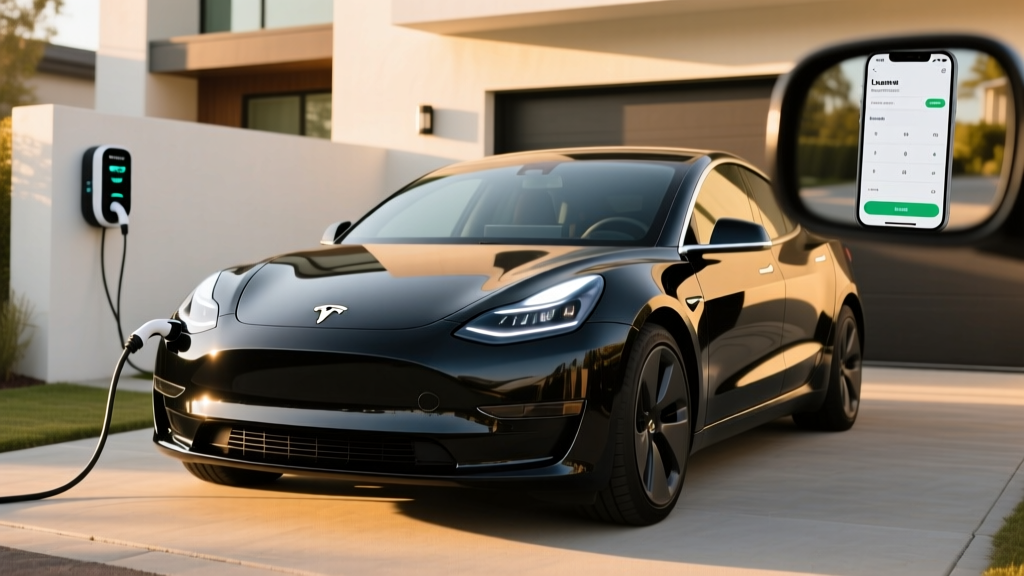
At home on a 240V Level 2 charger (48A), the Model 3 adds about 44 miles of range per hour, fully charging overnight in roughly 7–8 hours. On DC fast chargers, the Long Range and Performance trims peak at 250 kW, reaching 10–80% in approximately 22 minutes. The RWD peaks at 170 kW with a 10–80% time of about 25 minutes.
How much does the Model 3 cost after tax credits with 0.99% financing?
A Model 3 Long Range at $44,990 MSRP, minus a $7,500 point-of-sale tax credit, yields an effective price of $37,490. With $5,000 down and 0.99% APR over 60 months, the monthly payment is approximately $555. Total interest paid over the loan life is roughly $810 — compared to $7,290 at a 6.9% market rate.
Does the 2026 Model 3 qualify for the full $7,500 federal EV tax credit?
The Long Range and Performance trims (NMC battery, Panasonic cells manufactured in the U.S.) have historically qualified for the full $7,500. The RWD trim's LFP battery (CATL-sourced) faces uncertainty under FEOC critical-mineral restrictions. Always verify current eligibility at irs.gov and consult a tax professional. Income caps apply: $150K single / $300K joint.
Is the Tesla 0.99% APR promotion worth it vs. paying cash or leasing?
If you have Tier 1 credit and plan to keep the car 3+ years, the 0.99% APR is essentially free money — your cash earns more in a high-yield savings account than you pay in interest. Leasing may make sense if you want lower monthly payments and plan to switch vehicles in 36 months, but you forfeit the §30D point-of-sale credit (the leasing company claims it, though some pass savings through as a capitalized cost reduction).
What are the biggest drawbacks of the 2026 Model 3?
The turn-signal buttons on the steering wheel (replacing the traditional stalk) draw consistent complaints, especially during roundabouts. The absence of Apple CarPlay/Android Auto is a dealbreaker for some. Rear-seat legroom (35.2 in) trails the Hyundai Ioniq 6. And Tesla's service center network remains sparse outside major metro areas — mobile service handles minor issues, but body and high-voltage work requires a service center visit.