The Quick Answer: Is the Telo EV Truck Worth Reserving?
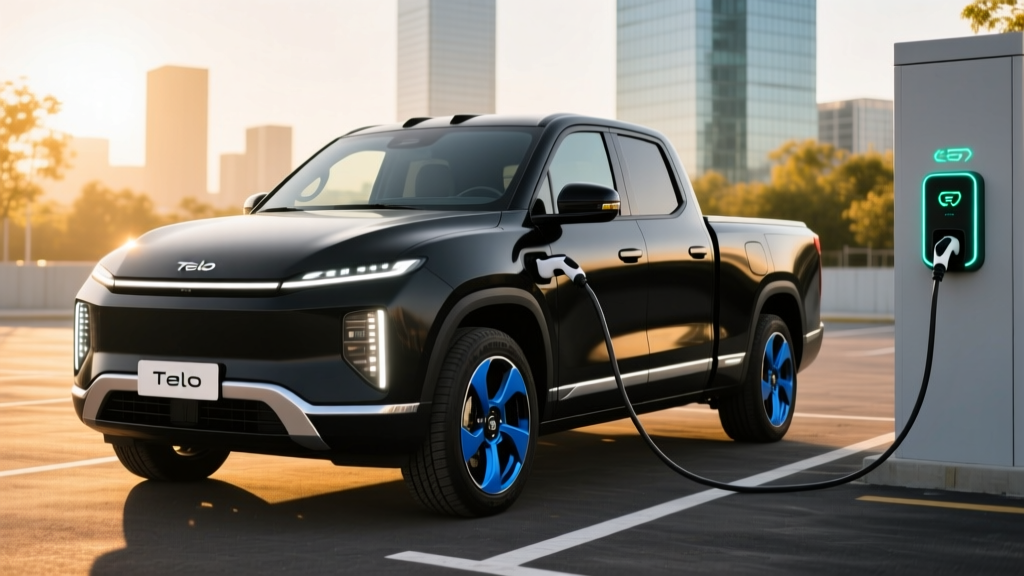
The Telo MT1 is an announced, not yet available electric pickup targeting a 350-mile EPA-estimated range, dual-motor AWD, and a bed that fits a 4×8 sheet of plywood — all in a vehicle roughly the length of a Mini Cooper. Reservations require a $198 deposit, with a base price announced at approximately $41,000 before incentives. Production timelines have shifted multiple times; as of early 2026, Telo has not confirmed a firm delivery date for reservation holders. If you need a truck now, this isn't it. If you're planning 12–24 months out and want a hyper-compact urban EV truck, it's worth tracking — with caveats.
What the Telo EV Truck Actually Is (and Isn't)
The Telo MT1 was unveiled in mid-2023 by a Bay Area startup founded by former Tesla and Cruise engineers. The pitch is specific: a right-sized electric pickup for urban and suburban use, not a full-size hauler competing with the Ford F-150 Lightning or Rivian R1T.
Here's what the announced preliminary specs look like:
| Spec | Telo MT1 (Announced/Preliminary) |
|---|---|
| Target EPA Range | 350 miles |
| Battery (estimated usable) | ~106 kWh (NMC chemistry) |
| Drivetrain | Dual-motor AWD |
| 0–60 mph | ~5.0 seconds (claimed) |
| Bed Length | 5 feet (fits 4×8 sheet with tailgate down) |
| Vehicle Length | ~152 inches (Mini Cooper class) |
| Towing Capacity | Not yet confirmed |
| Payload Capacity | Not yet confirmed |
| DC Fast Charge (target) | Not yet confirmed; 250+ kW target |
| Base MSRP (announced) | ~$41,000 |
| Reservation Deposit | $198 (refundable) |
| Production Status | Announced — no confirmed delivery date |
| Federal Tax Credit (§30D) | Unknown — depends on battery sourcing at production time |
Critical context: Every figure above is preliminary. Startup EV companies have a history of spec revisions between announcement and production (see: Canoo, Lordstown, early Rivian timelines). Treat these numbers as targets, not guarantees.
Range Reality Check: 350 Miles in a Compact Truck?
A 350-mile EPA target in a vehicle this size would require exceptional efficiency — roughly 3.3 miles per kWh if the battery is indeed ~106 kWh usable. For reference, the Hyundai Ioniq 5 (one of the most efficient EVs on the road) achieves about 3.0–3.4 mi/kWh, but it's a lower, sleeker crossover. A boxy pickup shape fights aerodynamic drag hard above 65 mph.
Real-World Range Expectations
If the 350-mile EPA sticker holds:
- City/suburban driving (30–50 mph): Expect 320–350 miles — EVs thrive here thanks to regen braking and low aero drag.
- Highway driving (70–80 mph): Expect 260–290 miles. Boxy truck shapes lose 15–25% range at sustained highway speeds.
- Cold weather (below 32°F): Expect 220–270 miles. Battery chemistry and cabin heating reduce usable capacity by 20–35%.
- Towing/hauling: Expect 150–200 miles if towing near capacity. Trailers destroy EV range — this is physics, not a Telo-specific issue.
The 350-mile claim, if achieved, would make the Telo MT1 one of the longest-range EVs on the market in any segment. But achieving that efficiency in a pickup form factor with a ~106 kWh battery is an ambitious engineering target. We won't know the real EPA number until the vehicle enters production and completes testing.
Charging: What We Know (and Don't Know)
Telo has targeted DC fast-charging capability of 250+ kW, but hasn't published confirmed charge-curve data, peak rates, or 10–80% timing. Here's what comparable vehicles achieve, which gives us a reasonable benchmark:
| Charging Level | Power (kW) | Estimated Miles Added per Hour | Notes |
|---|---|---|---|
| Level 1 (120V outlet) | 1.4 kW | ~4–5 mi/hr | Emergency/trickle only; ~70+ hours for full charge on 106 kWh |
| Level 2 (240V home) | 7.7–11.5 kW | ~25–38 mi/hr | Overnight charge in 10–14 hours; standard for daily use |
| DC Fast (target) | 250+ kW (peak) | ~800+ mi/hr (peak) | 10–80% in ~25–35 min if sustained; tapers above 80% |
Key concept — kW vs. kWh: kW (kilowatts) measures charging power — how fast energy flows into the battery. kWh (kilowatt-hours) measures battery capacity — how much energy it stores. A 250 kW charger doesn't deliver 250 kW the entire session; the charge curve tapers as the battery fills, especially above 80% State of Charge (SoC). Peak kW numbers are marketing figures; 10–80% time is what matters for road trips.
Without confirmed charge-curve data, road-trip planning remains speculative. For a ~106 kWh battery at a 250 kW peak, a realistic 10–80% session would take approximately 25–35 minutes — assuming good thermal preconditioning and a capable charger network.
Cost Breakdown: Telo MT1 vs. Gas Truck vs. Competing EV Trucks
Let's put the Telo's announced $41,000 price in context against what you can actually buy today:
| Vehicle | Base MSRP | EPA Range | Segment | Availability |
|---|---|---|---|---|
| Telo MT1 (announced) | ~$41,000 | 350 mi (target) | Compact EV pickup | Not yet |
| Ford Maverick Hybrid | ~$28,000 | ~500 mi (gas, 40 MPG combined) | Compact hybrid pickup | Now |
| Ford F-150 Lightning | ~$55,000 | 230–320 mi | Full-size EV pickup | Now |
| Rivian R1T | ~$70,000 | 270–410 mi | Mid-size EV pickup | Now |
| Chevrolet Silverado EV | ~$55,000 | 240–440 mi | Full-size EV pickup | Now (limited) |
| Hyundai Santa Cruz | ~$28,000 | ~400 mi (gas, 25 MPG combined) | Compact gas pickup | Now |
The Telo's closest competitor in size is the Ford Maverick — but the Maverick is a hybrid, not electric, and starts significantly lower. The Telo's closest competitor in powertrain is the F-150 Lightning or Rivian R1T, but those are much larger, heavier, and more expensive vehicles. The Telo occupies a niche no one else currently fills: a true compact electric pickup.
5-Year Ownership Cost Estimate
Assuming the Telo MT1 ships at $41,000 and achieves its range targets, here's a rough 5-year / 75,000-mile ownership projection compared to a Ford Maverick Hybrid (the closest real-world alternative):
| Cost Category | Telo MT1 (Estimated) | Ford Maverick Hybrid |
|---|---|---|
| Purchase Price | $41,000 | $28,000 |
| Federal Tax Credit (§30D) | $0–$7,500 (unknown) | $0 (not a PHEV/BEV) |
| Effective Purchase | $33,500–$41,000 | $28,000 |
| Fuel/Energy (75k mi) | $2,250–$3,750 (electricity) | $5,625 (gas at $3.50/gal, 40 MPG) |
| Maintenance (5 yr) | $1,000–$1,500 | $3,000–$4,000 |
| Insurance (5 yr est.) | $8,000–$10,000 | $6,000–$7,500 |
| Depreciation (5 yr est.) | $15,000–$20,000 (startup risk premium) | $10,000–$12,000 |
| Estimated 5-Yr Total | $49,750–$72,500 | $52,625–$59,125 |
Key takeaway: The Telo's fuel and maintenance savings are real — EVs have fewer moving parts, no oil changes, and electricity is cheaper per mile than gasoline. But the higher purchase price, unknown tax credit eligibility, and startup depreciation risk (unproven resale value) mean the total cost of ownership is roughly comparable to or higher than a Maverick Hybrid over five years. The Telo wins on emissions and driving experience; the Maverick wins on proven reliability and lower upfront cost.
Federal Tax Credit Eligibility (§30D)
Under current IRS §30D rules, the Telo MT1's eligibility for the up-to-$7,500 federal tax credit is entirely unknown at this stage. Eligibility depends on:
- MSRP cap: Pickup trucks must be under $80,000 MSRP — the Telo's ~$41,000 target clears this easily.
- Buyer income cap: Modified AGI must be ≤$150,000 (single) / ≤$300,000 (joint) — check your tax situation.
- Battery component sourcing: A percentage of battery components must be manufactured or assembled in North America (threshold increases yearly).
- Critical minerals: A percentage of critical minerals must be sourced from the US or FTA partners (threshold increases yearly).
- Final assembly: Must occur in North America — Telo plans US production, but specific factory details remain limited.
- Point-of-sale transfer: As of 2024+, eligible buyers can transfer the credit to the dealer for an upfront price reduction.
Because the Telo hasn't entered production, the battery supply chain hasn't been finalized for IRS verification. Don't count on the $7,500 credit until the vehicle appears on the official fueleconomy.gov eligible vehicles list.
Real-World Ownership Considerations
Home Charging Access
With a ~106 kWh battery, the Telo MT1 will demand a robust Level 2 home charging setup for practical daily use. A standard 120V outlet (Level 1) would take 70+ hours for a full charge — useless for anything beyond emergency trickle charging.
What you'll likely need:
- Level 2 charger (240V, 40–48 amp): $500–$800 for equipment (e.g., ChargePoint Home Flex, Emporia Level 2).
- Electrical panel capacity: A 106 kWh battery pulling 11.5 kW needs a dedicated 60A circuit. If your home has a 100A panel, you may need a panel upgrade ($1,500–$3,500).
- Electrician installation: $800–$2,500 depending on wiring distance, conduit, and local code.
- Permits: $50–$200 depending on jurisdiction.
- Total home charging setup: $1,350–$7,000 depending on panel situation.
Always consult a licensed electrician for a site-specific quote before committing to any EV purchase that depends on home charging.
Climate and Driving Patterns
The Telo's compact size and city-friendly footprint make it ideal for urban and suburban environments — tight parking, short commutes, grocery runs with the occasional hardware store trip. If that's your use case, the 350-mile range target is overkill in the best way: you'd charge once or twice a week at home and rarely think about range.
But if you plan to:
- Tow regularly: Expect range to halve. The unconfirmed towing capacity is a major unknown.
- Drive in extreme cold: NMC batteries lose 20–35% range below freezing. A heat pump (unconfirmed for Telo) would help but not eliminate this loss.
- Road trip frequently: Without confirmed DC fast-charge data, you can't reliably plan highway charging stops. Charging-desert routes remain a concern in rural areas.
Myths vs. Facts About the Telo and Compact EV Trucks
| Myth | Fact |
|---|---|
| "350 miles of range means I'll get 350 miles no matter what." | EPA range is tested under controlled conditions. Real-world highway driving at 75 mph typically yields 75–85% of EPA range. Cold weather drops it further. Plan for 260–300 miles on road trips. |
| "I can charge it on a regular wall outlet overnight." | Level 1 (120V) adds ~4–5 miles per hour. A depleted 106 kWh battery would take over 70 hours. You need a 240V Level 2 circuit for practical ownership. |
| "The $7,500 tax credit applies automatically." | Under §30D, eligibility depends on battery sourcing, income caps, and MSRP caps. The Telo hasn't been verified by the IRS. Confirm on irs.gov before purchasing. |
| "It's a startup, so it will definitely fail." | Startup risk is real (see Lordstown, Canoo), but Telo has demonstrated a working prototype and secured significant reservation interest. The risk is production execution and timeline, not necessarily viability. |
| "Compact trucks can't do real truck things." | The Ford Maverick (compact, ~150 inches shorter bed than full-size) has proven strong demand. The Telo's 5-foot bed fits a 4×8 sheet — sufficient for most suburban truck tasks. It won't replace an F-250 for job-site work, and it doesn't claim to. |
| "EVs cost more to insure." | Generally true — EV insurance premiums run 10–25% higher than comparable gas vehicles due to repair costs and parts pricing. For a startup EV with limited parts availability, expect the higher end of that range. |
Decision Framework: Should You Reserve the Telo MT1?
Choose the Telo MT1 (Reserve Now) If:
- You don't need a truck for at least 12–24 months and can absorb timeline delays.
- Your primary use is urban/suburban commuting with occasional cargo hauling (hardware store runs, bikes, camping gear).
- You have confirmed home Level 2 charging access or can install it.
- The $198 refundable deposit is low-risk for you, and you're comfortable with startup uncertainty.
- You value a small vehicle footprint and don't need full-size truck towing or payload.
Choose an Available Alternative If:
- You need a truck within the next 6 months — buy a Ford Maverick Hybrid ($28K, 40 MPG, available now, proven platform).
- You need serious towing (5,000+ lbs) or heavy payload — buy a Ford F-150 Lightning or Rivian R1T.
- You can't install Level 2 home charging and lack reliable public DC fast-charging nearby — a hybrid like the Maverick is more practical.
- Startup risk makes you uncomfortable — established OEMs offer proven warranty networks, dealer service, and parts availability.
- You need confirmed tax-credit eligibility for your purchase decision — only vehicles on the IRS eligible list qualify.
What First-Time EV Buyers Should Know Before Reserving
If the Telo MT1 would be your first electric vehicle, here's the essential groundwork:
- Secure your home charging first. Before any EV purchase, get an electrician quote for a 240V Level 2 circuit. If you live in an apartment or lack dedicated parking with electrical access, public-charging-dependent ownership is significantly more expensive and less convenient.
- Understand your actual daily mileage. The average American drives ~37 miles per day (FHWA data). Even with cold-weather and highway range reduction, a 350-mile-range EV covers most weekly driving on a single charge.
- Budget for insurance. Get an insurance quote on a comparable EV (Ioniq 5, F-150 Lightning) before committing. Startup EVs may carry even higher premiums due to limited repair networks.
- Don't bank on the tax credit. Plan your budget assuming $0 credit. If you qualify, treat it as a bonus.
- Research the company's production track record. Telo has a prototype and reservations, but no production vehicles delivered. Follow their updates, but maintain a backup purchase plan.
Frequently Asked Questions
When will the Telo MT1 actually ship?
As of early 2026, Telo has not confirmed a firm production delivery date. The company initially targeted 2025 deliveries, but startup EV timelines frequently slip. Reservation holders should plan for potential 2026–2027 availability and have alternative purchase options ready.
Is the $198 reservation deposit refundable?
Telo has stated the reservation deposit is refundable. Confirm current terms directly on the Telo website before placing a deposit, as policies can change.
Will the Telo MT1 qualify for the $7,500 federal EV tax credit?
Unknown. Under IRS §30D rules, eligibility depends on battery component sourcing, critical mineral sourcing, final assembly location, MSRP caps, and buyer income limits. The vehicle must appear on the IRS/fueleconomy.gov eligible list before purchase to confirm qualification.
How does the Telo compare to the Ford Maverick?
The Maverick Hybrid is available now at ~$28,000, gets 40 MPG combined, and has a proven service network. The Telo targets a similar compact footprint with an all-electric powertrain, longer energy range, and lower operating costs — but at a higher price, with no confirmed delivery date and startup risk. They serve similar use cases but with very different risk profiles.
Can the Telo MT1 tow a trailer?
Telo has not confirmed a towing capacity. For context, the Ford Maverick tows up to 4,000 lbs (with the tow package), and the F-150 Lightning tows up to 10,000 lbs. If towing is a priority, wait for Telo's official specs or choose an available truck with confirmed ratings.
What battery chemistry will the Telo use?
Telo has indicated NMC (nickel manganese cobalt) chemistry for its ~106 kWh battery pack. NMC offers higher energy density than LFP (lithium iron phosphate), which is necessary to achieve 350 miles in a compact vehicle. Trade-offs include higher cost, more sensitivity to sustained 100% SoC storage, and supply-chain considerations for critical minerals.
What happens if Telo goes out of business before delivering?
This is the core startup risk. If the company fails to reach production, your $198 deposit should be refundable per their stated policy — but there's no guarantee in a bankruptcy scenario. Don't reserve money you can't afford to lose, and always have a backup vehicle plan.